Wales

Juicer Pulp Burgers with Seitan, Miso and a Polenta and Sesame Crumb

Pulp Burgers with Seitan, Miso and a Polenta Crumb

Pulp Burgers with Seitan, Miso and a Polenta and Sesame Crumb

THESE VEGAN BURGERS ARE CARNIVORE APPROVED!!!!!  PACKED WITH FLAVOUR AND LOADS OF TEXTURE, YOU WON’T BELIEVE THEY’RE MADE FROM LEFTOVER KITCHEN SCRAPS!

A vivid receptacle for all your kitchen scraps, a modern take on what would have been a very old fashioned, house wife style, classic. Purple vegan burgers are not it Delia’s repertoire yet, but if you love juicing (and more and more people are getting on that ship) you’ll be wondering what to do with all that gorgeous looking leftover pulp. We use it as a fabulously nutritious filler for many dishes, our muffins turn out rather well (see Juicer Pulp Muffins with Pecan, Fig and Turmeric); burgers, cakes, soups etc. They give these burgers a great texture, light and moist. A million miles away from the stodgy, claggy veggie burgers that most of us have to endure on regular occasions. Well, not in the Beach House!!!!!! Pop round for dinner, we’ll whip you a pulp burger up and you’ll leave considering your very own vegan burger odyssey. It’s a large and diverse place to inhabit for a while. The options are mind boggling.

You will need alot of juicer pulp for these burgers, maybe save up for a couple of days. Taste it before you use it, the citrus elements especially can go a little wayward after a day or more in the fridge. We did it in a day! A pint of juice is surely a zingy start to the day. This pulp contains 250g spinach leaves, 4 apples, 4 carrots, 1 beetroot, 1 handful parsley, 1 lemon (with ½ zest), 1 orange (with ½ zest), 2 large florets of broccoli. Phew! Then yum. Quite a list of ingredients, but we use whats to hand and buy loads of veggies and fruits, if they are getting a little past their best we juice them and come up with many odd combos. Swede juices is a real thing! Certainly wakes you up first thing.

HEALTH BENEFITS OF EATING YOUR JUICER PULP?

The pulp leftover from juicing is filled with fibre which is amazing for digestion.  A little word of warning, too much fibre will bung you up so bear that in mind.  No juicer will produce completely dry pulp, so there are benefits from eating the leftover juice along with the pulp.  Fruits (especially citrus) store many of their nutrients/ flavanoids in their skins, so we are not missing out any of that goodness either.

OTHER IDEAS FOR USING UP LEFTOVER JUICE PULP

–  COMPOST IT, THE PULP WILL BREAK DOWN VERY QUICKLY AND THE GARDEN LOVES IT!

–  ADD TO SMOOTHIES FOR A FIBRE HIT

–  ADD IT STRAIGHT TO SOUPS AS A THICKENER INSTEAD OF POTATOES ETC

–  FREEZE IT, GATHER ENOUGH PULP UNTIL YOU HAVE ENOUGH TO MAKE BURGERS ETC.

–  SOME PEOPLE FEED IT TO THEIR PETS AND ANIMALS, MIXED INTO THEIR NORMAL FOOD.

I use cooked rice as the binding/ ballast for these veggie burgs. You can use a similar quantity of cooked millet, buckwheat, pearl barley, quinoa etc. They will all work well once blended up into a sticky paste.
The flavouring of this burger went East, but you can flavour it with whatever you like. Some suggested substitutes would be leeks = onions, tahini = peanut or other nut butters, sesame seeds = any other nuts (crushed for the coating), seitan = firm tofu or tempeh, tamari = soya sauce/ shoyu.

Seitan is an ingredient we use rarely.  It has a lovely texture, sometimes called ‘mock duck’ it is something a bit different.  Seitan is basically pure gluten and these burgers can easily be made gluten free by adding tofu or tempeh instead.  You won’t lose anything by doing so.

I fancied putting a crunchy coating on the burgers and a vivid yellow jacket, so I used polenta. You can leave them naked if you like, or go for breadcrumbs. Both would work very nicely indeed.  I like the colour of them without there jackets and its a little less fuss.

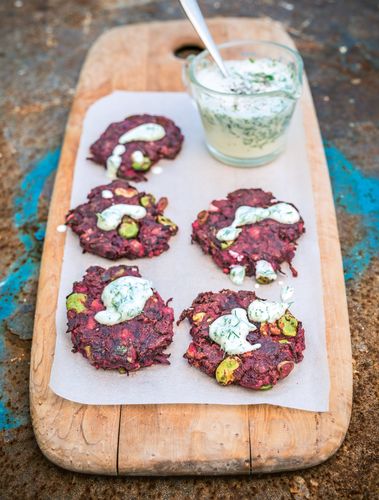
Pulp burgers pre-crumbing

Pulp burgers pre-crumbing

The Bits – Makes 8 Fat Quarter Pounders
3 tbs oil (more for frying)
300g leeks (finely sliced)
1 inch sq fresh ginger (finely diced)
4 cloves garlic (peeled and crushed)
3 teas sesame seeds (more for the coating)
3 tbs tahini
1 -2 tbs tamari
2 tbs brown miso
200g seitan (roughly chopped)
400g brown rice (cooked and cooled – leftovers are best)
1 tbs sesame oil
900g juice pulp

Crumb
1 small handful of sesame seeds
2 big handfuls of polenta (optional)
½ teas turmeric

Do It
In a large frying pan with a heavy bottom, add 2 tbs oil and your leeks, sauté until tender, add your seitan, sesame seeds and ginger, cook for another 3 minutes, then add the garlic, tamari, miso, tahini and 2 tbs water, cook until the liquid has mostly evaporated.

In a blender, blitz your cooked rice until it forms a thick paste. Sticky to the touch.
Add the leek mix and rice to the juice pulp, pour in your sesame oil and 1 tbs more oil. Pop in a fridge for ½ hour or longer to mingle and get together.

The leek mix and juice pulp before mixing

The leek mix and juice pulp before mixing

Scatter sesame seeds, turmeric and polenta on a plate, grab a handful of burger mix and form it into patties of your favourite dimensions. Place on the plate and toss the coating over the burgers, pat gently so that it sticks.

Your burger mix in all its vivid-ness

Your burger mix in all its vivid-ness

Preheat oven to 180oC.

Warm oil in a pan, we like to use roughly 3 tbs, and replenish when needed. For super crispy burgers, cover the base with 1 cm of oil and shallow fry them gently. This is amazing, but uses alot of oil, so we reserve it for what could be called, ‘special’ occasions. Fry the burgers on a medium heat for 2-3 minutes each side, until golden brown and warmed through. Top up the oil as needed.  Use a nice flat spatula and gently flip them over, veggie burgers need to be handled with a little finesse and care, otherwise they’ll look like a dog’s dinner (which basically means not very appetising at all unless you’re a spaniel).

rsz_p1080921

Quick fry in the pan and then a warm in the oven

After frying, place them onto a baking tray lined with parchment and pop them in the oven to warm for 10-15 minutes, this will ensure that the fat burgers have a piping hot middle.

Serve

However you like burgers. You may like to maintain the sesame theme, as we did, and serve with smokey hummus (smoked paprika mixed into regular hummus) and salad leaves (we used sorrel) or serve them in fresh bread with something creamy, a bean puree for example, and something tangy; pickles, pineapple, then the ubiquitous leaves; spinach, lettuce, sorrel?(it grows like weeds in our garden).

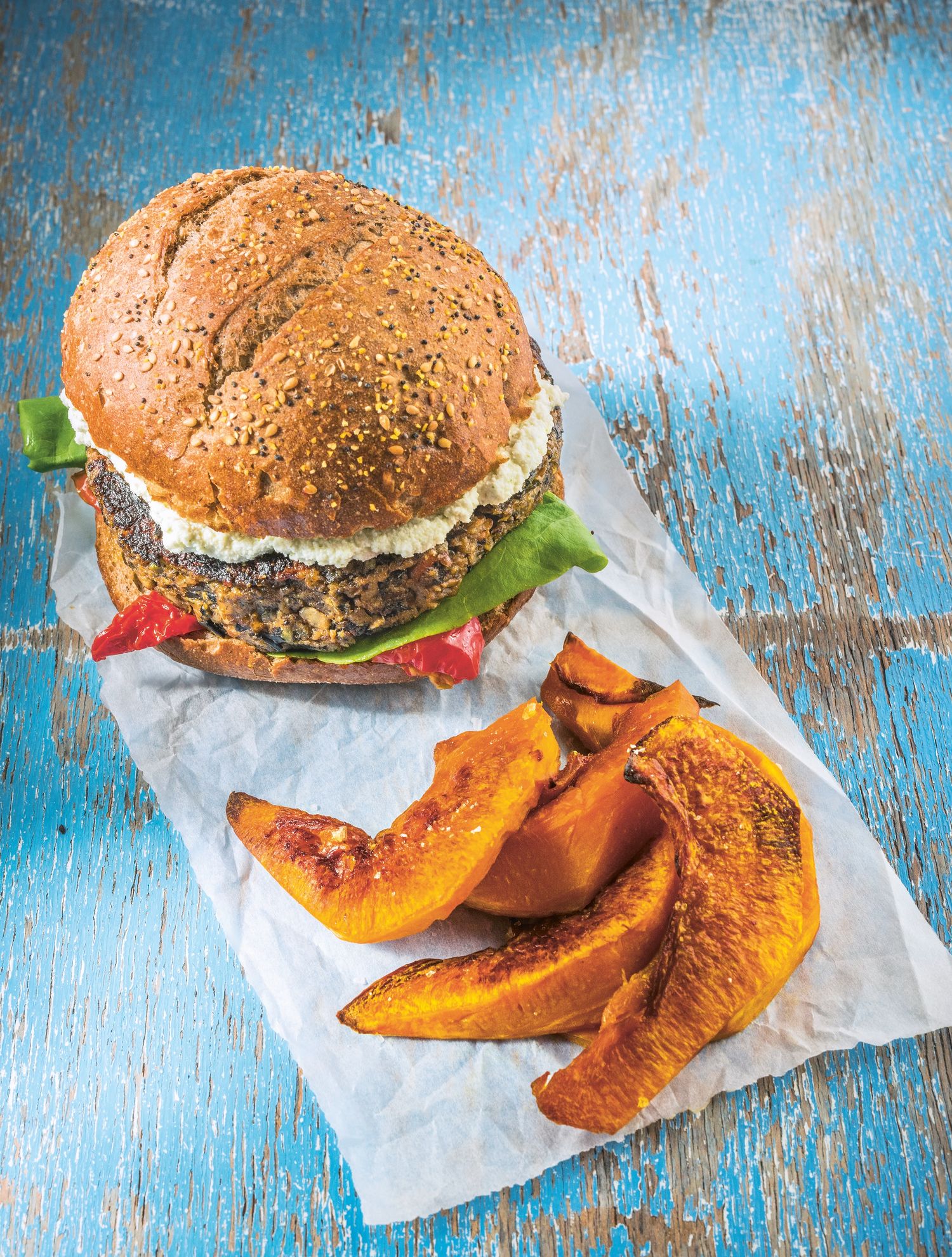
Our juicer pulp burgers, ready for action

Our juicer pulp burgers, ready for action

Foodie Fact

This is Wales and the leek is a national symbol of pride and rightly so for many reasons.  Leeks are said to come from Central Asia and were introduced to Britain by the Romans who believed they helped the voice (could this be why the Welsh are famed for their singing voices?).  The history of leeks in Wales goes back to the 17th Century when a Welsh army defeated the Anglo Saxons, to differentiate themselves form the enemy, the Welsh wore leeks on their helmets.

Leeks are a member of the allium family, along with garlic, onions and many others.  The alliums are filled with flavanoids, folates and anti-oxidants, which combine to keep our heart very healthy indeed.  All of the alliums have anti-inflammatory properties.  The healthiest parts of the leek are the bulb and just above, this is where the health-giving chemicals hang out.

Walking around Aber Falls (near Bangor) recently.  Walking off all those burgers!

Walking around Aber Falls (near Bangor) recently. Walking off all those burgers!

Categories: Recipes, Wales | Tags: , , , , , , , , , , , | 6 Comments

Spring arrives in a blizzard – The Beach House Garden

Spring  hits the Beach House Garden

Spring hits the Beach House Garden – Dark and Gloomy

Well Spring is here and we’re hanging on in the middle of a blizzard. The Beach House is a sturdy little cottage, but the garden is looking anything but spring-like.

The whole of North Wales, and Britain in general, is getting a good covering of springtime snow.  This day last year the temperature was 21oC.  You may be British, or know Brits, we talk about the weather alot over here, mainly because we have such interesting weather!  You never know what to expect, which doesn’t help a novice gardener.

We have planted a few seeds already, granted very prematurely and they are doing well on racks beside the fire!  Rainbow chard is beginning to sprout and I fear for these little things when they are thrown into the garden, open to our mountain elements.  Maybe we will have an indoor garden this year!

Last years gardening adventures, in sunnier times

Last years gardening adventures, in sunnier times

It is so cold at the moment, even our semi-wild cat Buster has come inside, to shelter from the winds (see below).  Buster is our gardening companion and an expert at getting in the way.

Last years attempts at growing had mixed results (to say the least). Slugs had a field day in the very damp conditions and we became more a slug diner than a organic veg patch. We had some success with a variety of potatoes and the occasional leek, but really, most things flopped.  We have new strategies and fresh energy this year to quell those slimy critters and hide our plants from the wind.  Our green beans ended up mainly in the opposite field last time.

This year we are going for alot of beetroot, some leeks, many potatoes, some green beans and greeen and red leaves (rocket, raddichio etc).  We’d also like to grow some squash and plenty of kale and chard.  We’ll let you know how it all goes.

Thankfully, we have little expectations this year and even in this small garden patch, are now fully aware of the difficulties of approaching a ‘self-sufficient’ lifestyle.  There is so much to learn and only so many seasons left…

Hope you are all nice and warm and cosy wherever you are.

Buster checking out the bin

Buster checking out the bin

More from Buster (the worlds coolest creature)

More from Buster (the worlds coolest creature)


Categories: Garden, Spring, Wales | Tags: , , , , , , , , , , | Leave a comment

Ciambotta – Italian Butter Bean Stew with lots of Greens

From the top of Knicht - Snowdonia, Wales

From the top of Knicht – Snowdonia, Wales

We are just back in Wales, the home of the Beach House and arrived to a clear night and a million star welcome! Today has been fantastic, getting settled in again and unpacking the wine bought in France and Spain. We may need to build an extension to fit it all in!

After all the fussing about and sorting we decided to head to the hills, Knicht to be exact, a Himalayan looking mountain near Porthmadog. It is an impressive rocky peak and we knew we had a good day of scrambling and sharp climbs ahead. It turned out to be an awesome walk, with views of the Snowdon range and the Irish Sea. Knicht is surrounded by many small mountain lakes and we’ve made plans to return and camp up there soon. Jane and I are so lucky to live in such beautiful places. We are loving being back in Wales and of course a major part of that is the Beach House Kitchen.

We are getting re-acquainted with all of our cool kitchen stuff; spatulas, knives graters and Buster our semi-wild cat (who lives in the wood store).  We’ve been cooking up a storm with oat breads, hummus, fruit salads and lashing of proper cups of tea. Amongst this frenzy came the idea for his stew.

We fancied a change of taste, we do eat alot of spiced food and have talked of visiting Italy for an age.  We have also been eating far too much amazing cheese in France and quaffing the odd glass of vino, all in all, we feel a little jaded after two weeks or more on the road and this Ciambotta recipe heralds a step back to the food we really love; healthy, fresh, local and hearty.

This Ciambotta, I would imagine, is very un-Italian to most Italians.  But it looks very Italian in Wales I can assure you! We’re a long way from Milan! The colours and citrus of the dish, not to mention the vegan parmesan and hint of tarragon, make for an interesting take on the traditional Ciambotta; a dish normally cooked by Italian Mum’s to use up spare vegetables. There is nothing spare about these vegetable though, they are all in peak condition, as they should be. Jane has been searching high and low for good produce, it’s that time of year when all that seems good are the Jerusalem Artichokes (nothing wrong with that then!)

To make this recipe more Italian, substitute the parsnip and carrot for aubergine and courgette.  But we’re back in the B.H.K and the local veg is brilliant. We’ve also missed our friend the parsnip, they are as rare as vegans is Spain!

We used Winter Greens here, they are like cabbage leaves. Kale, Savoy Cabbage and the like would also be grand. Even Spinach would be cool, anything dark green and leafy. The Greens work well because when rolled up and chopped thin, they actually resemble something like pasta (gluten-free wa-hay!)

Bon Appetito!


The Bits – For 4 hungry folk

3 cups cooked butter beans

2 tbs olive oil

1 large onion (finely sliced)

1 stick celery (finely sliced)

2 large carrots (small cubes)

1 large parsnips (small cubes)

4 cloves garlic (finely sliced)

2 big handfuls of greens (whole leaves finely sliced)

1 big handful of cherry tomatoes

1 lemon (juice and zest)

3 bay leaves

2 teaspoon dried oregano

1 teaspoons dried basil

2 cups butter bean stock (cooking juice)

2 tbs vegan parmesan cheese (buy online and in selected shops)

Do It

Cook off your beans for 1 hour (bring to a boil then simmer with a lid). They should be nice and tender. Set aside, this can be done well in advance, you can store them in the fridge for a couple of days.

On a medium heat, warm 1 tbs of oil in a heavy based frying pan and begin to sweat off your onions (5 mins), when soft add your bay leaves, carrots, celery, parsnip and garlic, stir well and cook for 3 mins, then add your dried herbs and tomatoes, stir well and cook for 5 mins and then add your beans and bean juice. Turn the heat up and cook for 5 – 10 mins get it all nice and warm, the veggies should be getting soft and the bean juice reducing a little.

At this stage, pop your lemon zest and juice, parmesan cheese, greens and a glug of great olive oil into the mix, stir in and then pop a lid on and warm on lowest heat for 5 minutes.  If you need a little more sauce, just pop some bean stock in and heat through.

Serve

We topped ours with some fresh parsley and basil leaves and nothing else!  A little more parmesan on top, but that would be lovely.  It’s quite a hearty stew, but of course being Italian-ish, a good lump of bread may be in order.

In the Beach House we love stirring yogurt into stews to add some creaminess.

We Love It!

The lemon does it here and the pungent parmesan. We love this take on the Italian classic Ciambotta and are glad to be back in the land of the splendid parsnip. This stew is laden with glorious veggies, just the way we like ‘em.


Tunes

As always, we try and keep you abreast of Beach House tunes, now we’re back on the island (Britain) we are re-integrating with some cool youngsters Alt-J, nice beats and melodies off the ‘Awesome Wave’, here we are ‘Dissolve Me’.  Wicked!:

Categories: Dinner, Recipes, Stew, Wales | Tags: , , , , , , , , , , , | 4 Comments

Beach Birthday Photographs

Biker Jane

It was my birthday recently so we thought we’d share some pics:

Before a day out on the Blaenau Ffestiniog Railway (last years present from Jane)

My Dad outside the Beach House

Jane and a bottle of bubbly – Whistling Sands Beach, Llyn Peninsula

My birthday bash, with Jane and my Mum – Whistling Sands, Llyn Peninsula

Lift off! Being launched from the sea (we saw seals here later!)

Jane and I looking concerned about the lack of champagne

Jane has a sunset splodge


Categories: 'The Good Life', photography, Special Occasion, Wales | Tags: , , , , , , , , , , , , , , , , , , , , , , , | 2 Comments

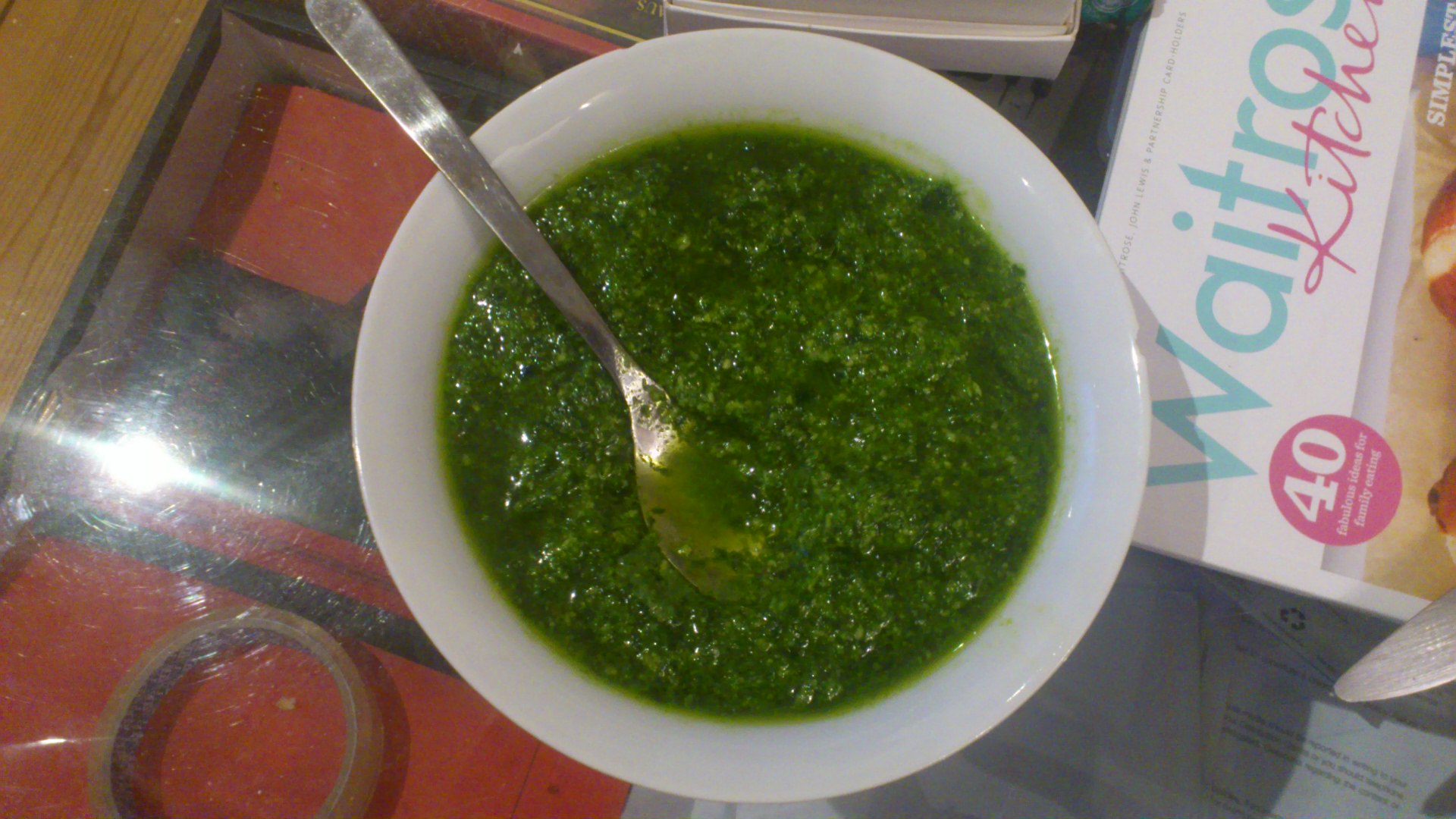
Wild Garlic (Ramson) and Walnut Pesto

Ruth’s hand mid forage

Another hedgerow classic via our Beach House brother, Dan. This recipe was originally taken from the great book, ‘Wild Garlic, Gooseberries and Me’ by the brilliant Dennis Cotter. I haven’t read it, but will hopefully be acquiring it soon.

This is a cracking little recipe, nice and quick to get together and you gain the infinite pleasure of cropping your own bunches of wild garlic (or ‘Ramson’ in some parts of the world), that are free and absolutely delicious.

The amazing thing about pesto, like most good things, it gets better with age (to a point!). An overnight stay in the fridge and POW, the flavours leap out at you.

We will be trying it tonight with almonds (we have a walnut shortage) and mixing it into some wholewheat penne. Yum!

Thanks and hugs to Dan and Ruth for their constant inspiration.

The Bits

100g wild garlic leaves, 50g shelled walnuts, 200ml olive oil, 40g Parmesan, salt, pepper

Do It

Add all ingredients to a blender and give it a good blitz.  A small food processor is best here, like the ones you would use to grind coffee.

Wild garlic and walnut pesto

Serve

We have pesto spread thinly on toasted oatbread, or mixed in with wholewheat pasta.

Foodie Fact

Interestingly China in the largest producer of garlic in the world, at 13 million tonnes of the stuff, followed closely by India (800,000 tonnes), then comes Egypt and South Korea.  France is not even in the top ten!

Dennis Cotter is an Irish veggie chef who owns the ‘Cafe Paradiso’ in Cork. His cookbooks and approach to all things veggie cooking are always fresh and very delicious.

Heres a link to a great little garlic producer in Scotland, the really garlicky company.

Categories: Dressings, Foraging, Friends of B.H.K, Local food, Recipes, Sauces, Snacks and Inbetweens, Wales, Wild food | Tags: , , , , , , , , , , , , , , , , , , , , , , , , | 2 Comments

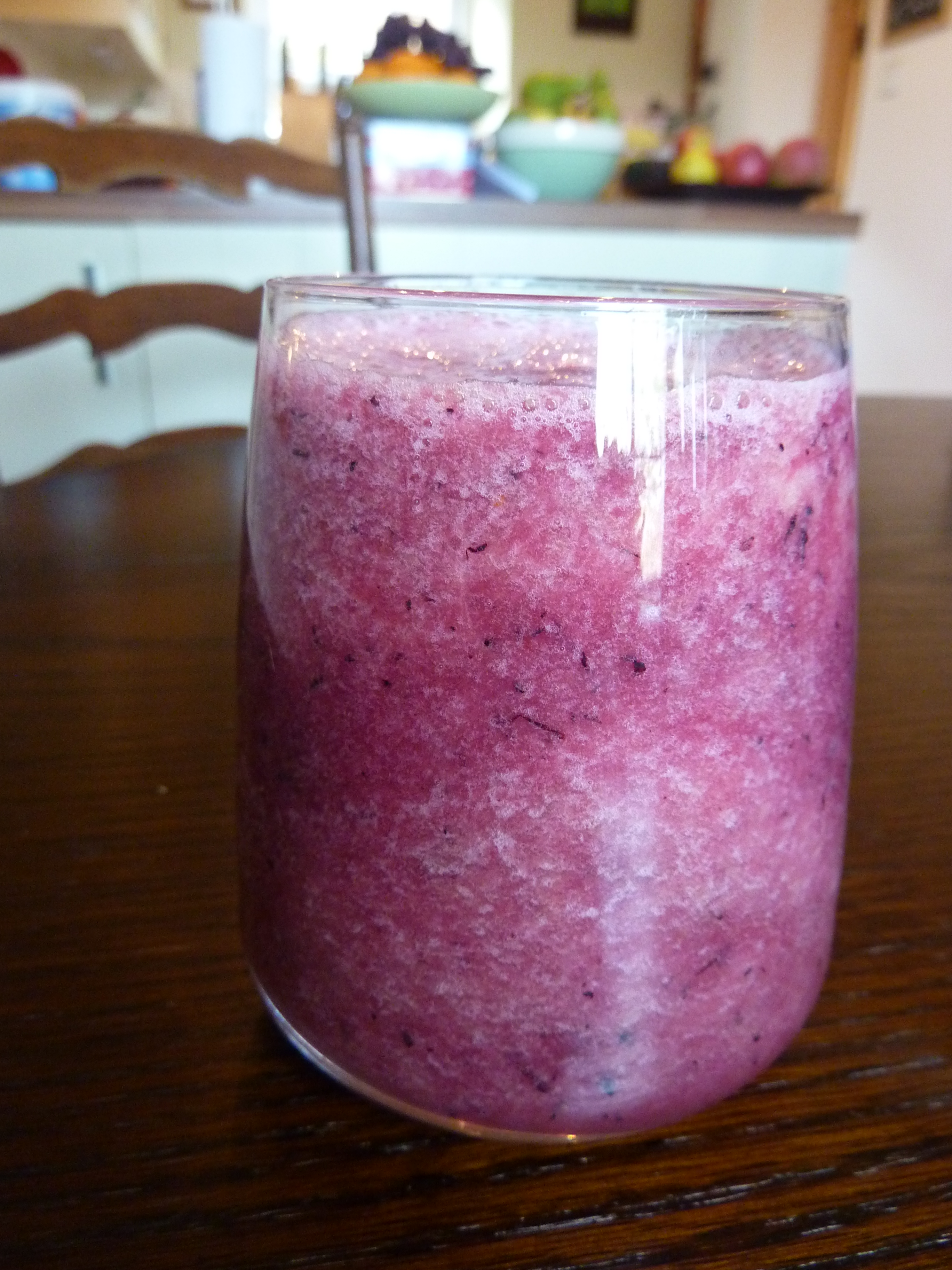
Pineapple and Blueberry Juice

Pineapple and Blueberries make happy

This mornings juice worked out a treat.  The sun is out again, which is a rarity and always cherished.  All the windows and doors are open as the Beach House breathes in the warm air.  It has been a long cold winter, we need all the sun we can get!

There has been a pineapple ripening on the window ledge for weeks now, getting nice and sweet, waiting for just such a day; when we can close our eyes and outside, drift off with the birdsong.  Maybe imagine that there are palm trees swaying above us and pineapples grow freely in the next field.  Instead its a fuchsia bush and potatoes that grow, but I wouldn’t change it.

I had the good fortune to stumbled across some luscious looking  organic blueberries (unfortunately not from this island) which will complement our lovely tropical friend, adding their vivid dark colour and nutrients to proceedings.

I  started the Magimix up and here the rest is here:

The Bits

Half a pineapple chopped into chunks, two good handfuls of blueberries.

Do It

Stick it in the Magimix, blueberries first, followed by the pineapple.  We always juice like this, always dense and concentrated first, followed by something juicy/ watery.   You will get better extraction of juices.

Pineapple and Blueberry Juice

Serve

Your favourite wine glasses!

Foodie Fact 

To grow pineapples all you need to do is chop off the top and plant it!  It does take years to grow (which heightens my respect for the fruit) and very tropical conditions.  Our pineapple tops add a tropical flavour to our compost bin!

Buster takes in some sun


Categories: Breakfast, Garden, Healthy Eating, Juices, Organic, Raw Food, Recipes, Relax, Vegan, Wales | Tags: , , , , , , , , , , , , , , , , , , , , , , , , | 2 Comments

Homemade Ricotta with Wild Garlic and Mint

Wild garlic and mint

I realise that I write regularly about making my own cheese.  It is something that I am quite fascinated by.  I have tried yoghurt and using live cultures etc, but it is difficult, especially due to the fluctuating temperature of our cottage (we only have a wood burning stove for heat) and the temperamental weather (British weather is utterly mental).  Live cultures etc don’t seem to like this, they are sensitive sorts.

Making ricotta requires non of this effort.  It is a fail safe method of making your own gorgeous cheese.  Not complex or pungent, but super smooth and creamy.  Every time.

This is a simple technique.  I would advise you seek out good quality, organic milk for best results.  Once you try it, you will not want to go back to the shop bought variety.  This is a real homemade treat that takes no time at all and actually saves you money.

I have mixed a few fresh herbs in here.  We had just picked some wild garlic, we took a wrong turn on Anglesey and ended up driving through a field of the stuff! The mint is beautiful looking, grown by the good people at Hooton’s Homegrown.  I walked into the kitchen this morning and was greeted by the wonderful aroma of these two and could not resist combining them with the cheese.

Ricotta means ‘recooked’ in Italian and is a so versatile.  It goes well in savoury and sweet dishes.  I love it with some warm oat bread and honey and it makes a delicious base for pasta sauces, we have also used it with dark chocolate for dessert (see here).   This ricotta recipe is excellent as it can be stirred directly into warm pasta.  It is basically a great thing to have in the fridge.

I am sure that this is one of those cooking techniques that you will use again and again. You can even make paneer, just use the same method but use a semi skimmed milk (the ricotta uses whole milk).  See a recipe here on the brilliant Kolpona cuisine blog.

There is no waste here.  After the curds have formed, drink the whey.  This is packed full of good protein.  It’s the same stuff those muscle bound freaks buy for inflated prices (and biceps!).  The whey can also be used in cooking, its great in stews, soups and even breads.

Cheesecloth had always eluded me.  I had heard of this mythical fabric but never owned any.  I have resorted to all sorts of strange methods to compensate for it.  I mentioned this to Jane and in her ever thoughtful fashion, she bought some in a little shop somewhere in Yorkshire.  I am now the proud owner of a metre square.  Thank you honey!

The Bits

1 litre of good whole fat milk (makes enough for a decent sized ball), juice of 1 lemon or 2 tbs cider vinegar (or any distilled vinegar), 1 teas sea salt, 1 handful of wild garlic, 1 handful of fresh mint, 1 piece of muslin/ cheese cloth.

Homemade ricotta with wild garlic and mint

Do It

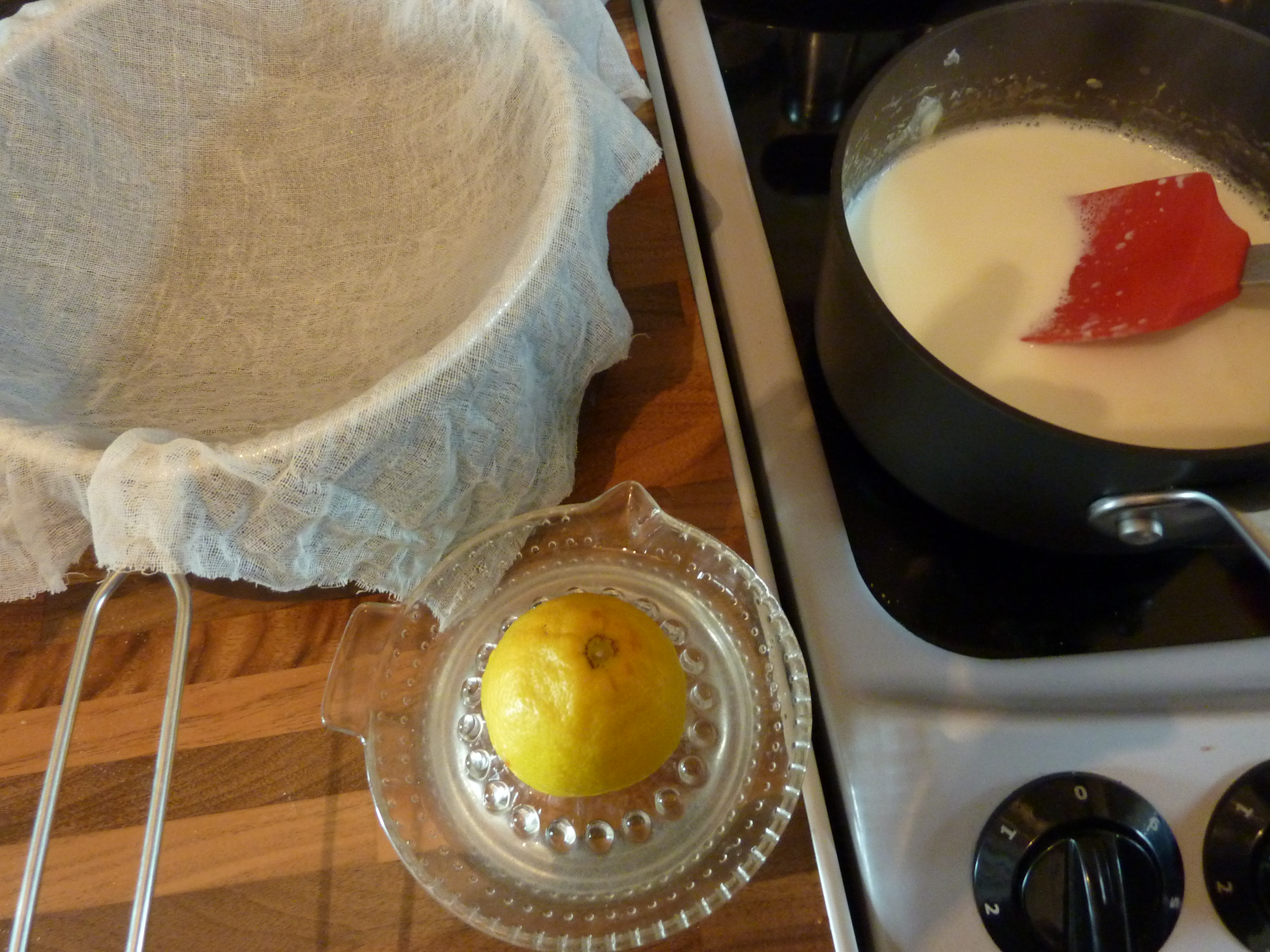
Heat the milk in a pan gently until it is steaming and small bubbles are forming around the edges, do not boil.  Add the lemon juice of vinegar, then stir a couple of times to mix.  Take off the heat and leave for 5 minutes, allowing the curds to form.  Line a medium sieve with your cheese cloth and place over a bowl.  Gently pour the milk/ cheese through the sieve and allow to drain.

Making the cheese

The longer you leave it to drain, the drier the cheese.  Think about what you would like to us it for.   I recommend leaving it for around 10 minutes.  Cool and cover, place in the fridge, it be good for around a week.

When the cheese is fully dried, chop your herbs finely and mix in with the cheese.  If it is proving to be too dry, mix in a little olive oil to get things lubricated.  Taste the cheese, add more salt if you like.

Using vinegar will give a cleaner flavour, lemon will make it slightly lemony.  Again, it depends on how you would like to use the cheese.

Serve

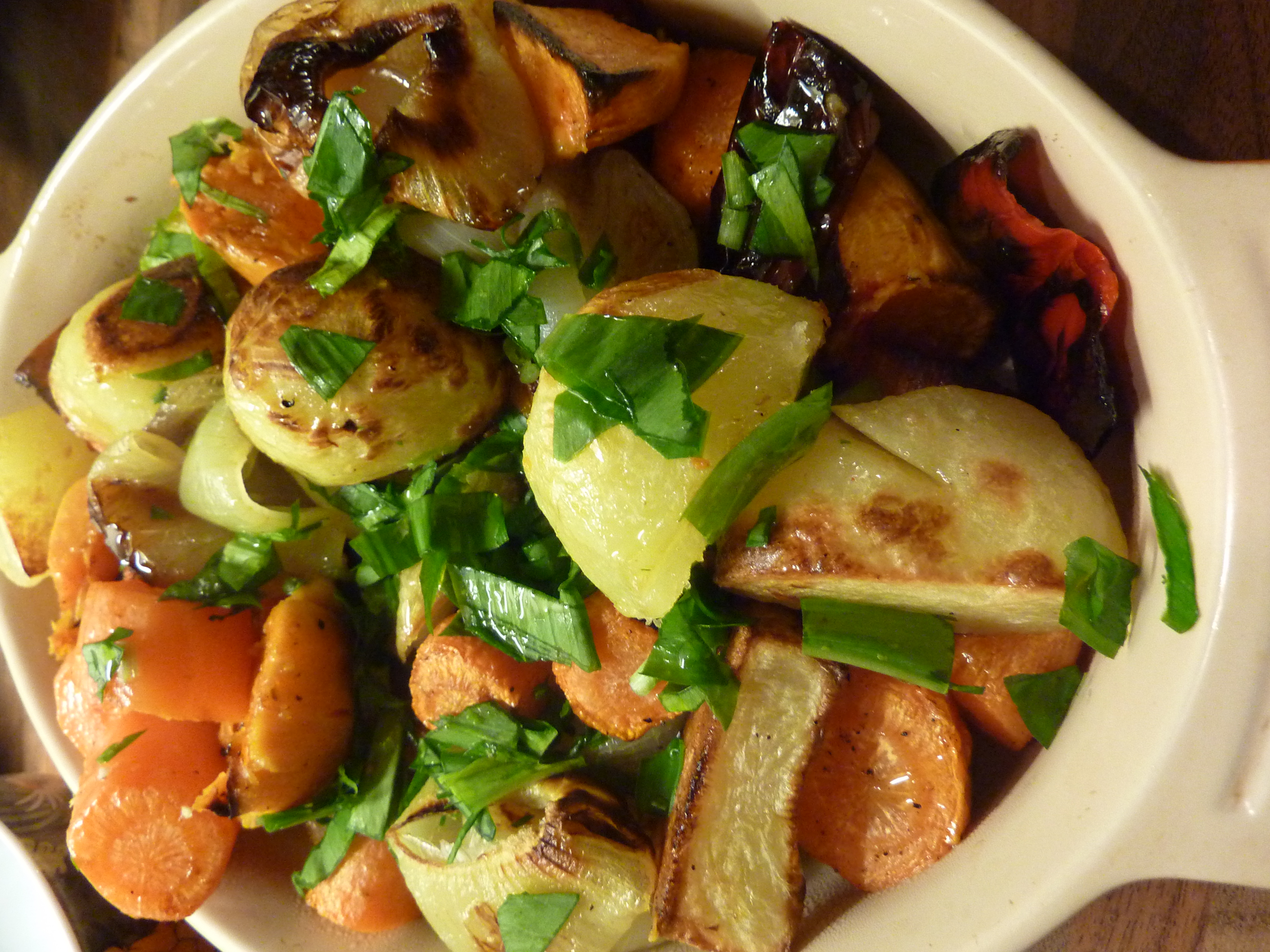
We had ours mixed into roasted root veggies, with our Sprouting Spring Salad.

Roasted root vegetable

Foodie Fact

You can use goats milk for the ricotta, it will be more tangy.  In Italy they use alot of sheeps milk, which is very smooth and creamy and of course the famous buffalo milk, which is equally as good.  It is fun to experiment with different milks.  I have to say, I like the ricotta we get from local Welsh milk.

Calon Wen Milk

Pickled Part

You can’t beat a crisp dry white wine with a fresh cheese like ricotta, something to cut through that awesome creaminess and get your palate sparkling.  We had a lovely Chilean Sauvignon Blanc which worked a treat.

Categories: Local food, Organic, Recipes, Snacks and Inbetweens, Wales, Welsh produce, Wild food | Tags: , , , , , , , , , , , , , , , , , , , , | 7 Comments

May’s Coffee Challenge – Welsh Coffee

We love Wales and feel that the local produce and suppliers just don’t get  the credit they deserve.  There are some amazing producers, doing amazing things with amazing ingredients!  In a way, we are lucky, because many of these Welsh gourmet types are not well-known.  We have them all to ourselves!  One such producer are the good people at Welsh Coffee.

Welsh Coffee

Welsh Coffee are a company from South Wales, producing fair trade coffee in small batches.  They pride themselves on intense coffee that is ‘roaster’ fresh and superior quality.

This month I am dedicating myself to transforming my dining area into a bijou cafe, serving the finest roasts and if I am lucky, a warm piece of Carrot and Bean Cake (see following post).  This is going well, a little Parisian music in the background, some attractive flowers, a nicely cushioned chair, there is just one thing missing, other people.  The atmosphere is a little subdued.

So ‘Builder Steve’ came over yesterday to look at our gable end (we are having damp issues) and I invited him to join me in the newly opened Beach House Cafe (not dissimilar to our dining area with a few bags of coffee scattered around the place) .  He’s a good coffee drinker and likes it black, which to me, is always a good sign.

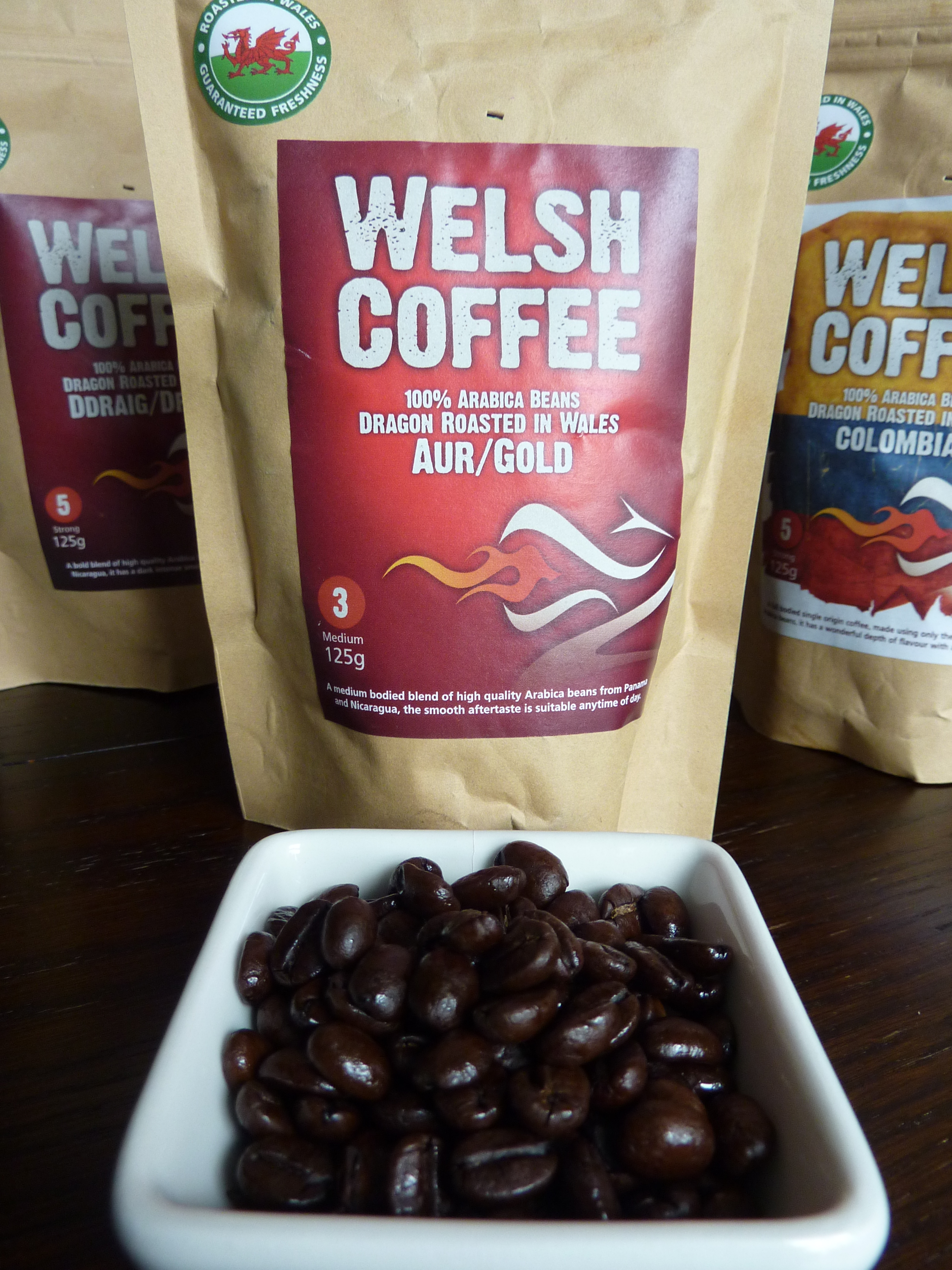
‘Builder Steve’ is a local legend and one of the most philanthropic folk you are likely to meet.  I decided to crack open some special beans that I’ve been saving for just this kind of moment, our Welsh Coffee Aur (Gold), dragon roasted in Wales from 100% Arabica beans.  I had a feeling this was going to be one hell of a brew…..

Nicaraguan and Panamanian Beans

I ground the beans up, they were dark and shimmering and formed a lovely almost black powder.  The smell of fresh coffee filled the hours for hours after.   The beans for the Aur (Gold in Welsh) coffee are sourced from farmers in Nicaragua and Panama, two countries that we love.

I left it to brew for 5 minutes in our trusty orange cafetiere, the smell was intoxicating.  This dragon coffee is powerful stuff!  It produced a coffee with a deep colour and incredible aroma.  It is medium bodied with a balanced and smooth aftertaste.  This is the kind of coffee that can be enjoyed at any time, anywhere, anyhow!

(A short Welsh language lesson.  Coffee is Coffi in Welsh.  Which is one of the only words I can easily remember.  My Welsh speaking in developing slowly.  I also know the word for Taxi, which is Tacsi.  Poor show really.  I hope to get to some classes soon.  The first Welsh I actually learnt was via a band named  ‘Ffa Coffi Pawb’ (translated ‘Everthing’s Coffee Bean’), this was Gruff Rhys, lead singer with the Super Furry Animals, second band.)

‘Builder Steve’ and I chatted for a while, we talked of wrestling sheep, nuclear war heads being stored in the next village and the sin of damp rendering.  It was almost like a normal cafe experience.  Steve agreed that it was a ‘seriously good’ cup of coffee and a definite step up from the Nescafe he normally drinks on site.  I took this as a glowing reference for these lovely Welsh roasted beans.

Welsh Coffee – Aur (Gold)

Categories: B.H.K Reviews, Local food, Wales, Welsh produce | Tags: , , , , , , , , , , , , , , , , , , | 3 Comments

Beach House Kitchen voted for a ‘Kreativ Blogger Award’

This is a beautiful thing, fellow bloggers VegHotPot and Lucy’s Friendly Foods have nominated us for a Kreativ Blogger Award.

We are understandably chuffed to receive such a kind nomination from two top bloggers.  I love their blogs, so it’s extra special that they like what is going on in the Beach House Kitchen.

The Kreativ Blogger Award is designed to get good bloggers together and spreading the word about each other.  I think it’s a top idea.

Here are the rules:

  • Thank the nominating blogger and provide a link to that blog.
  • Spread the love by nominating seven other bloggers, including their links here.
  • Tell your readers seven things they may not already know about you.
Here goes……………

Seven Blogs we like (alot and in no particular order):

We have only chosen food blogs (for obvious reasons) and only ones that are relatively new.  There are some amazing, established food blogs, but they seem to be doing just fine…..

I think some of these blogs may have been nominated before, but you can never get too many nominations for being Kreativ (can you?!)

1)  Byzantine Flowers  –  Brilliant for all-rounder for all things wholesome and organic.  Interesting articles all the way here, one of the sites I visit regularly.

2)  Vegetarian Ventures  –  The photos here are nearly as beautiful as the veggie recipes.  Lovely looking blog and well written articles.

3)  Moel Faban Supper Club – Denise’s blog is always an interesting read, a real foodie’s blog.  Our local Welsh supper club and a champion of local and seasonal produce.

4)  Tofu and Flowers –  Abigail gives us a real flavour of Thailand here.  Great stories and pics.

5)  Peas and Love –  Gwen’s blog ever fails with gorgeous looking veggie and vegan bites.  You will also find things ‘freegan’ bits here.

6)  AlmostRawVegan  – Great inspiration here for our coming Raw food month in June.  A lovely looking site with brilliant smoothie recipes.

7) Emmycooks –  I just love the way Emmy cooks!

Seven interesting things about Jane and I (again in no particular order):

1)  We met on a small island beach in the Philippines, I was accidentally evicting Jane from her room at the time.  Jane was suffering from horrific facial sun burning (known as panda bear eyes).

2)  Our first meal together was a tiny plate of cold veg fried rice, cooked by a disgruntled Belgian fella wearing tight trunks with Kraftwerk blaring from a stereo.

3)  Jane was initially attracted to me because I had several pots of yoghurt stashed  in my rucksack (a very impressive feat in Asia)…..

4)  ….I used these yoghurts to woo Jane at breakfast, atop coconut and mango porridge, cooked in a bamboo hut.  The rest is culinary history………..

5)  I flew all the way from Mumbai to be with Jane in the Beach House and set up the Beach House Kitchen (giving up a lucrative career in dodgy English teaching in Hanoi!!!).

6)  Jane is addicted to potatoes Lee is partial to a bean.  You will always find hummus in our fridge and oatcakes in our pockets.  Jane also likes hunks (of mouldy cheese).

7)  The population of Carmel, our village, is around 90 and has approximately three sheep to one person.  These sheep terrorize us with their munching and are an enemy to all raspberry patches.

Thanks to Becky and Lisa for the nominations and happy blogging to one and all.

Lee and JaneX

Categories: Blogs, Healthy Eating, Organic, Raw Food, Vegan, Wales, Welsh produce | Tags: , , , , , , , , , , , , , , , , , , | 5 Comments

The B.H.K Garden Photos – Spring and Seeds

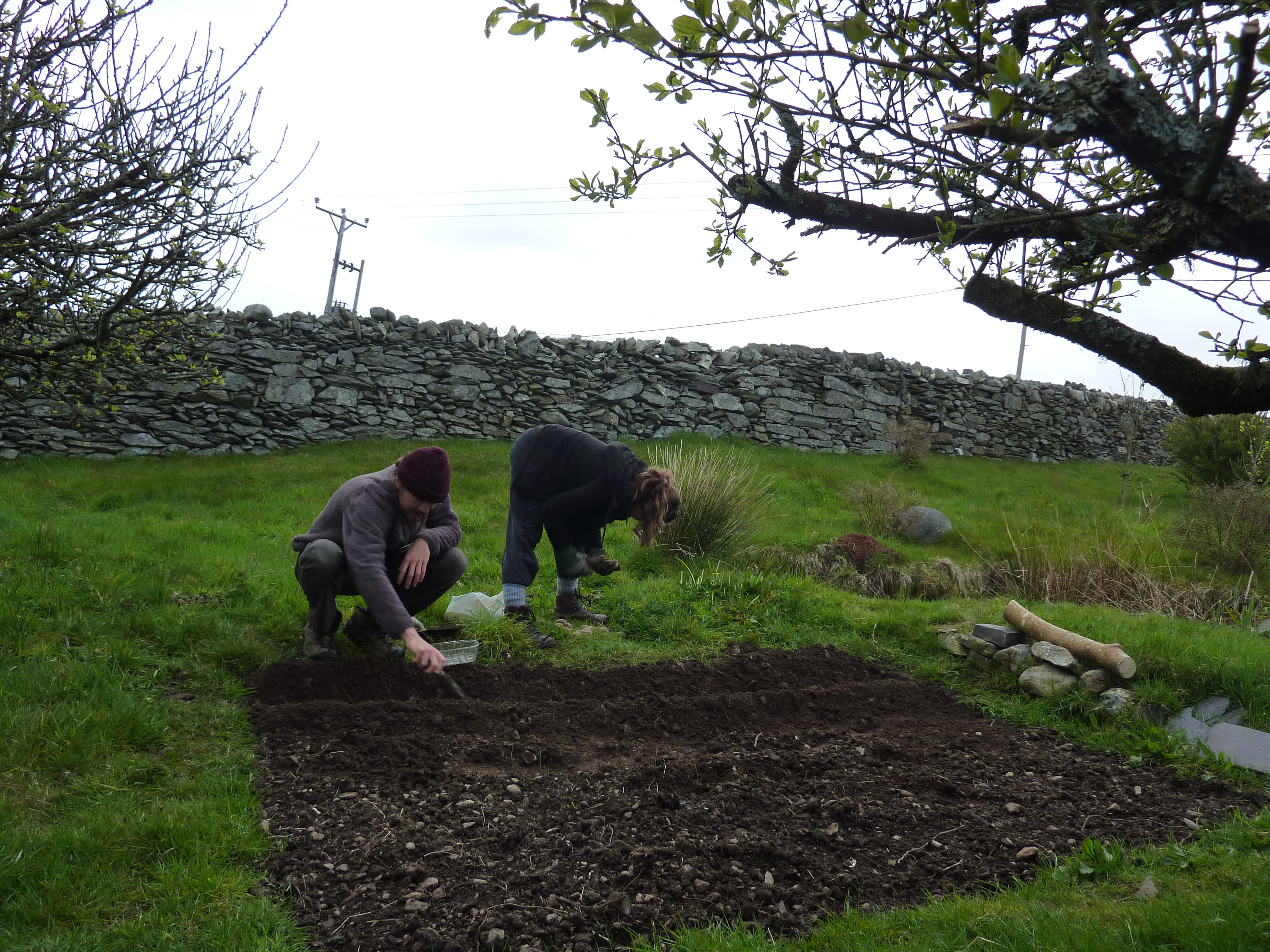
We hit the patch. 4 types of potato in furrows, blue, white, red and knobbly.

April in the B.H.K. garden has seen much activity.  Mainly we have chopped wood for next year, but we managed to squeeze some gardening in also.  

We are following organic practices , with a little biodyamic thrown in (new moon and all).  The veg patch has been turned several times, with piles of local horse manure from the adjacent field and four different types of potato have been planted.  Pete at Trigonos Farm, Nantlle, kindly donated the seeding potatoes (some just sprung to life in our veg basket!).  We have blue, red, white and knobbly.  One day I will learn the names of them.

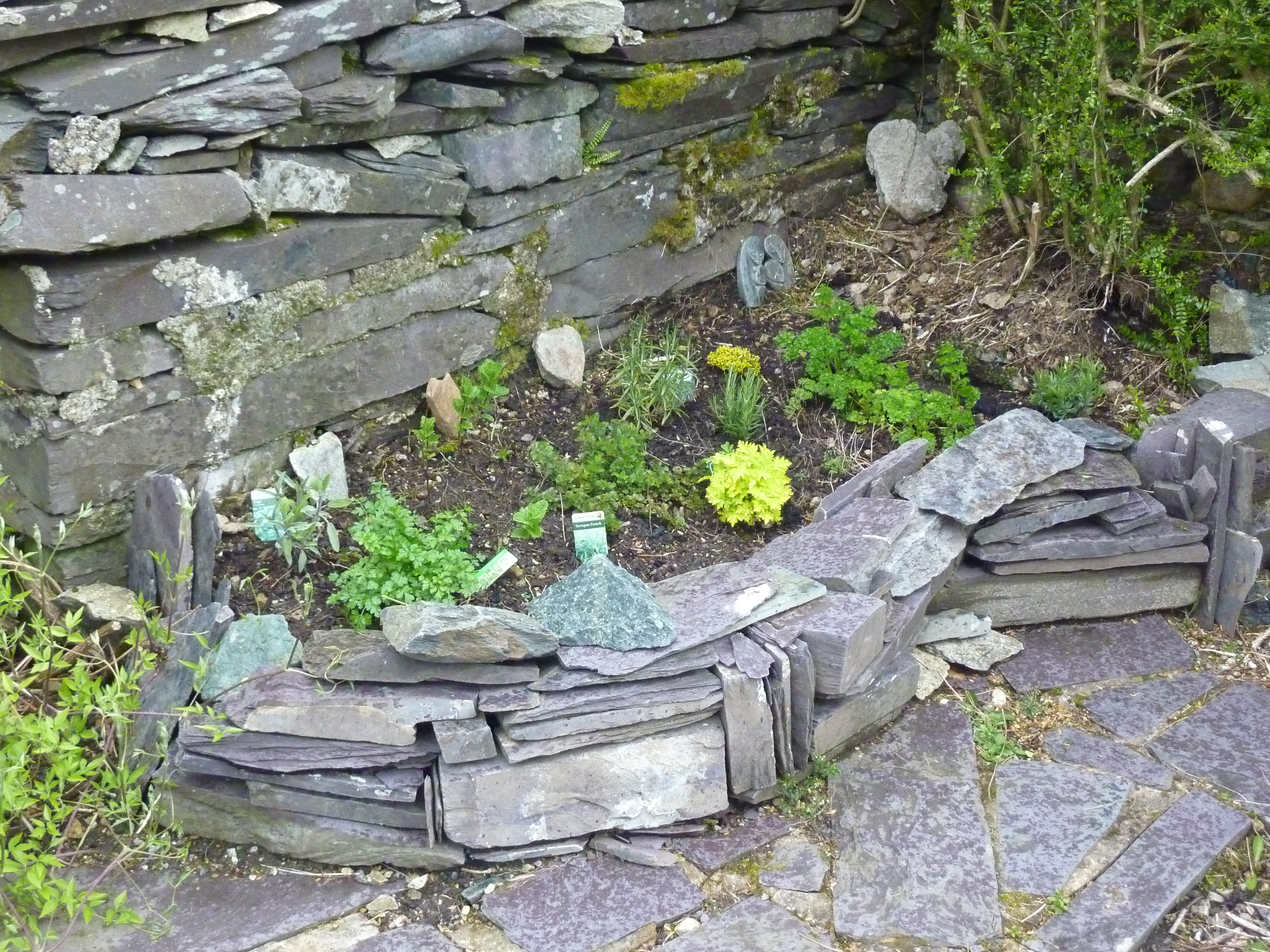
The front garden is full of herbs and four different types of latin american bean.  We hope for great things from the latin bean patch this year.

We also expect lots of flowers, some wild strawberries and the regular marjoram infestation.  The slugs are happy, but we plan on trapping them in underground cups with beer in.  Slugs like beer!  Get them tipsy and they seem to lose interest in plants.  Probably opting for a kebab instead.  

The newts have returned to the pond and the frog spawn seems to be wriggling even more.  Bring on the frogs!

We have a dodgy looking gang of sheep hanging around our back wall, but we have reinforced the defenses and hope to keep them out this year.  Apparently they like to walk along the walls and eat all things green.  The are also very dim and noisy.  

Breaking news – beetroots, green beans and leeks are rumoured to be on the way.

We are keen amateurs at best in the garden, any tips would be greatly appreciated.

Here’s hoping for zero food miles soon! 

Happy plantingX

Beach House herb garden circa April '12

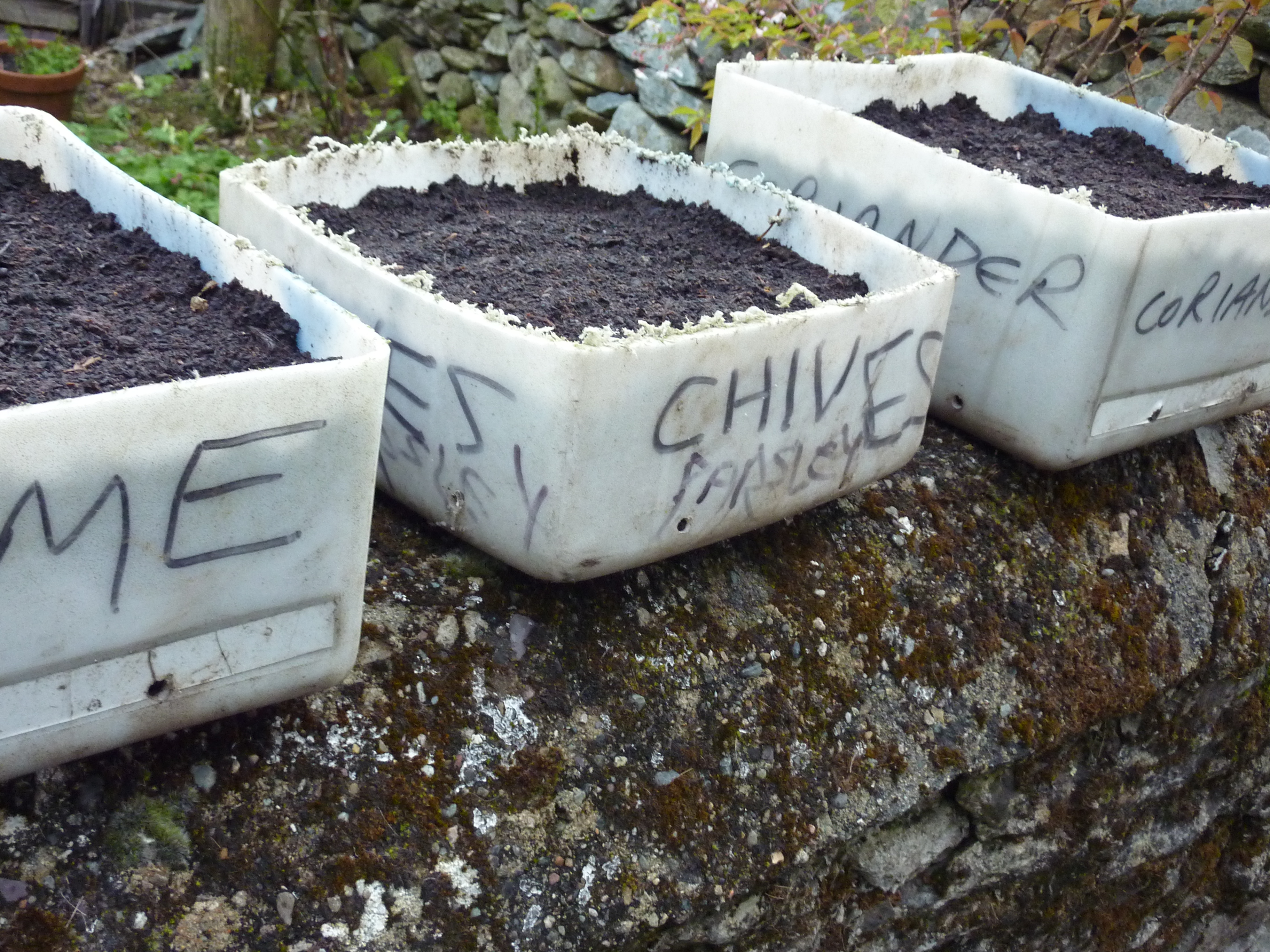
Our seed trays (formerly traffic cones)

Jane puts her back into the spuds

The local beige tree frog

Happy cook with the sun on my face.

Categories: 'The Good Life', Garden, Healthy Living, Local food, Organic, Wales | Tags: , , , , , , , , , , , , , , , , , , , , | 4 Comments

Ernie’s Easter Eggs

The 'Ostrich' Easter Egg

Happy Easter!

A nice time of year, but it does seem strange to still have snow on the ground.

I woke up this morning to find a psycedelic goose egg on the kitchen table (Jane had been up to some late night craft scribbles) and a nice slab of cherry chocolate.

Which triggered memories of my own egg painting days.  I once won a prize at school for dressing an egg up as superman. Which remains one of my highest accolades in the field of art (and tailoring).

Being Easter, we have eggs on the mind.  Not chocolate though, Ernie’s eggs. Ernie is an old navy captain who lives with his dog Paris and a garden full of ducks, drakes, geese and chickens.  It’s a proper cottage menagerie.

Some of Ernie's Bantam Eggs

Ernie’s fowl seem to like the sun and springtime snow, they are popping eggs out at an incredible rate, meaning an abundance for the Beach House table.
Ernie lives just down the way and has recently recovered from a broken hip that he injured whilst delivering our Christmas card. We do live on quite a steep hill!

Ernie’s cares greatly for his birds, they run around semi-wild, eat fine grains and are housed in a selection of well appointed coops.  You can see it in the eggs, which are really rich with brilliant yolks.  Perfect for soldier dipping (‘soldiers’ are slang for sticks of toasted bread, to avoid any unnecessary military confusion).  The first time I saw one of his goose eggs, I was sure he had a ostrich tucked away somewhere.  They are huge!  We haven’t eaten one yet (it’s the weight of around five hens eggs) but apparently they are good for baking. Goose egg brownie?!  I may crack it tomorrow, I’ll keep you posted.

We may not have a shop in the village, but at least we have an Ernie.

Lots of Easter love from the BHKXXXXXXXXX

P.S. – If you’re in Carmel, it’s 6 Duck Eggs for a pound.  Bargain.

Categories: 'The Good Life', Baking, Breakfast, Local food, Organic, Wales, Welsh produce | Tags: , , , , , , , , , , , , , , , , , | Leave a comment

Purple Moose Brewery (Bragdy Mws Piws) – Our local brew

http://www.purplemoose.co.uk/pmb_home.htm

I have encountered few better pints in my time and never a Purple Moose.  These are delicious ales, some of the finest in Britain, making them the finest beers in the world (or am I slightly bias?!).

Purple Moose are lovely folk brewing an award-winning range of beers just down the road in Porthmadog, North Wales.  They brew four ales throughout the year with regular specials, available to buy in bottles or by the cask.  We have been looking for an excuse to buy a whole cask for the Beach House!  Anybody fancy a barbecue?

Purple Moose beers are always interesting and full of character, reflected in the brew names which started with ‘Startled Moose’ and also include such classics as ‘Dark Side of the Moose’ (they are Pink Floyd fans), ‘Madog’s Ale’, ‘Myrica Gale’, ‘Old Wobbly Antlers’ and at Christmas time ‘Merry X-Moose’.

The ‘Myrica Gale’ is particularly interesting, brewed with Halletau Hops and Welsh bog myrtle this is a brilliant, malty dark ale which has hints of Marmite.  The Myrtle adds an almost aniseed-y flavour.  You won’t have tried anything like this.

I love my dark ales and stouts, so the ‘Dark Side of the Moon’ is a real winner.  Described as ‘chestnut-hued, malty, nutty and chocolaty’.  It has recently won a golden fork at the Great Taste Awards 2011.  With the temperature rising, I hear there is a summer elderflower pale bitter coming.  I’m getting thirsty.

The Range

‘Purple is my favourite colour and everyone loves a moose, don’t they?’ says Lawrence Washington the man behind the moose.  It all started as a little jokey ‘brand’ being brewed in Lawrence’s home.  He thankfully decided to make these beers on a commercial basis in a former saw mill.  Six years on and they have recently celebrated their 1000th brew.

What I love about real beers, wines, foods etc like Purple Moose is the tale behind them.  There is always an interesting human story behind all quality produce, normally a tale of passion and commitment that defies logic and reason.  You have to be slightly nutty to commit your life to good beer, cheese,  carrots etc.

We are not drinking much alcohol at the minute, which makes us savour great beer even more.  We are incredibly lucky to have the Purple Moose just down the road.  They never fail us for quality beers and quirky names.  If you can’t get hold of Purple Moose locally, you can now buy cases on-line.

Iechyd da! (pronounced ‘Yechidda’, Welsh for ‘Cheers!’)

Don’t just take our word for it, see the Purple Moose trophy cabinet here:

http://www.purplemoose.co.uk/pmb_awards.htm

Foodie Fact

Real ale contains folates, which are good for the brain, heart and bones.

Categories: Local food, Treats, Wales, Welsh produce, Wine and Booze | Tags: , , , , , , , , , , , , , | 2 Comments

Blizzards and Viruses hit the Beach House – 4th April 2012

Snow hits the Beach House

4th April, a reasonably interesting day at the Beach House

The golden sunlight is pouring through the window now and spring is in the air, which is normal at this time of year, except there is a foot of snow on the ground.
Yesterday we woke to a fierce blizzard. We live half way up a mountain, above the snow line and facing the Irish Sea. We are well used to storms and high winds. Yesterday was different, the telephone lines were humming like a badly tuned bass guitar and the thick snow fell horizontally at roughly 60 mph. It was a little hairy!  In April.
We lit a fire and went to turn on the kettle, but there was no power. No tea. Dear God, it was an emergency. Really, it was nice to be taken out of our comfort zone for a while, we sat and listened to the wind whistling, released from the digital world and free from any concerns of ‘doing’ things. We were snowed in, a great excuse to unwind and let life drift on by.
We imagined the whole area to be doing the same, but came to realise that this blizzard was only affecting our village! (Population negligible).  Two miles down the hill, in Penygroes, they were enjoying a pleasant spring day whilst we battened down the hatches (put extra socks on) and struggled on, without even a hot beverage.
The electricity came back on and eventually we were dragged back into the ‘e’ world, we had bits to do on-line. I turned my little Filipino laptop on, opened an email and promptly contracted a virulent virus. Quite a special virus named the ‘Windows Custodian Utility’ which set about crippling me in an electronic fashion. Apparently it is very new and clever, which in some perverse way made me feel privileged.
It has only just left me, after many consultations with our ace techno neighbour Mark and no doubt a huge slice of luck. I have been bashing it with as many scans as possible for two days.  Be gone you vile worm!
So here are some pictures of snow in April, falling on the fresh blossom of our garden and prompting us villagers, more so than ever, to bemoan our weather (we normally live in thick fog) yet secretly be fascinated by the unpredictable nature of this funny little island.
PS – If you are unfortunate to get this virus, drop me a line, I am now an expert at killing this persistent little sucker.

The day after up at the stone circle, overlooking the Nantlle Valley.

Categories: Wales | Tags: , , , , , | Leave a comment

Amazing Salts! Halen Mon Sea Salt, Anglesey

http://www.halenmon.com/

I am still relatively new to the north Wales area and am just getting to know a few like-minded people and producers.  I have recently met a few ‘foodies’ up in these hills and they all rave about the local produce, normally mentioning Halen Mon Salt from the Isle of Anglesey.  I have rarely seen people so passionate about their seasonings!  Heston Blumethal and Barak Obama are converts.  I felt compelled to know more.

Halen Mon is definitely our kind of supplier, the business started with a pan of sea water being heated on the Wilson family stove.  Now, a few years later, they are suppling top restaurants and chefs around the world.

Having gone off salt for a while, figuring that the food we eat contains enough of it, Halen Mon Salt has made me realise that a pinch of good seasoning can make all the difference.  Like anything, quality matters.

Their salt is made with charcoal filtered seawater that has passed through a mussel bed and a sandbank!  Sea salt is simply made by heating the water and drying until crystals form.  They are then washed in brine to make them shine.

Halen Mon have a fine selection of salts made by a lovely bunch of people.  We have been using a selection of them in our cooking.  The celery salt adds a distinct flavour to light salad dressings and the Tahitian vanilla salt compliments dark chocolate perfectly (see our ‘Bitter Chocolate Ricotta’ recipe).  I have used their ‘Welsh Oak’ smoked salt on roasted vegetables and haloumi and the flavour is delicious.

Our favourite salt recipe at the moment is spiced nuts, using their ‘Sea Salt with Organic Spices’.  Mix a few pinches of the salt with hot oil in a frying pan, pour in a selection of your favourite nuts and bake in a medium over until well roasted (15 minutes or so).  This salt can also be used to liven up the humble roast potato.  Having a range of salt like this in your larder increases your creativity as a cook.

The Halen Mon site has some informative, unbiased info on the pros and cons of salt in your diet (http://www.halenmon.com/faq.aspx).  Basically cut out the processed food made in factories and cook your own, with a sprinkle of Halen Mon to bring out the flavour.

Quality sea salt is pure and contains non of the anti-caking agents and other dodgy additives found in normal table salt.

Halen Mon is the finest salt I have tasted.  I love using it in dishes with a subtle flavour.  Salt is something that we normally just throw into food, every time I use Halen Mon, it reminds me of the importance of each ingredient in a dish.

The Beach House overlooks the Irish sea, which is blue today under bright sunshine,  we are very lucky to be using such brilliant produce made from that very water.  Without producers like Halen Mon, cooking would be so much duller and our food certainly less tasty.

Beach View, the beautiful Irish Sea

Categories: B.H.K Reviews, Healthy Eating, Healthy Living, Local food, Wales, Welsh produce | Tags: , , , , , , , , , , , | 1 Comment

Photos – Winter hits the B.H.K.

This week it has snowed a little on the grey island.  Sending the country into the yearly state of mayhem.  We went for a nice walk near Snowdon…

Jane beside Nantlle Lake


Icicles

On the Snowdon Trail


The Snowdon Horse Shoe

The Grass

Categories: photography, Wales | Tags: , , , | Leave a comment

Blog at WordPress.com.