Nutrition

Creamy Peanut and Sweet Potato Curry

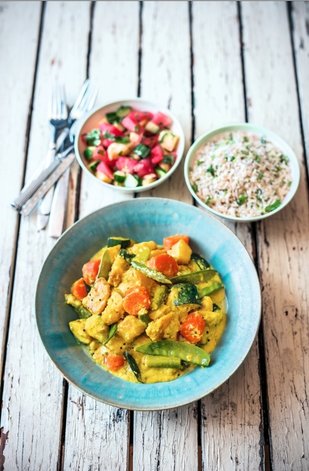
Creamy Peanut Curry with Sweet Potatoes (Vegan) Creamy Peanut Curry with Sweet Potatoes (Vegan)

This is not a fussy thing!  Not a gram (or lentil) of stress, just lots of spicy and sweet creaminess……the perfect dish to end Vegetarian Week. Twitter takes up a lot of time! I’ve been tweeting like a nutter this morning but its great to come back to the BHK. Blog-ville!

Here is last nights dinner which worked out a treat. Creamy and sweet with a hint of nuttiness and plenty of spice this is pure plant and packed with things to make you shine and go MMmmmmmmm……. This is a chunky curry, all made in the one pan for ease of preparation. We like to keep things whole food and don’t think this means loads or extra prep or time over the hob. There is no separate masala sauce making here, we just dive straight in and get maximum flavour and richness from the soya milk and peanut butter.

Jane and I celebrated my birthday on the beach and in the garden yesterday. A little belated as I’ve been busy promoting ‘Peace and Parsnips’ down in London and working at the Trig.  We quaffed a nice bottle of Sancerre and watched the sun slowly set from a rug near our stone circle (quite a cool feature of our garden!)  Pretty idyllic behaviour!  Our garden is looking wild and verdant at the minute, alive with the hum of big busy bumble bees.  You have to wait ages for a sunset at this time of year, we gave up at 9:30pm and retreated into the Beach House. I mention in the recipe that we like our veggies with a little crunch and must say that the pictures of the curry were taken alot later in the evening when the curry had sat and carried on cooking. They were well cooked by that stage (a bottle of wine can have a bizarre effect on cooking).

The Beach House Garden - Waiting for sunset The Beach House Garden – Waiting for sunset

NATURAL HEALING

Later we watched an interesting documentary ‘Sacred Science‘ about natural plant healing, straight from the shamans of the Amazon.  There is so much healing potential in the plant world, most of which we are unaware of.  This documentary opened our eyes to the potency of the natural world to heal even serious or terminal illness; cancer, parkinsons, diabetes etc.  The Amazon is tragically disappearing for a number of reasons, one of the main ones being deforestation for the growing of soya beans to fatten cattle for humans to consume.  Cutting out meat and dairy will have a hugely positive effect on the Amazon, safeguarding the plants that will one day, no doubt, be used more widely to cure illnesses that presently can only be treated with powerful chemical drugs with many side effects.

Shades view Shades view

A WORD ON WELSH WEATHER

(Always an interesting conversation in North Wales.  We had hail stones the other day like ping pong balls.  It sounded like the world was being pummelled with marbles!) Its been chilly up here in North Wales and the plants are taking it slowly this year. Basically, not growing. We are about to put our crop of seedlings out into the veg patch, but if things don’t get alot drier and sunnier, we fear stunted beetroots and shy cabbages. Come on SUN! Trigonos (is our local organic/ biodynamic veggie farm) is growing a load of veggies this year and hopefully soon we’ll have some local seasonal veggies to play with. At the minute we are turning to things like sweet potato regularly, primarily because they are one of the most nutritious (see ‘Foodie Fact’ below) and delicious things that could ever pass your hungry lips.

ULTIMATE SPINACH!

Jane makes me a mix CD for my birthday every year, last year we had the magnificence of ‘Wild Honeypie’ which contained alot of tracks from the awesome snowboarding movie ‘Valhalla‘. This years offering is ‘Hazy Daze’ and I’ve popped a couple of the tunes at the bottom of this post. To give you an idea of what we’re grooving to when peeling our radiant orange spuds. Its fair to say that ‘Ultimate Spinach’ are our new favourite band for so many reasons.

So, a simple curry which we hope you make with big smiles and eat with loved ones and laughterXXXXxx

Jane getting out little birthday picnic ready Jane getting our little birthday picnic ready – the Beach House Garden

The Bits – For 4

850g sweet potatoes (peeled and chopped into 2 inch chunks)

1 large onion (sliced)

1 large pepper (deseeded and cut into 2 inch chunks)

1 large courgette

2 large tomatoes (roughly diced)

1 chilli (finely diced) or 1/2 teas chilli flakes

2 inches ginger (roughly grated)

250ml soya milk

2-3 tbs smooth peanut butter

1 tbs vegetable oil

1 teas sea salt


Spices

2 teas cumin seeds

1 1/2 teas mustard seeds

1 teas fenugreek seeds


1 teas ground turmeric

2 teas ground coriander

1/2 teas ground cardamom or 4 cardamom pods

Just about ready - Curries up! Just about ready – Curries up!

Do It

In a large frying pan, warm the vegetable oil and add the spice seeds (only).  Leave them to fry and pop for 30 seconds and then add the onion.  Stir well and add 1 tbs of water if the pan is getting too hot.  This helps to prevent the spices from sticking and potentially burning.  Fry and stir for 5 minutes, when the onions are golden, add the ginger, chilli and sweet potatoes and cook for another 3 minutes.  Making sure you stir regularly.

Now add the ground spices to the pan, stir well and add the tomatoes with 2 tbs water.  Cover and cook for 5 minutes.  Now add the soya milk, courgettes and pepper, turn the heat up a little and bring the curry to a boil. Lower the heat and cover and cook for roughly 5-7 minutes, until the courgettes are soft with some crunch still.  If you plan on serving the curry later, cook only for a few minutes, the veggies will cook through when you come to re-heating the curry.

Just before serving, stir in the peanut butter.  If you really like peanuts, go for 3 tbs, 2 tbs will give a light, nuttiness.

Serve

Would be lovely with some freshly chopped coriander, brown rice and all your favourite curry accompaniments. A spiced chutney of some sort will be magnificent!  To add even more nutrition by adding a few handfuls of spinach to the finished curry and stirring them in.

Creamy Peanut Curry with Sweet Potato (Vegan) Creamy Peanut Curry with Sweet Potato (Vegan)

Foodie Fact

Sweet potato is one of our favourite ingredients.  Its such a treat in so many ways, just roasted in its jacket is something sublime.  Sweet potato (also called Yam) is grown all over the world, there are actually over 200 varieties.  The insides of these potatoes can be purple, cream, yellow, pink, white….  They are originally from Central and South America, one of the oldest foods known to man, nowadays the worlds largest producer is China. Sweet potato is one of the finest sources of beta-carotene, raising our Vitamin A levels.  Eating sweet potatoes with a little fat, i.e. the vegetable oil in this recipe, helps the body absorb the beta-carotene. These vivid tubers also contain lots of Vitamin C and Manganese.

Categories: Curries, Healthy Eating, Music, Nutrition, photography, Recipes | Tags: , , , , , , , | 3 Comments

Roast Squash and Pepper Soup with Baharat


Roast Squash and Pepper Soup with Bharat Roast Squash and Pepper Soup with Bharat – bowls of sun in The Beach House Kitchen

I’m conscious that on a day like today, Monday, time is more precious than at other times of the week.  I am very much, in the same boat.  I made tonight’s soup as easy as possible, but did not want to compromise on deliciousness!  The roasting part here adds unmistakeable sweetness and the bharat brings a spicy edge to the soup.

You may ask the obvious question, “but Lee, you are in a hurry and yet you take pictures of your food and write a blog piece?!”  It does seem like a strange way to behave, I admit this, but such is the ways of the food blogger.  We are those people in the restaurants who unabashedly whip out their camera when presented with a particularly nice slice of cake while the rest of the table pretend they aren’t with you.  Its a passion/ affliction.  Once you blog, you can’t stop……

We are in the middle of some very stormy and chilly days up here in the Beach House and soups seems like a very good idea.  I love the bright colour of this soup, with added radiance from the turmeric.  Its sunshine in a bowl and is a real lift when the sun is hiding behind the clouds.

rsz_p1250242

We’ve been celebrating a little after the release of ‘Peace & Parsnips’.  Jane and I took a trip down to Criccieth, a local beach and went down to Black Rock Sands for a proper bag of chips.  There is an amazing chippy in Porthmadog that we frequent on rare occasions.  Chips = celebration!  We sat on the flat sands, a rare place where you can actually drive cars around on a beach without the imminent danger of sinking like a stone.  Black Rock Sands reminds me of beaches in Australia, or what I imagine the tip of South Africa to look like. You can look out over maybe a kilometre of flat sand before you see the sea.  A truly beautiful place to scoff chips!

Us. Catching some well earned rays... Us. Catching some well earned rays on Criccieth beach

BAHARAT

Is basically a spice mix from the Middle East, as well as Turkey and Iran.  Although the ingredients may vary, some usual suspects are: black pepper, cardamom seeds, cassia cark, nutmeg, chillies, cumin seeds, coriander seeds.  The baharat we use is very much a Middle Eastern style, in Turkey they add a lot of mint and in Tunisia they make a mix with rose petals, cinnamon and black pepper.  There are an almost infinite number of combinations of spice mixes, but most of the baharat sold in large shops in the UK is similar.   More a warming spice mix than a turmeric or chilli driven one.

If you don’t have any Baharat around the kitchen, use the same amount of Rae El Hanout or Garam Masala.  They will add a similar spice kick to the background of the sweet peppers and squash.

This soup is as easy as roasting a tray of very roughly chopped vegetables and blending.

The Bits – For 4 small bowls

1 medium butternut squash – 1kg (cut into 1/4 lengthways)

1 head garlic (skins on)

2 yellow peppers (deseeded)

1 large onion (sliced)

3 teas bharat

2 teas turmeric

2-3 teas salt

Olive oil (for roasting and frying)


Do It

Preheat oven to 190oC.

Grab a large baking tray and rub a little oil over the squash and peppers.  Pop them in the oven for 20 minutes.  Rub a little oil into the garlic cloves and take the tray out of the oven and scatter the garlic cloves onto the tray.  Pop back into the oven and roast for another 15 minutes.  Take the garlic and pepper out, check to see if the squash is nice and soft, if not, put back in for another 10 minutes.  Set the garlic and pepper aside to cool, do the same with the squash once it is lovely and softened.

In a large sauce pan, add 1 tbs olive oil and fry the onion on a medium heat for 6 minutes, until translucent and soft.  While the onions are on, peel the skin off your peppers, garlic and squash.  Chop them all roughly.  Add the spices to your soft onions and stir for a minute, then add the squash etc.  Pour over 1 ltr of hot water and check seasoning (add salt as needed).  Leave it to simmer for 5 minutes before blending the soup with a stick blender or using a food processor (leave the soup to cool a little beforehand for this).

Roasted Squash and Pepper Soup with Baharat Roasted Squash and Pepper Soup with Baharat

Serve

A nice idea, for added richness is to stir some tahini into the soup.  Tahini is also packed with goodness, so nutritionally the soup becomes a real shiner.  If you are going all out tonight (it is a Monday after all!!!) chop up some coriander leaves and finish with little sprinkle of baharat.

Foodie Fact

Butternut squash is one of the healthiest veggies you can eat.  It is much lower in calories than potato and leaves you feeling nice and full after eating it.  Calories are of course only one part of the dietary picture, counting calories is definitely not our thing (big bags of chips and all!)  You can tell by the colour that its loaded with some good carotenes, which are ace anti-oxidants.  Squash is also good for vitamin C and is high in dietary fibre.

Our car off in the distance, Black Rock Sands, North Wales Our car off in the distance at Black Rock Sands, North Wales
And who can forget......CHIPS! And who can forget……the glorious CHIPS!
Categories: gluten-free, Healthy Eating, Nutrition, photography, Recipes, Soups, Vegan, Wales | Tags: , , , , | 2 Comments

Blueberry & Hemp Muffins (Gluten-free, Sugar-free)

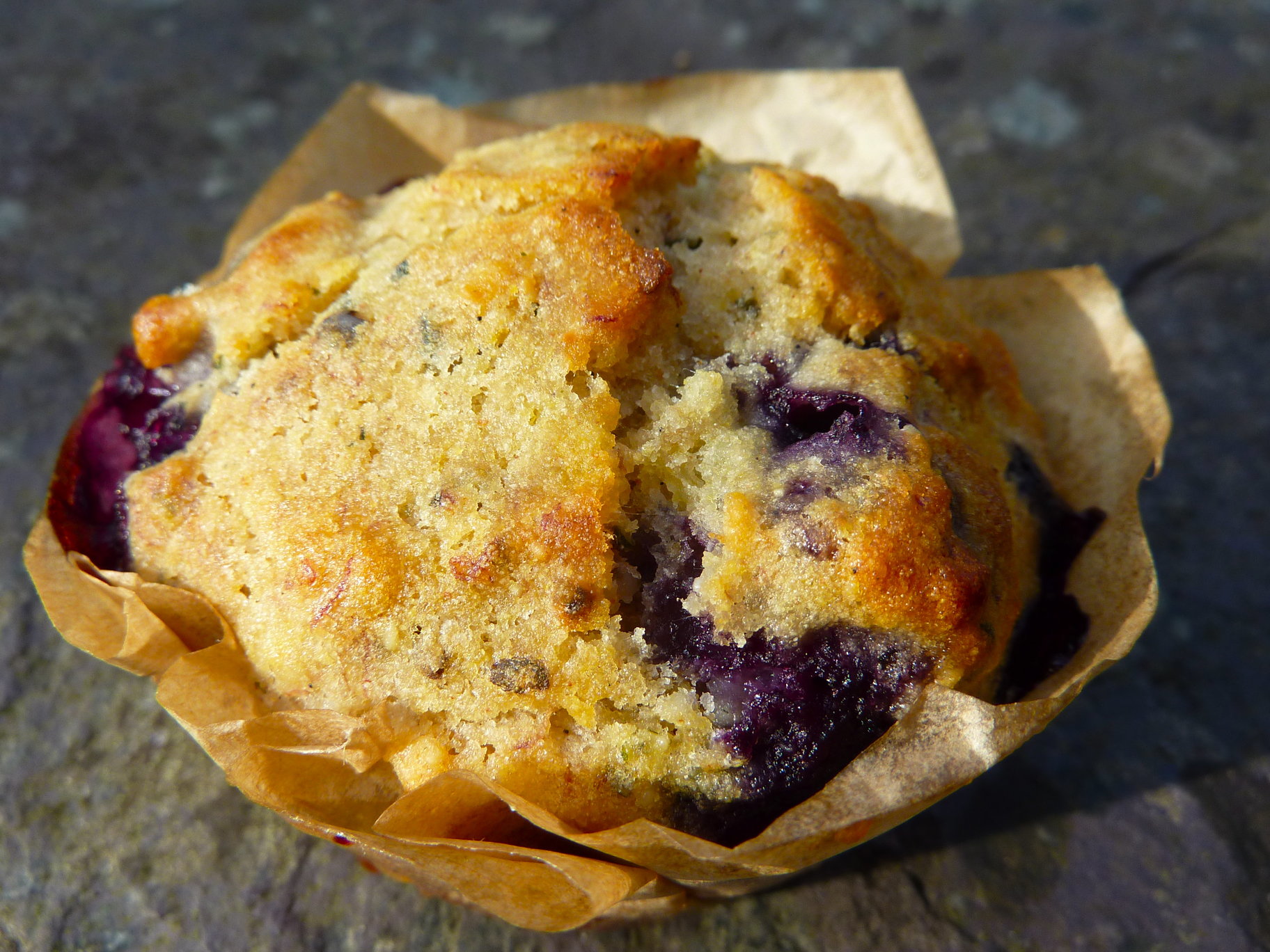
Mighty MUFF - Blueberry and Hemp Muffin (gluten free) Mighty MUFF – Blueberry and Hemp Muffin (vegan/ gluten free)

I love cooking with vegan and gluten free food.  It’s a challenge.  How can we make a muffin taste, look, feel as good as a ‘normal’ muffin without the things that can muddle our bodies.  So many people are giving gluten a miss, it seems like a good idea as many people struggle with it.  I love bread so I made a tasty loaf the other day using predominately ground sunflower seeds, it worked a treat.  I feel a shift, things are changing in the foundations of how we eat.  The next generational food norms will be very different indeed.  Gluten free and vegan will be as normal as fish and chips or black forest gateau.

I cook in a place called Trigonos, an idyllic retreat centre and organic veg farm.  It’s a blessing.  There I encounter all sorts of dietary requirements, every group that I cook for has a long list of specific dietary needs.  The most regular are vegan and gluten free (we are a pure veggie place), but there are so many people out there waking up to food intolerances and how they can hamper our wellbeing.  We are all unique and beautifully different, what works for me, might not work for you.  But eating less gluten and animal-based saturated fat can only be a good thing for our health.  That is a widely held, universal, food understanding.  So these muffins are nice…..  They can be enjoyed by almost anyone and there is no sacrifice in the taste or treat departments.

Nobody who eats these muffins would think they are vegan or gluten free.  They are really quite healthy but very delicious.  Any berry can be used here, depending on the season.  We managed to get some blueberries and I admit, they are one of my favourites.  The berries sort of explode in the muffins, creating lovely fruit pockets of happiness.  There is plenty of richness from the coconut oil and a little bit of bite from the polenta flour (very fine polenta that is, not the course grain stuff we use normally).

GLUTEN FREE BEHAVIOUR

We tend to make our own gluten free flour mixes, we still haven’t got round to making the definitive Beach House Bread Mix.  But its coming.  Banana helps with the binding here, but you can use stewed apple instead.  This is also very nice and works well when using blackberries in this recipe.  We’ll be doing his later this year for sure.  The brambles are already winding their wicked way all over the back of the garden and in Autumn, it will be an oasis for big, juicy blackberries.

FLAX EGG?(!)

Making flax eggs is so easy. Grab some flax/ linseeds and grinder them in a coffee grinder, blender, something like that.  You are looking for a fine powder, but a few whole seeds is absolutely fine.  You can also buy ground flax seeds or flax meal.  This can then be added to all baking shenanigans in order to add a very nutritious binding agent.  In the absence of eggs, I find them the best.  They even have a vaguely egg-like texture, very gelatinous and gloopy.  For 1 tbs of ground flax, I add 1 1/2 – 2 tbs water, stir and leave for a short time.  You’ll see the change very quickly.  Ground flax is also an amazing way of adding nutrition to your morning cereal, yoghurt or smoothie.  Ground flax also helps to make a substantial and chewy loaf of bread or pizza crust.  Fibre is so, so important to a healthy diet.  It cleans you out in more ways that one!!!!

See here for more about flax eggs and other vegan baking substitutes.

I love using hemp seeds although they are a little rare.  You could try sunflower seeds here, but the hemp seeds (hulled ones anyway) are so creamy and light.  They seem to blend into the muffin adding richness.  Sunflower seeds will be more of an  obvious presence.  Tasty non-the-less.  Hemp is a wonderful plant and is becoming more and more popular for its uses in making fabric and even paper.

On the beach, with a shell On the beach, with a shell

What with promoting our new book PEACE & PARSNIPS (out tomorrow I may add)  and cooking, cooking, cooking…..there seems little time to squeeze in blogging, let alone glorious beach walks.  Which is a shame.  We will hopefully get some more of our recipes up on the B.H.K very soon.  It is almost impossible to keep up.  I love writing about food, but I must say, I love cooking much, much more.  I’m an out of balance food blogger.  Forgive me!!!!  I just bought a new computer to replace my ancient little Filipino net book gadget, hopefully this will make me vastly more efficient.  You never know!

These muffins are light and fruity…..healthy and delicious….give them a whirl!!  All of your guilt-free dessert dreams are coming true….right here:

Fresh from the oven- THE SMELL! THE AROMA! (yum) Fresh from the oven- THE SMELL! THE AROMA! (yum)  PS – I ran out of mix so the top left muff is a bit wee

The Bits – Makes 6 muffins

50g gluten-free flour mix (brown is nice)

50g rice flour

25g polenta flour (not coarse polenta, it should be fine like flour)

(or try 125g of a pre-mixed gluten free flour)

30g hulled hemp seeds

2 tbs coconut oil (softened)

½ teas g.f. bicarb soda

½ teas apple cider vinegar

¼ teas sea salt

1 teas vanilla extract

1 banana (mashed)

4-6 tbs rice syrup (depending on how sweet your tooth is; I’m a 3 and Jane’s an 8 – on this scale)

30-50ml soya milk

1 flax egg (1 tbs ground flax seeds mixed with 1 1/2 tbs water and left for 15 minutes)

100g blueberries (or berry of your choice)

Do It

Set the soya milk aside and then mix together the dry and wet ingredients separately.  Then mix both together until just combined, adding the soya milk as need.  The batter should be sticky, but not wet.  Gently stir in the blueberries without popping any if poss (no drama if you do, they will have cool purple streaks).

Spoon the batter into oiled and lined muffin trays.  Use muffins cases if you like, I prefer cutting out squares of baking parchment, oiling them and using them.  They look far cooler.  Bake for 20 minutes or until a toothpick test comes out clean and not sticky.  Remember, a little moisture in a muffin is a good thing of course, over baking them would be a shame.  Use your muffin-sense here.

Leave to cool in the tray for 20 minutes before enjoying liberally with mugs of your favourite chai.

Blueberry and Hemp Seed Muffin Blueberry and Hemp Seed Muffin – Difficult to be this close without taking a bite…..

Foodie Fact – Flax Seeds

Flax seeds contain soluble fibre, a gel forming substance called ‘mucilage’.  This means that they are brilliant for slowing down the release of sugars into our bodies, helping us absorb more nutrients from our foods and resulting in us being fuller for longer.  2 tbs of flax seeds contains 4 grams of dietary fibre.

Flax seeds are also the very best source of lignans, which provide the body with anti-oxidant and fibre-like benefits.  In fact, flax seeds are actually higher in anti-oxidants (polyphenols) than blueberries!  Not bad for a little grass seed.

Flax seeds are also ridiculously high in Omega 3 fatty acids, probably the highest to be found in nature.  Omega 3’s help to keep our hearts healthy.

Categories: Baking, gluten-free, Healthy Eating, Nutrition, photography, Recipes, Vegan | Tags: , , , , , | Leave a comment

Braised Maple Parsnips with Young Nettles


Pan Roast Maple Parsnips and Young Nettles

Braised Maple Parsnips with Young Nettles

An ideal, quick and easy side dish and we are quite partial to the odd parsnip at the moment!  Throw some grains into this recipe (like millet or buckwheat) and a couple oh handfuls of walnuts or hazelnuts and you’re looking at a fine lunch.

Don’t let the bristly stings put you off, nettles are one of natures greatest gifts to Brits, they come just after winter and are packed with brilliant nutrients (see the ‘Foodie Fact’ below) that will help us get over our long winter blues. You can make them into a soup, stew, smoothie, pan fry them as they are; in fact these prickly lovelies are good in most things.  Nettle cupcakes may be pushing it however!

Nettles have a lovely flavour, quite unique, a little like spinach but with a unmistakable nettle tingle to them.  Nettles really feel alive, they are certainly a feisty plant and grow everywhere when given the chance.  The worst  thing you can do with nettles is cut them and leave them on the ground.  More will grow!  This is a good thing for us but can wreak havoc on your Dahlias.

HARVESTING NETTLES

Harvesting nettles is so easy, just handle with care.  We have been walking loads at the moment, reacquainting ourselves with all the local flora and fauna.  We normally stash a plastic bags in our pockets and use it for nettle picking.  A rubber glove, like a marigold or garden glove, can also be very handy.  If you are walking on a path, where people walk dogs, pick high.  For obvious reasons!!!  Some people even pick the nettle bare handed, apparently if you grab them quickly, it doesn’t hurt.  We have obviously not mastered this technique. OUCH!

Jane feeding our neighbourly horses - mid Nettle pick

Jane feeding our neighbourly horses – mid Nettle pick

Nettle season is coming to an end, but it seems that there are still many tender young plants around the Beach House.  Just pick the first four leaves down, anything below will be a little tough and coarse.  As with most leaves, don’t eat nettles when they have started to flower.  Something happens chemically and they lose their nutrients and become tough on the belly.

Fill your boots.  Now is the time of year to get your last batch of nettles and dry them for later in the year.  You can use dried nettles in soups and stews, but its really best as a tea.  Nettle tea is packed with nutrients and tastes delicious.  Free food!  We’d be silly not to!!!!  You can also make a load of tea and then cool it, strain it and keep it in the fridge and drink throughout the summer as an awesome, chilled infusion and full-body tonic.  Trust us, nettles are magic and will keep you shining!

One of the easiest ways to dry herbs, if you don’t have a dehydrator (they are becoming cheaper and more popular), is to lay your leaves out in the boot (for estates) or seats of a car and roll the windows up.  On a hot summers day, your herbs will dry out in no time at all.  You can dry herbs in a warm oven, but this can be energy consuming and hit and miss.  Sometimes they can burn.  Ideally, you live in a hot and dry part of the world, where drying means putting things outside in the sun.  In Wales, we have to be a little more creative!

I like to add a little lemon juice at the end, just to lift a little of that intense sweetness.  It gives a bit of a sweet and sour finish to the dish.  If you love sweet things straight up, you don’t have to bother with the citrus.

The Bits – For 4 (little plates), 2 (big plates)

5 medium sized parsnips (lightly scrubbed, but not peeled.  Cut into 3 inch batons or as you like)

6-8 big handfuls young nettles

1 tbs rapeseed oil

2 tbs maple syrup

1/2 tbs lemon juice

Sea salt and pepper (to taste)

Do It

Pick all the stems, insects etc off your gorgeous nettles (use your gloves for this), give them a good rinse.  We just want the small, tender, fuzzy leaves.  Get a small saucepan of salted water boiling.  Add the nettles to the water and blanch them for 30 seconds or so, then plunge into some cold water (keeping them vividly green).  Drain well just before serving.  If you want them warm, just blanch them before you serve the parsnips and don’t bother with the ‘plunge’.

In a large, heavy frying pan, warm the oil on a medium high heat.  Add the parsnips, toss in the oil and fry for around 7 minutes, until they begin to go golden and caramelised.  Then add roughly 2 tbs of water and cover with a lid, lower the heat to medium and leave them for 7 more minutes.

Then whip off the lid and turn the heat back up.  Pour over the maple syrup, gently toss the parsnips in the syrup and cook until you are happy with the beautiful, dark, caramelised glaze, a few minutes will do, then squeeze in a little lemon juice.

Braised Maple Parsnips with Young Nettles

Braised Maple Parsnips with Young Nettles

Serve

Stack the parsnips onto a nice plate, surround with a nettle ‘nest’ and tuck in.  You may fancy a little more salt and pepper.

Foodie Fact – Nettles

Nettles are actually more nutritious than Broccoli or spinach.  And they are free.  How cool is that!  I wonder how long until one of the big supermarkets starts to bag them up and sell them as a ‘niche’ product?

Eating nettles helps to keep our kidneys and adrenal glands up to speed.  Nettles are the perfect detox food, as they assist our bodies in expelling toxins.  These lovely leaves have also long been used as a diuretic and to treat joint pains.

Nettles are very high in Vitamin A (bones), K (blood clotting) and Calcium.  In fact, just 100g of nettles contains 1/2 your daily calcium requirement.  Calcium can help to alleviate symptoms of premenstrual syndrome, headaches, mood swings and bloating.

Nettles are also rich in minerals like Iron and Magnesium and are packed with dietary fibre.

Categories: Detox, Foraging, gluten-free, Healthy Eating, Nutrition, photography, Recipes, Side Dish, Spring, Wild food | Tags: , , | 1 Comment

Mindful Eating – The Top 5 Good and Bad Mood Foods

Foods that make you go ZING!

Foods that make you go ZING!

MOODS

Moods. What can we do? Sometimes you’re up and then for no reason whatsoever, your down. Can food help? Most people realise that moods affect what we eat, but does it work the other way. Do foods effect our moods?

There has been much research into the matter which has shown a link between moods and the food we eat. A recent survey has shown that a large proportion (over 80%) of people felt better when they changed their diet. Eating healthier makes us feel better inside and out.

SCIENCE BIT

From what we can tell this is down to serotonin, the happy chemical, produced in our brains. Serotonin cannot be produced without tryptophan (an amino acid), so its a good idea to eat foods high in trypophan to make us happy. Simple enough!? Low serotonin levels are blamed for anxiety, cravings, mood disorders and IBS. The concept of eating foods high in trypophan is similar to that of taking an anti-depressant like prozac. Holistic anti-depressants.

Moods cannot be gotten rid of, but can be brought under control. The extremity of the ups and downs can be lowered, meaning you feel more centered and grounded in a good place. Eating and living well can be essential in maintaining not just our physical, but also our mental health.

TOP 5 GOOD MOOD FOODS

1) mung beans

2) nuts

3) tofu

5) bananas

Taken from the e-book The Serotonin Secret, Dr Caroline Longmore

After too many 'good mood' foods Jane sometimes tries to fly!!!!

After too many ‘good mood’ foods Jane sometimes tries to fly!!!!

WHAT MAKES THEM FULL OF ‘HAPPY’?

Foods high in fibre, wholegrains and protein can also help boost moods. Food with a low glycemic index, like oats for example will help the brain absorb all of these happy amino acids. Tryptophan absorption is boosted by carbohydrates.

These foods should be combined with lots of clean water and fresh fruit and vegetables. Eating regularly and not skipping meals also boosts our mental health. A balanced diet is always the best way forward.

Foods that have the opposite effect are sometimes called ‘Stressors’, the main culprits are listed below:

STRESSED FOODS

– Sugar

–  Caffeine

– Alcohol

– Chocolate

– Wheat-containing foods

– Additives

– Dairy

– Saturated Fats

Provided by the ‘Food and Mood Project’, backed by the mental health charity ‘Mind‘.

A diet heavy in the ‘stressors’ can lead to all sorts of problems including anxiety, insomnia, fatigue, panic attacks, lack of concentration and unfortunately, many more…

Sugar has a powerful effect on our sense of well being, if we eat too much, we can get into a sugar roller coaster, which is never nice. Our blood sugar levels are all over the place and we feel drained and fatigued when the sugar is lessening and high as a kite when its peaking.

OVER INDULGING

If you do over indulge (who doesn’t?!) one of the worst things that you can do is feel guilty about it. Feel great about it! You have just treated yourself and you deserve it. Move on and make efforts to eat better and feel better, step-by-step, slowly slowly. It’s a long road without any fixed destination.

Apparently we all have ‘triggers’, foods that can take us up and down. This depends on you, have a little experiment. If you are feeling a bit sluggish and down, think about what you have eaten that day or the night before. Trends will inevitably form. We found it really helpful to take the plunge and go for a full raw, vegan diet. Just for a month or sometimes just a week or so.  Our bodies became sensitive to what we ate and we learned alot about what makes us feel good and otherwise.  There seem to be definite trends in the foods that take the shine off things, and in our experience, most of them are all noted above as ‘Stressors’.  You don’t have to go this far of course, just cut out certain foods for a period of time and see how you feel.  Many people are doing this with gluten at the moment and feeling the benefits.

The occasional treat can never be a bad thing!!!!

The occasional treat can never be a bad thing!!!!

MINDFUL EATING

Eating well is one thing, but thinking well is another level completely. They both tend to rise inclusively.  Once we are feeling more stable and peaceful in the mind, our eating habits seem to change.  We become more aware of how we are fueling our bodies, the effects that the foods we eat have a profound effect on health, both mental and physical.  We all have a good idea of how to make our bodies fit and lean, but how is our mind shaping up?  Are we happy and content?

Thinking positively is the key, a good place to start.  If we can practice thinking only positive thoughts for a minute at a time and build on that. If this is done whilst meditating, even better.  Meditation doesn’t need to be done on a Tibetan cushion, you can do it anywhere.  On the bus or train or even when walking or simply sat in a waiting room.  The days are filled with moments of potential mediation, windows of unexplored peace and rejuvenation.  In our opinion, meditation is the most important practice in creating/ maintaining a more peaceful mental outlook. Once your thoughts are flowing in the right direction, the body tends to follow.  The cookies you crave one day are the carrot sticks you cannot live without the next.  Habits change very quickly.  It is really surprising.  We have been through all of this ourselves and being ‘mindful’ requires discipline and dedication.  But it does have incredible, trans-formative rewards.  Add that to your new found passion for mung beans and you’ll be shining away for all to see.

Here is a meditation clip for those interested.  Jane and I recently attended a Tibetan Buddhist meditation retreat up in Dharamasala, India.  This is there style of doing things, but there are so many styles and methods of meditating.  The most important thing is feeling a sense of peace.  That’s it!  Whatever works for you is the way.

We have a very soft spot for Tibetan Buddhism, so here’s how they focus the mind (this Rinpoche has the most lovely, smile-inducing voice):

If meditation is not your thing, how about some good exercise, get the blood pumping; a long walk in the countryside or a park, turning the computer off and doing some gardening, turning the mobile phone off and cooking your loved one the most beautiful feast, painting, writing, putting up a shelf with care and attention.  Anything that gets you away from the tidal waves of thoughts and ‘thinking’ will no doubt rejuvenate.  Taking care of ourselves, being gentle with ourselves, nourishing mind and body.

For more information on mood foods, check out theMind site. There is information here for Brits on how to contact dietitians and nutritionists to get started on a new diet plan and lifestyle.

Take it easy, have a handful of sunflower seeds, meditate peacefully and shine onX

Bananas always make me smile!

Bananas always make me smile!

This piece is a revised version of something we wrote a few years ago.  We just love the idea that foods can have such a profound effect on our sense of wellbeing, or otherwise…  

Categories: Healing foods, Healthy Eating, Nutrition, Vegan | Tags: , , , , , , , , | 3 Comments

What is a Flax Egg? and Other Vegan Egg Substitutes

This is!  (Flax Egg)

This is! (Flax Egg)

THE VEGAN EGG

A flax egg is basically 1 tbs of ground flax seeds mixed with 2-3 tbs of water. Left to sit for around 15 minutes, it becomes gloopy and a little egg-like. Ideal for binding vegan baked fare and highly excellent from a nutritional point of view.

The flax seeds should be as well ground as possible, depending on the equipment you have to hand.  It is best to use something like a high powered food processor or coffee grinder.  We use the later after a good rinse (old coffee grinders smell a little like ashtrays, have you noticed?)  We also try to use a pestle and mortar and after lots of elbow grease and caveman grunting; pounding and crushing, we were left with the consistency above. Namely, not very ground up at all. They are hardy little suckers, maybe it’s because they are so full of good things.  Even when only semi-bashed, they still work well.

OMEGA 3 POWER!

Flax seeds are full, full, full of healthy Omega 3 fatty acids, one of the highest sources in nature.  In fact, flax, chia and hemp seeds contain more Omega 3’s than any type of fish, which may also contain heavy metal contaminants.  Recent studies show that baking or cooking these fats is no problem, these amazing polyunsaturated fats will not wilt in the heat.

One of their main uses for the Omega fats in the body is to aid and stimulate metabolism.  Omega 3 fatty acids have been shown, in tests (by people wearing white coats clutching clipboards) to help with cumulative conditions such as heart disease, high blood pressure and strokes and can also assist with inflammation and may potentially help with cancer and mental health.  None of these ‘white coat’ tests seem conclusive but we can be sure that Omega-3’s (and their sibling linolenic fat, Omega 6) help with the healthy development of brains, eyes and nerves.  Other fatty acids in flax seeds give us shiny hair, strong nails and keep our cells firing on all cylinders.  Do I need to go on……………….!!!!  They’re great!

Glorious flaxseed (or is it a linseed?)

Omega 3 fatty acids come in different lengths, and without getting too scientific (because I am a cook), the longer the chains (called EPA and DPA), the easier it is for the body to synthesize these glorious fats.  Plants provide our bodies with short chain fatty acids (ALA), which can be converted into longer chain fatty acids (with more bonds open for chemical reactions) but the conversion rate depends on whether you are male or female, your age and on your diet.  Flax seeds contain roughly 10 times more omega 3 fats per serving than fish, so there is a pretty good chance you will be getting a good dose of the finest EPA’a and DPA’s if you use things like flax eggs, to regularly add flax seeds to foods; cereals, stews, baking, vegan/ veggie burgers, breads and pizza dough etc.  Once you make the decision to give up animal products, you are definitely not saying goodbye to our Omega 3 friends.

LIGNANS AND FIBRE

Flax seeds are also by far the highest source of lignans in nature (some say 800 times the amount of their nearest rivals!!!!), which basically translates as a whole bunch of anti-oxidant benefits. In fact, most people think that anti-oxidants rich foods are normally berries and brightly coloured foods, but flax seeds are well up there in the anti-ox states. Not bad for a grass. Flax seeds are almost 70% fat, but will not make you pile on the pounds. These fats are all beneficial to the body and are essential to a healthy, well balanced diet.

Flax is packed with fibre, which helps, especially in baking, when you are adding sugar to the mix. Flax seeds will help to put the brakes on sugar leaping into our systems and creating metabolic havoc and subsequent weight gain. These little seeds actually help to kickstart the metabolism, perfect morning food.  Flax seeds are widely used to help the bowels, they are cleansing and maintain ‘regularity’.  Especially good for I.B.S., diarrhea and constipation.  Try taking a tablespoon of flax seeds before a meal and you may feel fuller, reduce hunger and stimulate your digestive system.  Healthy bowels also have the knock on effect of you losing a little weight.

—————-

1 tbs of flax seeds contains a similar amount of vitamins, minerals, antioxidants and lignans as 30 cups of Broccoli. 

Fibre wise, 1 tbs flax seeds = 30 slices of wholewheat bread 

—————–

Wow!  What a thing.  See this great site, Healthelicious, for more in depth info.

FLAX OR LIN-SEED?  WHAT’S THE DIFFERENCE?

There is no difference, its all in a name.  Just be aware that boiled linseed oil is best for your shed or garden furniture and not for eating.  Things bought in DIY shops are normally not great on the plate!  Linseed oil is actually a brilliant wood preservative and perfectly natural, unlike the horribly toxic alternatives (creosote et al).  Golden linseeds and flax seeds (a dark reddish brown colour) are very similar things and both can be utilised in the same way.

OTHER VEGAN EGGS (!?)

There are many options out there for vegan egg-subsitutes, most come in packets and plastic wrapping. There are powders you can buy, but I have always found ground flax eggs to do the trick, they are like ‘an egg with benefits’.  As I’ve already harped on about, they are proper nutritional powerhouses.  Baking recipes with lots of eggs in are normally out of bounds for vegans, but if its something like a quiche or dished with boiled eggs in, tofu or tempeh will make for a perfect substititute.  I have used plain silken or firm tofu, blended together with gluten free flours like tapioca, potato or gram, this also works well in cakes and vegan burgers/ sausages.  It is always best to blend tofu first, as it may leave chunks in your lovely cake.  I have also used mashed sweet potato as a very funky binder.

Vital wheat gluten (or ‘Seitan’ as its called when formed into chunks) is a great addition to breads and burgers.  It  is basically flour, washed until only the gluten remains.  It acts as a string binding agent when added to things like vegan burgers or sausages.  It is, of course, highly non-gluten free and I like to enjoy it in moderation.

Chia seeds, when ground and soaked in a similar way to flax seeds, offer a decent gloopy texture and as you may know, wondrous health benefits.  Bananas and stewed apples/ fruit can also be used to replace eggs in some recipes, but non of these option offer the ‘fluffiness’ that eggs, especially egg whites can give to baked goods.

Here are some top tips from PETA on egg replacement options:

• 1 egg = 2 Tbsp. potato starch

• 1 egg = 1/4 cup mashed potatoes

• 1 egg = 1/4 cup canned pumpkin or squash

• 1 egg = 1/4 cup puréed prunes

• 1 egg = 2 Tbsp. water + 1 Tbsp. oil + 2 tsp. baking powder

• 1 egg = 1 Tbsp. ground flax seed simmered in 3 Tbsp. water

• 1 egg white = 1 Tbsp. plain agar powder dissolved in 1 Tbsp. water, whipped, chilled, and whipped again

Read more: http://www.peta.org/living/food/egg-replacements/#ixzz3BmJLmnW5

The egg-options mentioned here are a reasonable solution to the vegan baking egg dilemma with the added bonus of being amazing for the heart (and all parts of the body for that matter). See our Juicer Pulp Muffins with Pecans, Fig and Turmeric for flax seed eggs in full effect.  It is fascinating what you can do when baking vegan, and although some recipes will be slightly denser than those with eggs, the obvious health and ethical advantages far out weigh the textural differences.

And flax eggs make these, Juice Pulp Muffins

And flax eggs make these, Juice Pulp Muffins with Pecan, Fig and Turmeric

Categories: Baking, Healthy Eating, Nutrition, Vegan | Tags: , , , , , , , , | 5 Comments

Creamy Broccoli, Sunflower and Lemon Dip
Broccoli, Sunflower and Lemon Dip
Broccoli, Sunflower and Lemon Dip

Fancy a quick dip!  This simple, creamy vegan dip is a great way to get more broccoli into our lives.  Which is never a bad thing!

Broccoli is one of the healthiest things sprouting from the earth.  Outrageously high in vitamin C and K.  Broccoli should not be cut before storing, otherwise the vitamin content decreases and should not be washed before popping in the fridge (a general rule with all fruit and veg) as this speeds up the spoiling process.

The nutrients in vegetables and fruits is directly effected by the soil and methods used in growing.  Organic is best, but even modern organic, industrialised practices leads to an depletion in the nutrients in soil and  subsequently the things grown in it.  In the Beach House, we wholeheartedly recommend befriending local producers/ farmers or even better growing your own.

This went down a treat at lunchtime today, perfect summer dipping fodder with the added benefit of being super healthy and light.

The Bits – Males one bowlful

300g silken tofu

2 handfuls sunflower seeds (soaked overnight = smooth dip, unsoaked = crunchy dip)

1 small head of broccoli (finely chopped)

1 small clove garlic (peeled and crushed)

1/2 lemon (juice and zest)
1/2 handful of fresh dill

1/2 handful of mint leaves

1 tbs good olive oil

Cracked pepper and sea salt (to taste)

Do It

Place all in a food processor and blend for a minute, scraping the sides down if you need to.   If you have used unsoaked seeds, expect a nice crunch to your dip, otherwise, make it nice and smooth.

Beach House radishes - ready for dipping action
Beach House radishes – ready for dipping action
Serve

With all your favourite crudites, we love to dip oat cakes into ours.

Foodie Fact

By birth, Broccoli is an Italian.  A member of the cabbage family and the green sibling of the cauliflower.  It is never good soggy, steam for 5 minutes max or serve raw.  Broccoli is a meal in itself, use the leaves and stems for different textures.

Broccoli has excellent anti-inflammatory and anti-oxidant properties, especially high in vitamin C.  We regularly add it to morning juices to gives us a gentle kickstart in the right direction.  Broccoli is also outrageously high in fibre, helping fight cholesterol and keeping our digestion ticking over nicely.  This green hero also helps our eyes and repairs our skin.  Only a handful of broccoli per day will have considerable benefits.

Summer time and dippin' is easy.....

Summer time and dippin’ is easy…..

Categories: Nutrition, Recipes, Side Dish, Vegan | Tags: , , , , , , , , , | 3 Comments

Spirulina – What is it and why we should all be munching it?

What may look like swamp thing is actually one of the worlds healthiest foods

Spirulina, the funkiest of green powders on the block.  Something Jane and I love dearly and take regularly to perk up our bodies and give us a super energy and health boost.

We recently visited Auroville, Tamil Nadu, India.  A community based on free expression, virtue and peace.  Its actually a difficult place to explain in an article like this, best to check it out for yourself here.

Jane worked opposite the Aurospirul Farm, a place we have bought Spirulina from in the past.  It was amazing to be so close to a fine producer of many varieties of organic spirulina. We love the spirulina mixed with Amla (like a gooseberry) which has potent levels of vitamin C which helps with the absorption of nutrients.

The Aurospirul Farm in Auroville, Tamil Nadu, India

We are spirulina converts and have been for a while now, mainly due to the fact that it contains 60% easy to digest complete vegetable protein without the bad fats and cholesterol of meat.  It also contains loads of Vitamin B12, which is a vitamin generally lacking from a vegan/vegetarian diet.  Considering all of this, many people still look at us strangely when we pop the bright green pills (or powders) of a morning, so we thought we’d share some things that we know and get us excited about spirulina.  An ancient source of  brilliant nutrition that we hope will be used much more in the future and is one of the only food ‘supplements’ that we’d whole heartedly recommend.

What exactly is Spirulina?

Spirulina (Arthrospira platensis) is a tiny blue-green algae in the shape of a perfect spiral coil.  Biologically speaking, it is one of the oldest inhabitants of planet earth.  Appearing 3.6 billion years ago, it provided an evolutionary bridge between bacteria and green plants.  This water plant has renewed itself for billions of years and has nourished many cultures throughout history, in Africa, in the Middle East and in the Americas.

Spirulina grows naturally in mineral rich alkaline lakes which can be found on every continent, often near volcanoes.  The largest concentration of Spirulina today can be found at Lake Texoco in Mexico, around Lake Chad in Central Africa and along the Great Rift Valley in East Africa.

For many generations, Kanembu women have passed from mother to daughter the traditional methods of harvesting spirulina from Lake Boudou Andja in Chad

“Let your food be your medicine

and your medicine be your food”

Hippocrates 460-370 BC

Spirulina is called a super food because its nutrient content is more potent than any other food.

Many of the essential nutrients needed by the body are concentrated in spirulina.  It is comprised of of at least 60% all vegetable protein, essential vitamins and phytonutrients such as the rare essential fatty acid GLA, sulfolipids, glycolipids and polysaccharides.

Spirulina is a low fat, low cholesterol, low calorie, vegetable protein containing all the essential amino acids that cannot be produced by the body but are needed to synthesize the non-essential amino acids.  Spirulina has no cellulose in its cell walls and is therefore easy to digest and assimilate.

Whats it got in it then?

Natural Beta Carotene (provitamin A)

Spirulina is the richest source of natural beta carotene, ten times more concentrated than in carrots.  Beta carotene is a very important anti-oxidant, some studies show it reducing the risk of cancer.

Gamma-Linolenic acid (GLA)

This rare essential fatty acid in mothers milk helps to develop healthy babies.  GLA is the precursor to the body’s prostaglandins, master hormones that control many functions.

Spirulina is the only know food, other than mother’s milk, to contain concentarted levels of GLA.

The best natural iron supplement

Iron is essential to build a strong system, and yet iron deficiency is the most common mineral deficiency.  Studies have shown that iron in spirulina is absorbed 60% more efficiently than from iron supplements.

High in Vitamin B-12 and B Complex

Spirulina is the richest source of B12, richer than beef liver.  Because B-12 is the most difficult vitamin to obtain from plant sources, vegetarians have taken to spirulina.  B12 is necessary for the development of red blood cells.

Phytonutrients

The polysaccharides in spirulina are easily absorbed with minimum intervention of insulin.  Phytonutrients provide quick energy without ill effects on the pancreas.

Sulfolipids

In blue green algae can prevent viruses from attaching to cells or pentrating them, thus preventing viral infection; they are ‘remarkably active’ against the AIDS virus, according to the NCL.

Pycocyanin

Is the most important pigment in Spirulina; it has both magnesium and iron in its molecular formation and therefore may be the origin of life, common to both plants and animals.

Chlorophyll

Is known as a cleansing and detoxifying phytonutrient.  Spirulina contains 1% chlorophyll, among the highest levels found in nature and the highest chlorophyll A level.

Cartotenoids

Are a mixed carotenoid complex functioning at different sites in the body and working synergistically to enhance antioxidant protection.

All the pills and funky green potions made by Aurospirul (our favourite Spirulina heroes)

How to use Spirulina?

Spirulina is a perfectly safe natural food which provides quick energy and nourishment.  Spirulina powder can be added to fruit or vegetable juices or to dishes to enhance the nutritional content.  It is tasty in soups, salads, pasta and breads or mixed into yoghurt.

There is no way around it, Spirulina tastes a little like very healthy ponds.  It is an algae after all!  Aurospirul make a crunchy capsule that can be eaten straight up and is actually very pleasant.

Special tip – Make a fresh lemon juice and stir in Spirulina.  The vitamin C in the lemon will help in the absorption of minerals like Iron.  

Do not cook spirulina as this affects its nutritional value.

Dosage – 1-5 grams per day to result in significant health benefits. Take it everyday for best results.  You cannot take too much spirulina, there are no side effects at all.

Spirulina nutritional composition

General Analysis

Protein 60%

Lipids (fats) 5%

Carbohydrates 25%

Minerals (ash) 7%

Moisture 3%

Values per 100g spirulina

Energy 387 kcal

Phycocyanin 1.37g

Total caroteniods 0.19g

Chlorophylls 0.97g

Vitamin B12 16.41ug

Gamma Linolenic Acid 0.02g

Iron 37.73mg

Spirulina grows naturally in alkaline lakes around the world

All info taken from a the lovely people at Aurospirul.  

Categories: Healing foods, Healthy Eating, Nutrition, Superfoods | Tags: , , , , , , , , , | 7 Comments

Why Raw Food?

This was written for our raw food time last year, but is a timely reminder of what we are putting ourselves through!!!! Fortunately, its all good!

Raw June is here for the Beach House.  Jane and I are going cold veggie (and fruit) for the entire month and we both cannot wait to get going.

It really has come around quickly this 100% raw/vegan June adventure.  We have both been working quite a bit lately and have had less time to plan for the big plunge than we would have liked, hence the lack of any ‘build-up’ posts.  As with most things, we’re going straight in there!

I have a strange excitement in the pit of my stomach and I don’t know why.  I know that I will feel alot better and have bags more energy, focus and vitality, but there is the feeling that this could be something very big in my life.  It could be a huge lifestyle change for the better, no matter how unconventional it is and no matter how many people call me a ‘weirdo’  (there have been quite a few already) I going for this new diet and looking forward to experimenting with my body and mind in a good way.  We are what we eat, well, we shall see.

The main reason for eating raw is that cooking kills nutrients in food.  Vitamin C and B are heat sensitive, enzymes are also destroyed when food is cooked, which are essential to the function of the body.  If enzymes are not replenished in the body, we can age quickly and loss health.  Raw foods have been used for years to treat ailments and illness, most famously by Dr Ann Wigmore,who set up the Hippocrates Health Institute.  The truth is that we are exposed to more pollutants than previous generations and our food has less nutrients, even organic food is grown on soil that is less rich than is was in previous times (normally due to bad farming techniques).

Ecologically, if we all ate more raw foods there would be a relief on the planets resources.  No cooking conserves energy, there is less packaging (hopefully non) with raw foods, there are no emissions created no processing, the waste is compostable and biodegradable, meaning no rubbish.

Below is the Raw Food Pyramid (thanks to the Almost Raw Vegan for this), this replaces the average diet with meat, dairy etc and will give you an idea of what we will be munching on in June.  We are eating no dairy, refined foods, wheat etc and no alcohol or caffeine.   Our diet will consist of many different types of salads, smoothies and juices and another host of interesting raw foods that you will seldom find, especially in the UK where raw food is still a relatively new thing.  In the States and Australia for example, raw food seems to be very popular.  Many people say that raw food will become the new vegetarianism for this generation, I have already seen restaurants with raw options on the menu.

We have always eaten alot of raw food, we just didn’t necessarily call it ‘raw’, just a salad or a smoothie. We will try and be as close to 100% raw as possible, but aren’t really too fussy about things.  We’ll still be drinking herbal teas and if our new lovely looking olive oil is not certified raw, we’ll still use it.  The same goes for nuts, seeds, dried fruits, pastes etc which are all borderline raw foods.  We love these items too much and deem their nutritional values to be too important to eliminate from our diet.

We hope to open a few people’s eyes, minds and palates to the joys of raw food.  Raw food is nutrient rich, meaning you don’t need to eat or digest as much.  When you are eating a bag of crisps, or packet of biscuits, the reason you are not getting full is because they are devoid of nutrients.  Your body needs the right fuel!  A raw diet puts that fuel in and makes it readily available.  We have had a few days almost raw already and the we have been buzzing!  I went for my normal jog and needed to extend it a little, up the mountain.  I couldn’t stop!  With raw food, your body needs less energy for digestion, which can be utilised in other beneficial ways.

The body has clearly define cycles or natural rhythms:

12pm-8pm  Digestion cycle

8pm-4am  Absorption cycle

4am – 12pm  Elimination cycle

The raw diet will help to cleanse our system of toxins and bring us into balance.  After gradually eating healthier for a number of years (we are not just diving in here, we have been eating well for a while now)  my body is quite sensitive to toxins and rich foods.  I sometimes get what is called a food ‘hangover’ after a cheese or chocolate binge, I will be glad to be free of them.  Raw food is devoid of toxins and packed with nutrients.  There is a popular raw slogan, ‘stop counting calories and start counting nutrients’.  It makes perfect sense to me that what we eat has a profound effect on our bodies and minds.  What we consume affects us on ways that we cannot see or know.  Raw food seems like a stepping stone for me to a greater understanding of my body and what makes me tick, what makes me truly happy.

Raw food will also free up so much time, as I mentioned we are both busy this summer with work, so not cooking will allow us to do other things.  The garden is definitely looking like it needs some TLC.

We will be taking alot of inspiration from our fellow bloggers of the cyber world and also have some good books.  ’Eat Smart, Eat Raw’ by Kate Wood being one of the main ones.  Written by a Brit for British folk, mainly important because we don’t have the plethora of fruits and veggies that many countries enjoy.  We also have the long cold, dark winters, where soup is our best friend and a chilled smoothie seems like a difficult proposition.

We will be supplementing our diets with a few superfood-type bits.   Jane picked up some Barley Grass at the health food shop and that is supposed to be super charged stuff.  We will also be drinking propolis daily, which is a bee resin with amazing properties.  We’ll be writing about it soon.  We will also be sure to drink plenty of water, as this seems to be important no matter what foods you are eating.  Become more fluid!  It is worth noting that many mineral waters are not organic and the best water you can drink is water that has been treated by reverse osmosis, this is pure H2O.  You should also not drink water, or any liquid with meals, as it affects digestion and absorption (diluting stomach acids).

So we are going out in a blaze of intoxication tonight.  We said we wouldn’t, but we are.  It is a relatively decadent evening with some smoked stilton with sparkling wine planned, followed by some of the finest chocolate I have ever tasted (post coming soon..).

Raw June, a time when we in the Beach House gain a greater awareness and respect for the foods we eat and the bodies we inhabit;  a time when we gain a new insight into the world of nutrition and the impact it has on us.

Jane and I are both very positive about all of this, which we feel is crucial, as our mental state has a more profound effect on our health than anything else.

Happy Days!

Categories: Detox, Healthy Eating, Nutrition, Raw Food | Tags: , , , , , , , , | 6 Comments

Top 5 Sources of Vegetarian Protien

Glorious Veggies!

More great info from the folks at veglove.com

Five Sources of Vegetarian Protein

Whether you’ve been a vegetarian for years or are giving it a thought for the first time, the most common question you’ll get about your diet is, “where do you get your protein?” Instead of drawing a blank, get prepared for this situation and impress your audience with a solid answer.Here are some facts you can share:

Most of us are aware that protein has an important roll in our bodies, but you may not know why. Made up of amino acids (oxygen, nitrogren, carbon, and hydrogen), protein is the nutrient responsible for growing new cell and building and repairing tissue. However, contrary to popular belief, we don’t need to consume that much of it to be health. The average requirement of protein is only about 5 ounces a day, or about 5% of your daily caloric intake. It may also surprise you to hear that too much protein can actually damage your bones and organs, and that reducing the amount of protein in your diet can give you more energy, put your digestive system at ease, and protect your immune system.

A common misconception is that meat is the best source of protein. Consider the following animals: gorillas, cows, elephants – all of them are vegetarians! While you probably aren’t aiming to have their body types, they are great examples of how big and strong a living creature can be on a plant based diet. While animal products contain large amounts of protein, they are also high in cholesterol and saturated fat, which can lead to heart disease, cancer, and diabetes. The plant based diet is low in fat, free of cholesterol, and full of fiber.

Almost every plant contains protein, though some have more than others. Luckily, we do not need to get all amino acids from one source, so eating a varied vegetarian diet will result in a complete balance of protein. Here are some excellent foods that you can depend on to keep your body fit:

1. Beans contain more protein than any other vegetarian source, and they are high in fiber so you’ll feel full hours after eating them. There are countless varieties, the most popular being black, pinto, kidney, chickpeas, lentils, split peas, and soy.

2. Whole grains are a great compliment to beans, and together they pack a protein punch into your diet. Rice is always a great choice, but give quinoa a try. While quinoa is technically a seed, it contains more protein than any other grain. Check out barely and millet, and keep in mind that even popcorn contains protein!

3. Nuts are also very high in protein – one ounce of almonds has the same amount as one ounce of steak (6 grams)! Enjoy your favorite nuts raw, salted, roasted, seasoned, or in butter form.

4. Seeds are a great addition to any meal – simply sprinkle them on top or mix them in to add an extra boost of protein to your dish. Flax, pumpkin, and hemp seeds are not only rich in essential amino acids, but contain other important nutrients like omega-3s, iron, and fiber.

5. Green vegetables. There’s a reason Popeye was obsessed with spinach – he wanted to maintain his big biceps! Other veggies with high protein content are: broccoli, kale, green beans, asparagus, and watercress.

Categories: Healthy Eating, Nutrition | Tags: , , , , , , , , , , , | 3 Comments

Top 10 Detox Foods

Great healthy info here from veglov.com

Top 10 Detox Foods

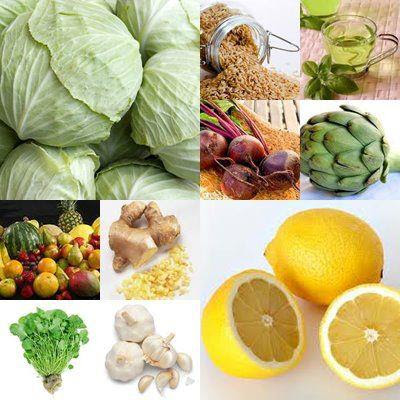
Top 10 Detox FoodsLemon
Lemons are a staple of many detox diets, and there is good reason for this. Firstly, lemons are packed with antioxidant vitamin C, which is great for the skin and for fighting disease-forming free-radicals. Furthermore, the citrus fruit has an alkaline effect on the body, meaning that it can help restore the body’s pH balance, benefiting the immune system. Try starting your day with hot water and a slice of lemon to help flush out toxins and cleanse your system.

Ginger
If too much fatty food or alcohol has caused problems for your digestive system, it may be worthwhile adding some ginger to your diet. Ginger is not only great for reducing feelings of nausea, but it can help improve digestion, beat bloating and reduce gas. In addition to this, ginger is high in antioxidants and is good for boosting the immune system. To give your digestion a helping hand, try sipping on ginger tea or adding some freshly grated ginger to a fruit or vegetable juice.

Garlic
Garlic has long been known for its heart benefits, however the pungent food is also good at detoxifying the body. Garlic is not only antiviral, antibacterial and antibiotic, but it contains a chemical called allicin which promotes the production of white blood cells and helps fight against toxins. Garlic is best eaten raw, so add some crushed garlic to a salad dressing to boost its flavour and your health at the same time.

Artichoke
If you have recently been overindulging in fatty foods and alcohol, adding some steamed globe artichoke leaves to your meals is a great way to help get your body back on track. Globe artichokes are packed with antioxidants and fibre and can also help the body digest fatty foods. On top of this, globe artichoke is renowned for its ability to stimulate and improve the functions of the liver – the body’s main toxin-fighting tool.

Beetroot
For those needing a quick health-boosting shot of nutrients, you can’t do much better than beetroot. Packed with magnesium, iron, and vitamin C, the vegetable has recently been hailed as a superfood due to its many reported health benefits. Not only is beetroot great for skin, hair and cholesterol levels, but it can also help support liver detoxification, making it an ultimate detox food. To enjoy its benefits, try adding raw beetroot to salads or sipping on some beetroot juice.

Green tea
While it’s not technically a food, no detox plan would be complete without regular consumption of essential liquids. Fluids are essential for keeping our organs healthy and helping to flush toxins from the body, and drinking green tea is a great way of boosting your intake. Green tea is not only a good weight-loss drink, but it is extremely high in antioxidants. Research has also suggested that drinking green tea can protect the liver from diseases including fatty liver disease.

Cabbage
Many celebs have resorted to the cabbage soup diet to help lose weight and get in shape quickly before a big event, however cabbage is not only good for weight loss – it is also an excellent detoxifying food. Like most cruciferous vegetables (including broccoli and sprouts), cabbage contains a chemical called sulforaphane, which helps the body fight against toxins. Cabbage also supplies the body with glutathione; an antioxidant that helps improve the detoxifying function of the liver.

Fresh fruit
Fresh fruits are high in vitamins, minerals, antioxidants and fibre= and are also low in calories, making them an important part of a detox diet. If you’re after brighter eyes and skin, shinier hair and improved digestion, try boosting your intake of fruit and eating from a wide variety of different kinds. The good news is fruit is easy to add to your diet, so try starting your day with a fresh fruit salad or smoothie and snacking on pieces of fruit throughout the day.

Brown rice
If you want to cleanse your system and boost your health, it is a good idea to cut down on processed foods. Instead, try supplementing your diet with healthier whole grains such as brown rice, which is rich in many key detoxifying nutrients including B vitamins, magnesium, manganese and phosphorous. Brown rice is also high in fibre, which is good for cleansing the colon, and rich in selenium, which can help to protect the liver as well as improving the complexion.

Watercress
Like most green herbs and vegetables, watercress is an excellent health-booster and detox food. Firstly, watercress leaves are packed with many vital detoxifying nutrients, including several B vitamins, zinc, potassium, vitamin E and vitamin C. Secondly, watercress has natural diuretic properties, which can help to flush toxins out the body. To reap the benefits of this nutritious food, try adding a handful of watercress to salads, soups and sandwiches.


Categories: Detox, Healthy Living, Nutrition | Tags: , , , , , , , , , | 7 Comments

Mood Foods – Top Nine Happiest Plant-Based Foods

rsz_p1190241

Moods.  What can we do?  Sometimes you’re up and then for no reason whatsoever, your down.  Can food help?  Most people realise that moods affect what we eat, but does it work the other way.  Do foods effect our moods?

There has been much research into the matter which has shown a link between moods and the food we eat.  A recent survey has shown that a large proportion (over 80%) of people felt better when they changed their diet.  Eating healthier makes us feel better inside and out.

From what we can tell this is down to serotonin, the happy chemical, produced in our brains.  Serotonin cannot be produced without tryptophan (an amino acid), so its a good idea to eat foods high in trypophan to make us happy.  Simple enough!?  Low serotonin levels are blamed for anxiety, cravings, mood disorders and IBS.   The concept of eating foods high in trypophan is similar to that of taking an anti-depressant like prozac.  Holistic anti-depressants.

P1060354

Smile away!!

Moods cannot be gotten rid of, but can be brought under some kind of control.  The extremity of the ups and downs can be lowered, minimised, meaning we feel more centred and grounded in a good place.  Evidence suggests that eating and living well can be essential in maintaining not just our physical, but also our mental health.  We certainly feel the benefits!

Here are some plant-based foods that can help:

Mung Beans

Top Ten Good Mood

1) Mung beans

2) Asparagus

3) Sunflower seeds

4) Pineapple

5) Tofu

6) Spinach

7) Bananas

8) Nuts

9) oats

Taken from the e-book The Serotonin Secret, Dr Caroline Longmore

Foods high in fibre, whole grains and protein can also help boost moods.  Food with a low glycemic index, like oats for example, will help the brain absorb all of these happy amino acids.  Tryptophan absorption is boosted by carbohydrates.

P1350026

These foods should be combined with lots of clean water and fresh fruit and vegetables. Eating regularly and not skipping meals also boosts our mental health.  As ever, a balanced diet is always the best way forward, lots of fresh veg and fruit, with wholegrains, plenty of green leafy veg and some sweetness!  Treats are essential!!

Foods that have the opposite effect are sometimes called ‘Stressors’, the main culprits are listed below:

Food ‘Stressors’

  • Sugar
  • Caffeine
  • Alcohol
  • Chocolate
  • Wheat-containing foods
  • Additives
  • Dairy
  • Saturated Fats


Provided by the food and mood project, backed by the mental health charity Mind.

A diet heavy in the ‘stressors’ can lead to all sorts of problems including anxiety, insomnia, fatigue, panic attacks, lack of concentration and unfortunately, many more…

p1340868

Roast Carrot & Ginger Hummus – Healthy, happy, get dippin’!

Sugar has a powerful effect on our sense of well being, if we eat too much, we can get into a ‘sugar roller coaster’, which is never nice.  Our blood sugar levels are all over the place and we feel drained and fatigued when the sugar is lessening and high as a kite when its peaking.

If you do over indulge, one of the worst things that you can do is feel guilty about it.  Feel great about it!  You have just treated yourself and you deserve it. Move on and make efforts to eat better and feel better, step-by-step, slowly slowly.  It’s a long road without any fixed destination.

Apparently we all have ‘triggers’, foods that can take us up and down.  This depends on you, have a little experiment.  If you are feeling a bit sluggish and down, think about what you have eaten that day or the night before.  Trends will inevitably form.

unnamed (1)

We found it really helpful to take the plunge and go for a full raw diet.  Our bodies became sensitive to what we ate and we learned alot about what makes us feel good and otherwise.  You don’t have to go this far of course, just cut out certain foods for a period of time and see how you feel.

Eating well is one thing, but thinking well is another level completely.  Think positively, practice thinking only positive thoughts for 5 minutes at a time and build on that.  You will eventually develop a brilliant habit of a positive world outlook.  This is a helpful tool.  Add that to your new found passion for mung beans and you’ll be shining away for all to see!

P1190267

For more information on mood foods, check out the ‘Mind’ site.  There is information here for Brits on how to contact dietitians and nutritionists to get started on a new diet plan and lifestyle.  You could also check out the website food for the brain.

Take it easy, have a handful of sunflower seeds and shine onX

Categories: Healing foods, Healthy Eating, Healthy Living, Nutrition | Tags: , , , , , , , , , | 16 Comments

The Wonders of Honeygar and the Alkaline Body

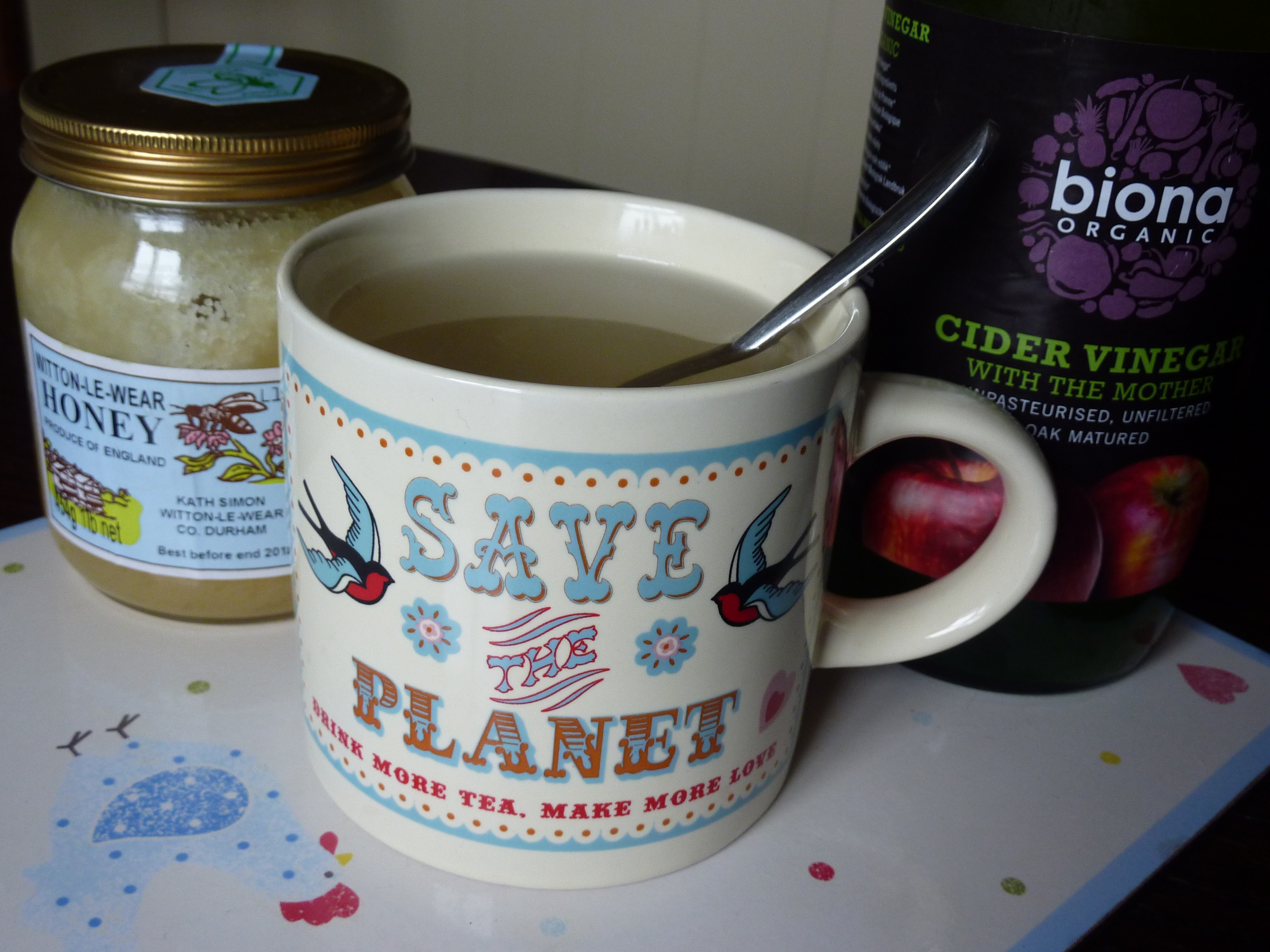
Hagar (Honey and Cider Vinegar)

Honey and cider vinegar combined with just boiled water is normally called ‘Honeygar’ and a mighty fine thing it is.  This potion is not only a lovely brew (an acquired taste) it also has great health properties and may help to cure many ailments.

Both Hippocrates and the ancient Egyptians are said to have appreciated the healing properties of cider vinegar.  It has also been used as an anti-aging elixir in history, which is always popular!

Good quality cider vinegar (with the mother) is a natural product, made by allowing crushed apples to ferment in oak barrels.  It has cleansing properties which help to detoxify the body and is a powerful cleansing agent which naturally helps to fight germs and bacteria.

Cider Vinegar can also help to keep the body nicely alkaline.  Vinegar is acid but when broken down in the stomach becomes alkaline.  An alkaline body has been shown to better fight germs and disease.

Raw fruits, leafy green vegetables, tea and legumes are examples of alkaline foods.  Interestingly a foods actual pH is not a good indicator of a food that has acidic effects on the body, for example, lemons and limes when processed by the body actually have an alkaline effect.  The ideal ratio of alkaline to acid foods in a diet is around 70/30.  High stress levels can also effect the amount of acid produced in the body.

Cider vinegar has been used to help treat arthritis. Many people are looking for alternative methods of treatment.  There have been articles recently in the press verifying these healing effects.

Lillies on the windowsill (nothing to do with Cider Vinegar, but lovely non-the-less)

Sir Ranulph Fiennes, the famous explorer and endurance chap, suffered with arthritis in his hand and hip and turned to drinking honeygar.  He says “Without it I wouldn’t be able to have done all the things I have done…it has completely kept my arthritis at bay.”

Honeygar is best drank regularly and can take a while to kick in, so stick with it.  It also must be combined with a low acid diet, that means no nasty foods high in sugar, nothing too processed (factory food) and alcohol.

I have a hip that clicks and a dodgy neck, which are probably old injures from when I was young and used to do terrible things to my body, all in the name of sports.  I have started to drink honeygar and will keep you posted on the progress.

I think the message is, there is enough evidence out there to suggest that honeygar can work well.

When buying cider vinegar, check that it contains the ‘mother’ and is organic.  This ensures that it is completely natural, the good stuff, and has not been distilled.   The distillation process kills of enzymes and minerals.

‘Hagar’ Recipe

Add 2 tbs cider vinegar and top up with freshly boiled water, add honey to taste (1 tbs is normally good for us, we use maple syrup now which is delicious!)

You can tell this is an old article, the BHK is now 100% vegan!:)

Some of the info for this post came from the great benefits of honey site and an article in the Daily Telegraph 

Keep up with all the Beach House Kitchen cooking and travels, you can follow us via our newsletter, click here to easily join our e-mail list.  

Categories: Healing foods, Healthy Living, Infusions, Nutrition | Tags: , , , , , , , , , | 76 Comments

Raw Asian Buckwheat Stew

Sprouting Buckwheat

This is not exactly Asian, not your average back street Shanghai fare; we lack some ingredients but do our best in the hills of Wales!  This recipe boasts all the flavours you would expect from a classic Asian dish, with the raw touch of sprouting buckwheat and the richness of cashews.  It really is a revelation that this food tastes so good cold and is so satisfying.  Who knew?

We live quite remote, the nearest decent shop being 30 mins drive.  For a cramped island like ours, 30 mins is quite a distance.  If you can believe it, there are no fresh fruit and veg markets in the entire area.  It is strange, we are quite unique.  We therefore use what we have locally, there is a shed over the hill that sells the occasional organic vegetable, at this time of year, local produce for sale is quite sparse.  Hence we make do and blend!

We have been missing our Thai curries, stir fries etc, so this was my attempt at adding a new set of flavours to this Beach House raw June.  I like adding cucumber to dishes, it freshens and lifts things.

These recipes are known as ‘living food’ due to the sprouting going on.  Anything sprouting is full of life and nutrients and is serious super fuel for your body (and mind/well-being…..).

Sprouting buckwheat has a lovely bite to it and reminds me of a fuller quinoa in flavour.  It tastes and looks like a grain, but is gluten and wheat free.  It can also be blended up into a lovely porridge (more of this to come).  Buckwheat sprouts well and only takes a couple of days.   The technique is simple enough, soak for 24 hours in fresh water, drain and wash, leave for 24 hours, drain and wash etc.  Until sprouts begin to appear.  It  is then ready to eat.

This stew has a lovely rich feel and is very satisfying, which you need on the grey island (Britain) were it is currently summer/winter in just one day.  The storms may rage outside, yet we are warm inside and dreaming of the East….

The Bits

Veg – 1 large tomato, 1 small onion, 1/3 cucumber, 1 carrot, 1/2 red chilli (check for heat)

Sauce – 2 cloves garlic, 2 inch cube of ginger, juice of 1 lime (finely chopped zest if you like a real tang), 2 teas honey, 3 tsp sesame oil, 2 tbs tamari (or light soya sauce)

Stew – 2 cups sprouting buckwheat, 1/2 cup whole cashews,

Topping – 1 1/2 cups chopped green beans, 2 teas sesame seeds, handful of broken cashews

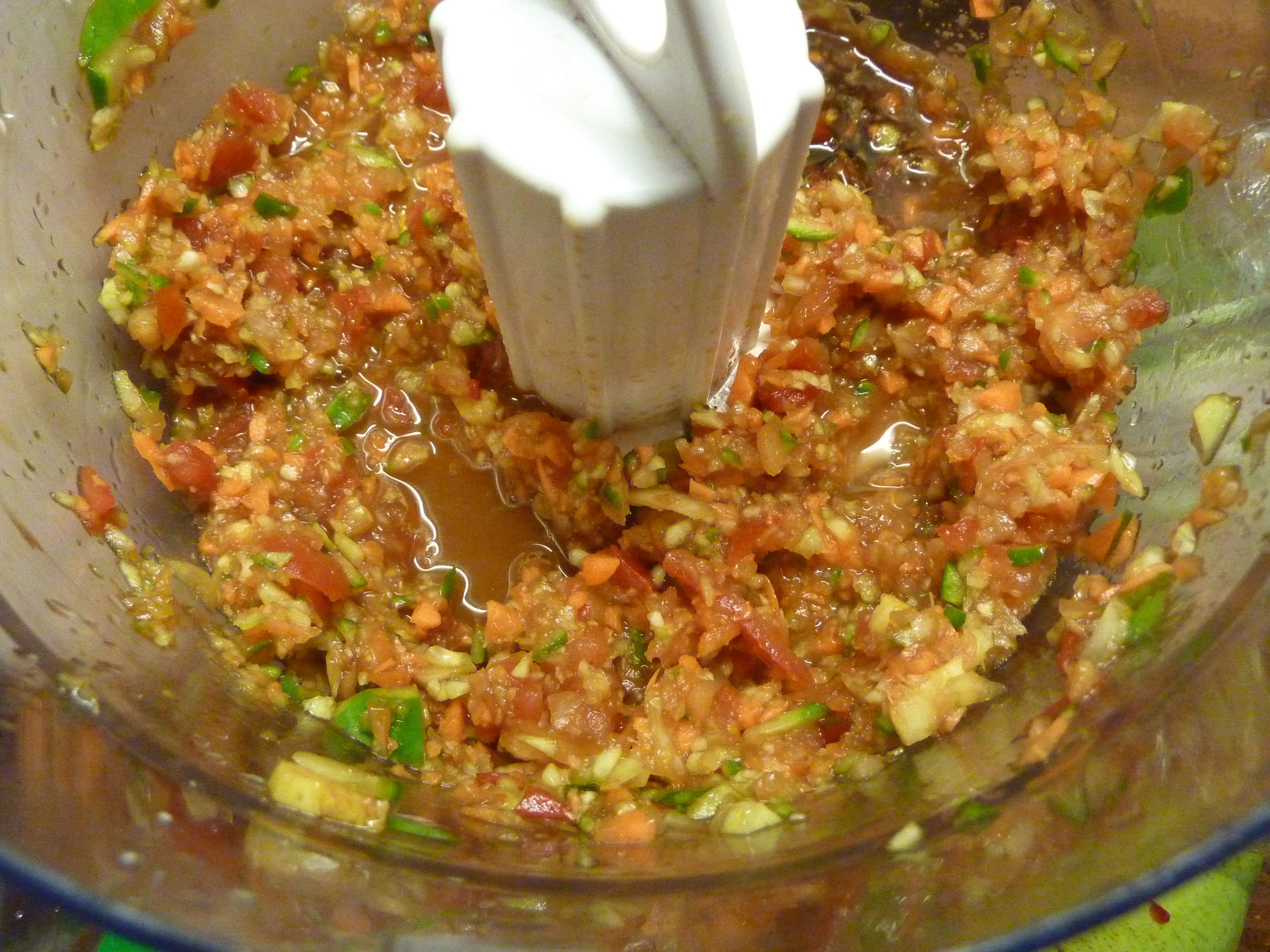
Mid blitz aka carnage

Do It

Add all veg and sauce bits to the blender blend to a fine salsa like mix, taste check for balance of flavours, then add your stew bits and pulse a few times to break up the buckwheat and cashews slightly.  Not too much, you need a little bite there.  Chop up your greenbeans and scatter on top in any fashion that takes your fancy (we normally mix half into the stew).

Serve

Finish with a few sprinkles of sesame seeds (we were out of stock here) and some broken cashews.

Raw Asian Buckwheat Stew

We Love It!

This beats a sloppy Chinese takeaway any day of the week!  Bursting with vitality and nutrients, this is one of our favourite raw recipes thus far.

Foodie Fact

Buckwheat is one of the most complete grains globally and contains all eight essential amino acids (meaning you can basically live on it!).  It is great for diabetics as an alternative to sugary wheat and also alkalizes the blood.  Buckwheat even boosts the brain, it contains high levels of lecthin and 28% of the brain is made of lecthin which also purifies the blood and actually soaks up bad cholesterol.  Wonder food!

Categories: Detox, gluten-free, Healthy Eating, Healthy Living, Low G.I. (glycemic index), Lunch, Nutrition, Raw Food, Recipes, Superfoods, Vegan, Welsh produce | Tags: , , , , , , , , , , , , , , , , , , , , , , , , , , , , , | 4 Comments

Four C’s Juice with Barley Grass

About to get juicy

CARROT, CELERY, CUCUMBER, CORIANDER…….the fours C’s.

Why has nobody thought of this before! Or should I say, why have I never heard of this before, a carrot and coriander juice.

A classic soup recipe will no doubt make a tasty juice, just colder and thinner but still full of all those good enzymes and nutrients we need to keep ticking over.

I’ve made a few additions here to spice things up a little. The cucumber adds some freshness, the celery a more savoury edge and the ginger and nice little POW.

We take the skin off the cucumber as it has a bitter flavour and also turns the juice a peculiar beige shade.

We have been using barley grass in our savoury juices, it is a real super food and also has a pleasant taste.  We’d like one day to start a little wheat grass farm here, but this dried barley grass is a more than adequate substitute for wheat grass.

Fire up the Magimix!

The Bits

Makes two good glasses

4 Carrots, 2 sticks of celery, 1/2 cucumber (de-skinned) 2cm cube of ginger, 1 handful of coriander (celantro, stalks and all).  If your juicer is not great, you may need to mash up the celantro in a pestle and mortar and add it to the juice later.  It can get left behind.  If you have one of those little wheatgrass crushing machines (lucky you) use that instead.

Follow the instructions on the barley grass packaging (don’t over indulge!) we use half a teaspoon per glass.  Add a little juice and mix to a paste, then add the rest of your juice, stirring all the time.  This avoids blobs of intense barley grass surprising you mid-slurp.

Do It

You will need a juicer here unfortunately, we are blessed with a crimson Magimix that is by far the greatest appliance we have ever owned (purrs like a Rolls Royce when started).

Juice your coriander and ginger first, then the rest goes in with the carrots last.  Carrots are a great veg to juice last as they give off alot of juice and really clean out any lingering bits and peices.

Four C’s Juice

We Love It! 

This is a delicious savoury way to start the day, packed with vitality and goodness.

Foodie Fact

Several reasons that barley grass is worth adding to your diet.  It contains:

–  Five times more iron than brocolli.

–  More iron than steak.

–  Seven times more vitamin C than orange juice.

–  Eleven times more calcium than milk.

Our bodies are mainly too acidic for our own good, leading to many health issues.  Barley grass is a strong alkalizer and helps to neutralise the effects of an acidic diet and let our cells get on with their business.

Categories: Breakfast, Juices, Nutrition, Recipes | Tags: , , , , , , , , , | 1 Comment

Sava’s Elephant Garlic Flower Salad

Sava’s last lunch at the BHK

Here was this lunch offering, made by Jane and Sava.   A crunchy wonder, with bucket loads of veggies, topped with the ever intriguing, elephant garlic flowers.

This was Savannah’s last meal with us and we wanted it to be special.  We rustled up a few different salads, dips and even a piquant beige guacamole.

Sava is originally from South London, but is currently masterminding world domination (Sava style) which means spreading love, happiness and vibrant energy to all corners of the world.  Sava is also an ace vegan chef and was the perfect house guest during this raw time at the Beach House.  We have spent most of our time sitting around talking about food and travel, two of our most favourite chat topics.  Its been a gas….

Sava has an brilliant travel website, all about travelling the world and living your wildest dreams.  Its called travel butterfly.  Sava has just returned from travelling around Central and Southern America and there are loads of wonderful tales, images and tips to be found there.

These garlic flowers have thick stems with a potent garlic punch (the whole house stank of garlic after chopping a few up).  The flowers seem edible, with small yellow petals.  One bunch has lasted us quite a few days as its best used sparingly.  Warning, if you are worried about garlic breath, do not approach these flowers (and stop worrying).

You may like to add some spirulina, wheat grass or barley grass powder to the topping if you are raw, or even if you aren’t, this would give you a serious boost.  These are three heavyweight contenders of the superfood world.  It is said that you can live on these green powders (the barley grass actually tastes of dried fish) but not even I will venture this far down the road of cleaning my internals up.  The barley powder we have is labelled as a ‘powerful’ food and should be eased into, you wouldn’t want to over do it (this all seems very tame compared to my tequila slammer days, but unimaginably healthier!).

These salads are always super easy to get together, we’ve made them per person so you can just have it yourself, or share with the people you really, really like.  This is a big salad and designed to be a main meal so there is a lot of ingredients in it.  We realise this goes against some of our ‘The Big Four Raw Food No No’s’ but we are trying to be good!  We topped it with the elephant garlic flowers so we could measure the amount we ate with eat spoonful, it also looked great.

Elephant garlic flowers

The Bits

Per person – Handful of baby corn, 1 carrot (chopped), handful of mangetout, 1 ripe tomato, 1/2 courgette (chopped), 1/2 apple (green and sour is best, chopped), 1 stick of celery, handful of cucumber (chopped), handful of cos lettuce (chopped), 2 teas linseeds, 1 handful of mung bean sprouts, 2 teas alfalfa sprouts.

Topping – Handful of elephant garlic flower (chopped), handful of sunflower seeds, splash of olive oil.

Elephant Garlic Flower Salad

Serve

Layered with a creamy Miso, Tamari and Tahini Dressing, topped with the chopped elephant garlic flowers.

We Love It!

Mainly because Sava made it and she is very lovely indeed.  The elephant garlic is amazing and well worth seeking out, it explodes in your mouth and adds a spot of romance to the plate.

Foodie Fact

Native Americans believe wild garlic to help against ailments such as high blood pressure, asthma and scurvy.

Our Morning Juice Routine

Is stuttering along.  We are still getting into the routine of a mid-morning juice.  I used to have  a nice jug of coffee, now its a yogurt pot full of fresh juice.  I know which one my body prefers (bit sometimes I miss that aroma).

Jane made a magic juice this morning with the trusty Magimix.  Simple and not really worth a separate post, its similar to a couple we have done before.  It was a zesty Apple, Carrot and Ginger.  The perfect balance of sweetness with a kick of ginger.  Here is Jane mid juice:

Jane making morning juice

We aim to be drinking at least one juice per day and are finding that we are not hungry in the mornings.  This would make sense, all of our nutritional requirements are being met, so the absorption cycle of the body doesn’t really kick in until 12pm.  That’s when we whip out the salads.

We plan on getting a 25 kilo bag of carrots from a farm down the road and really getting juicy next week.  Apparently, if you drink too much carrot juice, you actually turn orange.  Watch this space, will make for interesting pictures I’m sure.

Happy days aheadX

Categories: Breakfast, Friends of B.H.K, Healthy Eating, Nutrition, Raw Food, Recipes, Salads, Sauces, Side Dish, Superfoods, Vegan | Tags: , , , , , , , , , , , , , , , , , , , , , , , , , , , , , , , , , , , , , , , , , , , , , , , | 1 Comment

The Big Four Raw No-no’s

On a rope bridge in Panama

For me an introduction to raw food came quite unexpectedly while I was working and staying with a friend out in Panama; home of some fantastic and enormous fruit and veg. Kami prepared delicious salad after salad; we ate little and often, with the right combinations of foods and two weeks later I was veritably zinging.

We thought it would be a good idea to share Kami’s words of wisdom; after all one of the biggest reasons for going raw is to help the body with its mineral and vitamin absorption and efficient digestion. After some extra research I realised it is easy to get bogged down in this subject. So I squeezed it down into a few main points.

The Big Four Raw no-no’s

1. Fat and carbohydrate: Avoid having sweet fruit like bananas, nuts, seeds, avocados etc together in the same meal. If you do eat them together the fats and proteins (which are slower-digesting foods) will cause the sugary fruit to ferment in your stomach. This cannot be good. You can eat the fats or proteins four hours before, or a couple of hours after the sweet fruit instead – because the sweet nutrients will have had time to dance through your digestive system by then.

2. Carbohydrate food and acid food: Like with fats, acid foods need longer to digest. If they are eaten with sweet fruits they can also cause fermentation in the stomach.

3. Acid food and proteins/fats: Citrus fruit, pineapple, strawberries and other acid fruits should not be eaten with nuts or avocados; otherwise the protein will not digest properly. Acid fruits inhibit the flow of gastric juice whereas digestion of protein requires an unhampered flow of juice.

4. Keep the amount of fat to a minimum: Fat has an inhibiting influence on digestive secretion and also slows down digestion of other foods. It is generally a good idea to reduce fat intake; it is surprising how little of it we need. Delicious but notoriously fatty avocados are best eaten with a green salad but never with nuts sweet fruit, especially melons.

We feel the trick to this diet is to keep it simple. After all we just want to help our bodies digest this lovely fresh food. Tips like sticking to one type of protein in meals (some raw foodies even stick to just one type of nut or seed). By not eating a huge variety of food types in one meal will help to stop our bodies having to work too hard and will avoid most of the no-no’s too.

We’re just looking forward to getting sensitive with our own bodies; listening to how it feels after eating different combinations of food, and how we feel after these small easy to digest portions.

We want to live in the best possible way for our whole lives so that we can be the healthiest and best we can be for ourselves and for other people! Apart from the eating (which has a huge impact) we also want to focus more on sleeping, exercising, relaxing, being creative, being in nature, having fun so we can shine together brighter from the inside out – yay!!

Have fun trying out our recipes and join us in Raw June!

Love Jane xxxxx

Categories: Healthy Eating, Healthy Living, Nutrition, Raw Food | Tags: , , , , , , , , , , , , , , , , , , , , , , , , | 11 Comments

Raw Hazelnut, Rosemary and Lentil Hummus

Day two of raw June and I’m feeling good. We have been eating quite a bit of raw food recently, so I wasn’t expecting wonders. Later in the month, who knows, maybe I’ll be sprouting!

I am working in a kitchen at the minute and its the middle of ‘silly season’, so its hard graft. I am finding no problems with the energy and when I eat healthy I find I need less sleep (which is a real help in the catering industry). It does have its advantages, I wont be missing cooking this month that’s for sure!  I am also surrounded by temptation, nice looking chips and slabs of cheesecake. It’s a good test. Most of my colleagues think I’m mad, but I’m used to this (for one reason or another). I am definitely eating less and not feeling hungry, I don’t even fancy a coffee anymore, which is rare behavior.

Many people comment that raw food sounds ‘boring’. This recipe is anything but and I find most raw food to be fascinating in its complexity and creativity alone; never mind the health benefits.

This is a real gourmet raw hummus. I thought I’d start as we mean to go on. It contains a lot of ingredients, but it is much more than a dip. This will be the main part of dinner tonight, with an orange, sweet potato and red cabbage salad.

It is rich with the nuts and oil, but does not have the smooth texture of a normal hummus. The flavour is a knockout though and like with alot of health foods, you have the piece of mind that it is doing your body good and providing you with some super nutrients.

We used sprouts here due to the fact that our sprout corner is going mad. At the minute we have a variety of receptacles holding all sorts of seeds and beans. We’ve mung bean, sunflower seed, buckwheat, wheat grains, quinoa and green lentil all in various states of soak and sprout. The mung beans are a staple here, but most of the other ones we’ve either tried and failed with or are completely new to. It’s a great little experiment and the right weather for sprouts. We found it difficult in the winter to get them going and our airing cupboard seemed too warm. Now we have the happy medium of summer (ish) temperatures in Wales.

Sprout Central

We have been soaking our nuts overnight, this helps to release the enzymes and nutrients.  They are also softer, better for blending.  Hazelnuts are one of the good nuts, peanuts, pistachios and brazil nuts are not goodies.  We will still be eating them though, just a little less than before.

It’s worth spending a little more on a good almond milk, the cheaper varieties are thinner and not as creamy.

So here’s our first attempt at a raw hummus:

The Bits
1 cup of hazelnuts, 1 cup sprouting green lentils, 1 cup sprouting chickpeas, 1 handful of dried rosemary, 1/2 cup almond milk, 1/2 cup of extra virgin olive oil (evoo), juice and zest of 1 lemon, 1 tbs raw tahini, 1 tbs flax seeds, 2 cloves of garlic chopped, salt and pepper if you like (I used a dash of Braggs Liquid Aminos instead, it contains naturally occurring sodium and loads of good amino acids).


Do It

This is the easy part, put it all into a blender and blitz until smooth, roughly five minutes should do. If it is sticking or dry, add water as you are blending. This should loosen things up.

Serve

Great as a dip of course, or with a salad. We will be mixing it into chunky chopped vegetables tomorrow.

We Love It!

We Love sprouts!  So anything they are in, we are happy about.  This recipe is bursting with flavour, the hazelnuts and rosemary work together so well.  It has a nice creamy, richness to it, but is low if fat.  Hoorah!

Foodie Fact

Sprouting Chickpeas (Garbanzos/ Giggle beans to some) are packed full of protein.  They contain more protein than milk!  Many vegans and raw food types are asked about how they add protein to their diets, the truth is protein is available in many plant based foods.  Nuts and seeds mainly, but sprouts are also a good source.

Chickpeas are full of carbs, but low in fat.  A small serving of chickpeas contains around 50% of your daily Vitamin C requirement.

Raw Hazelnut, Rosemary and Lentil Hummus

Categories: Dinner, Healthy Eating, Healthy Living, Low G.I. (glycemic index), Nutrition, Raw Food, Recipes, Snacks and Inbetweens, Vegan | Tags: , , , , , , , , , , , , , , , , , , , | 2 Comments

Sunbeam Fruit Salad

Blooming great rhododendrons. It’s finally May!

The perfect fruit salad!?

Impossible to tell really, but it certainly hit our spots.

This is not what you would call a seasonal wonder, more a bargain basement bonanza!!!  This is a salad for when you have a glut of fruit that needs eating soon.  Its totally OTT and befitting of my birthday weekend, when excess is embraced.

This fruity number is very delicious and perfect for this morning in wonderful Wales.  It’s a glorious day, full of sunbeams, the birds are singing and Buster (a cat) is lounging in the herb garden.  Everybody is out in their gardens, wondering what on earth to do.  You realise the importance of our sun when it is hidden behind grey clouds for many months.  When it returns, it has an incredible effect on people; they go outside, they begin to re-connect with the light (sun).  We all start shining!

We have this type of salad most mornings, a mixture of fruit and vegetables topped by a thick smoothie.  It keeps us going for most of the day, brimmed full of goodness.   Jane and Mum went shopping this weekend (Mum was visiting for my birthday, which was an amazing time, the best birthday I’ve had since I was 9 years old and organised a mass football match on the local park and had a cake shaped like the FA cup) and chanced upon some amazing bargains in the fruit section.  Organic blueberries, apricots etc for 20p a pack!  Its capitalism gone mad!    We have not seen fruit like this for many, many months and their return has a similar effect to the return of our beautiful sunshine.

Top tip – I have been making these beauty salads for a while now and if there is one tip that I would offer to you lovely people it is this, use a clean board.  Sounds obvious, but the slightest hint of garlic or onion on a board can spell disaster for the subtle flavours of your fruits.  We have a separate board for all things fruit.

If you think that mixing fruit and vegetables in salad is a little weird, perhaps it is, but it is delicious.  Carrots are very sweet and celery has a lovely mild flavour.  They both add real bite to proceedings.

The Pear and Peanut smoothie topping recipe will follow on the next post.  This makes enough for two massive bowls.

Bumble bees get busy with bluebells

The Bits

We used our selection of fruit and veg here, but you can of course have a play and use what is in season or any good stuff that you can get your hands onto.  Mix in seeds/ nuts for added crunch and texture, a citrus fruit to add a little tang, the addition of flax seeds really helps your digestion:

2 apricots (de-pipped and diced), 1 big handful of blueberries, 1 apple (diced), 1 pear (diced), 1 orange (peeled and diced), 2 kiwis (peeled and diced), 3 carrots (chopped), 2 sticks of celery (chopped), 1/2 handful of roasted sunflower seeds, 2 tbs flax seeds, 1/2 handful of roasted hazelnuts, 1 handful of chopped mint (chopped)

Do It

Grab your favourite salad bowl, chop all bits up into your favourite shapes, mix then all in gently and top with your smoothie (see next post).  Serve liberally with smiles.

Serve

In bowls of the size that befit the mouths to feed.  In the Beach House, this means big bowls!

The Sunbeam Fruit Salad

We Love It!

Really, what’s not to like here!  The perfect way to start the day.

Foodie Fact 

Blueberries are a sign from nature that snacking has always been OK.  They are one of the original grab and go foods!!!!  Served straight from the bush.  I am so glad to have these back in my life, they are real burst of incredible nutrition.  I love their dark colour, it adds brilliant contrast to any dish it touches.

They contribute amazingly to our health, that dark purple colour is thanks to some wonder pigments that are full of antioxidants.   They contain some of the highest levels of antioxidants in the plant world.  They limit free radical activity and actually regulate our blood sugar levels.

Categories: 'The Good Life', Breakfast, Garden, Healthy Eating, Nutrition, Organic, photography, Raw Food, Recipes, Salads, Snacks and Inbetweens | Tags: , , , , , , , , , , , , , , , , , , , , , , , , , , , , , , , | 15 Comments

Why cats cannot be vegetarian?

We have a very cool cat who visits us every day, his name is Buster.

Buster

He is a real character, very friendly and always making us laugh with his nutty antics.  We think he is semi-wild, he hangs around our garden and occasionally brings us bits of rabbits as a gift.

We have been giving him the odd bowl of milk, maybe a half tin of tuna if he is lucky.  I recently bought some cat biscuit things, but having read some info on the internet, I have come to realise that most animal food is full of some really foul ingredients.  The ingredients of most pet food is doing our pets no good.

Buster is not really our pet, more a regular visitor.  But I can see the dilemma many pet owners must have.  What should we feed our pets?

We thought that maybe Buster could eat a vegetarian diet.  After all, the oldest dog in the world was 27 years old and a vegan!  Being a mini tiger, we figured it would be wise to research this (cats are very different from dogs after all), we found that it was not a good choice nutritionally for a cat.

This article explains why, taken from the ‘Essential Vegetarian‘ website:

7 reasons why your cat cannot be vegetarian? 

Any vegetarian or vegan who has a cat, at some stage thought about feeding it vegetarian diet. Out of all the domestic animals cats are unique. A study by the National Cancer Institute suggests that all current domestic cats in the world are descendants from a group of self-domesticated wildcats 10,000 years ago. In fact there’s still no conclusive evidence that domestic cats should be classified as a separate species.

Being a true carnivore a cat (domestic or wild) subsists on a diet consisting primarily of meat. In its natural state the cat will hunt and provide for itself at every opportunity. A wild cat eats all of its prey including hair, skin, flesh, bones and internal organs. Cats are very unlikely to give up meat voluntarily. If you intentionally feed cat vegetarian diet, it will look for meat somewhere else. Many cats will hunt and kill mice, rabbits and birds. Certainly they will consume other foods as well, especially of animal origin. However as these are not important in their diet, cats will eat them only in small quantities and not on a regular basis.

Cats lack the physiology to properly digest vegetation. It’s no coincidence that a cat eats grass to induce vomiting to get rid of the hair collected in its stomach. The cat’s digestive system cannot convert plant based nutrients in to the form that its body can utilize. That’s why cat are are called strict carnivores, as they need to take the active form of the nutrients from other animals, who do the conversion beforehand.

Here’s 7 most important nutrients that your cat is unable to get from a vegetarian diet:

  1. Taurine is an amino acid essential for cats as unlike other mammals, cats cannot synthesize it. In the absence of taurine, a cat’s retina slowly degenerates and the cat suffers eye problems and can become irreversibly blind. This condition is called central retinal degeneration (CRD). Cow’s milk is a poor source of taurine and there is none in plant foods. The only rich source is meat.
  2. Arachidonic acid is one of the essential fatty acids. Dogs and humans can convert linoleic acid found in vegetable fats into arachidonic acid. Cats are unable to do that, as their liver doesn’t contain delta-6-desaturase enzyme (no kidding!). Cats need arachidonic acid to be able to produce an inflammatory response so that the body can protect itself in case of disease. Arachidonic acid also helps control skin growth and is necessary for proper blood clotting, proper functioning of the reproductive and gastrointestinal systems. Animal fat is the only major source of arachidonic acid, very small amount can be found in eggs and milk. Arachidonic acid deficiency takes some time to develop but its effect on the cat is profound.
  3. Vitamin A found in vegetables (carotenoid) cannot be converted by cats in to the active form of vitamin A (retinol). As cats do not have the necessary enzyme to do the conversion they have to hunt other animals that have done it for them (mice, rabbits). There are sufficient quantities of retinol in meat and very small amounts in eggs and milk. Liver is the richest source of preformed Vitamin A. Vitamin A deficiency in cats can cause night blindness, retarded growth, and poor-quality skin and fur.
  4. Vitamin B12 is another vitamin that cannot be synthesized by cats. Vitamin B12 is present only in animal products.
  5. Niacin can be synthesized from the amino acid tryptophan by many mammals but not cats. Meat is the best source of niacin. Insignificant amounts of niacin can be found in milk and eggs. Lack of niacin in cat’s diet can cause loss of appetite, loss of weight, inflamed gums, and hemorrhagic diarrhea.
  6. Thiamin (vitamin B1) has an important role in carbohydrate metabolism. Cats are very susceptible to deficiency of this vitamin. Thiamin is rapidly destroyed by heat, that’s why only raw meat is the only good source of this nutrient. Very small amount can be obtained from eggs and dairy. Thiamin deficiency in cats can lead to anorexia, ataxia, paralysis and finally permanent brain damage.
  7. Protein is required by cats in large amounts. Over 30% of a cat’s diet should consist of protein and this can be a problem on a vegetarian diet.

For all these reasons cats must not be fed vegetarian or vegan diet. Cats have very specific nutritional needs which you must meet if you want to keep them fit, healthy, and happy.

You might have to make some hard choices as this is a question of life and death for your cat. It might be impractical or impossible to let your cat hunt, but killing your cat by feeding it food they cannot digest is just another way to participate in animal cruelty that we’re trying to avoid in the first place.

Is your cat a vegetarian?  We’d be interested to know how you go about it.
Categories: Friends of B.H.K, Nutrition, photography | Tags: , , , , , , , , , , , , , , , | 3 Comments

Blog at WordPress.com.