Posts Tagged With: food

Beach House Radio – Our top choppin’ tunes

Some of our top tunes to chop to………..

https://www.youtube.com/watch?v=DGFvlnCq-ts

https://www.youtube.com/watch?v=gAVB25yjY5I

rsz_p1170752

https://www.youtube.com/watch?v=pqXUyf0ixvo

https://www.youtube.com/watch?v=tIssqxixYp0

https://www.youtube.com/watch?v=c_7u06P3ebU&list=RDqyE9vFGKogs&index=33

https://www.youtube.com/watch?v=L99wAbddt4Y&list=PLZqsyBiYZFQ1lSPbxpuTK288FXNy-2tQq


Categories: Music | Tags: , , , | 3 Comments

What’s in a vegan’s larder?

The Larder – The Land of Large Jars

Being a vegan does not make mean a massive life change or larder clear out.  Vegans eat the same as anyone else (bar a few major exceptions), you don’t necessarily need to raid your local health food shop.  Most of these items can be bought in markets, high street shops, supermarkets etc.  A regular non-vegan remark may be, “I’ve never tried vegan food”, a possible vegan response could be “Have you ever had an apple?!” We all eat vegan food everyday, its nothing new.

Being vegan does not mean a total revamp of your shelves and cupboards, although you may want to ditch that block of funky Stilton.  We like to keep them well stocked and raring to go…….  If you have the space, buying in bulk is the way forward.  Remember we are mad about food and keep far too much, buying little and often is a good idea.  You don’t need every spice/ condiment under the sun, buy a few and use them, the treat yourself to a bag of Ras El Hanout or Georgian Spice Medley.

This larder list represents a raft of ingredients that have been built up over time, many store very well, but things like spices must be kept in a well sealed jar away from sunlight and used reasonably quickly (when ground especially).  We are quite stringent about our spice cache.  We take better care of them than we do most other things (sorry about that pot plants).  Spices just lose their flavour and pizzazz otherwise.  There is nothing quite as pathetic as a pinch of lacklustre spice.  Whats the point!  We will be posting some ‘Waste Less – Top Tips’ very soon.

So, the vegan larder is almost the same as any other larder, but we have listed a few things that you may like to stock to keep things plant-based:

VEGAN STAPLES – None are necessary, but nice to have around.  Here are some of the stars of a vegan diet, all bursting with magnificent health giving properties.

Note – Some of these must be kept in the fridge.

Nutritional Yeast Flakes (add extra, cheesy flavour to dishes, comes with added B12)

Tahini (light or dark) and nut butters (like almond, brazil, peanut, macadamia or hazelnut)

Tofu, Tempeh (like chunky tofu), Seitan (also called ‘mock duck’)

Non-dairy milks (soya, almond, cashew, coconut, oat)

Flax seeds and oil (delicious, amazingly nutritious and full of omega oils and vitamin B12)

Coconut milk (very handy always)  

Vegan butter (aka non-hydrogenated margarine)

A variety of Olives (a great source of richness)

Some kind of seaweed, like dulse or nori, is always handy and delicious

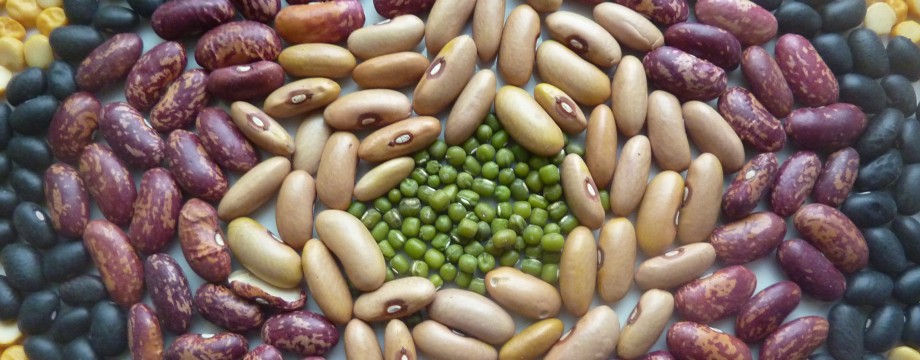
Plus lots and lots of amazing fruit, vegetables, pulses, nuts and seeds.   The staples for any amazing vegan diet.  

So nothing too weird and wild eh?!  Here are other bits we regularly keep in our larder/ cupboards/ drawers/ random jars that act as launch-pad for the Beach House dishes.  “Houston!  We have turmeric!”

SPICES – We are mad about them, ground or seed, in a good way.  Stay spicy!!!!:

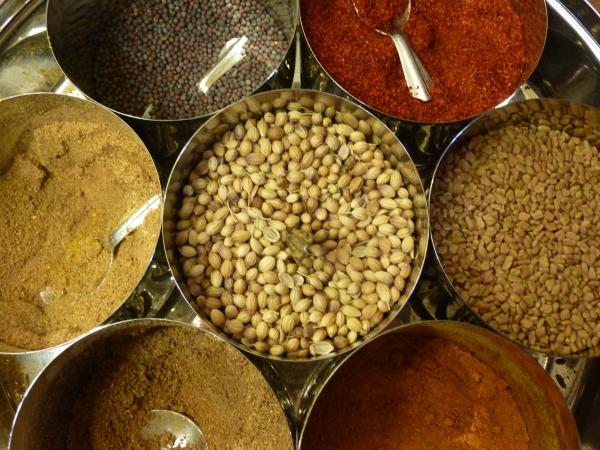
Cumin, coriander, ras el hanout, sumac, turmeric, chilli, cayenne,  garam masala, cinnamon, fenugreek, fennel seeds, cardamom, mustard seeds (yellow, red and/or black), asafoetida (hing), clove, ajwain seeds, star anise, nora’s (dried spanish peppers), paprika (smoked and sweet), good curry powder, nutmeg, good black pepper.  Normally a few odd spice mixes we’ve picked up along the way.  

PASTES/ PRESERVES/ BOTTLES – This set of beauties pack a real flavour punch:

Tahini, molasses, peanut butter, other nut butters like brazil or hazelnut, barley extract, marmalade, marmite, good red wine, white and sparkling wines, sherry, port, tequila (you get the idea……), orange blossom water, rose water, wasabi, tamari, mirin, teriyaki sauce, sushi vinegar, rice vinegar, balsamic vinegar, red and white wine vinegar, apple cider vinegar.

DRIED FRUITS – Such sweet things and so much tastier and nutritious than simple sugar:

Date, raisins, figs, prunes, apricots (unsulphured), apples, sun dried tomatoes, mulberries (if we’re lucky), cranberries, blueberries.

OILS – Richness, good fats and vital lubrication:

Light olive oil, great Extra Virgin Olive Oil (EVOO), vegetable/ sunflower/ rapeseed/ groundnut oil (for frying at high temp), good cold pressed rape seed oil (for dips and drizzles), walnut, toasted sesame, avocado, chili.

PICKLES/ JARS – Gherkins, capers, OLIVES, chutneys and jams, always marmalade, dijon, English and wholegrain mustard

SNACKS – Things that make you go mmmmmm!

Dark, dark chocolate, nachos, wasabi peas, bombay mix, baked chickpeas, japanese rice crackers, the occasional crisp

rsz_p1160891

POWDERS – Funky coloured things in bags and boxes, which are normally super healthy:

Nutritional Yeast Flakes, wheatgrass, barley grass, spirulina, cacao, live yeast, baking powder, bicarb of soda, organic and low salt vegetable stock, rock or sea salt, whole peppercorns

GRAINS/ OTHER DRIED STUFF – Where would we be without stodge and ballast?!

Pasta (brown, green and/or multi coloured – beetroot is cool), polenta (rough and fine), brown rice, many different beans, millet, barley, oats (rolled and Scottish), quinoa, cous cous, bulgur wheat, wild rice, wheat groats, muesli, buckwheat, rye flour, wholemeal flour, gram flour, spelt flour, coconut flour, corn flour, loads of different lentils, mung beans, alfalfa, soba and udon noodles, rice noodles, porcini/ shiitake mushrooms (dried), powdered seaweed, nori sheets

NUTS/ SEEDS – We are very nutty and seedy here in equal measure:

Sunflower, flax/ linseed, sesame, pumpkin, linseed, hemp, poppy seed, chia

Almond, walnut, cashew, hazelnut, peanut, macadamia (if we’re flush), pine nuts, pecans, pistachio, coconut, Brazil.

‘ERBS – Where would we be without these leaved wonders?!:

Rosemary, thyme, basil, chervil, tarragon, mint, ginger mint, dill, curry leaves, Thai basil leaves, oregano, dried mixed herbs, sage, bay leaves, marjoram, dried nettle, wild garlic, sorrel

As I said, you don’t need all of this, but the Beach House is in the middle of nowhere, so we keep a decent, old fashioned larder.  Jane loves drying herbs and I love grinding spices.  An essential part of cooking is of course the ingredients, not only buying them, but keeping them in tip-top condition.  A good larder is the sign of a happy cook!

We write alot more about spices, grains and vegan larders in general in our new book, Peace and Parsnips.  Its packed full of vegan deliciousness.  Coming soon in May 2015.

Out in May!!!!!!!!!!!!!!!!!
Categories: Healthy Eating, Superfoods | Tags: , , , , , , , , , , | 2 Comments

Homemade Spiced Ginger and Lemon Cordial (Sugar free)

Star Anise - one of the 'stars' of the show Star Anise – one of the ‘stars’ of the show

So Jane and I decided to go for a walk along the beach yesterday and nearly got blown away.  Spring hasn’t quite arrived in North Wales!

I know this may sound like a winter time treat, but having just returned from India, Wales seems pretty damn wintery to me!  Jane and I are warming our cockles around steaming mugs of hot ginger drinks (I have managed to pick up the dreaded sniffles).  Ginger is the best thing for colds et al, more like a potion than just a refreshing tipple.  This cordial also work brilliantly cold, over ice and in a tall glass (glug of gin optional).

The B.H.K is a global thang and we know that many of you are getting ready for winter.  This zingy cordial will help to ease the blow of dark days and timid sun.  We know that our mates Fran and Steve down in Tasmania will dig it for example.  Serendipity Farm will be buzzing!

Jane throwing shapes on Dinas Dinlle beach - Wales is yet to feel the heat wave of the south Jane throwing shapes on Dinas Dinlle beach – Wales is yet to feel the heat wave of the south

We love making our own stuff, you know what goes into it.  Most cordials, even if they are organic and well made, are packed full of sugar.  Here, you can use as much or as little sweetener as you like.  Sometimes we have it neat, sugarless.  A real wake up zing in the morning!  Try this with hot apple juice for an even more decadent steaming cup of joy.

This is one of those things, once you make one batch or cordial, you cannot stop.  Roll on the elderflower season.  Coming soon hopefully……..

Glorious grated ginger - can you smell that zing!!!! Glorious grated ginger – can you smell that zing!!!!

The Bits – Makes roughly 500ml
100g grated ginger root

1/2 lemon (peel and juice)

1 lemon (juice)

4 green cardamom pods (split)

1 star anise

1/2 stick cinnamon

5 cloves

650ml water

Sweetener (agave, maple syrup etc) – as you like, we go sugar free if poss.

rsz_p1170306

Homemade Spiced Ginger & Lemon Cordial (Sugar free)

Do It

Place all (except the lemon juice) in a medium saucepan and bring to a boil, pop a lid on and simmer for 20 minutes.  Set aside, squeeze in the lemon juice and leave to cool and steep for an hour.

We find that after a night in the fridge, the flavours are even more full power.  You may like to add your sweetener now, but we prefer to do it when we drink it, depending how our sweet tooth is feeling.

Strain into a jug and pour into a clean glass bottle or a kilner jar.  Something sealable and preferably glass.  Because it is lacking in loads of sugar, this won’t last for as long as other cordials. Keep in the fridge and enjoy within 3 days. Trust me, it won’t hang around that long!

Serve

Add to cup of hot water (just off boiling) to make a lovely steeper or serve over ice with a slice of lemon and sparkling water, making an awesome ginger ale.  Either of these can be made a bit boozy with a glug of dark rum (a Dark and Stormy) or gin for example (as if you need guidance!)

Sweeten as you like, with what you like.  We use brown rice syrup or sometimes stevia if we are being supremely healthy.  Liquid sweeteners work best as they dissolve quickly and easily.

Hot off the hob – try it warm or cold with great apple juice.  YUMMMAH!

Foodie Fact

All the spices in this cordial are AMAZING for the body!  They are natural medicines for all sorts of ailments.  We will focus on star anise.  Boil star anise in some water and sip it gently, it can soothe stomach pain and cold/ coughs.  

Anise has a delicate liqourice flavour and the seeds of the star are simply anise seeds.  Surprisingly!  The seeds and the husk can be used in cooking, baking etc.  The main source of anti-oxidant glory is the volatile (in a good way) oil named anethole, but anise does boast a potent cocktail of other anti-oxidant oils.

In many traditional medicines anise is used for: anti-flatulence, anti-spasmodic, digestive, anti-septic, expectorant, stimulant and tonic.  They are also a wonderful source of the vitamin B’s, vitamin C and A and contains high levels of iron, copper (good for red blood cells), calcium and potassium.

Categories: Healing foods, Infusions, photography, Recipes, Wales | Tags: , , , , , , , , | 6 Comments

‘Meat vs Veg’ – Lee on T.V.

All images taken from ‘Meat vs Veg’ shoot, Summertime ’13

I made a TV program called ‘Meat vs Veg’, I have no idea why I haven’t popped it on the BHK yet, but here it is.  In all it’s glory!  It was nearly two years ago now and since then has been shown all around the world on a variety of food channels, but as yet, has not been shown in the UK.  Hopefully, it will be on soon.

It was a load of fun to make and the basic format was me against Mike Robinson, a top, and very meaty, chef; owner of the Pot Kiln Pub and an all around gentleman (unless you happen to be a deer that is).  We cooked for a varied group of people, two contestants per show, all with weird and wonderful tastes in food; some gourmet critics, others couldn’t tell a chicken wing from a sweet potato.  You will have to watch the program to see who won, Meat or Veg??!

https://www.youtube.com/watch?v=P6qFCXU9t64

Mike and I got up to all sorts of mischief around London, each show contained a ‘Street Challenge’ where we had to hit the streets and tempt people with our tasty morsels.  We cooked for women rowing teams, R and B models, animal volunteers, Battersea dogs home, aspiring theatre actors, music studio employees…….it was a wild time.

Mike and I were cooking everything live to camera and trying to be interesting at the same time.  Which is much more difficult than it may sound!  Making a TV program down in London was certainly a change from working up in North Wales.

Jane and I were in India recently and it was showing on a Nat Geo channel.  I even got recognized in a small village in the Himalayas, which was very strange and quite hilarious.  ‘Meat vs Veg’ is out there and it’s a light hearted food program, with stunning food and bags of laughs.  It highlights my ability to make a fool of myself in front of a camera (a talent I have honed since childhood).  Overall it was a great experience.

If you are in Serbia, Brazil, India, Hong Kong, Australia and probably a load more countries around the world, keep your eye out for ‘Meat vs Veg’ on your food channels and let us know if you manage to catch an episode.  I’m the tall hairy one, probably attacking Mike with a carrot or other root vegetable.  He deserves it!!!!!

Mike and I (trying to look tough)

Categories: Healthy Eating | Tags: , , , , , , , , , | 15 Comments

Sweet Potato and Spinach Thoran (Keralan Stir Fry)

Sweet Potato and Red Pepper Thoran

Sweet Potato and Red Pepper Thoran

Do not be put off by the long list of ingredients, this is Indian cooking in a flash! Thoran is like a South Indian stir fry, very quick to get together and whip up.  Its one of those dishes that easily slots into the ‘staples’ category of your recipe repertoire.   Small efforts are rewarded with massive and delightful flavours.  Definitely our way of doing things.

The ingredients for this have been adapted to Wales, a subtle change from steaming, tropical Kerala.  I’ve still gone for some non-native ingredients, pepper and sweet potato, but swede and parsnips just don’t seem to fit the bill (although I did use them for a soup – coming soon……)

Thoran is what the Indians would call a ‘dry’ side dish, normally served with a saucy curry (like Sambar) and rice, some coconut chutney would finish things off like a tropical Keralan dream.  Thoran is cooked especially well in Kerala and Tamil Nadu and this part of the world is a vegans heaven.  There are very few dishes which are reliant on ghee (clarified butter) that dominates the cooking of North India.  In the south its all about the coconut and sometimes, if you’re lucky, the odd cashew.  The food is lighter and seems fresher, without the reliance on uber rich, spicy sauces (which I might add are extremely delicious).

Thoran is an essential part of a Sadya, which is basically a very elaborate South Indian Thali, normally served on a banana leaf (if you’re in the right joint) at festival times.  Sadya showcases the depth and diversity of Indian cuisine, the way for centuries it has been designed and modified to tantalise all of the tastebuds and senses.  Sadya will have dry curries, saucy curries, fluffy rice, crispy papads (poppadoms), sour chutneys, creamy/ herb based chutneys, smokey chutneys, banana chips, spicy pickles and normally a tamarind based soup (Rasam) to aid digestion of all of this.  In fact, a full on Sadhya served at a big festival can consist of around 28 dishes (some even go up to 60!)  I would have to say that to get the most flavour from your Keralan food, it has to be eaten with (well washed) hands.  Roll up your sleeves and dive in.  A Sadya sounds like an elaborate feast but its actually quite a normal meal, inexpensive and versions of it are served in modest restaurants all over Kerala.  I think we normally paid around one pound for an all you can eat Sadya.  Yes ONE POUND for all that deliciousness!  Welcome to India!  The dishes all come out in a specific order and a nice gentleman will come over and just keep spooning things onto your welcoming leaf.  It is quite a complicated process, but when you’re the recipient, you just scoop away and smile.

Trying to help, learning loads.....

Trying to help, learning loads…..

I have just got back from the Mother land and while I was there stayed in some amazing homestays.  I spent the first six weeks travelling from Delhi to Kerala with my Dad (see out blog ‘The Jalebi Express‘) and then we met Jane in Delhi and Jane and I travelled the Himalayas and spent time with the Tibetans up in Mcleod Ganj. Homestays are not normal in India, they vary greatly, some are just like hotels although many hotels in India can soon become something like a homestay.  If you hang around for a while, you are bound to get to know all the people that work there.  More so than in other countries.  Even in the heart of Delhi, I now know all the people who work in my favourite hotels, restaurants, shops and chai stands.

Whilst travelling around the spectacular North of Kerala we stayed at Varnam Homestay, just outside Wayanad National Park.  There, I had the pleasure of cooking with Beena (our host) and her amazing team of lady helpers.  Wayanad is tucked away in the northern tip of Kerala and is a stunning area, the flora and fauna are dense and spectacular; wild elephants and tigers roam the land and the people are gentle and very hospitable.  The way of life hardly wavers above a gentle amble.  Beena and Varghese our gracious hosts were amazing and could not have made Dad and I more welcome.  When I mentioned my passion for food and cooking they immediately roped me in to helping out with the next days lunch and dinner prep.  I learnt so much and was amazed to see their chopping skills.  You pull a plastic sheath over your index finger and use it as a mid-air chopping board.  The knives are sharp and occasionally you end up cutting through the flimsy guard.  Once the blood is stemmed, you carry on with a new colourful finger guard.  This of course never happens to the ladies.

The Varnam ladies get busy

The Varnam ladies get busy

We prepared many dishes, but the Plantain Thoran was one of the highlights, cooked over a wood flame stove with minimal fuss.  We also made a Keralan classic sauce, with highly roasted coconut and ginger as a base.   A very unique flavour and something I will be cooking very soon (I forgot the name, it may be called Inchi Curry – see here for a recipe).  Once i find a good supply of coconuts up here, our kitchen is heading towards Kerala again.

Varnam Homestay was set in some impressive farmland and forests.  The little huts are raised on stilts to ensure the farmers have somewhere to go when a tiger wanders by

Varnam Homestay is set in some impressive farmland and forests. The little huts are raised on stilts to ensure the farmers have somewhere to go when a tiger wanders by

Varnam Homestay is set in acres of its own land and we were served only ingredients that grew on their land, that included the rice, coffee, all the sensational fruits and vegetables and even milk (they had a few cows roaming behind the kitchen).  The family were so friendly and warm, Dad and I stayed an extra two days, mainly exploring the locals hills and testing out the hammocks for comfort and durability.  They all seemed to work well.  We also saw a tigers footprint, which looked fresh, but I am no expert.  It sounds like I’m belittling the whole experience but the food was a highlight and to be served only homegrown, was a rare and highly tasty treat.  Another wonderful aspect was the other guests, not something you can say in every hotel. They were such a good bunch from all around the world, we ate together on a large table and during the delicious meals,  very quickly became friends.  I think eating is the best way to meet new people, we all relax over a good curry!

Varnam's Plantain Thoran

Varnam’s Plantain Thoran

Indian food is mind boggling at times and can be complex, but that’s why I like Thoran, its cheap and quick.  The other wonderful thing about a dish like Thoran is it is there to use up any seasonal produce.  In Kerala for example plantains are a regular ingredient, as well as bitter gourd, yucca, yardlong beans, giant arums, red cheera and several different types of flowers.  Even banana flowers make a mean Thoran.  In Britain, you can opt for potato, green beans, carrots, I’d even go for asparagus.

Thoran is quick to cook and so easy to get together

Thoran is quick to cook and so easy to get together

The Bits – For 4 (as a side dish)
2 tbs coconut oil
400g sweet potato – or 1 big one (peeled)
1 onion (peeled)
1 large red pepper (deseeded)
(all finely diced)
4 large handfuls spinach leaves
1 teas mustard seeds
1 teas cumin seeds
1 handful curry leaves
2 dried chillies (cut down the middle lengthways)
2 tbs grated ginger
1 tbs turmeric
75ml water

Finish with……
1 massive handful grated fresh coconut (or desiccated coconut will do)
1 large chilli (finely sliced)
1 handful fresh coriander (finely chopped)

Do It

Thoran cooks quickly, so best have all your ingredients to hand and prepared.  Stay with the pan for most of the cooking time, stirring gently with a non-metal spoon or spatula.  I love this kind of cooking, its exciting!

In a large, heavy frying pan, preferably with a chunky bottom, warm your coco oil on high heat.  Add the dried chillies, mustard seeds, when the seeds pop a little add the curry leaves.  Fry for a minute and then add your sweet potato, onion and peppers, stir.  After a couple of minutes, add the ginger and turmeric and a little water if things begin to stick to the bottom.  Fry for a couple of minutes and then scatter the spinach on top and cover the pan with a lid.  Lower the heat a touch, leave to cook for five minutes.

Check that the sweet potato is softened, then stir in the grated coconut, fresh coriander and chillies.  Reserving a little of these for a final flourish.

Serve 

Spoon into a preferably warm and striking serving dish and sprinkle on your ‘final flourish’ ingredients.  Munch with relish and dream  of swaying palms and endless rivers of mango juice.  Check out those vibrant flavours!!

Sweet Potato and Red Pepper Thoran

Sweet Potato and Red Pepper Thoran

Foodie Fact

Sweet potato is packed with beta-carotenes.  In fact it is one of natures best sources of Vitamin A.  They also boast plenty of vitamin C.  Although SP’s are a starchy root veg, they actually help to maintain and regulated our blood sugar levels, mainly due to their high levels of dietary fibre.

One of the local residents, who was friendlier than he looked

One of the local residents, who was friendlier than he looked


Categories: Curries, Healthy Eating, Recipes, Travel | Tags: , , , , , , , , , | 1 Comment

Mushroom and Spinach Hash and a Saucy Debate

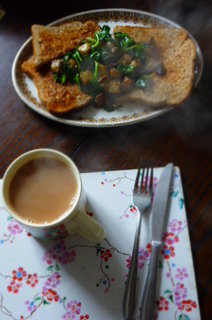
Mushroom and Spinach Hash

Mushroom and Spinach Hash

Breakfast of champs!!!!!!!!!!!  Although really anytime of day is a good time for hash.  Spinach is not everyone’s breakfast go-to veg, but it adds a stack of vitamins and nutrients to any dish and the body loves few things more first thing.  Give it a go, it might even start making an appearance on your cooked brekkies (or is that a step too far?!).

I always find it strange that the things we eat in the morning normally make an ace late night snack as well.  Hash is proper Brit grub, which for me means it fills the belly after a long walk around our freezing terrains, either returning from a pub or recovering the morning after.  After all, beer and Britain go together like beans and toast, pies and piccalilli, Wimbledon and Cliff Richard (Dad’s personal favourite).  You catch my drift, historically British culture needed food that filled a whole, fueled our passion for hard graft and soaked up buckets of ale.

HASH

An evocative word for many reasons, culinary and otherwise.   Foodie wise, the name hash comes from the French ‘hacher’ which means to chop.  Hash is normally a wonderful receptacle for leftovers, alot like Bubble and Squeak.  In Denmark they have a dish like hash called ‘biksemad’ which means, ‘tossed together food’.  I think this is sums it up.  In fact, most countries have a version of hash up their sleeves, ‘picadillo’ in Spain, ‘pyttipanna’ in Sweden and ‘tyrol’ in Austria.  We love it!

Most people forget that Britain was once struggling and my grandparent and parents would eat things like hash primarily because they were quick and cheap.  Hash is proper ‘poor mans’ grub but this, as we find all over the world, does not mean that its poor food.  Hash is a brilliant way of turning cheaper bits and pieces into a hearty and satisfying meal.  One chap has even release a cookbook dedicated to the mighty hash and high end restaurants are now doing fancy things with the hash medium.

Hash is something I was partially raised on.  In the North East of England there are many varieties.  To my mind, its loads of stuff fried together in a pan, with a potato stuck in their somewhere along the way if you like. Its proper British grub. I think the main thing with pan frying potatoes is to take it slowly and gently, try not to bash them up too much.  Many people around the world add spice to their hash, in my neck of the woods, this is absurd.  Hash is straight up and pure, not spice.  I know that in the States they use the term hash for many differing dishes, some thick stews, some loads of minced meat fried.  Well not it in the Beach House hombres, this hash is strictly plant but not lacking in substance and certainly not lacking in nutrition and taste.

Dad gets caught in the crossfire (notice awesome dressing gown, essential in the Artic realm of the pre-spring Beach House Kitchen)

Dad gets caught in the crossfire (notice awesome dressing gown, essential in the Artic realm of the pre-spring Beach House Kitchen)

I’m not totally blowing our trumpets here (….I am….) but vegans know their way around a nutritious, low saturated fat, nibble or two. As a kid, we used to have this with fatty bacon and probably a load of corned beef whacked in their.  Maybe topped with a sausage or two.  Corned beef was a constant companion to me, or Pek (like Spam, but I found it to be tastier).  Strangely, last night I had a dream/ nightmare based around that jelly you find around the meat in a pork pie. The same jelly you find on Pek, aspic jelly that is a not-too-distant cousin of the jellyfish and seems quite a strange thing to find stuffed into a pie or coating food in general. It was oozing all over the place, like a B-Movie Monster….”Attack of the Aspic Jelly!”

THE SAUCY DEBATE – ARE YOU RED OR BROWN?

In Britain you’re either red or brown.  There is no middle ground.  The battles lines are drawn!  Like the round heads or the royalists, labour or tory it is unwise to mix your allegiance.  Welcome to our saucy world.

Now if you’re reading from anywhere outside of the U.K. this is going to all sound a little strange, but there is a timeless debate raging on these little islands about sauce. Brown sauce to be exact. Brown sauce is a phenomenon that has gripped Britain since the early 20th century.  Frederick Gibson Garton came up with the recipe, a grocer from Nottingham.  I’ve no idea how, but he thought that combining tomatoes, tamarind, dates, molasses and vinegar would appeal to the masses.  It was a hit and apparently they served it in the houses of parliament, hence the name.  HP is the original Brown Sauce, but there are many contenders (see below).  HP was traditionally made in Aston near Birmingham, the factory is now closed.  HP was originally called ‘snotrag’, a charming name taken from the founders name (Garton’s), late in the 60’s and 70’s it was called ‘Wilson’s Gravy’ due to the fact that Harold Wilson, the British Prime Minister at the time, used to cover his meals with the stuff.   HP now comes in a load of different varieties, but its still best out of the old glass bottle.  Why is that?

BROWN SAUCE – CONTENDERS AND TASTING NOTES

Not all Brits are into HP.  There are many options over here.  As a child I was weaned on Daddie’s sauce, slighty more acidic and not quite as concentrated with a less pungent bouquet.  The main attraction was the price I’d imagine.  Chop sauce is another contender that seems popular in the North.  My Uncle Brian swears by Chop.  I like Chop.  Its very thick and has a lighter flavour than HP.  A good chip dipper.  Having said all of this, for me, I opt for HP.  Having been travelling most of my life, the sight of an HP bottle, with its ‘By Appoitment of Her Majesty The Queen’ and Big Ben embossed on the front, stirs a normally absent sense of nostalgia and reminds me of dinner time around my grandparents house.  Its powerful stuff!

Brown sauce is a treat for us in the BHK, in fact Jane is more of a red sauce gal (Tomato Ketchup that is).  I reserve a chilled bottle in the fridge for special breakfast times.  Its highly processed and not what you’d call a healthy option.  Full of salt and sugar.  Its just one of those flavours that is so heavily linked with childhood memories.  Its also vegan and there are precious few ‘childhood memory’ foods that can claim to be purely plant.

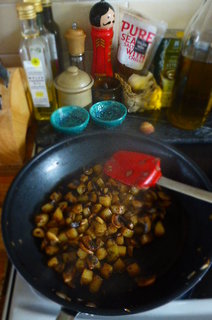
The key here is to cook the hash for a while, on a lowish heat and make sure everything is nicely caramelised.  Stirring gently and regularly to ensure the potatoes don’t stick and remain in tact.  Its a hash not a mash!

Brekkie of champs......

Brekkie of champs……

We’ve had a bash at home made HP sauce and homemade baked beans, but this morning Dad and I had a date with a beach walk.  There are some brilliant recipes on the web for both of these things and of course, everything is better homemade right?!

I’ve made hash with firm tofu added before which makes it more substantial and of course brings a load of protein to the party.  More filling for sure.  Crumble some drained firm tofu (roughly 175g or half a block, will be enough) into the pan with the mushrooms.

There are an infinite amount of hashes to experiment with, use whatever veggies you have at hand and put it on toast.  Eeeaaaaaaaaaassssssssssyyyyyyy!

Things are getting golden in the pan

Things are getting golden in the pan

The Bits – For 2

1-2 tbs cooking oil (I used rapeseed oil)

10 mushrooms – chestnut work well (roughly chopped)

2 small potatoes (cut into 1cm cubes, skins scrubbed and kept on)

1 small onion (finely diced)

4 massive handfuls of spinach leaves

1 teas balsamic vinegar

Sea salt and plenty of black pepper (to taste)

You favourite toast and lashings of baked beans

Optional Extra
HP Sauce (the only way to go)

Do It

In a large heavy frying pan on a medium heat, add the oil, potatoes and onions.  Coat well in the oil using a wooden spoon or spatula and continue to gently stir and cook for 10-15 minutes.  The potatoes and mushrooms will now be nicely caramelised.  Add the mushrooms and balsamic vinegar and continue to gently stir regularly and make sure the potatoes are not sticking, lower the heat slightly if you need to.  (Now is a good time to heat your beans if you’re having hash and beans).

Cook for 5-7 minutes and then pile the spinach leaves on top, it will look like alot, but they cook down quickly.  Stir the leaves into the hash and wait for them to wilt, after a couple of minutes, season well with salt and pepper.

Pop your toast in.  As a vegan, you can buy some nice, natural olive oil spreads (like margarine, but without the nasties) or I just like to drizzle olive oil or good rapeseed oil on my toast.

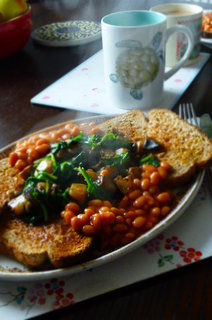
Mushroom and Spinach Hash (with baked beans)

Mushroom and Spinach Hash (with baked beans)

Serve

Spoon the hash over your toast and surround with a steaming moat of beans.  Add sauce in the quantity and location that you prefer and get stuck right in!

Foodie Fact

Spinach is one of the worlds most nutrient dense foods, all wrapped up in a tasty green leaf.  Spinach boasts wild amounts of Vitamin K and A, it is also rammed full of a plethora of minerals like manganese, folate and iron.  Eating spinach will help you against inflammations, cancer, caridiovascular problems and it gives a serious anti-oxidant boost to the body.  Talk about starting the day on a good foot!

Buy vividly green spinach for greater levels of Vitamin C.  If your spinach is wilting anywhere else than your pan, look elsewhere for your daily hit of wonder green leaves.

PS – You may have noticed that Dad is standing in for Jane, who is at this very moment, sunning herself somewhere on a beach in Spain.  Sounds terrible.  She is back next week to really get the BHK rocking.  

Categories: Breakfast, Budget, Recipes | Tags: , , , , , , , , , , , | 3 Comments

Happiness is the highest form of health – The Dalai Lama

No matter how many kale smoothies we drink, no matter how much we avoid processed sugar or potatoes, “happiness is the highest form of health.”  I found this little quote put much of our current eating habits into focus.  Enjoy your food, whatever you’re cooking or eating!  A healthy, content and happy mind inevitably leads to a healthier body.

Happy gardener, happy cook, happy food, happy eater.

Jane and I are up in Mcleod Ganj, India, at the moment, spending time with the Tibetan Community in exile.  Read more about our antics here.  If you like this quote, we post regular things like this on our Facebook page.

Chagpo Nang (take care)……

Long life to the Dalai Lama!

FREE TIBET

Categories: Friends of B.H.K, Healthy Living, Inspiration | Tags: , , , , , , , | 2 Comments

A Taste of Goan Cuisine and Papaya Paradise


Papaya Paradise - Papaya, cashews and a drop of coconut milk.  A fruity delight.

Papaya Paradise – Papaya, cashews and a drop of coconut milk. A tropical tickle.

Paradise for me involves papaya, cashews and coconut. Maybe a beach and a few palm trees lolling in the background. Put all those in a bowl (minus the salt water, sand and chewy leaves) you are approaching my idea of a fruit-based nirvana.  We are in Goa and all of these things are plentiful, there are stalls that enforce coconuts on you with each passing, men gifting papayas to you on a regular basis and cashews, the size of small curved chipolatas, are sold for peanuts.  Also, it is not mango season in India, so there is no fruity conflict for me, the papaya reigns supreme.

Peter (the wonderful man who looks after the apartment we are staying in) gifted us the largest and ripest papaya I have ever clapped eyes on yesterday. Carving it is something like hollowing out a canoe from a large orange tree trunk. Peter obviously has a secret local supplier, I’ve never seen a papaya like this is the stalls by the side of the road. It would take up half the stall!

I am not sure if you’re going to be able to get a decent papaya in Europe and beyond. Maybe try a Caribbean or Asian shop, you know the one, the Aladdin’s cave of interesting ingredients from all corners of the world. The little space that transports you to Africa, Jamaica, Thailand and Pakistan just by the power of the brands they stock, the occasional aroma and random, unknown, packet of semi-illicit looking spice that just has to be experimented with.

Se Cathedral - the largest cathedral in Asia (with the largest bell also)

Se Cathedral – dedicated to Saint Catherine, the largest cathedral in Asia (with the largest bell also)

Goa is a magical land, totally different from the rest of India, the cuisine is very interesting, a mixture of many things, Indian and Portugese especially. Each dish changes from region to region and this is not a huge state by Indian standards.
I have been reticent to cook much in the apartment, not wanting to stock up on loads of spices and ingredients, we are only here a short time and whenever I travel I always end up with kilos of half used packets and sachets lurking in the depths of my backpack. This time, I’m trying not to waste a thing.

Tonight I will try something like a Goan Curry, which normally has a good tang to it, created by adding toddy vinegar or tamarind. Adding vinegar to food was the main influence of the Portugese who were here for hundreds of years, in fact, Vasco de Gama landed in 1498 and they hung around until well into the 17th century.  Old Goa had population larger than Lisbon or London at that time. The Portugese also brought some other quite important staples across the waves; namely, chilies and potato, along with some very common spices, especially nutmeg, which the Goans love to use liberally in savoury dishes.  The Portugese also influenced the Goan desserts, many resemble the flans and tortas of the Iberian Peninsula.  Most of our local friends, living around the apartment have Portugese ancestory and could actually emigrate to Portugal if they wished. Interestingly, most of them have the last name ‘De Souza’, there are a few ‘Courtinho’s’, ‘Perrera’s’ and so on.

Dad does an Abbey Road Impression - in front of the Bom Jesus Cathedral, Old Goa

Dad does an Abbey Road Impression – in front of the Bom Jesus Cathedral, Old Goa (‘Bom’ means ‘good’ in Portugese.

Goa is mainly divided between Christian and Hindu (with a small population of Muslims), they have lived in harmony since the beginning and even share some festival days. Religious background affects the way that dishes are prepared, one Xacutti or Kodi will differ greatly depending on the faith involved. Goan cuisine is incredibly traditional and diverse, awe inspiring really. I have never tasted anything like the Vegetable Xacutti I had yesterday in the excellent ‘Viva Panjim!’. A restaurant tucked down a side alley in a sedate quarter of the capital city, Panjim. ‘Viva Panjim!’ is located in the old Fountainhas area of the city, with many colonial looking buildings forming small quiet alleyways and nooks. In this place you can really see what things would have looked like under Portugese rule. My Xacutti involved alot of roasted coconut and was heavy on the warming spices, especially cinnamon and clove, there was definitely some kind of nutmeg/ mace going on in there as well . Dad opted for a Kingfish Goan Curry (like a ‘Vindalau’ – as they call it here), which has a vibrantly red coloured sauce which contained; Kashmiri chillies, tamarind, lots of onions and garlic, cumin seeds and tomatoes. It looked sensational. All of this served in an old colonial home with slow fans and hand carved furniture. The owner Madam Linda D’Souza sat at a desk overseeing things and when we showed an interest in the cuisine, how it was prepared (I was digging for a recipe or two of course) she gifted us a beautiful cook book, packed with the history of Goan culture and very personalised recipes from local home cooks and chefs.  There are even diagrams of how to climb a coconut tree and work a rice paddy.

In 'Viva Pajim!' one of our finest dining experiences to date

In ‘Viva Pajim!’ one of our finest dining experiences to date

Goa has no end of old school hippy joints that sell homemade tofu or seitan, pancakes, vegan cakes etc which was fine for a couple of meals (Bean Me Up, Blue Tao, Whole Bean Cafe and the legendary German Bakery were particular favourites) but we are now definitely in the hunt for more Goan delicacies. The only problem is we’ll have to leave the beaches and head inland, to the small towns to find the real deal. It seems that travelers/ tourists are not really into the local wonders. Which is a real shame. We have been invited by two real old school gents, Patrick and Peter (who run a tiny bar beneath our place) to their home for a home cooked (vegan!) dinner on Sunday. Something we are both very excited about. Will keep you posted.

Vegetable Xacuti, Fried Aubergine Chips and Dad's Goan Fish Curry

Vegetable Xacuti, Fried Aubergine Chips and Dad’s Goan Fish Curry

Categories: Curries, Travel, Vegan | Tags: , , , , , , , | 2 Comments

The Tribal Vegans of the Bishnoi Villages, Near Jodphur – 20th January 2015

I’ve been writing a travel blog about my Dad and I’s journey around India, ‘The Jalebi Express’.  We visited some tribal vegans recently, wonderful peace-loving people living in the Thar Desert, Rajasthan.  I hope you enjoy the article!

The Tribal Vegans of the Bishnoi Villages, Near Jodphur – 20th January 2015.

Grinding millet into flour

Categories: Travel, Vegan | Tags: , , , , | 3 Comments

Israeli Salad (The Indian Traveler Classic) and Tribal Vegans


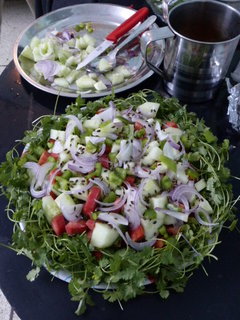
Israeli Salad

Israeli Salad

B.H.K. IN JODPHUR, INDIA

I actually had our homestay’s version of this for breakfast today, sitting on a roof terrace feeling inspired, taking in the massive Mehangarh fort and early morning city skyline with black kites hovering overhead.  The perfect breakfast setting!  I had forgotten about this traveler classic salad.  I enjoyed it so much, I’m having it twice today!  This type of salad is so quick and fresh , apparently hailing from Israel.  Salads like this are almost naked, stripped down and a showcase for glorious veggies.  They have this kind of salad in many countries, Morocco, Turkey, Iran etc, it’s one of the world’s finest side salads that compliments almost any meal.

Any traveler around India will recognise this salad, it’s served in most traveler/ backpacker style restaurant or cafes.  India is a home for many hybrid style world cuisine dishes.  For example, German Bakeries are everywhere selling bready croissants and random biscuits.  I guarentee that from Pushkar to Rishikesh, Gorkana to Leh, Varkala to Darjeeling travelers will be eating this salad right now with grins on their faces.  Salads are rare and normally a very small deal in India.  I am not sure exactly how Israeli it is, there are obviously some missing ingredients in India, like the gorgeous olive (which I miss deeply when on the road in the East).  I’ve been totally spoilt for olives in Spain over Christmas, we have our own olive man down the market who always sorts us out with a local and diverse range of those delightful orbs of oily goodness.

So I whipped my version up tonight for dinner (well Dad added an omelette to the mix, but he’s doing amazingly well to steer away from meat and embrace veganism).  I love making dishes in hotel rooms and always travel with my trusty little knife and a couple of plates and spoons.  Add to that two big tin cups and you have all the apparatus needed for a salad smorgasbord.  Jane and I have traveled with a grater before and other such bits, but space is at a premium in my backpack this time.  Making things in your room means you know exactly what went into it, sometimes in India they stir a little curd or cream into this salad.

I miss the crunch and vibrancy of a massive bowl of salad, all that raw food goodness.  I adore curry, but making my own fruit salads and veggie salads in my room is a real treat.  When I’m eating it, I can almost hear my body thanking me.  Keeping yourself topped up on nutrients and vitamins especially when travelling is a must to stay on top form.  I even have Dad taking part in my morning spirulina ritual, you can buy it over here inexpensively and organic.  Adds a touch of zing to proceedings!

rsz_p1130399 (1)

Dad striding through Sadar Market, Central Jophur with the giant Mehrangarh Fort in the background.

So, here I am with Dad, Jodphur, in Rajasthan.  A wonderfully historic city, I am typing beneath the giant fort, fantastically lit each evening.  In fact, it reminds me a little of an old Spanish town, dominated by a medieval fort.  The streets are small and windy and the people wonderfully friendly, something I find all over Rajasthan.  We are staying with a incredibly hospitable family (the Hill View Guesthouse), headed by the laugh a minute Zafran, who is also a member of the local government…..I could go on at this point for a long, long time, but Dad and I are starting a blog called ‘The Jalebi Express’, coming to wordpress very soon (aka when we can get a decent blast of reliable internet access).  It’s going to be a hoot, with all of Dad and I’s adventures around this truly awesome land.  For regular Beach Housers, the other half of the BHK, Miss Jane Legge, will be joining up with us in Delhi in some 5 weeks time.

VEGAN INDIA

Being vegan is a serious challenge in India, normally involving turning down sumptuous looking food and regular boughts of impromptu fasting.  I like yoga, I believe fasting to be very good for the health, but if you’re not expecting to go hungry it can be just plain pants!  Trying to explain not eating ghee to an Indian is a little like going into an Italian Mama’s kitchen and saying “What are you doing with all those rank tomatoes and this wine is like a poor man’s Vodka and Red Bull and as for that dodgy mouldy looking cheese, I’m going nowhere near that, smells like feet, and as for those dodgy noodle things.  Sorry, just not my thing at all.  I’m English you know.  Our food’s great etcetc…….”  I approach with hopefully a little more tact but the ghee issue constantly rears its head and seems to sneak into the most unexpected things.  I will soldier on and still have plenty of oatcakes left from Lidl!  Turning down things like camel milk tea, traditional village cooked dishes, constant streams of delicious looking steaming masala chai, basically all Indian sweets is one of the most difficult part of being a vegan.  It’s well worth it though, this is after all, very much my own choice. It’s just when cultures shift, so does the ethical playing field and in India, the cow is Holy and what comes from the cow, the milk and even the poo has sacred connotations.  I have started to go for the approach of lots of laughing and pointing at my head with a zany look in my eyes, trying to convey that I am slightly mad.  Lots of shrugging and confused looks ensue.  It rarely works.  Any ideas?

Down at the market, Jodphur

Down at the market, Jodphur

I had a magical time down at the market today gathering a few bits.  I have been to Jodphur before and love the little veggie market near the stately Victoria Clock Tower, a hopelessly British looking thing poking above the skyline of Maharaj buildings, Mosque Minauret’s and an enormous palace.  I always get local price there and meet so many characters.  The salad, with plenty of leftovers, cost around 1 pound to amass.  The experience of chatting with characters selling fruit and veg (market vendours are always a hoot all over the world, why is that?), local folk who are interested in my nationality; reasons for visiting India, marriage status, occupation, age, university back ground, next destination (a very standard range of questions fielded on average 30 times per day) and having a laugh is of course quite priceless.  I gently elbowed my way past many a ferocious, single minded house wife.  In the market, they mean business.  When buying veg I have regularly been elbowed out of the way or body checked away from the freshest looking produce.  It can get a little hectic.  All part of the fun.  For my quid I also got 6 small lemons and a wedge of ginger for morning beverages.  Not a bad price all considered!

TRIBAL VEGANS!

In fact today I’ve been quite busy in the kitchen.  Earlier on Dad and I visited a Bishnoi Tribal village, a very interesting branch of Hinduism (see here).  They are vegans!  The Bishnoi’s do not believe in harming nature, no cutting of trees, no animal products at all.  They eat grains and vegetables grown in local forests and this philosophy of life can only be found in Rajasthan, just 28 villages in fact.  You’ll see me busy below grinding millet to make flour which is them mixed with a little water and made into lovely, toasty chapattis.

Grinding Millet for chapati, Bishnoi Village, Jodphur

Grinding Millet for chapati, Bishnoi Village, Jodphur

Tomorrow, Dad and I are helping with the food preparation for a engagement party, some 300 guests are expected!  Fortunately Dad is an ace carrot peeler and garlic basher.  Indian’s love a wedding and this is wedding season.  We went to visit the brides house last night, Dad and I carrying plates of fruits and nuts down through the winding blue walled lanes of Jodphur.  The bride to be lives beside a large white mosque and we were welcomed like long lost family.  Dad has some tender looking mutton, I opted to nibble on roti (flatbread).  Tomorrow night, the brides family come to visit our homestay, with Raja (the amazing, 18 year old son of the family) taking centre stage.  Zafran is organising the feast and it sounds like a mutton affair again.  I’m looking forward to getting behind the scenes of mass Indian wedding catering.  The pots are normally the size of a small jacuzzi.  Maybe I could rustle up a salad?!

The Chef at Raja's Brides House (lovely fellow, cooking on wood fires for hundreds of hungry party goers)

The Chef at Raja’s Brides House (lovely fellow, cooking on wood fires for hundreds of hungry party goers)

I have made a few wee embellishments to the classic Indian/ Israeli salad.  You knew I would.    They are not really taste based, more with nutrition in mind.  I cannot live for long without green things in my belly.  So I’ve added loads of coriander and mint which is plentiful over here and 10p for a massive bag.  You could also use spinach or even watercress, and if you love parsley, parsley.  Flax seeds are one of my favourite things.  They are powerhouses of all sorts of nutrition.  I’ve added flax seeds which I bought in Dilli Hart in South Delhi (a wonderful craft market if you’re ever in the area).  In a classic Indian twist, these flax seeds turned out to be deep fried and smothered in salt and masala spices.  My diet flips on its head in India and after a week, my belly is just about coming up to speed.  Lots of carbs and a huge decrease in vegetation.

Dinner time, Dad and I getting ready to eat off newspaper on the roof of a Jodphur Blue House.

Dinner time, Dad and I getting ready to eat off newspaper on the roof of a Jodphur Blue House.

A (VERY) BRIEF HISTORY OF CARROTS

In North India, carrots are a shade of deep pink, potentially red.  Striking looking things and ours today was a whopper, about 2 foot long.  It stuck out of my ‘man bag’ like a baseball bat.  Originally carrots in Europe were black (it was the orange loving Dutch who changed the colour to and trend, the Dutch are excellent market gardeners and the British were not.  Many of our techniques for market gardening, meeting our supply of veggies in cities etc, we’ve borrowed/ bought from the Dutch.)

I say things like extra virgin olive oil and sea salt almost in jest.  There is very little of that touching our lips here.  I am sure there is a hotel in Jodphur serving these types of delicacies tonight, but not on our budget!  A miniscule sacrifice for travelling India, but would have embellished this salad very nicely indeed.  Instead we use two sachets of olive oil that Dad had pocketed from our dinner on Turkish Airways from Istanbul.  Genius!

Remember this a traditional Indian Israeli salad and if you decide to make it, you will be joined by thousands of travellers over here, chowing down on exactly the same crunchy, vibrant goodness.

Make this salad super fresh, straight off the chopping board, just like they do in Marrakech, Tehran, Jodphur and  Istanbul.

The Bits – For 4 as a side salad

2 carrots (black, red, orange…….white I hear are quite tasty)

5 tomatoes

1 large cucumber (peeled or non peeled, some say that the skin is hard on the digestion)

1 small, sweet red onion (finely sliced in half moons, nice for presentation)

1 green pepper (finely diced)

3 big handfuls fresh coriander leaves

1 big handful fresh mint leaves (finely sliced)

4 tbs extra virgin olive oil

3 tbs flax/ linseeds

½ lemon juice

Sea salt (to taste)

Do It

Chop your carrots, cucumber and tomato in similar sized 1-2cm chunks.  Arrange your coriander leaves around the edge of a serving plate.  I like to add texture and layers to the salad so mix the mint, tomatoes and onion together (holding back a little onion for topping).  Pile as a base layer between the coriander.  Now mix the cucumber, carrots and pepper together.  Scatter/ pile on tip of your tomato layer.  Scatter the flax seeds and a few thin slices of cucumber on top.

Israeli Salad (The Indian Traveler Classic) ready for action

Israeli Salad (The Indian Traveler Classic) ready for action

Serve

When ready to serve, simply drizzle the oil over the salad and squeeze the lemon on top (watch those pips!)

In India, you can serve this with warm chapatti in most other parts of the world, crusty bread is nice.  Or keep it purely raw for optimum nutritional benefits.

PS – Carrots are of course a bit crunchy.  Maybe you’d prefer slightly more refined, smaller chunks.

Foodie Fact

FLAX SEEDS = PROPER ‘SUPER FOOD’, CHEAP, LOCALLY GROWN (It pretty much grows everywhere)

Flax seeds have outrageous amounts of Omega 3 fats, they are superb for anit-oxidants and have plenty of vitamin B.  You will also find them to ease and assist digestion.  They are also cheap to buy, no ridiculous ‘super food’ price tag here.  Not bad for a humble brown grass seed.

Happy muncher!

Happy Muncher!

Categories: Healthy Eating, Raw Food, Recipes, Salads, Travel | Tags: , , , , , , , , | 11 Comments

A Massive Festive Hug!

rsz_p1110540

The depths of winter on Mojon Beach

Just a quickie to say:

MEEEEEEEEEERRRRRRRRYYYYY CHHHHHHHHRIIIIISSSSTMMAAAAASSSSSS!!!!!!X

and then:

HAAAAPPPPYYY NNEEEEWWWWWWW YYEEEEAAAARRRR!!!XXXX

Hope you have a very magical time with plenty of tofu pie and pumpkin crisps………and the odd sherry to wash it all down.

It seems like an ice age since we last said a little ‘hello’. We have been suffering from a very Spanish dilemma over here in Murcia, cooking loads of gorgeous nibbles and bites, but easing into the manana (tomorrow) lifestyle a little too easily. “Manana, manana, manana…..” its a magnificent way to live, but leads to a lack of posts and far too much time to contemplate dinner whilst lounging on a beach. Its 20oC today, Christmas Eve and we are soaking up the rays on behalf of all Beach Houser’s out in lands not so well endowed with festive sunbeams. We salute you!

We are planning a quiet Christmas on the terrace with my Dad and some stunning local vino and a mammoth veg-fest terrine (not necessarily in that order!).  Jane is plotting a platter of potato served three ways, as you all know, Jane is partial to a patata or three.  Dad is fully on board with the vegan express and we’re going totally  vegetal this festive period.  Bravo big man!

2014 has been a great year at the Beach House, thanks for all of your support and inspiration. Jane and I are in India in the new year, so you can expect plenty of curry based action very soon. Our new year resolution will be to whip up more posts, hopefully this year, we’ll actually get around to it. Life so rich and ‘Manana’ an ever viable option…..

Peace, Love and Light,

Lee and Janexxxxxxxxxxxxxxx

The Winterwonderland (a massive calcite wave with turquoise pools) Pammukale, Turkey

The Winterwonderland (a massive calcite wave with turquoise pools) Pammukale, Turkey

rsz_p1110398

CHEERS! (G+T’s all round)


Categories: 'The Good Life', photography, Travel | Tags: , , , , , , | 12 Comments

Breakfast Cookies with Banana and Brazil Nuts and the Trials and Tribulations of Vegan Travel

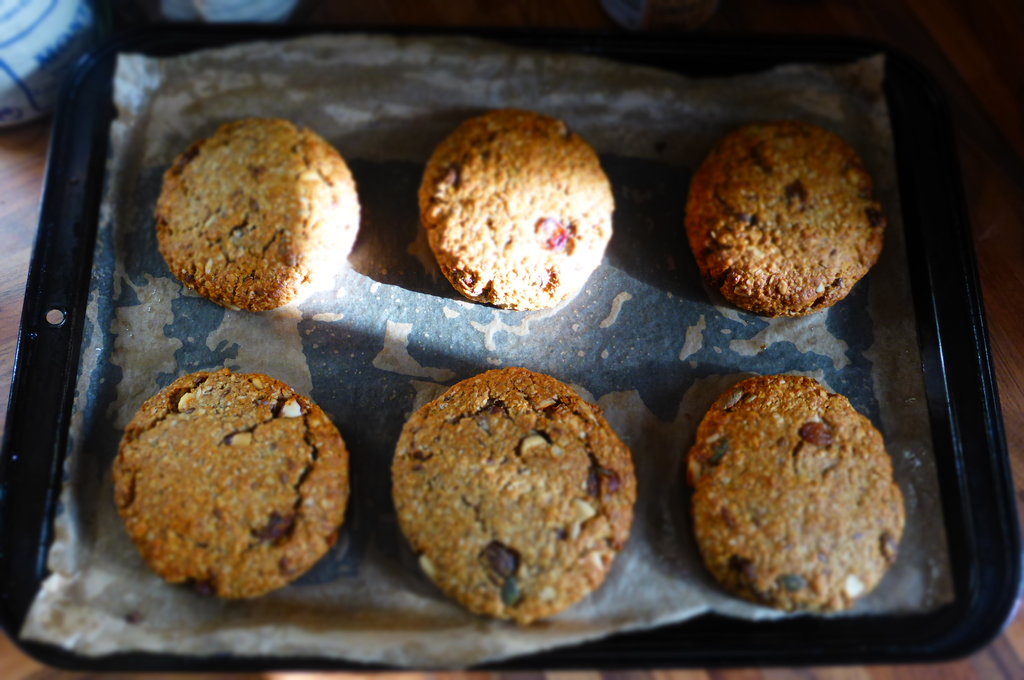
Brazil Nut and Banana Breakfast Cookies - Fresh from the oven

Brazil Nut and Banana Breakfast Cookies – Up close and personal

Warm, healthy cookies for breakfast.  Yes, please!!!!!!  A fine start to any day and even the sleepiest of heads can cope with the simplicity of getting these together.  This is a nourishing and energy giving breakfast on the run and one of these cookies contains much more nutrition than your average bowl of cereal.

A strange post to be winging it across from the Turkish Med, but the weather in the port town of Antalya is dreadful.  Jane and I are tucked up in bed with cups of well stewed Turkish tea.  We were here two weeks ago and the sun was blazing, it now resembles a supermarket car park in Leicester town centre in a November hail storm (with the occasional roman aqueduct thrown in).  Amazing the difference some pants weather can make.

THE BEACH HOUSE ON TOUR

A quick update as to our wandering ways.  We’re in Turkey, as mentioned and have been whizzing around in a hire car for two weeks, covering thousands of kilometres in this fascinating and rich land.  Firstly, Turkey is a country with many layers of incredible history and culture, stunning and varied landscapes, but the real star (as ever we find) is the people.  The folk we have met have been absolutely brilliant, wonderfully hospitable, kind and funny.  Jane and I have felt very at home ever since, on the first night, a genial waiter Abdullah, offered us his house to stay in for as long as we like. We declined his more than generous offer, so he halved our bill and sent us on our merry way.  This has become quite normal, every day we are confronted with bare faced kindness and highly welcoming behaviour.

The view from our hotel in Antalya on the first day, now it looks considerably greyer with occasional lightning forks crackling over the mountains.

The view from our hotel in Antalya on the first day, now it looks considerably greyer with occasional lightning forks crackling over the mountains.

We’ve been so active in the last 14 days its quite hard to recap that’s been done.  Having taken in most of the Turquoise coast, with its stunning ancient Greek and Roman Ruins and beautiful beaches, we headed up to Pammukale, which is a massive calcite wave with hot thermal springs (and an almost token vast ancient Greek settlement on top).  We then whisked our little Fiat up through the Alpine clad mountains, inland and across a vast Anatolian steppe to Konya (the resting place of the poet Rumi and the home of the whirling dervishes) and then spent a few days exploring and hiking in the ridiculously unique and surreal rock features of the Cappdocian valleys.  We stayed in a luxury cave, carved out of compressed volcanic dust.  The beauty of having a car is being able to stop alot along the way and get lost.  Getting lost I find is the best way to get to know a country properly.  The out of the way places are always more fun than the tourist ‘hives’.

Now we’re back on the coast, having traced the silk road for a while and hung out in caravaserai’s.  We’re readying ourselves for a weeks volunteering and cooking on an organic farm and animal sanctuary (meaning sitting down for a day).  Phew!  In a nut shell, its been intensely brilliant.  It feels like we’ve been away for years.  Pictures will hopefully follow when a better internet connection arises.

THE TRIALS AND TRAVAILS OF VEGAN TRAVELER 

Being a vegan foodie traveler outside select parts of LA  is never going to easy, but many Turkish staples are easily veganised and we haven’t struggle for sparkling sustenance thus far.  Saksuka, corba (soup, lentil normally), bean stews, gorgeous pides (Turkish pizza), village rice dishes, shepherd salads, smoked aubergine and pepper salads, many clay pot roasted veggie variations (in wood fired ovens), and lashings of white bread ( no whole grains on the horizon) have kept us ticking over quite nicely.  All washed down with plenty of tiny glasses of Turkish Whiskey (well stewed tea normally grown around the Black Sea).

We do have a very unique diet in the Beach House Kitchen and we always feel the pinch the first few weeks of a travel.  Gone are the 6 vegetable morning juices and rampantly organic raw salads and layered tofu bakes.  Having said that, back here in the big city Antalya (population 11 million) we have just enjoyed a slap up mezze-fest in a white table cloth joint.  Radical selections of local leaves, beetroot, funky turnip juice, fresh steaming white bread, melt in the mouth aubergine dishes (known as the ‘sultan’ of vegetables in Turkey and quiet revered), interesting and intense tomato rice (the shape of which I’d never seen before, very squat and dumpy grains).  Great stuff and an open fire to boot.

Generally travelling as a vegan means scouting out as many fruit and nuts as you can find.  I’m not a huge supplement fan, but do travel with some Spirulina which I picked up in India, see this article I wrote for more info on this wonder green powder.  Getting balanced nutrition is a happy quest when on the road.  A vegan traveler has to be more patient with food and accept the occasion stray lump of cheese or gristle with grace and impeccable manners.  After all, we are ambassadors of something highly  positive, why ruin it all with a restaurant rant.  It can get a little embarrassing on occasion, especially when in a home.  No matter how much you explain yourself, language barriers can become chasms when ordering in a restaurant.  It is quite an alien concept in most parts of the world.  So far, on this trip, I have been fine and had no encounters with surprise ingredients.  There is an element of keeping it simple and realising the the cornucopia of local food is generally out of bounds and you will have to settle with some simple veggies dishes and many baffled and perplexed looks from local waiting staff and restaurant owners.  Jane and I also make alot of salads and simple veggie dishes ourselves, we always travel with a good knife and some plates.  This keeps costs down a little and means that we can pack loads of gorgeous local veggies into diets with relative ease.  Overall, Turkey is a great country for vegan travel and much of the produce is organic and seasonal.

I made these cookies just before we left the Beach House for our travels around Turkey, Spain and India.  They were a real hit with our friends over coffee and chats.  As usual with our sweet things, they are an attempt at taking a gorgeous cake/ cookie recipe and making it as healthy as we can, without compromising on delicousness.

These baked beauts are packed with nutrition and low GI, all that shebang!  They are also super tasty and almost a meal  in themselves.  After one of these for breakfast, we feel pretty much sated for the morning.  We’ve basically put loads of the things that we love in a bowl and baked it, most are ingredients that we believe will do our body the most amount of good first thing in the morn.  A novel way of approaching cookie making you may say?!  But the cookie taste it there, it just so happens that we snook in a few wonder foods as well.  We’ve got oats, flax seeds, bananas, maple syrup, brazil nuts, cinnamon……it’s like a health food shop condensed down into small disc of crispy happiness!  All these things are going to make your body smile and sing.

Gluten free folk may like to try buckwheat flour or your favourite gluten free flour mix instead of the wholewheat flour, we haven’t tried it, but are sure it will lead to magic results.  Gluten free oats are also readily available.  You can also just use oats, but the cookies won’t quite have the density and firm texture that these will.

Fresh out of the the oven

Fresh out of the the oven.  Would you call this a cookie or a biscuit?

SO WHEN IS A BISCUIT A BISCUIT, AND A COOKIE A COOKIE?

I think this is a matter of cultural surroundings and varying criteria.  Personally, a cookie is moist and chewy and a biscuit is crunchy and crumbly.  Cookies are normally fatter and biscuits are thinner.  Cookies are not traditional in the UK, so any new and magical ingredients normally take things in a cookie direction.  What do you think?  I know in the States biscuits are served with savoury dishes, they seem to be more like a semi-scone, but generally quite heavy.  I know one thing, there is no way anybody would refer to these whoopers as a biscuit, maybe a ‘slab’ would be better way of describing them, or a ‘chunk’.

Use any variety of nuts and seeds here, whatever’s handy (although poppy seeds are probably best used only if you love ‘em dearly).

Once baked and cooled fully, these cookies will keep for a few days in a tight fitting container or biscuit tin and don’t just eat them for breakfast, eat them all day if you like!

Gluten-free flour mix and oats will be great in this recipe too.

—————————–

Breakfast Cookies with Banana & Brazil Nuts

The Bits – 6-8 big cookies

200g Scottish oats (50g more reserved)

30g wholewheat flour

2 bananas (mashed with your hands or a fork)

3 tbs sunflower seeds

1 ½ tbs flax seeds

1 handful brazil nuts (roughly chopped)

200ml sunflower oil/ light olive oil

3 tbs maple syrup/ brown rice syrup/

1 teas bicarb of soda

1 ½ teas ground cinnamon

1 teas almond extract

In the mix

In the mix

Do It

Preheat an fan oven to 180oC.

Mix together all the bits in a large bowl until a smooth dough is formed, then add the rest of the oats and stir in.  This will give the cookies a little bite and texture.

For soft cookies bake for 10 minutes, for slightly crisper cookies, turn the tray and bake for a further 2-3 minutes.

Breakfast is served!

Breakfast is served!

Serve

Using a flat spatula, place on a wire rack and leave for 15 minutes to cool.  Best served with a nice big cuppa tea.

Foodie Fact  

Many people believe bananas to be high GI (Glycemic Index) foods, meaning they release their carbohydrates straight into your blood stream and leave you with a ‘sugar spike’ that can lead to blood sugar level mayhem and long term ailments.

Bananas are actually low GI and are our friends, meaning they help against diabetes and keep our heart healthy.  The greener your banana, the less sugar present.  Plantains have the lowest sugar levels.

Goodbye from the Med!  (expect more pics soon)

Goodbye from the Med! (expect more pics soon)


Categories: Baking, Breakfast, Recipes, Travel, Vegan | Tags: , , , , , , , , | 5 Comments

Autumn’s End at the Beach House Kitchen

A very belated Happy Samhain/ Halloween to you all!  We spent it packing up the house, soup bubbling and preparing the garden for winter.  Here are a few images of the last days of Autumn, a week ago, in the Beach House Garden.

We have flown the nest again like migrating birds.  We’re in Turkey, up to our necks in ancient ruins and scrumptious kebabs and salads.  Looking at these pictures makes us feel privileged to live in such a special little corner of the world.  More news from Turkey, Spain and India soon…..goodbye Beach House until AprilXXXXXXXXXXXXXXXXXXXXXXXX

The Beach House Garden bracing itself for the Welsh winter

The Beach House Garden bracing itself for the Welsh winter

Our Hawthorn tree all red and sparkly

Our Hawthorn tree all red and sparkly

Last of the blackberries, still fruiting into late October!?

Last of the blackberries, still fruiting into late October!?

Autumn sunset off the Llyn Peninsula

Autumn sunset off the Llyn Peninsula

Late Autumn and the chills are setting in.  Soup tonic, Pumpkin, Fennel and Leek with Soda Bread.

Late Autumn and the chills are setting in. Soup tonic, Pumpkin, Fennel and Leek with Soda Bread

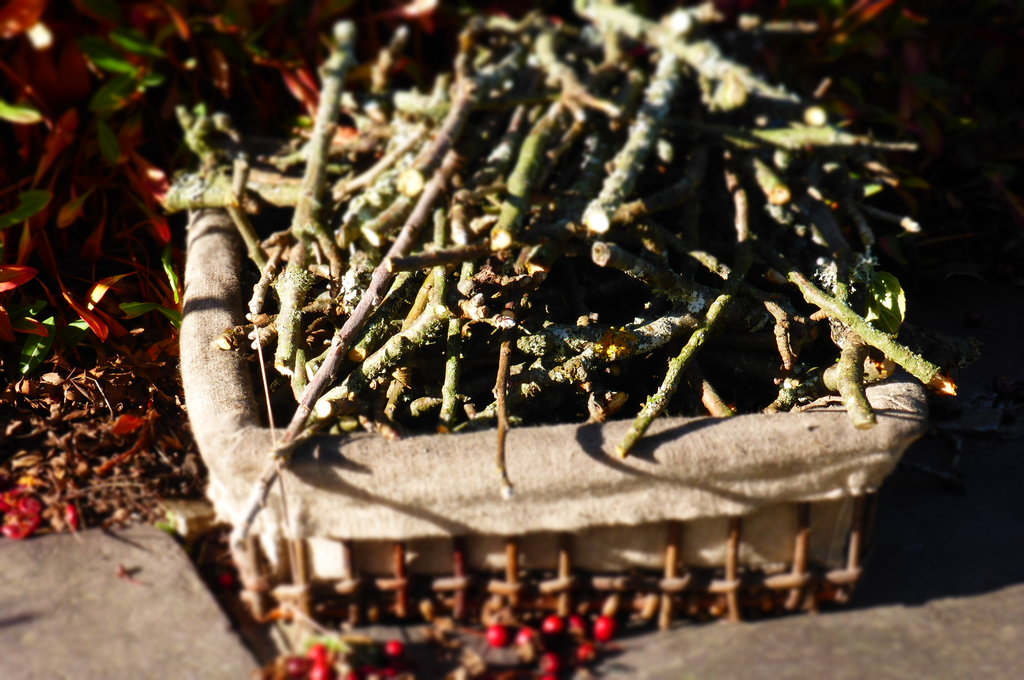
Kindling ready for the fire

Kindling ready for the fire

Potato patches covered with manure and compost, ready for next year

Potato patches covered with manure and compost, ready for next year

The source of great potatoes, our neighbourly horse who lives next door.

The source of great potato manure, our neighbourly horse in the next field.  Not the friendliest, but quite a quite prolific manure provider

Stash of funky rocks from the beach

Stash of funky rocks from the beach

Steamy kitchen action, Welsh cottages not cut out for heavy wok action

Steamy kitchen action, Welsh cottages not cut out for heavy saute action

Wake up, 3oC, warm Banana Bread cookie time (recipe to follow)

Wake up, 3oC, warm Banana Bread cookie time (recipe to follow)


Categories: 'The Good Life', Autumn, Garden, photography, Wales | Tags: , , , , , , , | 5 Comments

Homemade Baechu Kimchi

rsz_p1080453

Homemade Baechu (Cabbage) Kimchi

Kimchi is certainly pickle/ condiment royalty.  Very Korean and yet superb with traditional British veggies, a home for all your seasonal veggie fest’s and the perfect way of preserving the ‘gluts’ that we experience at this plentiful time of year.

I don’t know why I’ve used the ‘Homemade…’ in the title, it seems quite obvious that it would be homemade, but it does give a nice homely ring to a dish and there is nothing like the rancid smell of festering cabbage to make me feel settled and comfortable. I love the smell of kimchi and sauerkraut in the house, but I must admit that after a week or so, the garage beckons for our fermenting friend. Kimchi is a labour of love, but isn’t all cooking. Surely when we cook we are bucking the convenience trend and doing something for ourselves that is quiet intangible, but easily felt and munched. Food made with love, fermented with relish, is as integral part of any home. Sacrifice for our bellies is a worthy sacrifice I say. Kimchi will test your culinary resolve and passion for pickles to the max. Its like marmite you could say, there is an intense love/ hate things going on, Jane and I are in the Korean cabbage love camp.

Kimchi is a great place to start fermentation exploration, a spicy pickle that can be taken in many different directions from a flavour point of view.  This Baechu (Cabbage) Kimchi recipe is basic and very open to embellishments.  It is normally made with fish sauce, but for obvious reasons, your won’t find that on the BHK.  It is not missed either.

Kimhci is very simple to make and the toughest part is being patient enough to let it ferment properly before you munch it.  Kimchi lights up any meal, especially salads and rice dishes and can even be used in soups, stir fries and stew .  It is the national dish of Korea, where they eat it with pretty much anything and in vast quantity.   Your average Korean eats 125gms of Kimchi per day.  Three quarters of the Kimhci consume in South Korea is still made at home, which is great  to hear, although most South Korean residential areas must have quite a fragrant cabbage pong going on!!  Surely they have a special Kimchi closet or well ventilated area for its maturation.  Many businesses in Korea give a yearly ‘Kimchi’ bonus, so employees can go out and buy the ingredients to make a years supply of this wonder pickle.  Kimchi made in Korea is controlled by a legal standard, basically if it isn’t made the traditional Korean way, it just ain’t Kimchi.   In Korea instead of saying ‘cheese!’ when you have a photograph taken, they say ‘kimch!’.  Its a happy sounding word!  It certainly makes me smile.  Koreas obsession with Kimchi and the fact that it is normally eaten with rice or noodles is one of the factors keeping obesity out of Korea, generally they enjoy a high fibre, low fat diet with Kimchi as a tangy constant.

Kimchi is alot like its German sibling Sauerkraut, the only major difference being flavouring and the fact that Kimchi is softened in very salty water to start with and then fermented in less salty water.  Sauerkraut is slightly more straightforward.

We make a big batch of Kimchi, you can half this quantity if you are just starting out and are unsure as to whether Kimchi will become a major part of your life.  You will not be disappointed with the results, as I said, homemade Kimchi cannot be replicated and it is surprisingly easy to prepare.  Lastly, we should mention that Kimchi is ridiculously good for you and contains all the magic of other fermented foods.  This type of pickle cleanses the palate and also aids digestion.

If you are on a low salt diet, you can make Kimchi and Sauerkraut without salt, just substitute with wine, seeds like fennel, aniseed, dill, carraway etc or even seaweed (which contains sodium naturally).

One thing is for sure, fermenting is addictive and once you start, it opens so many doorways for tasty pickles to complement any meal.  Being fermented, they also store very well, so for minimum effort, you can have a constant supply of glorious tangy condiments.

Kimchi can also be made with most root vegetables; Swede, Turnip, Burdock, Jerusalem Artichoke, Horseradish……etc in Kimchi is awesome and any radishes are always welcome (and quite traditional to boot).

Chinese cabbage is easy to find in Asian/ Oriental Food shops throughout the UK and I’d imagine, the world.  Local cabbage also works well, it just isn’t quite as Korean looking or tasting.  Where you find Chinese cabbage, you will also find Daikon radish.

Have fun with your microorganisms!

The Bits – Fills one massive gherkin jar (see picture above)

1 kg Chinese cabbage (you can use bok choi or white cabbage as subs)

2 Daikon radish (or a large handful of radishes)

3 carrots (or turnip)

3-4 onions (or 1 large leek)

6-8 cloves garlic

6-8 red chillies (depending on how hot you like it!)

6 tbs fresh ginger (grated)

Sea salt

You may also like to add green peas, seaweed, artichokes, in fact most veggies that are seasonal can be added to a Kimhci to great effect.  Potatoes do not work so well.  

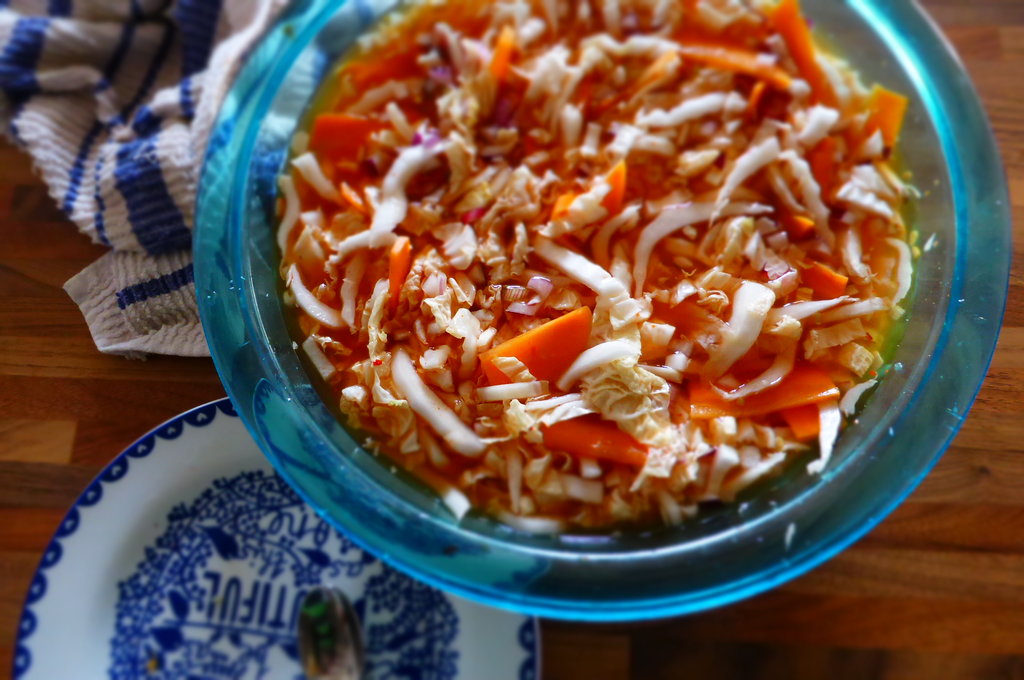
Veggie mix after overnight soaking

Kimchi veggie mix after overnight soaking

Do It

Grab a large saucepan or bowl with vertical sides that is big enough for the job.  You will also need a lid/ plate that fits snugly into the pan/ bowl, something that will be suitable to press the kimchi down and keep it submerged beneath the brine.  You don’t need purpose bought equipment here, just use whats hanging around the kitchen.  You’ll also need a weight, we use a large jar filled with water, anything good and heavy.   Really, the heavier the better.  The more you press and bash the kimchi, the quicker it breaks down and better it tastes (all the flavours can then get right into the cabbage and veggies).

Mix your brine, 2 litres of water and 9 tbs of salt.  Stir to dissolve salt, taste to check that it is very salty.

Roughly chop the cabbage and finely sliced the radish and carrot.  Leave these veggies to soak in the brine, weight them down and leave overnight to soften.  Add any other seasonal veggies at this stage.

Grate the ginger, mash and slice the garlic, remove the seeds from the chillies and slice (pop them in whole to reduce the heat of the kimchi), use loads of spices and flavourings, Kimchi loves it!  I then like to add the spices to a pestle and mortar and mash them up a bit, this can also be done in a food processor (just pulse a few times).

Drain the brine off the vegetables (reserve the brine) and taste them to ensure they are salty enough.  If they are too salty, unpleasantly so, rinse them with fresh water.  If they are not salty at all, sprinkle in a few more teas of salt.

Mix the veggies with the spice paste thoroughly and stuff into your saucepan/ bowl.  Pack it down tightly, bash it around a little bit with a rolling pin if you like, lovingly abuse it!  Press down with your plate/ lide until the brine is released and rises above the veggies.  You may need to top it up a little using your reserved brine.  Leave the kimchi, with a weight on top, for a day, covered with a kitchen cloth or anything that will keep out insect intruders and dust.  Any bits of vegetable that float to the top, escaping the lid, just throw into the compost bin.

Leave to ferment in a warm place, the smell will be overpowering at times, so bear this in mind.  Taste the kimchi everyday or as often as you can (or remember to do so).  When the Kimchi tastes ripe, tangy and very flavourful, place in a sterilised glass jar (or several) and keep in the fridge.  This will take between one to two weeks.  The warmer the place, the faster the fermentation.  Keep the Kimchi well weighted and pressed, you can even do this by squeezing it with your hands on a daily basis (which I quite enjoy).  Microorganisms work better in the heat.

This is a relitively low salt Kimchi, traditonally in Korea it would have more salt and be left in a cooler place to ferment for alot longer.  This works if the smell is overpowering your house and it needs to be moved to a cellar/ garage.  We are gluttons, we cannot be that patient unfortunately!!!!

Pressing the Kimchi down evenly is very important

Pressing the Kimchi down evenly is very important

Any mould/ spores that form on the brine surface are perfectly natural, just skim them off regularly.  Your Kimchi is very safe in its neutral brine home with its friendly and beneficial bacteria.  Bacteria has such a bad rap, but we are made up of billions maybe trillions of them!

Serve

I like it stirred into plain rice, a very Korean way of eating it.   Jane likes it on a mixed salad plate.  Stir frying it with tofu is a real treat, or use it to liven up soups, especially miso based soups we have found.

We both like it pure, spooned straight from the jar into our mouths, no nonsense, no additions required.  Kimchi is a flavour-fest straight up.

Foodie Fact

Kimchi is packed with vitamin A, B and C but its real star is the healthy bacteria present in all fermented foods, called lactobacilli.   It is normally found in yoghurt, so for vegans, eating fermented foods is a great way of getting this wonder bacteria into our diets.  Loctobacilli helps with digestion and works to prevent yeast infections.  Fermented cabbage has also been shown to help fight cancer.

The Beach House at sunset (through the Hawthorn tree)

The Beach House at sunset yesterday (through the Hawthorn tree) – we’re having an amazingly sunny autumn up here.  Summer hasn’t ended yet and its Oct 1st!!!! 

Categories: Fermentation, Healing foods, Recipes, Side Dish | Tags: , , , , , , , , , , | 8 Comments

Bardsey Island Apple and Plum Chutney plus the Tale of Johnny Appleseed


Bardsey Island Apple and Plum Chutney

Bardsey Island Apple and Plum Chutney

Its that time of year in the Beach House garden, when you step outside, you’ll probably find some form of fruit landing on your head.  Its raining fruit! Jane very sensibly converted a load of our plums and apples into small pots of gorgeous chutney, I have to say my favourite bit is the label, all hand designed.  Family and friends, may we introduce you to your Christmas pressie!  Chutney bubbling is such a British autumnal pursuit, it seems heavily engrained in our consciousness, we were born here; on this fare island to conserve and pickle at will, then spread it all on a seeded cracker…….with a brew (cuppa tea).

Mum bought me a Bardsey Apple tree for my birthday back in May.  We are preparing a rockery out the back for it to live, but it has thrived this summer after missing the storms and gales that robbed the blossom from our more established apple trees.   Bardsey apple trees are very special, all can be traced back to the ‘Mother’ tree on Bardsey Island, off the rocky tip of the Llyn Peninsula (the eyebrow of Wales when you look on the map).  The Llyn is like Devon or Cornwall 20 years ago, especially the North Coast and Jane and I love to camp over there on the beaches and do some seal watching (they’re massive and quite sociable).  The Llyn is a special place and all roads over there lead to the mythical Barsdesy Island.  I wrote an article on my other blog about it, Bardsey Island – Island of 20,000 Saints and there is plenty of info here about Ian Sturrock and his single handed resurrection of the Bardsey apple tree.  Ian discovered it growing beside an old house on the isolated outpost and ancient pilgrimage site.  After testing the tree, he realised that it was completely unique, nothing like it in the world.  Since then Ian has grafted and grown probably thousands of the trees and exports them as far a field as the U.S. and Japan.  It amazing to think that we are eating almost extinct apples!

The original Bardsey ‘Mother’ Tree

The Bardsey Apples themselves are succulent and golden and a very good ‘all rounder’.  They go great in a pie and a have a lovely sweet and sour twang to them, nice crunch too.  Our little tree has done a great job this year, its young branches heavy laden with apples for most of the summer, it has even survived the regular gales we get up here (even in summer!), Jane and I have had to pick it up a few times after finding it blown across the front garden!  Proper gales up here on Tiger Hill!!!!

Other than the apples, this year has seen a bumper crop for fruits of all varieties.  I have never seen or tasted blackberries like it, huge and super sweet and fragrant.  Our plum tree has gone made, its branches full of plums, reminding me of an abundant Mediterranean grape harvest, not a craggy, long suffering plum tree cowering behind a dry stone wall.  Add to that a huge raspberry harvest earlier in the year and from a fruity perspective, we’ve had a ball!!!!

I’m not sure how Jane dreamt this chutney up, we have been experimenting whenever we have gluts of things in Spain and Wales.  Whatever happened in the pan, it worked, this chutney is well balanced between sweet and sour and had gorgeous occasional chunky surprises like the soft raisins or a lump of plum.

Good organic apples are essential here as apples grown non-organically are normally treated with high levels of pesticides which you cannot get rid off, even after a good rub on your jumper.  Heres an article we wrote about the ‘The Dirty Dozen’ – The 12 worst foods to buy non-organic, not exactly a light read, but worthy information that we regularly incorporate into our fruit and veg foraging escapades.  Organic apples also have a habit of tasting loads better.  As usual, we are lucky sorts, having a bumper crop down at Trigonos has also meant that we can keep things local this year.  I absolutely love apples and Judy’s Discovery’s are up there with some of the tastiest, crunchiest apples I’ve ever scoffed.

I think its probably worth making this all organic actually, especially if your giving it to loved ones as a gift (that seems to be what we end up doing with chutneys and jams).  Our bodies love organic food and non-organic food puts serious pressure on our digestive systems, liver and kidneys, to try and deal with the poison. Its a strong word I know, but pesticide is undoubtedly a poison and when we eat non-organic, we have to deal with it somehow.  We fully appreciate that unless you are rather wealthy, very devoted or have an organic small holding/ farm, being 100% organic in life is a tall order.   We are mainly organic and there is something intangibly wonderful about starting the day with a 100% pure organic juice/ smoothie.  It probably all in the mind, but I am (almost) literally floating around the place after one of those beauts, charged with energy, it certainly cleans out your tubes.

Our little Bardsey Tree (thanks Mum!) - Awaiting a proper home in the back garden

Our little Bardsey Tree (thanks Mum!) – Awaiting a proper home in the back garden

If you live anywhere near a farm or even better, someone with an orchard, knock on their door with a hefty chocolate cake and get into some gentle chatter about how you enjoy apples and wondered if they liked cake.  Trade could happen and you may end up with bags filled with proper apples to make into things, eat whole or have a go at Apple Hooch (basically crush or juice the apples, leave in a clean bucket with a light covering and taste after a week, then everyday after that.  Eventually it will ferment and become alcoholic and you have just made the easiest and probably one of the healthiest forms of booze known to humankind.)

You can buy pickling spice from most shops, even the supermarkets have it.  If you are just making this as a one off, you can use roughly 1/2 teas of the following whole spices (namely, not ground): coriander, cloves, mustard, dried ginger, chillies, all spice and wrap them in a bit of muslin.   If you don’t have them all, add a little more of the others although I would go easy on the cloves and all spice unless you love ’em dearly.

If your planning on keeping this chutney for a while you will need very clean jars.  We keep a stash in the garage, a decent jar for us is a real gift!   Janes method of jar sterilising works every time and we regularly keep chutneys for months without any obvious microbial issues.

Big BHK Love to all happy chutney bubblersX

Gorgeous plum-age

Gorgeous plum-age

The Bits – 8 Medium Jars

750g tomatoes (peeled and chopped)

500g apples (hopefully from a local tree – chopped into small chunks)

120g Onions (chopped)

400g plums (stones removed)

15g pickling spice (tied in a muslin bag)

15g mustard

10g salt

150ml apple cider vinegar

110g sultanas

130g light brown sugar (unrefined)


Some of the lovely assembled bits

Some of the lovely assembled bits

Do It

Put tomatoes, onions and apple into a pan and stir, on medium heat, until they start to soften. Add a little water to stop it sticking if you need to.  Then wrap the pickling spice in a muslin bag and add to the mixture, stirring as it simmers.

Blend the mustard and salt with a little vinegar and stir it into the mixture. When the ingredients have softened add the sultanas, sugar and remaining vinegar.

Continue to simmer, stirring often until you have a thick smooth chutney.

Chutney bubbling

Chutney bubbling

While that is going on, sterilise your jars.  Give them all a good wash in hot soapy water, rinse and dry.  Put your jars on a baking tray and place in an oven, turn on the heat to 180oC.  Leave for 10 minutes and then pop in the lids (make sure the’ye not plastic!) and leave to warm up for between 5-10 minutes.  Remove them and leave to cool for 5 minutes.

The jars will still be hot so use a kitchen cloth to handle them.  Pack the chutney into the hot jars, wiping away any spillages around the lip.  Screw the lid on tightly, pressing the ‘button’ down on top.  This should make an airtight seal as the chutney cools.   Store for 2 months or longer before opening.  If you can resist its fruity charms!

Serve

Chutneys go with almost anything, but we found that this went like a dream with home-made loaf toast, or a breakfast pan-bread. Try it on the side with salads, or generously lathered on crackers with fresh sliced tomatoes and salad leaves as a midday snack!  We have also paired this chutney, with great success, with a Goan style curry (one with tamarind/ lemon in to make it a little tarty).  Bascially, you’ll find any excuse to eat this type of chutney!

We Love it!

Sweet and sour, can be eaten at anytime of day on almost anything, we can find little to not like about chutney, especially when its falling from trees!   Money does not grow on trees, but chutney does and it tastes alot nicer than a fiver (that’s 5 British pounds).

Danger - Plums falling!

Danger – Plums falling!

Foodie Fact

“An apple (or two) a day……..”

Apples are part of the rose family, a surprisingly comprehensive family of fruits and nuts including almonds, apricots, plums, cherries, peaches, pears and….roses.

We all know that apples are beautifully sweet, but this does not mean that the sugar is doing us harm.   Apple contain phyto-nutrients that actually regulate our blood sugar levels.  Apples have good levels of fibre, but due to the unique mix of chemicals within apples, this decent level of fibre is transformed into benefits that would normally be associated with foods containing vastly higher levels of fibre (long winded description, but cool non-the-less!)   Apples also allow us to absorb more goodness from our foods in the large intestines.    Apples do contain vitamin C, but not loads, they do however boast a load of polyphenols (which actually act as a sunscreen and are the main reason why apples brown so easily) and most of these chemicals acts as strong antioxidants.  Regular munching of apples will also lower bad cholesterol.

JOHNNY APPLESEED

The coolest story we know about apples is that of Johnny Appleseed (aka Johnny Chapman) who lived in the U.S. in the 1800’s.  He spent a large portion of his life wandering barefoot around the country, some say 100,000 sq kilometres, sowing apple seeds as he went which provided early settlers with food.  He was a generous and caring nurseryman who placed huge significance on the symbolism of the apple and conservation of nature.  Folk who plant many trees and conserve nature are surely worth remembering, in our eyes they are the real heroes.

Categories: Foraging, Garden, Recipes | Tags: , , , , , , , , , , | 8 Comments

Detox Greens Soup with Welsh Miso, Ginger and Green Lentils

Detox Greens Soup with Welsh Miso, Ginger and Green Lentils

Detox Greens Soup with Welsh Miso, Ginger and Green Lentils

There is just the hint of winter in the air as we move through autumn and this slight chill always gets my soup bells ringing.  Here is a soup that ticks all of the autumnal boxes, tasty and utterly loaded with healthy things, even (almost) locally made Welsh Miso.

This recipe takes care of all of our seasonal fare on Tiger Mountain, all of them green and when simmered together for a time, transform into a tasty health elixir.  The flavours are hearty and comforting with a tinge of ginger and miso in the background to keep things interesting and offer a little Japanese style twang.

My Dad, John (aka the big yin, aka ‘heed’, aka Johnnie Boy) has been visiting for a week and he knows how to enjoy himself, Jane and I struggle to keep up!  We’ve had a week of wonderful times but lets just say that many of them were not exactly beneficial to the health.  Our wine rack is bare (a very grim sight) and our ale stores seriously depleted.  After waving Dad off at the station, we both decided that our bodies needed some kind of green wake up call and nothing comforts and revitalizes more than a decent bowl of soup.

The 'Big Yin' at Aber Falls, near bangor

The ‘Big Yin’ at Aber Falls, near bangor

Cabbage is the backbone of this soup, and a good cabbage is essential late autumn behaviour.  Not the most glamorous of ingredients but when handled with care, one of the tastiest and versatile veggies.  I love wrapping things in cabbage leaves and baking them, or even blanching the leaves and using them as an alternative to something like a spring roll.  One things for sure, in north Wales, we’ll never be short of cabbages, they love it up here and at work the other day (I cook in a retreat/ alternative learning centre), I had the privilege of tackling the largest cabbage I have ever seen.  Judy (farming genius and very much more) wandered into the kitchen bearing a green globe at least 2 feet across!!!!  I swear there must be something magical in the soil over there, we can hardly eke a Brussel sprout out up here!!!!  If you can’t get hold of a good organic cabbage, you may need to add a little more stock to the mix, your taste buds will be the guide…….

We have been building up to making our own miso for a while now, but are fortunate to have Welsh miso being produced almost on our own doorstep, give or take a few hundred miles, in the same country at the very least.  They guys at Source Foods seem like a very decent bunch and their products are top. We recently got hold of a pot of their hemp miso (thanks for forgetting it Helen!) and its a wicked addition to their fabulous fermented offerings.  They use all organic ingredients and without sourcing bits from Japan, which has been very unfortunately effected by the Fukushima tragedy.   Welsh Miso, quite randomnly, is our amazing stuff!

Miso adds unmistakable vitality and deliciousness, but comes with bags of sodium.  If you are serious about making this a detox soup, give your kidneys a break and take it easy on the miso, 2 tbs is enough.  There is however new research coming out that highlights the difference between salt and miso, they are handled differently and have different effects on our bodies.  Salt leads to higher blood pressure and for some miraculous reason, miso does not.  This is backed up by the rate of heart problems in Japan, where high levels of miso is consumed regularly.  We used light miso here, but you can use a darker variety, just use less.  See the ‘Foodie Fact’ below for more info on marvelous Mr Miso.

This soup falls into the bracket of ‘a meal in itself’ and we regularly eat it like a stew, without much liquid and plenty of lumps.  In this state, it will be wonderful with brown rice, but we find it filling enough by itself.

The Bits – For 6 good bowls

1 teas olive oil

1 teas toasted sesame seed oil

1 leek (finely sliced)

1 1/2  inch fresh ginger (finely diced or roughly grated)

2 celery sticks (finely sliced)

1/2 medium savoy cabbage

1 cup green/ puy lentils

1 small head broccoli (cut into small florets)

6 handfuls spinach leaves

600ml warm organic vegetable stock (use only water if you trust your veggies to be amazing)

1 teas dried rosemary

2-5 tbs light miso (to taste)

sea salt (if needed)


Drizzle of olive oil (optional)

The Bits all prep'd

The Bits – pre-prep

Do It

In a large heavy bottomed saucepan on medium heat, drizzle in the oils and when warm add the leeks, ginger and celery.  Stir and fry for 4-5 minutes, until soft.  Add the cabbage, lentils, stock/ water and rosemary to the pan.  Bring to a boil and lower heat to a steady simmer, pop a lid on and cook for 20-25 minutes, until the lentils are soft.

Add the broccoli and spinach, stir into the soup and pop the lid back on, cook for a further 5 minutes on a low simmer.  Stir in the miso to taste.  Pulse a few times with a stick blender, or add a quarter of the soup to a food processor and blend until smooth.

Pop a lid on and leave the soup to stand for a couple of minutes.  Miso is really like salt with benefits, it will enhance and deepens the flavours.

Definitely looks healthy!!!

Definitely looks healthy!!!
Serve

Straight away, add a little splash of olive oil for added richness.  If its a very special occasion (or a Tuesday) you could stir in 2-3 tbs of hazelnut butter to add silky creaminess.   Inevitably, Jane’s Easy Seeded Wholemeal Loaf, lightly toasted would be a belter of an accompaniment.

Foodie Fact

‘Miso’ is Japanese for ‘fermenting beans’ and miso can be made with any grain/ bean.  We used soya based miso here but you can find barley, rice, buckwheat, wheat, hemp seed….the list goes on.  Obvious what the miso is made of will alter the nutritional benefits but soya beans are normally used as a base in the process.

Miso involves fermentation, which of course means funky mould (or fungus if you will).  The fungus in question is the brilliantly named  ‘Aspergillus oryzae’ and its highly magic!  The key discovery made in the production of miso was how to keep these spores alive and transportable.  Miso on the move.  People have been fermenting foods in Japan and China for thousands of years (its also traditionally made in Indonesia and Korea), it was referred to as ‘Koji’ and they were well aware of the health benefits brought about by these amazing moulds.  This is the same process used when making sake, soya sauce tamari etc.

To make miso, you basically add the Aspergillus (or other sometimes other bacteria’s/ micro organisms are used) to soaked and cooked soya beans to get things started, this is in turn added to soaked and cooked grains/ beans and the miso is left to mellow and mature.  Miso comes in all sorts of shades and colours, normally white, red and dark brown, the fermentation process dictates the depth of flavour and colour.  Normally the darker the colour, the more intense the flavour, red and brown miso can be matured for three years and ‘Hatcho’ Miso, which is famous in Japan, is matured in 200 year old vats for three winters.

Buy organic miso when you can and ensure that no MSG has been added, cheaper makes will do this.  Miso is very nourishing and is a good source of fibre and protein, it is a very tasty way of adding legumes to your diet, 2 tbs of miso normally contains the nutrition of 2 cups worth of legumes.  The fermentation process of miso means that some of the beneficial chemicals present are already broken down by the magic fungus, giving our digestion a break and allowing our bodies to easily absorb all the goodness.   Misos main attraction, from a health point of view, is its outrageous list of beneficial anti-oxidants, our free radical scavenging friends.

We also just like the word ‘Miso’ and have decided that if another cat decides to move in with us, there are few appearing round our way, we’ll name it ‘Miso’.  Could we get away with calling a child ‘Miso’?!  Hmmm…..

Somethings we’ve cooked with our friend mighty Miso:

Mug of Miso

Sprouted Buckwheat, Onion and Miso Crackers (Raw)

Sava’s Elephant Garlic Flower Salad

Miso and Tahini Dressing

Black Prince Tomato and Coriander Soup (Raw)

Soup on the hob

Soup on the hob

Categories: Detox, Fermentation, Recipes, Soups, Welsh produce | Tags: , , , , , , , , | 7 Comments

Simple Blackberry Compote and Tips on Berry Foraging

The BHK bumper blackberry crop

The BHK bumper blackberry crop

We decided to let our brambles run wild this year, the back of the garden has sprung into a thorny, berry heaven.  Brambles are so prolific and need no encouraging to take over the joint!  We’ve had a bumper crop with kilos of blackberries flying into the kitchen and looking for a home.  I like what the brambles have done to the nether regions of our garden, creating a home for all sorts of cool creepy crawlies and a decent amount of little mice, which are big friends to our developing garden.

On our green and good isle, Britain, we are enjoying a good start to September, the extra rays of sunlight are resulting in some massive, succulent blackberries, so we’ve been making chutneys, wine (this recipe will no doubt appear here soon) and compotes/ jams. We are nicely stocked for the upcoming Christmas/ birthday present-athon. What better gift than a spicy chutney?

Blackberries are such a bountiful autumnal bonus and along with elderberries, are two of my favourite fruity treats. This is such an abundant time of year, it seems like all the warm weather we’ve had this year has come to fruition. Its hanging from almost every bush! It makes all that messing around with soil and late night slug raids on the veg patch worth while. We can eat from the land and there are few things more satisfying than a fruit salad made from you’re own (British!) garden.

Berry foraging bonus - fresh lavender smells around the house

Berry foraging bonus – fresh lavender smells around the house

Blackberries are native to Northern Europe and they grow as far north as Siberia!  Our berries, like most, just run wild all over the place.  You can be more organised and precise and run them up trellises etc.  But thats proper gardeners territory and we’re not there yet.

When making this compote, it will rarely get easier when playing with pots and pans. Two ingredients and a little heat, a jar and a cool place.  All you need for a knockout compote.  We took this in what is known as a ‘sugar free’ direction as a friend was visiting who is avoiding the heinous white powder.  A sprinkle of dates sorts out all of our sweet tooth requirements and also brings a thicker texture to the party.  Taste the compote after 5 minutes bubbling on the hob and add more dates if not quite sweet enough.  We are not sure how long it will last in the fridge, this compote is not made as a ‘preserve’ but should be eaten soon after cooking.  We’ve had a huge pot in the fridge now for over three weeks and its fine.  I did think that the reduced sugar content would shorten its life, but its still soldiering on.

Good blackberries are essential for this type of embellishment free behaviour, raid you local hedgerow to find the finest blackberries.  You will probably have a nice time too, just avoid those vicious thorns and if picking on a road, avoid speeding buses!

TOP TIPS FOR BERRY FORAGING

–  Never pick anything edible around train tracks, they regularly spray chemicals around the tracks to stop weeds growing.  Never pick berries that are cocked dog leg height, for obvious reasons.

–  Be careful not to squash berries when picking them, if you do, we suggest popping them into your mouth.  Try to keep your hands clean when picking fruit, the occasional scoff is very hard to resist (and all part of the fun).

–  Only pick berries that are plump and soft, the ones that fall off in your hand.  If you have to tug it, it ain’t ready for munching.  Leave if for a few days and then go back for it (blackberries grow and ripen quickly).

–  Use the berries straight away, that day.  If they look dirty, or you don’t fancy wild berry munching, submerge berries in cold water when you get home, give them a swish around and then leave them to drain, laying them out on kitchen paper when ready.  Handle them very gently, until they are dry-ish.  Then pop in the fridge covered loosely.  This works for us.  But as mentioned, the sooner they disappear into happy bellies, the better.

–  When picking blackberries, look at the white bit (where the stem should be), this is where maggots reside.  If there are maggots hanging out, ditch the berry on the ground and continue undeterred.

–  Don’t wear your new white shirt or trousers.

The Bits – Makes 2 regular jam jars 

800g freshly picked blackberries

2 big handfuls of chopped dates (to taste)

Do It

In a large, heavy bottomed pan, add the blackerries and dates, bring slowly to a boil and leave to simmer for 20-30 minutes, until the berries have broken down.  Stir regularly, do not allow the base or edges of the compote to catch and burn.

Very easy Blackberry Compote

Very easy Blackberry Compote with some Rye Bread

Serve

The resulting deep purple gorgeous-ness can be spread on warm toast with soya yoghurt or with chopped bananas and nut butter.  Very pleasant when spooned over your morning bowl of muesli or even frozen and made into a sorbet (we haven’t tried this yet).  You could also make a wonderful dressing with it, by adding balsamic vinegar and a touch of oil and seasoning.

Foodie Fact

Blackberries contain a low-calorie sugar substitute called Xylitol, which is low GI, meaning slow absorption into the blood stream.  Blackberries are high in fibre and are full, full, full of antioxidants like vitamin C and chemicals called phenolic flavanoids (good guys).

See below for the physical after effects of a days blackberry picking.

Jane on Aberdaron beach yesterday, full of blackberries!

Jane on Aberdaron beach yesterday, full of blackberries!

Categories: Foraging, Recipes, Wild food | Tags: , , , , , , , , , , , , , | 10 Comments

Beetroot, Apple and Caraway Sauerkraut

Great jar, inaccurate label.  It should read 'Beetroot, Apple and Caraway' Sauerkraut

Great jar, inaccurate label. It should read ‘Beetroot, Apple and Caraway’ Sauerkraut

Sauerkraut is a well disguised super hero. Cloaked in cabbage and a fermented glow, Sauerkraut is a dish that is not only delicious, but is very easy to make and gives us some very pleasant nutritional boosts.

China, with its amazingly rich and ancient food tradition seems the source of picklin’. It is said that traders brought many of their tasty pickles and fermented fare from the Far East to Europe. ‘Sauerkraut’ is the German name for fermented cabbage, the French call it ‘Choucroute’ and British people just call it “Fermented YUM”.

The fermentation of Sauerkraut involves a number microbial species; one creates an acid environment for another to thrive and the process continues until the ph is acid and we are left with the perfect conditions for pickling a cabbage. You just need to form a decent brine, cover the vegetable with it and leave it until you like the texture and flavour. Any kitchnen will have the equipment necessary to produce a decent ‘kraut and you can play around with the veggies, mixing and matching different combos.

This time of year, early Autumn in North Wales, is the perfect time for Sauerkraut making. All the ingredients we use here are bang on seasonal and we’re stocking up our larder for another long winter time, when vividly coloured sauerkraut is a pleasant surprise to unearth (not that we’ll be here, we’ll be in Turkey!!!!!!!). A ray of purple light in the chilly grey gloom. We like the addition of apples here, it gives a hint of sweetness. Beetroots are also doing well up here and a little caraway is always welcome to the party, giving things an unmistakeable, East Europe feel (where this kind of preserving behavior is very popular). Red cabbage makes an appearance to add even more colour and a backbone.  Proper cabbage-ness.

The process may seem a little long winded, but I’ve tried to simplify it down and make it accessible to the ‘kraut curious.

Buster (always interested in the smell of sauerkraut)

Buster (always interested in the smell of sauerkraut)

This recipe is lifted, with a few BHK modifications, from the brilliant book ‘Wild Fermentation‘ book by Sandor Ellix Katz. We are really getting our teeth into all things fermented at the minute, coming soon, the easiest Apple Juice Hooch imaginable (you almost have to do nothing to make home crafted booze!) and a really simple Kimchee recipe.

If you are avoiding salt, there are many salt-free sauerkraut recipes out there. We are yet to try them, but they will definitely be interesting!

You can add virtually anything to sauerkraut and it tastes good (this is not a challenge!); different herbs, spices etc.  We’re just sampling an Indian spice stylee version (you will not be surprised to hear!!!!) Can’t wait for the pokey results.

Fermenting and conserving vegetables using brine is something that once picked up, will be a constant source of inspiration in the kitchen. Making things like the glorious Kimchee or pickled onions/ gherkins is a not to dissimilar technique and of course, homemade stuff tastes leagues better than our shop bought friends. Once you start picklin’ and preservin’, its hard to stop (strange as that may sound).

Get your ‘kraut on!

The Bits – Makes roughly 1 kg of ‘kraut

1 medium-sized red cabbage
2 beetroots
1 red onion
(roughly grate these)
1 apple (cored and sliced)
2 teas caraway seeds
2 tbs sea salt

Grated and ready for action

Grated and ready for action

Do It

In a deep bowl or pan (preferably with straight sides), add the grated bits, caraway and sprinkle over the salt. Mix in well with your hands, pack down as well as you can.

Pick a lid/ plate that fits snugly over the sauerkraut and place a weight on top. Use kitchen weights, bottles of wine, whatever is handy and weighty. This weight will force the liquid from the veggies and fruit, the salt takes care of the rest via osmosis. The brine will begin to form. As the liquid gradually rises, keep pressing the lid down regularly until the brine covers the sauerkraut (this may take 24 hours). This is what we want. You can now cover this with a kitchen cloth and leave for 2-3 days and let the microbials do their work.

Some cabbages contain less water than others, if after 24 hours the brine is not covering the veggies, add salted water (1 tbs salt per 250ml water). Check the ‘kraut every day or two and skim off any ‘bloom’ that may form. This is technically mould, but is rare and does not affect your sauerkraut as it is protected by the brine.

The sauerkraut is normally ready after 3 days, depending on the heat of the room (the hotter the less time it takes to mature, the cooler the longer it can be left). It should be tangy and crisp.

You may like to scoop some out and keep it in the fridge when it is young and leave it for a few more days to mature, noting the flavour difference and what is your preference. We like ours funky and leave it for 5 days-ish. If the sauerkraut is getting soft, its probably passing its best and should be eaten pronto.

Serve

We’ve been having ours all over the place.  Great for picnics and packed lunches, on toast and a nice little surprise package on a plate of salad.

Foodie Fact

Fermented cabbage and other Brassicaceaes (Bok choi, broccoli, cauliflower, Brussels sprouts, mustard, kale, spring greens and many more) have been shown to help against cancer. When the cabbage breaks down, it goes through a chemical shift and the resulting isothiocyanates have been shown to fight the big C.

Sauerkraut juice is also a magical tonic, regarded as a digestive aid second to none.

Hell's Mouth Beach, Llyn Peninsula - Ideal picnic spot for sauerkraut scoffing

Hell’s Mouth Beach, Llyn Peninsula – Ideal picnic spot for sauerkraut scoffing

Categories: Healthy Eating, Raw Food, Recipes, Side Dish | Tags: , , , , , , , , , | 9 Comments

What is a Flax Egg? and Other Vegan Egg Substitutes

This is!  (Flax Egg)

This is! (Flax Egg)

THE VEGAN EGG

A flax egg is basically 1 tbs of ground flax seeds mixed with 2-3 tbs of water. Left to sit for around 15 minutes, it becomes gloopy and a little egg-like. Ideal for binding vegan baked fare and highly excellent from a nutritional point of view.

The flax seeds should be as well ground as possible, depending on the equipment you have to hand.  It is best to use something like a high powered food processor or coffee grinder.  We use the later after a good rinse (old coffee grinders smell a little like ashtrays, have you noticed?)  We also try to use a pestle and mortar and after lots of elbow grease and caveman grunting; pounding and crushing, we were left with the consistency above. Namely, not very ground up at all. They are hardy little suckers, maybe it’s because they are so full of good things.  Even when only semi-bashed, they still work well.

OMEGA 3 POWER!

Flax seeds are full, full, full of healthy Omega 3 fatty acids, one of the highest sources in nature.  In fact, flax, chia and hemp seeds contain more Omega 3’s than any type of fish, which may also contain heavy metal contaminants.  Recent studies show that baking or cooking these fats is no problem, these amazing polyunsaturated fats will not wilt in the heat.

One of their main uses for the Omega fats in the body is to aid and stimulate metabolism.  Omega 3 fatty acids have been shown, in tests (by people wearing white coats clutching clipboards) to help with cumulative conditions such as heart disease, high blood pressure and strokes and can also assist with inflammation and may potentially help with cancer and mental health.  None of these ‘white coat’ tests seem conclusive but we can be sure that Omega-3’s (and their sibling linolenic fat, Omega 6) help with the healthy development of brains, eyes and nerves.  Other fatty acids in flax seeds give us shiny hair, strong nails and keep our cells firing on all cylinders.  Do I need to go on……………….!!!!  They’re great!

Glorious flaxseed (or is it a linseed?)

Omega 3 fatty acids come in different lengths, and without getting too scientific (because I am a cook), the longer the chains (called EPA and DPA), the easier it is for the body to synthesize these glorious fats.  Plants provide our bodies with short chain fatty acids (ALA), which can be converted into longer chain fatty acids (with more bonds open for chemical reactions) but the conversion rate depends on whether you are male or female, your age and on your diet.  Flax seeds contain roughly 10 times more omega 3 fats per serving than fish, so there is a pretty good chance you will be getting a good dose of the finest EPA’a and DPA’s if you use things like flax eggs, to regularly add flax seeds to foods; cereals, stews, baking, vegan/ veggie burgers, breads and pizza dough etc.  Once you make the decision to give up animal products, you are definitely not saying goodbye to our Omega 3 friends.

LIGNANS AND FIBRE

Flax seeds are also by far the highest source of lignans in nature (some say 800 times the amount of their nearest rivals!!!!), which basically translates as a whole bunch of anti-oxidant benefits. In fact, most people think that anti-oxidants rich foods are normally berries and brightly coloured foods, but flax seeds are well up there in the anti-ox states. Not bad for a grass. Flax seeds are almost 70% fat, but will not make you pile on the pounds. These fats are all beneficial to the body and are essential to a healthy, well balanced diet.

Flax is packed with fibre, which helps, especially in baking, when you are adding sugar to the mix. Flax seeds will help to put the brakes on sugar leaping into our systems and creating metabolic havoc and subsequent weight gain. These little seeds actually help to kickstart the metabolism, perfect morning food.  Flax seeds are widely used to help the bowels, they are cleansing and maintain ‘regularity’.  Especially good for I.B.S., diarrhea and constipation.  Try taking a tablespoon of flax seeds before a meal and you may feel fuller, reduce hunger and stimulate your digestive system.  Healthy bowels also have the knock on effect of you losing a little weight.

—————-

1 tbs of flax seeds contains a similar amount of vitamins, minerals, antioxidants and lignans as 30 cups of Broccoli. 

Fibre wise, 1 tbs flax seeds = 30 slices of wholewheat bread 

—————–

Wow!  What a thing.  See this great site, Healthelicious, for more in depth info.

FLAX OR LIN-SEED?  WHAT’S THE DIFFERENCE?

There is no difference, its all in a name.  Just be aware that boiled linseed oil is best for your shed or garden furniture and not for eating.  Things bought in DIY shops are normally not great on the plate!  Linseed oil is actually a brilliant wood preservative and perfectly natural, unlike the horribly toxic alternatives (creosote et al).  Golden linseeds and flax seeds (a dark reddish brown colour) are very similar things and both can be utilised in the same way.

OTHER VEGAN EGGS (!?)

There are many options out there for vegan egg-subsitutes, most come in packets and plastic wrapping. There are powders you can buy, but I have always found ground flax eggs to do the trick, they are like ‘an egg with benefits’.  As I’ve already harped on about, they are proper nutritional powerhouses.  Baking recipes with lots of eggs in are normally out of bounds for vegans, but if its something like a quiche or dished with boiled eggs in, tofu or tempeh will make for a perfect substititute.  I have used plain silken or firm tofu, blended together with gluten free flours like tapioca, potato or gram, this also works well in cakes and vegan burgers/ sausages.  It is always best to blend tofu first, as it may leave chunks in your lovely cake.  I have also used mashed sweet potato as a very funky binder.

Vital wheat gluten (or ‘Seitan’ as its called when formed into chunks) is a great addition to breads and burgers.  It  is basically flour, washed until only the gluten remains.  It acts as a string binding agent when added to things like vegan burgers or sausages.  It is, of course, highly non-gluten free and I like to enjoy it in moderation.

Chia seeds, when ground and soaked in a similar way to flax seeds, offer a decent gloopy texture and as you may know, wondrous health benefits.  Bananas and stewed apples/ fruit can also be used to replace eggs in some recipes, but non of these option offer the ‘fluffiness’ that eggs, especially egg whites can give to baked goods.

Here are some top tips from PETA on egg replacement options:

• 1 egg = 2 Tbsp. potato starch

• 1 egg = 1/4 cup mashed potatoes

• 1 egg = 1/4 cup canned pumpkin or squash

• 1 egg = 1/4 cup puréed prunes

• 1 egg = 2 Tbsp. water + 1 Tbsp. oil + 2 tsp. baking powder

• 1 egg = 1 Tbsp. ground flax seed simmered in 3 Tbsp. water

• 1 egg white = 1 Tbsp. plain agar powder dissolved in 1 Tbsp. water, whipped, chilled, and whipped again

Read more: http://www.peta.org/living/food/egg-replacements/#ixzz3BmJLmnW5

The egg-options mentioned here are a reasonable solution to the vegan baking egg dilemma with the added bonus of being amazing for the heart (and all parts of the body for that matter). See our Juicer Pulp Muffins with Pecans, Fig and Turmeric for flax seed eggs in full effect.  It is fascinating what you can do when baking vegan, and although some recipes will be slightly denser than those with eggs, the obvious health and ethical advantages far out weigh the textural differences.

And flax eggs make these, Juice Pulp Muffins

And flax eggs make these, Juice Pulp Muffins with Pecan, Fig and Turmeric

Categories: Baking, Healthy Eating, Nutrition, Vegan | Tags: , , , , , , , , | 5 Comments

Pecan and Fig Muffins (Vegan, Gluten Free, Sugar Free)

Juice Pulp Muffins with Pecan and Fig Juice Pulp Muffins with Pecan and Fig

GLUTEN FREE, VEGAN, SUGAR FREE, LOW GI, HIGH FIBRE, …….whatever you want to call them, these muffs are very cool.

The worlds healthiest muffin?  Almost, possibly not.  The worlds strangest muffin?  Quite possibly.  The worlds tastiest muffin?  (Probably) YES!

These are muffins if Doctor Parnassus made them in his Imaginarium (any Terry Gilliam fans out there?)  Containing what can only be described as pscycedelic pulp (great name for a surfer rock band).  This is what you could call a classic Beach House post, we woke up and all of a sudden made some pink-ish muffins with turmeric in them, then thought we’d write about the experience.  I trust you don’t think any of these posts are planned or orchestrated in anyway.  This is adventure is all the food we are eating right NOW.  Steaming on the plate/ wire rack.  You can probably tell by the rushed looking photo’s, a hungry camera man is a complacent camera man.  Thankfully these freakish muffs are totally delicious, have an almost succulent texture and are happily brimming over with health giving properties and the main thing (that we almost forgot) is that they are a pleasing receptacle for your leftover juice pulp.

Yes,these sweet thangs are ‘sugar free’, although I don’t quite get this new movement.  The whole sugar free thing seems mystifying; you can’t eat one type of sugar but can eat other types of sugar.  Its like being vegan, but you can eat goats cheese because its lower in fat????  Can someone please explain the ‘Sugar-free’ craze?  Anyway, these are sugar free as they only contain dried fruit and maple syrup, which are not classed as ‘sugar’ by some.   They are of course, much better than processed, bleached, alien sugars, meaning all white sugar (which isn’t even vegetarian as it can contain bone meal!!!!).  Low GI seems the way forward, or eating fructose with fibre (like a banana) which naturally slows he absorption of sugar into the blood stream.

PULP (NON)FICTION

Jane and I would be nowhere without juice.  Our lives have changed since we got our first juice machine and we are now a happier shade of orange (too many carrot and ginger juices, you have been warned!).  We have been curious about juice pulp muffins for ages.  How can we use up all of this wonderful looking chaff.  Its almost pure fibre and we’re not eating it?  Quite a conundrum!  How can we utilise this excellent commodity, other than adding to the ever grateful compost bin.  What better way that baking with it!  We discover a great webpage that gives ‘20 smart uses for using up leftover juice pulp’ from making ‘pulpsicles’ to a face mask, there are so many creative ways of putting pulp to work.  Check it out!  We also like to add it as balast ie replacing, rice, lentils etc, to vegan burgers and patties (falafels, sausages, frisbee…….or whatever shape is being moulded), it can also be incorporated into a wholesome and frugal soup.  No doubt, more pulp-based Beach House posts are coming this way….watch this space for Pulp Gazpacho.

A bucket full of pulp derserves a home A bucket full of pulp derserves a home

PULP NUTRIENTS VS JUICE NUTRIENTS

The leftover pulp from juicing is primarily fibre, although there are some other good things in it as no matter how good your juicer, dry pulp is virtually impossible to extract.  Too much pulp is not great for the system as the high fibre content may lead to ‘blockages’.  Some would say, and this makes perfect sense, that juicing inundates the body with concentrated nutrients that it may not be quite ready for and eating whole foods is the way forward.  We’d agree with this.  The enzymes needed to extract the nutrients of most foods can be found in the food you’re eating.  How cool is that!!!!  When we juice, we seperate the ‘whole’ food, so eating the pulp later means that all of the nutrients are not necessarily available to the body.

Another theory is that the nutrients from vegetables is in the juice and the nutrients from fruit is in the pulp.  Meaning, juice your veggies and eat your fruits.  This is due to the flavanoid content in the skins of especially citrus fruits.

This is not in anyway us angling against juicing, just give some differing opinions.  Juice is the finest way to start any day and we’d whole heartedly recommend it to anybody.  For us, it is the cornerstone of healthy, vibrant diet.  Juicing is a truly awesome way to offer our bodies potent nutrients and is a sublime wake up call to our system first thing.  How often would we normally eat 4 carrots, 2 apples, 1/2 beetroot, 2 inches of ginger and loads of kale (our juice ingredients this morning) in one sitting, especially one glassful!  You can just imagine what good that is doing our bodies and it shows the effect of bags of energy and a sense of ‘fullness’.  Normally after a breakfast juice, I won’t eat again until at least lunchtime.

These here psyco muffins are beautifully moist due to the high pulp content, we baked ours for between 35-40 minutes (37 1/2 minutes to be exact!) any more and you’d loose some of that ‘gooey in the middle, crispy on the outside texture’ that is so drop, dead gorgeous.  Also, under baking vegan/ gluten free goods will not mean that you catch anything or have dodgy digestion for the rest of the day, so there is no risk going for gooey.

Maple syrup is so precious on this hill, we did a half/ half mix between malted rice syrup and the glory sap (maple syrup).  Anything is better with more maple syrup, so go wild accordingly.  You could use any combo of dried fruits and nuts in this recipe.  With the bright purple beetroot content of these muffs, I thought at one stage that pecan and fig just didn’t go.  For some reason, they didn’t seem fun enough for pink!?  Peanut and cranberry seemed better, and still sounds nice.  Hazelnut and dried apricot, walnut and date, almond and prune……..The dried fruit used will alter the sweetness, especially if you’re going for dried dates.  I’d say this recipe is moderately sweet and would make the perfect, post juice, mid morning nibble.

If you’re not very keen on spice, omit the cardamom and turmeric (adding 1/2 teas more cinnamon), although the latter especially is one of the finest things you could ever wish to consume (health wise).  Turmeric also gives these muffins a very funky colour, especially when combined with beetroot pulp (although the raw mix hue does tame slightly when baked).  You can use most juice pulp here, but things like celery will take things in a more savoury, eclectic direction.  Things like carrot, beetroot, greens (maybe not cabbage), any fruit, ginger are all fine pulp fodder for baking sweet things.

So if you try one muffin this morning, fill it with psychedelic pulp.  Don’t worry, I’ve ate four of them whilst typing this with no obvious side effect (other than a goon like grin and a misty/ vacant look in my eyes, “Parnassus you rogue, is that you!!!!!??????”,,,,,,,,,,@).  All is well in the BHK!

Dr Parnassus himself would be proud of such a mound of goodness Dr Parnassus himself would be proud of such a mound of goodness

The Bits

2-3 cups juice pulp (ours was beetroot, carrot, apple)

1 1/2 cups gluten-free flour (we used 1 cup rice flour, 1/2 cup cornmeal/ fine polenta)

1/2 cup vegetable oil (coconut oil is also wonderful)

1/3 cup whole bean, organic soya milk

1/2 cup maple syrup (brown rice syrup or liquid sweetener of your choice.  Adds to the crispy exterior)

3 tbs flax seeds (ground well and mixed with 6 tbs water.  Leave for 15 minutes to become gloopy)

3/4 cup dried figs (roughly sliced)

1/2 cup pecans (roughly chopped)

1/2 tbs vanilla extract

2/3 tbs bicarb of soda

1 teas ground cinnamon

1/3 teas ground cardamom and 1/2 teas turmeric (optional but awesome)

For additional oomph! and new flavour directions (especially if you’re making a breakfast style muffin):

Add 1 heaped teaspoon of ground coffee/ wheatgrass or spirulina/ lemon or orange zest – and let us know how these go……we are trying the wheatgrass version next week.

Do It

Simple as.

Mix all ingredients together in a large bowl with a trusty wooden spoon.  Form into big balls with your hands and pop into a muffin tray.  You don’t need a special muffin tray for this recipe, you can form big balls with your hand and place them on a lined and oiled baking tray and then fashioned them into a muffin shape.

Preheat an oven to 180oC (fan oven) and bake for 35-40 minutes, turning the tray/ trays after 20 minutes.  Our oven is a beast and can burn the items closest to the fan (do you have that problem?).

Leave to cool for 10 minutes on a wire rack before nobbling one or two.  Best served warm and slightly steaming.

The psychedelic interior (dampened slightly by baking) The psychedelic muffin interior (dampened slightly by baking)

Serve

As quickly as possible.  We ate ours with some homemade blackberry and apple compote, just because it was on the hob.  I’d imagine some cashew cream or soya yoghurt would be pleasant.  You will of course need your favourite brew (that means a cuppa tea, not a beer in these parts, we are drinking alot of ‘Iron Buddha’ tea at the minute.  From China.) to hand.

Foodie Fact

Pecans.  These little beauties are members of the hickory family and like all nuts, are packed with the things we need and thrive upon.  Full of very good and useful fats, huge amounts of energy, good cholesterol and dietary fibre.  They are also rich in anti-oxidants, especially an excellent source of vitamin E which protects our cells and skin from free radicals.

Categories: Baking, gluten-free, Recipes, Vegan | Tags: , , , , , , , , , , | 24 Comments

Blog at WordPress.com.