Another couple of wonderful award nominations have landed at the Beach House doorstep recently. We love ’em!
I’ve finally managed to get around to acknowledging this kindness. We are putting both nominations onto one post due to the Beach House being full of busy at the moment. Not enough time to cook, never mind type!
Karin Wiberg nominated us for the Beautiful Blogger Award, which is a real pleasure because we love Karens writing, especially the regular haiku’s that spring from her blog. A wonderful place for creative writing and literary inspiration. We’ve been called many things in the past, but never beautiful! We are blushing up here in the hills.
Yoga with Maheswari nominated us for the Reader Appreciation Award. Yoga with Maheswari is a really wonderful blog for positive vibrations of the yogic kind, wisdom and much bendiness. One day we hope to attend a class and share a breath.
The rules of both awards basically the same:
Thank the blogger who nominated you with a link.
Copy and paste the award logo to your blog.
Share seven things about yourself
Nominate 5-10 bloggers for the award and notify them.
Seven things about ourselves:
1- Our front garden is being laid siege to by a particularly grotty group of feral street sheep. These sheep are not pets and stare down oncoming traffic. If they breech the dry stone walls, our tomatoes are in great peril.
2 – Our back garden is being laid siege to by a seemingly infinite number and vastly diverse range of ravenous slugs. They are eating anything that lays down roots for too long and we fear they may be planning future raids on the veg drawer in our fridge, such is their devious and slimy nature.
3 – Our first green chilli bloomed yesterday on the windowsill, the same day as our first tomato. A day when the sun actually shone for a while.
4 – Jane is Gemini, I am Taurus.
5 – Jane has recently taken courses in aromatherapy, mechanics, Spanish and woodworking at the local college. I am allergic to the classroom environment.
6 – The Beach House may sound like an exotic location bathed in sunshine and bikinis, well, not quite. We have had the worst summer in North Wales for the past 100 years and the Beach House may be more aptly named the House of the Rising Damp.
7 – Jane is a keen breeder of spider plants, we currently have at least one in each room and the ‘Mother’ is threatening to take over the front room (remember the film ‘Little Shop of Horrors’!)
Here are our nominations for ‘Beautiful Bloggers’ and what a gorgeous bunch they are. We also feel that they deserve the ‘Reader Appreciation Award’, so we bestow that accolade on the below blogs also. This may be bending the rules slightly, but richly deserved non-the-less.
I just wish I had the time to give them all a nice write-up, needless to say, they are all equally amazing places you should embrace, visit and enrich:
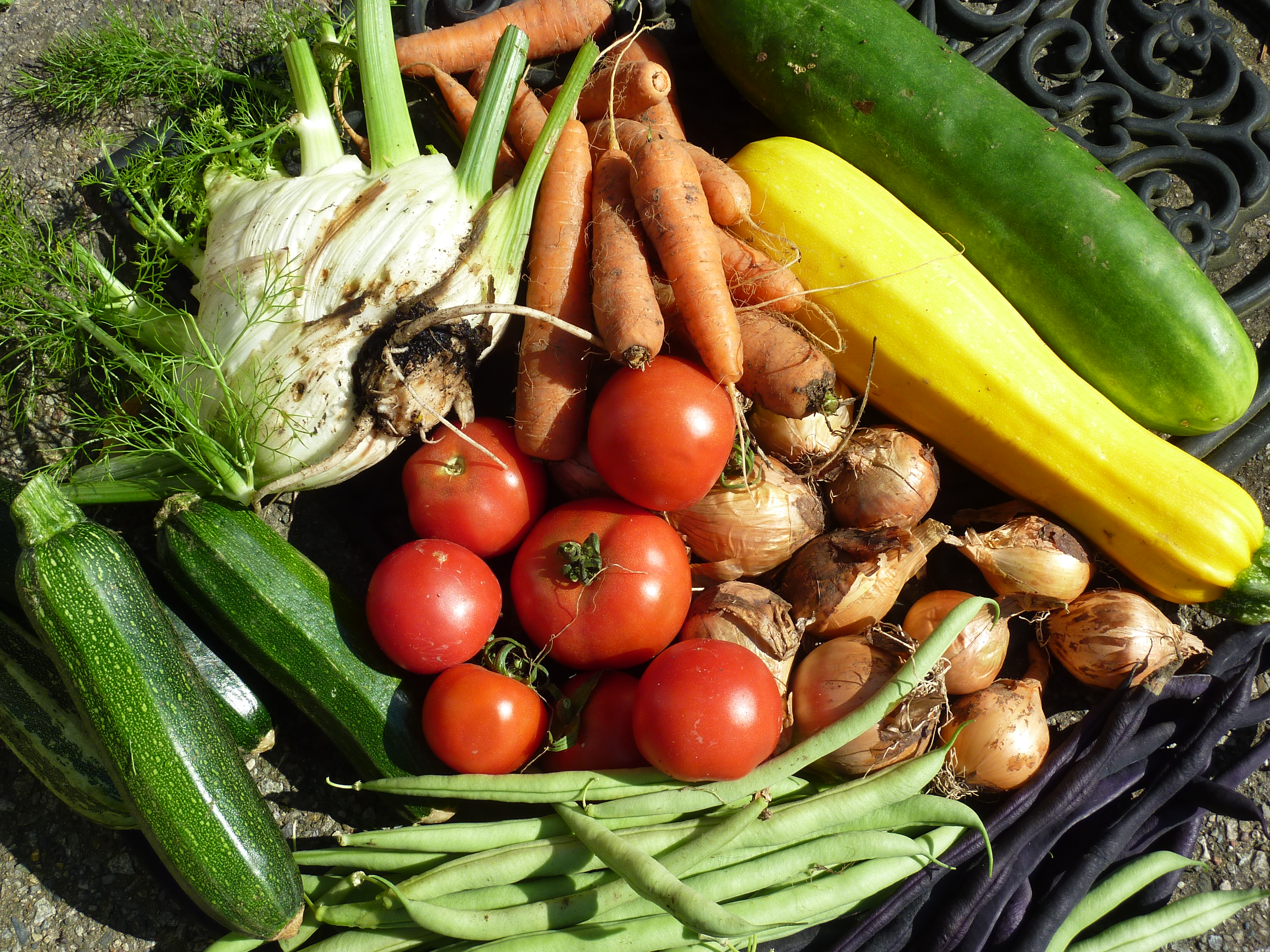
Only naked and fresh veggies here! Food for the sun. When the produce is this good, you don’t want to mess with it too much. The flavours of these veggies are amazing, we are so privileged to live in an area with some serious vegetable growing heroes living close by.
We are getting veg from two local farms over the hill and have recently been picking up a veg box from another farm. We are suddenly inundated with incredible produce and can think of no better way of eating it than raw. Bring on the salads!
Local food is fresher and contains more nutrients due to this, we also like to support these amazing folk who are dedicated to the land. These salads are simple and contain only a few ingredients. Its what you’ll find us eating most days. Adding less ingredients to food makes the nutrients in food easier for the body to digest and use.
Our garden has taken a beating recently with the ‘summer’ storms, the wind is raging out there as I type these words. Leaves whizz by at right angles and the rocket is blown flat to the ground. The slugs have also had a field day out there, I can only hope they enjoyed what they ate. We have been harvesting some lovely red potatoes and a little rainbow chard, but really, the garden had been a steep learning curve this year. Next year, we are full of hope and fresh ideas to fortify our garden from these vicious Welsh elements. Having spoken to local farmers, it has been the worst growing season for 20 years, so a meagre crop is understandable. So we need some help!
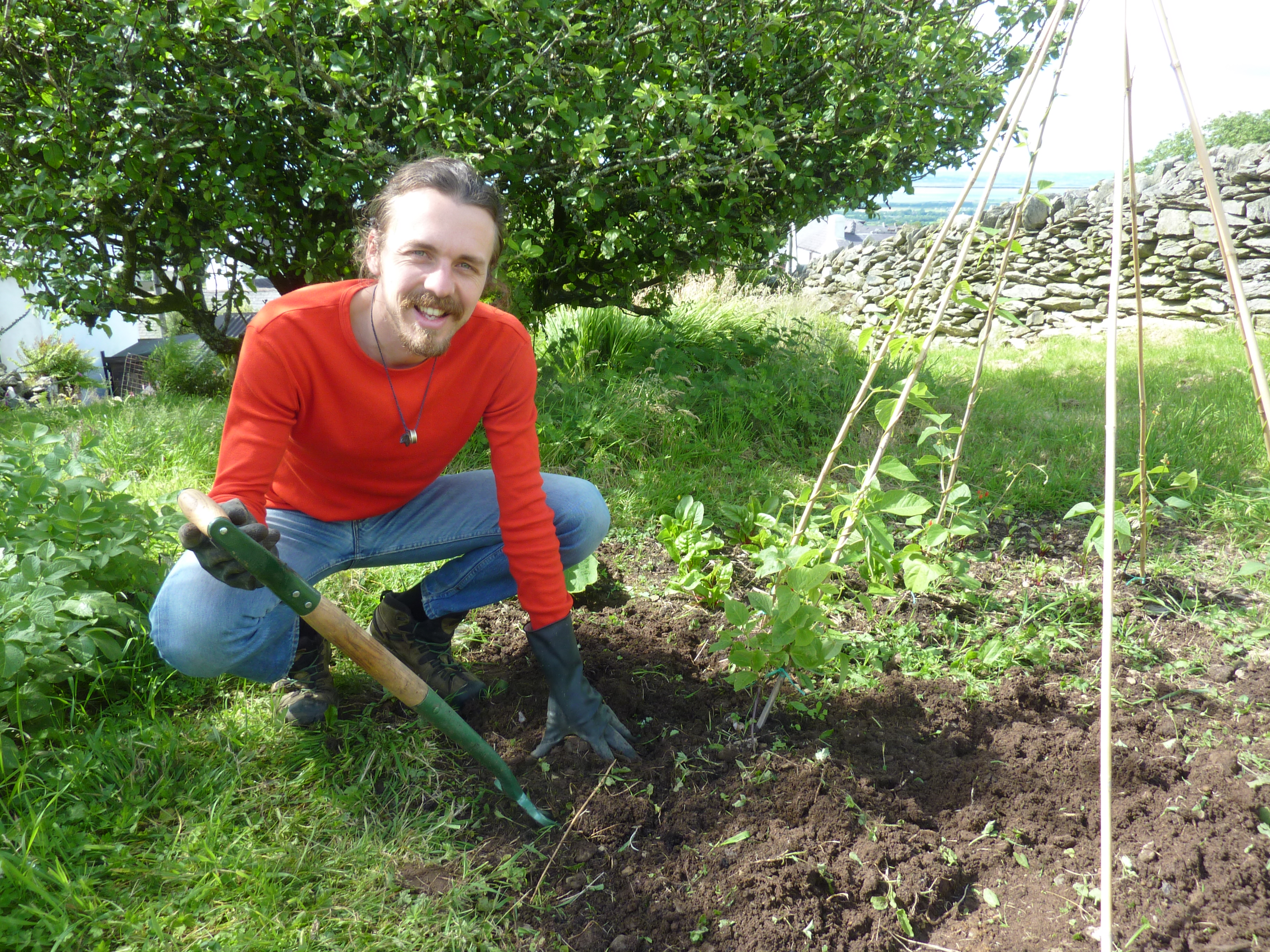
Doing my best for the leeks
I’ve been working like a trooper of late, no time to cook food at the BHK. I needed plenty of shiny food and nutrition to keep me going and Jane has stepped in and has been making the most fantastic raw food delights. These salads, that we ate last night for dinner, were for me the pick of the bunch. Simple and tasty with a wonderful dressing.
I have a habit of throwing things together and letting a little bit of experience and my taste buds sort out the rest, Jane is brilliant at following recipes and measurements. This is important with some parts of cookery, namely baking and it would appear dressings. This dressing was perfectly balanced, with the warm edge of mustard and a good amount of honeyed sweetness.
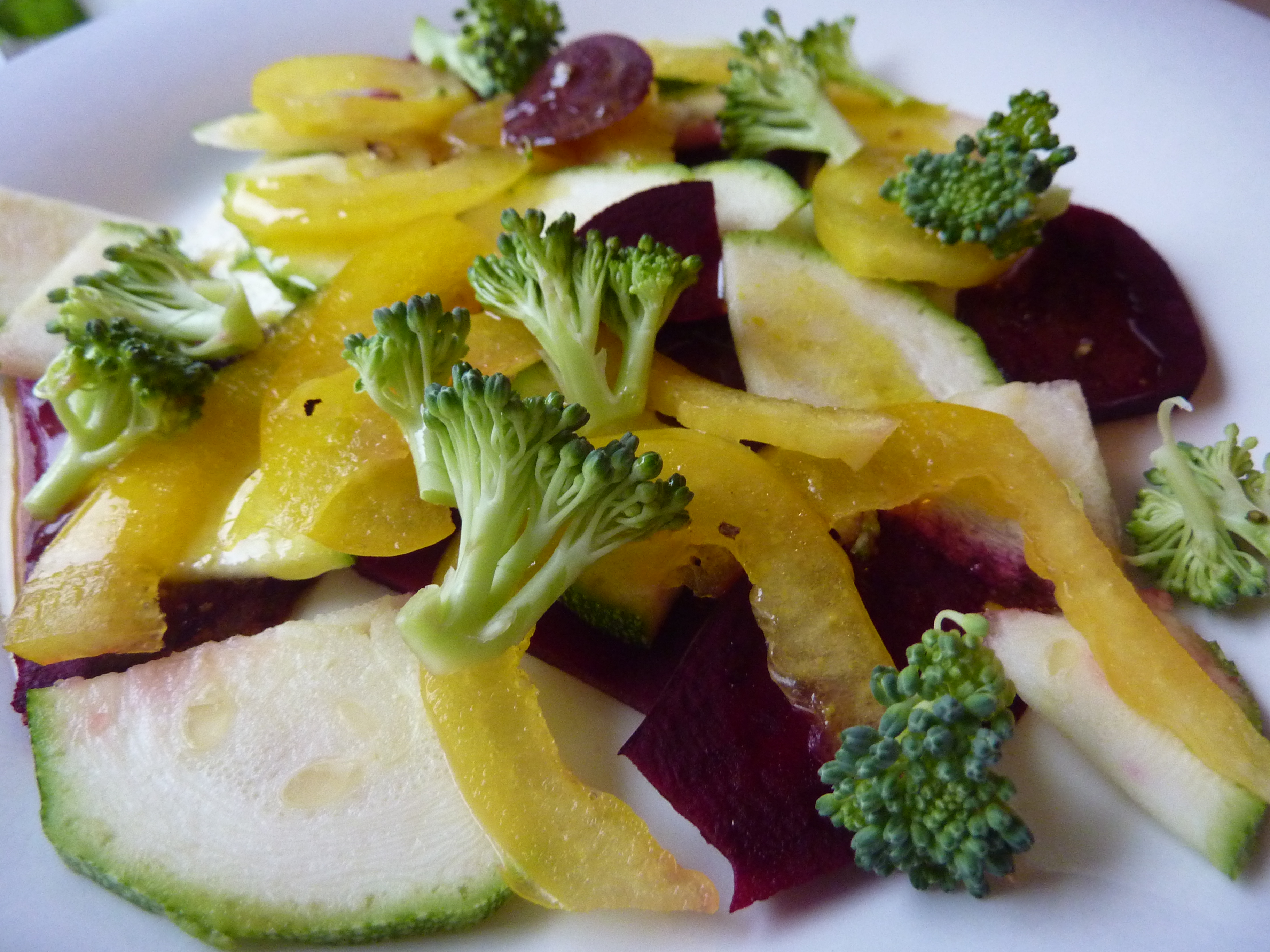
Thinly sliced veggies
Thinly Sliced Veggies
Some may call this a ‘carpaccio’, but really it’s just a stunning way to serve veggies as a salad. Get your nicest plate out of the cupboard, some amazing veggies and slice thinly and arrange. Viola!
The Bits
We used our one each of our local organic farms courgette, beetroot, broccoli and a organic yellow pepper. Any combination of hard vegetables will do, if you are conscious of presentation, maybe mix up the colours a little.
Tomato and Basil Heaven
Tomato and Basil Heaven
For this you must have the finest tomatoes available. These red/green tomatoes came with our veggie box and completely blew us away. They grow in poly tunnels and god knows what else! They are insanely tasty and needed just a few torn basil leaves which are blooming on the windowsill and a splash of olive oil.
The Bits
2 handfuls of amazing tomatoes, meagre handful of torn basil leaves, a splash of great olive oil and sea salt and pepper if you must.
Carrots and Almonds
Carrots and Almonds
The sweetness of these carrots and almonds goes perfectly with the sweet mustard dressing.
The Bits
3 wonderful large carrots (scrubbed, not peeled), 1/3 head of broccoli (broken into little pieces, use the stalk and leaves), 1 handful of raw almonds, thinly sliced red onion and yellow pepper.
Sweet Mustard Dressing
Shake all ingredients together in an old jam jar, they are also handy to keep your dressing in afterwards.
The Bits
1 teas English Mustard, 2 teaspoons clear honey, 1 tbs lemon juice, 4 tablespoons rapeseed oil, a sprinkle of sea salt and pepper.
There is so little work in getting these together, we hardly need a ‘Do It’ section. More time to soak up some rays with your loved ones.
Serve
All veggies are best served at just under room temp, we used the dressing on the Carrot and Almonds and Thinly Sliced Veggies, the tomatoes needed no additions nonsense.
We Love It!
Magic veggies deserve to be eaten in all their glory i.e. naked and fresh!
Foodie Fact
Why buy organic/ local? Food loses nutrition when shipped and kept, so the more local fresh food you consume the better for you and your community in general. Organic veggies actually contain no more nutrients that conventionally grown, but they are clean and contain no pesticides (or poisons). Organic practices enrich the earth and by not using chemicals and GM techniques, ensure the fertility of the earth for future generations. Also, people who grow organically are normally lovely people to visit for tea!
A real breakfast belly filler here. This is a great start to the day, maybe not the very best, but somewhere close! This is a bowl designed especially for those who have a busy/active time ahead. Maybe your a sheep farmer, or a trapeze artist, whatever your activity of choice, this bircher will give you full power! The sprouting bircher gives slow release energy that will keep you ticking over well beyond lunch, in fact, we find it lasts us until dinnertime! It’s a beast!
You will need to get sprouting here, or buy some in. The former is more enjoyable and much cheaper than the later. It would be a shame to exclude them. We are keen to get the world sprouting, we’d love to see windowsills full of mungs! Once you begin to sprout, you just cannot stop. We used sprouting buckwheat and wheat grains (called wheat berries in the States), both can be bought easily in most shops in the UK in a pre-sprouted state. They will definitely have them in your local health food shop.
Sprouting is great value and nutrition, the grains/pulses really bulk out and you get a good amount of sprouts from just a hand full of dried little things. Wheat grains make for brilliant sprouts, they are quick and abundant and have a nice sweet taste. Wheat grains are basically unprocessed wheat, Ideal if you are craving some bread or biscuits but want to stay super healthy (incidentally, these sprouts make a great loaf I’m told) .
We had this breakfast before a long walk in the hills and it was the perfect fuel to scale some craggy rocks and filthy bogs. Birchers are a real favourite of mine, basically a bowl of muesli, with yoghurt, given one big stir. Makes a change, a bit of a mash up.
The seeds and fruit can be played with here, whatever you have in the bowl and fridge really. We like to used flax seeds because they are great for the digestive system and sunflower seeds because the have amazing health properties and flavour. This recipe uses organic rolled oats, but you could use oat groats if you were eating raw.
Serves two hungry hikers/ workers
The Bits
1 cup of organic rolled oats (or oat groats), 1 banana (chopped), 1 apple (chopped, organic is definitely best here), 1/2 cup nuts (we use hazelnuts or almonds), 1/2 cup raisins, 1/4 cup sunflower seeds, 2 tbs golden flax seeds, 1/2 cup buckwheat sprouts, 1/2 cup wheat grain sprouts, 1 cup yoghurt (we use soya, whatever you prefer), 1 teas cinnamon.
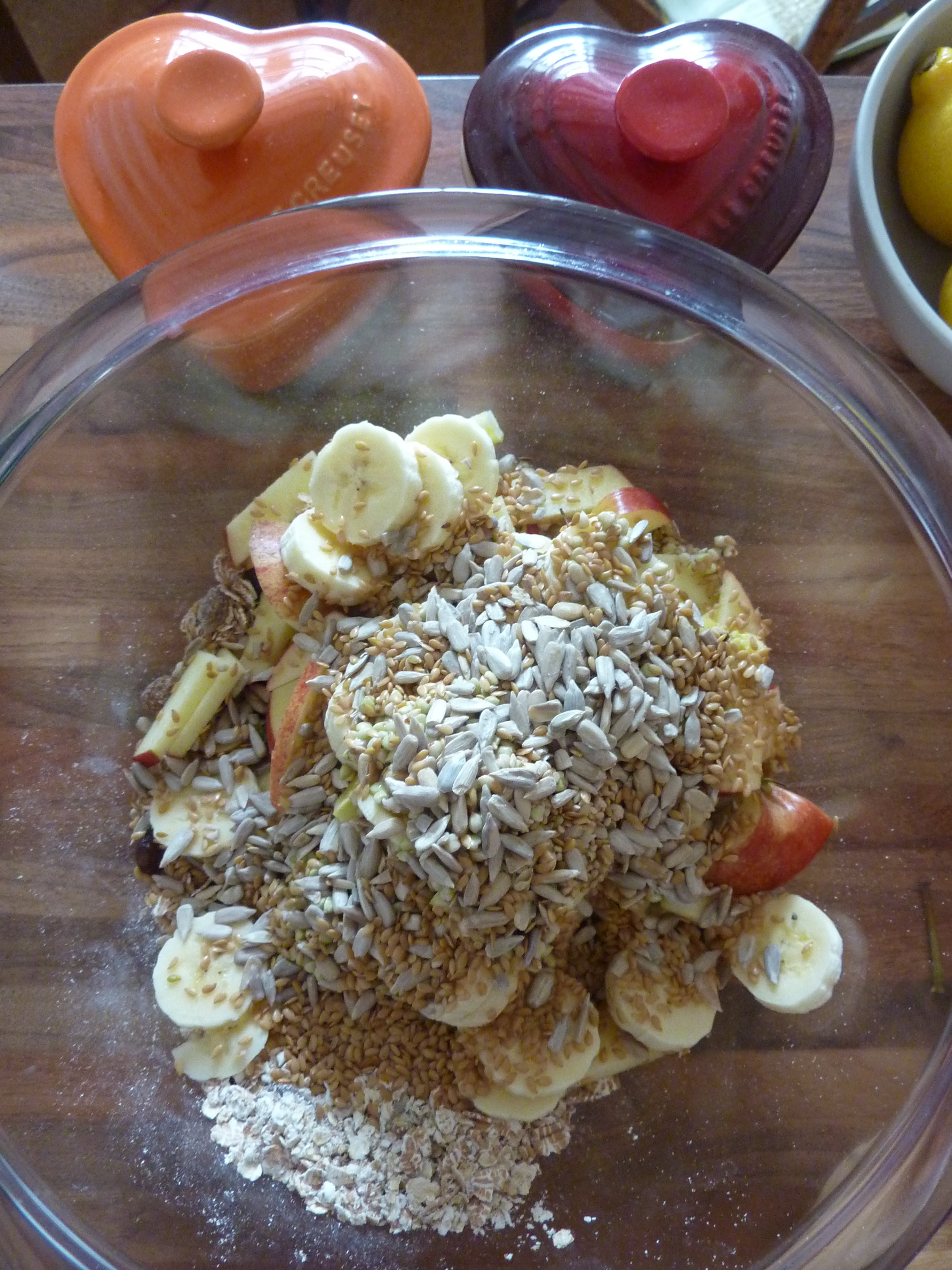
Sprouted Wheat and Apple Bircher – in the mix
Do It
Get out a nice big bowl, add all ingredients in no particular order and give it all a good and gentle stir. It should be well mixed when served.
Bircher post-mix, check out those funky sprouts!
Serve
As quick as you can, in spacious bowls, it does not keep so well.
Sweeties may like a little compote or honey on top of their bircher, but we think it is sweet enough.
Sprouted Wheat and Apple Bircher
We Love It!
This is a bowl of goodness that really sticks to the ribs and is packed with good energy and nutrients. It deserves to be fully fledged member of the ‘best way to start the day’ gang.
Foodie Fact
A serving of sprouted wheat grains contains your daily requirement of Manganese, which keeps your brain, metabolism and nerves in check. Good to know!
Farm fresh veggies from our friends at Trigonos, bring on the salads!
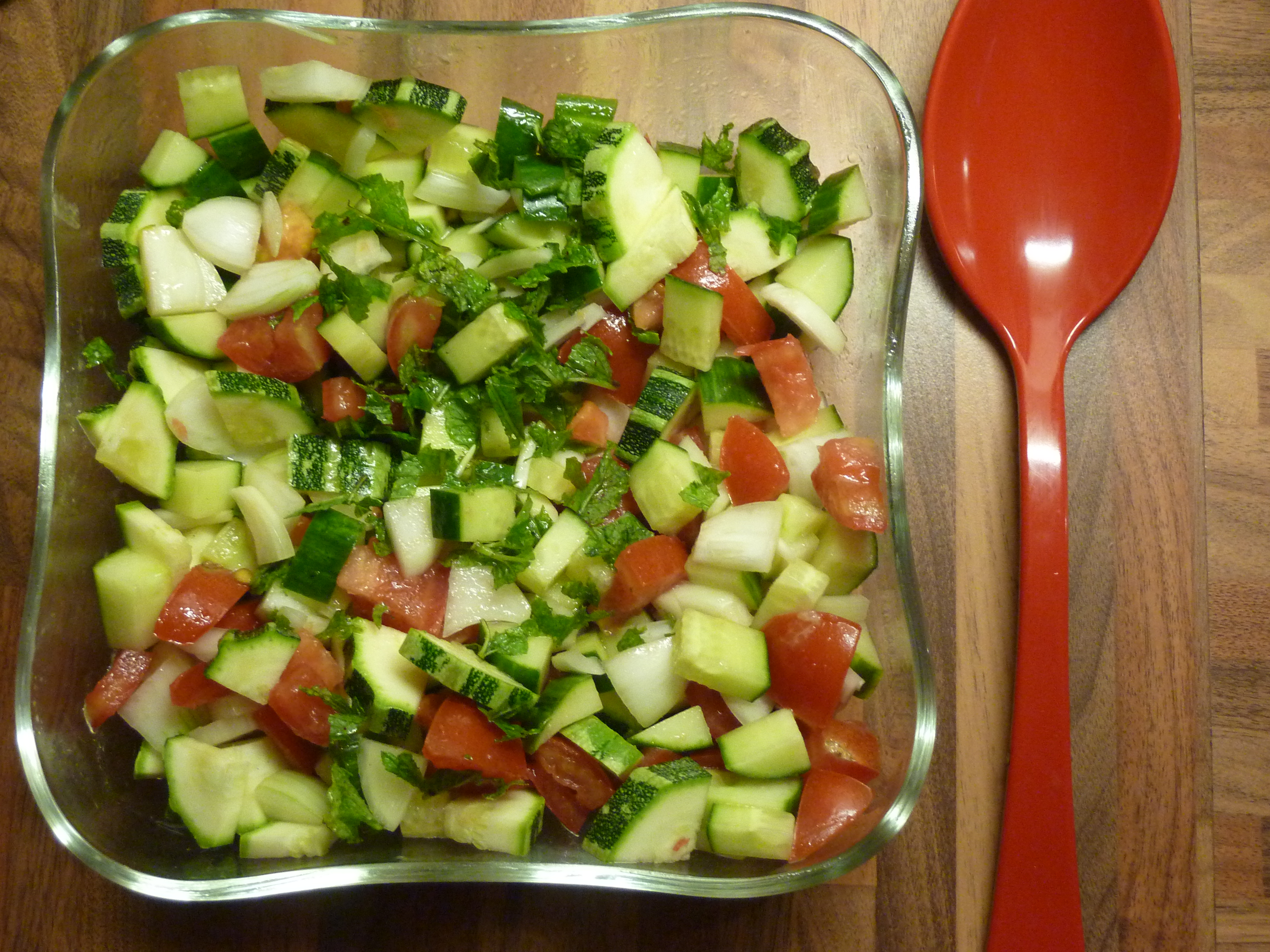
Salad Shirazi is one of my favourite Persian salads and very easy to get together and prepare. This salad seems to be ubiquitous from Delhi to Tangiers, hard vegetables chopped up small with onion and some lemon juice, herbs if you are lucky or decadent or both.
We used some lovely veggies from the farm and added a little courgette because it is that time of year. The mint came from the herb garden and our little taste of Persia was complete.
This salad adds the ideal fresh crunch to rich cuisine and went perfectly with our Persian Aubergine Stew, but is perfect as a salad in its own right. The fresher the produce, the better the salad.
The Bits
3 medium sized cucumbers, 3 small firm tomatoes, 1 courgette, 2 small sweet onions, 3 tablespoons good olive oil, juice of 1 lemon or lime, 1 handful of fresh mint (chopped, dried mint will do), sea salt and cracked pepper to taste
Do It
Cut tomatoes, cucumbers, courgette and onion into small cube-ish pieces and place them in a salad bowl and gently mix. Add salt, pepper, mint, olive oil and lemon juice, mix well.
Persian (or Iranian) food is a favourite of mine, but something I haven’t cooked for a long time. It is similar to Indian food and the food of other areas in the Middle East; namely Turkey, Iraq and Pakistan. Some would say that these countries food cultures are similar to Persian food, after all, they were there first! Ancient Persia, Darius the Great and all, have always sparked my imagination. I hope one day to visit (soon).
THE BEAUTY OF PERSIAN CUISINE
Persian food is beautifully spiced and rich. It’s roots are of course ancient and the oldest Iranian cookbook was written in 927 and was called ‘Kār-nāmeh dar bāb-e tabbākhī va sanat-e ān’ or the “Manual on cooking and its craft”. It offers an exhaustive insight into the complexity and importance of Persian food to the people and the culture. This amazing food tradition has been passed down through the generations, normally from mother to daughter, meaning that the dishes served in Tehran today will not have varied greatly from the time of the ‘Kar-nameh’. This all means that Persians take there food very seriously, authenticity is a must.
Persian food is captivating, I love the emphasis on fresh produce, in London I have seen Iranian housewives shopping down at the markets and they only accept the very freshest of ingredients (giving the stall holders feedback if things aren’t up to scratch!) Persian cuisine uses large amounts of fresh herbs, sometimes it seems they replace the use of vegetables!
A LITTLE HISTORY…….
Persian food has influenced the world of cooking, much more than we know, giving us delights such as ice cream and kebab. Dare I say it, many of North Indian dishes are heavily derived from Persian cuisine. In Mughal times especially, Persian cooks were in high demand in the courts of the ruling caste. These trends filter down into the melting pot of India’s culinary traditions.
The whole vast area of the Middle East has been linked throughout history; cultures mingling and merging throughout the centuries. Iran is a very fertile land with a wonderful array of produce; pistachios, spices, dried limes, fruits, pomegranate, green herbs, the flavours of rose and saffron, all spring to mind and the colours alone get my imagination flowing.
TEHRAN VIA LONDON
My first taste of Persia came in a London backstreet, a place where farsi filled the air and a smiling man made fresh flat breads in a stone oven. The food was so fresh and the flavours striking. I started to experiment with Iranian cooking and found a whole new range of flavours and ingredients to play with. Dried limes for example are unique revelation!
Persian food is very traditional and each dish has set rules to follow, not something I am completely comfortable with, but the results are generally outstanding. My best memories of these Iranian days were the rice (polo) cake that I made. The sort of dish that is so easy and looks very unique, the rice takes the shape of the the pan and forms a nice golden crust. You cut into it like a cake! Served with a delicious Ghormeh Sabzi (Veg and Kidney Bean Stew – Iran’s National Dish) and you have something quite special to enjoy.
Although Persian main dishes revolve around meat and rice, I have found the creative combining of ingredients can easily be related to veggie foods. There are also many vegan stews, salads etc that are popular in Iran, like this Khoresh Bademjan or Aubergine Stew, which traditionally would have a lump of meat in it.
AUBERGINE – ‘THE POTATO OF IRAN’
Aubergine (Egg plant to some) is a staple in Iran and is even known as the ‘potato of Iran’. I love making stews, the gentle simmering nature, the way they fill the house with the homely smell of food. The use of cinnamon here adds such a warming flavour to the dish and the lentils keep nice and firm, giving the stew a very hearty feel.
I know how passionate Iranians are about their food, so I felt it right to seek advice for this recipe and stumbled upon a top Iranian food blogger, Azita at Turmeric and Saffron. Azita’s recipes are traditional and made with love and care, many handed down from her mother. This to me is real heart and soul food, cooked with love and care and a cornerstone of family life and culture all over the world. It is surprising how many of our memories of loved ones revolve around food (or maybe that’s just me!) I have changed the recipe slightly, but kept the authentic flavours in tact.
Iran is such a vast and fascinating land, the dishes served will vary greatly in different regions, I’ll just have to go for a visit and try them all myself! Hopefully you’ll see some holiday snaps on the B.H.K soon. It’s great to be back in the Iranian cooking flow and I hope to be making much more Iranian food.
Happy CookingX
Yellow split peas
This makes a big pot full, good enough for four hungry mouths.
The Bits
3 large aubergines (peeled, sliced into large chunks and salted with 2 tablespoons of salt)
2 courgettes (chopped into large chunks)
4 medium tomatoes (peeled and chopped)
1 large onion (diced)
4 cloves of garlic (crushed and chopped)
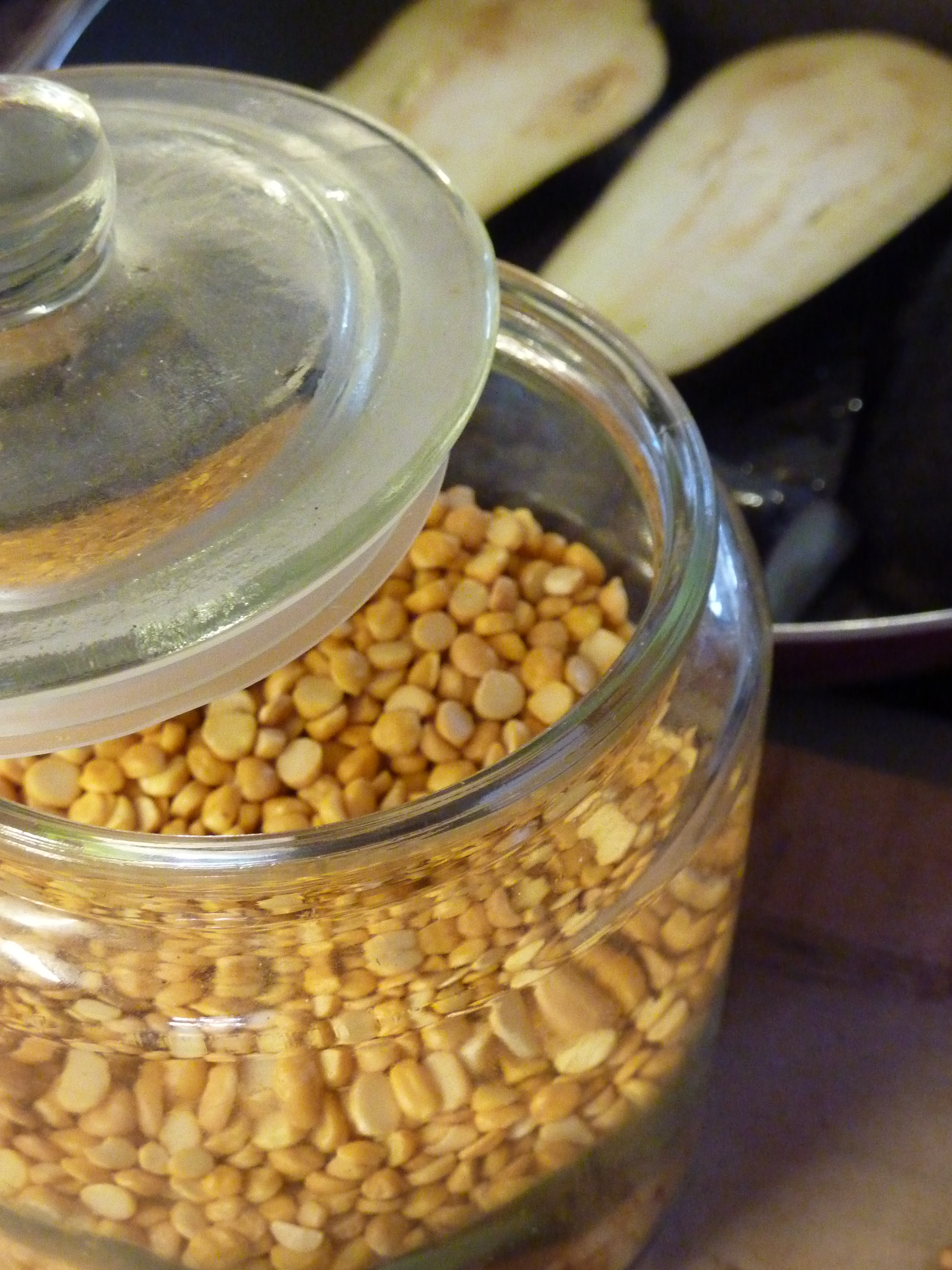
3/4 cup yellow split peas (rinsed)
3 tablespoons sunflower oil for frying onions etc
1/2 cup (60ml) oil for frying aubergines
3 tbs tomato puree
3-4 cups of water
1 teaspoon cinnamon
1 1/2 teaspoon turmeric
sea salt and cracked pepper (to taste)
1 lime or to taste (juice) or 2-3 tablespoons sour grapes (ghooreh).
Do It
This is Persian food, meaning a very particular way of preparing the dish. Well worth the effort!
Leave your aubergines for 30 minutes with salt rubbed into them. Then place the salted aubergines in a large container filled with water; put a heavy bowl or a heavy lid on top of the eggplants to hold them down for ten minutes, this will get rid of the bitterness. Remove aubergines from container and pat dry completely before frying. (You can skip this step if you’re pushed for time).
Frying Aubergine
Fry the aubergines in 1/2 cup (60ml) of hot oil until brown on both sides, remove and then add the courgette and fry until golden. Place all on a plate lined with thick kitchen paper to drain some of the excess oil.
Using a knife, mark each tomato with a shallow X at the top, place them in a pot of boiling water for five minutes before pulling off the skin, then chop or slice them thinly or just chop the tomatoes skins on (for the time deprived).
In a large saucepan, heat the oil, add chopped onions, saute until translucent then add the garlic, stir well. Sprinkle in the turmeric, salt and pepper and cinnamon. Mix thoroughly. Cook until onions begin to caramelise.
Onions and spice – Rather nice!
Add dry split peas, fry for five minutes, this will keep the peas more firm in the khoresh. Then add chopped tomatoes, tomato puree and three cups of water to cover all the ingredients. Bring to a boil, lower the heat, cover and cook for an 35 mins on medium heat.
Add the fried aubergine and courgette to the mixture, adjust the seasoning and add more water if needed.
Cook for another 15 minutes, until all is nice and tender. Add the lime juice or two tablespoons of sour grapes (ghooreh). Let it sit for 10 minutes off the heat, with the lid on. This allows the stew to cool a little, flavours can be impaired by really hot food.
Persian Aubergine Stew
Serve
With steaming rice, soya yoghurt (or whipped silken tofu) and a fresh salad shirazi. This dish may also be served with sour grapes (ghooreh), which you can buy in many world food stores.
We Love It!
Jane and I can sit at our table in the Beach House, up in the clouds, and dream of exotic far off lands and ancient cultures…to the blue mosque of Isfahan and back before dessert…..traveling the world one plate at a time. This stew is that good!
Foodie Fact
The aubergine (or brinjal or eggplant…) is native to India, this fruit comes in all shapes and sizes and is now grown around the world. It is very low in calories and contains much soluble fibre. The skin of aubergine is high in anti-oxidants and it is a good food to help high blood cholesterol and aids metabolism.
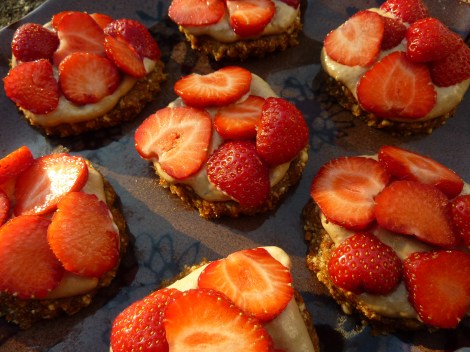
This is a variation on our Raw Summer Berry Cheesecake that was SOOOOO GOOD we thought we would do it again… only adding some different ingredients to make it tastier and a little more interesting (and smaller!). One for the sweet tooth and can be eaten on a raw food diet too. Try it, it’s amazing!
It was a beautiful sunny day so I put on my shorts, went in the garden, felt super-summery, and then decided to surprise Lee with a beautiful treat for when he got home from work. The strawberries were farm-fresh, juicy, and looked oh so irresistible in the fridge, and the result was a delightful delicate mix of this rich nutty sticky base with it’s thick creamy sweet fruity topping. Such sunny decadence!!!
I just love raw food preparation and cooking. It’s quick, there is very little mess or washing up, and I really feel like I am learning so much about how to combine the ingredients and flavours. It’s so incredible how tasty these blends of foods can be and how versatile these ingredients are – the topping in this recipe is unbelievable! Tahini never tasted so good.
Raw Strawberry Tartlets
The Bits
Base
200g dates
200g soaked almonds
Large handful sultanas
Large handful cashew nuts
A shake of cinnamon
A shake of ground (or chopped ginger)
The delicious creamy topping
1 large banana
Juice of one lemon
3 tablespoons tahini
8 dates
Topping
Chopped strawberries
Do It
So here’s how it’s done!
Base – Blend the ingredients for the base in a food processor. Make little balls with the mixture and squash flat to make little round mini-bases. This took the longest out of everything because the mixture gets so sticky. Make as many bases as you want, any size or shape you want! Worth persevering with your sticky fingers for the end result 🙂
Topping – Blend everything together and smooth the lovely thick mixture on to your bases. Throw on some chopped strawberries, or any other fruit you may have that looks beautiful; and serve straight away.
You can keep the base and topping separate in the fridge and they will keep well for a few days.
Only add the fruit just before serving for the freshest taste imaginable!
Serve
We like it all left out of the fridge, at room temperature. Served in the garden and eaten with teaspoons (to prolong the happiness). Normally with a nice cup of Rooi-al (Rooibos tea with almond milk) or Rooi-soy (with soya milk). The perfect little summer treat.
We Love It!
This is so simple. The most delicious dessert and minimal effort…leaving more time for eating!!!
Foodie Fact
Strawberries are actually native to Europe, and technically a ‘creeper’. Nothing evokes summertime in Britain more than the coming of the strawberry. Strawberries are very high in vitamin C, our anti-oxidant friend and vitamin B. They also contain plenty of vitamin B and E and have good levels of mineral content. They are also full of phyto-nutrients that are brilliant for the body, they fight diseases and other nasty things. Oh, and they are low in calories.
With beetroots like these who needs spinach?! Or something like that anyway. With a regular supply of these beauties almost year-round you can expect alot more beetroot dishes on the BHK! Really though, it is my favourite veg. I know that is a bold statement for a veggie lover. The ‘root is such a magnificent purple thing, but the leaves are just as good and this soup recipe puts them to good use. We normally chop them up and put them into salads, so this is a nice change.
Now, the vast majority of Beach House readers are from over the pond, that is to say the USA. We love you guys and must translate a little here, you may know these leaves as beet greens and beetroots are of course beets. I like the name beets and beet leaf has a much better ring than beetroot leaf, but I must stay true my small island roots.
The beetroots we are buying at the moment from the farm all come with at least five crisp leaves and beautiful crimson roots. You can really see the similarity with chard, especially swiss chard, they are all one big happy family. As with most plants, the leaves contain more nutrients than the roots, one more reason to never, ever throw them away (I hear of people doing this). What a waste!
This is a basic soup recipe and the beetroot leaves can be substituted for beetroots themselves, or most other veg. This is a classic soup base that allows you to use up any veggies that you have hanging around.
As with most soups, its better the day after. The flavours really come together and the piquant tomato flavour really comes through with the balsamic adding a lovely sweetness.
I decided on oregano here, because it is blooming at the minute in the herb garden. You may prefer to use thyme or even rosemary would go nicely.
We made a big vat of soup here, feel free to half the quantities for a more modest pan full.
Makes one big pan full (eight bowls)
The Bits
1 tbs veg oil
2 sticks celery (chopped)
1 carrot (chopped)
4 cloves garlic (minced)
1 big white onion (chopped)
2 teas ground cumin
Leaves of 12 beetroots (well washed and roughly chopped)
Heat veg oil on medium in a suitably large pan, add onions and soften for a couple of minutes, add celery and carrot and continue cooking and stirring for a couple more minutes. Then add cumin, garlic and balsamic, allow the vinegar to evaporate (getting rid of most of the acidity) then add you beetroot leaves and season with salt and pepper, stir in well.
Beet leaves wilting
Cook for a few minutes and when the leaves are wilting add the tomatoes, the oregano leaves and the puree, stir in and heat through, then add your stock and bring it all to the boil. Lower heat and cover, cook for 20 minutes, until all veg is tender. Then blend together using a hand blender or in batches in a food processor. The soup should be smooth, no lumps, check seasoning.
Blitz it up!
Serve
In warm bowls, topped with some oregano leaves and fresh cracked black pepper.
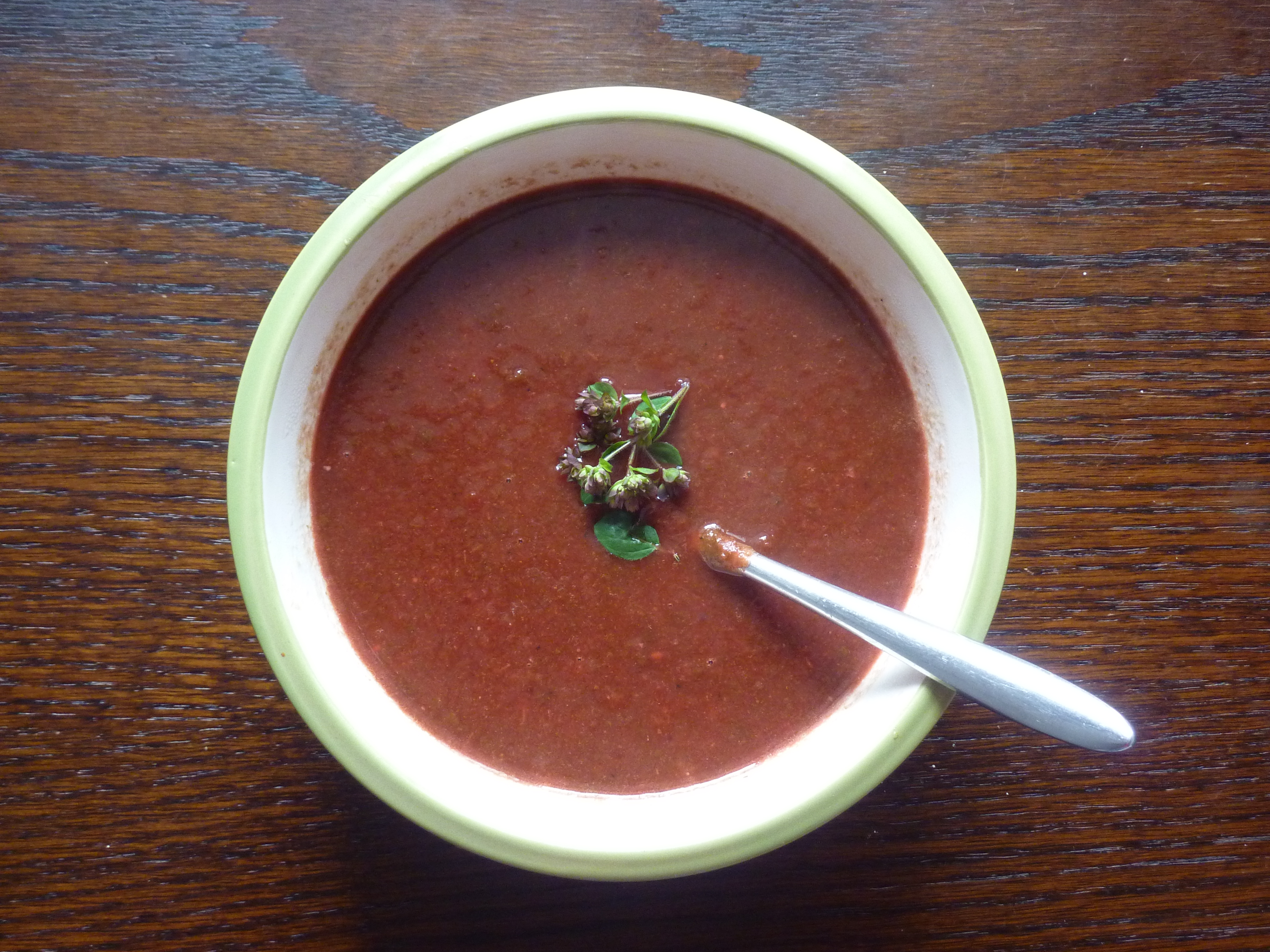
Beetroot Leaf Soup
We Love It!
A great summer warmer (needed in these climes), we love the combination of balsamic and beetroot, sweet and tangy coming together nicely with the deep and hearty tomatoes. A lively, zingy soup, jam packed full of flavour and goodness.
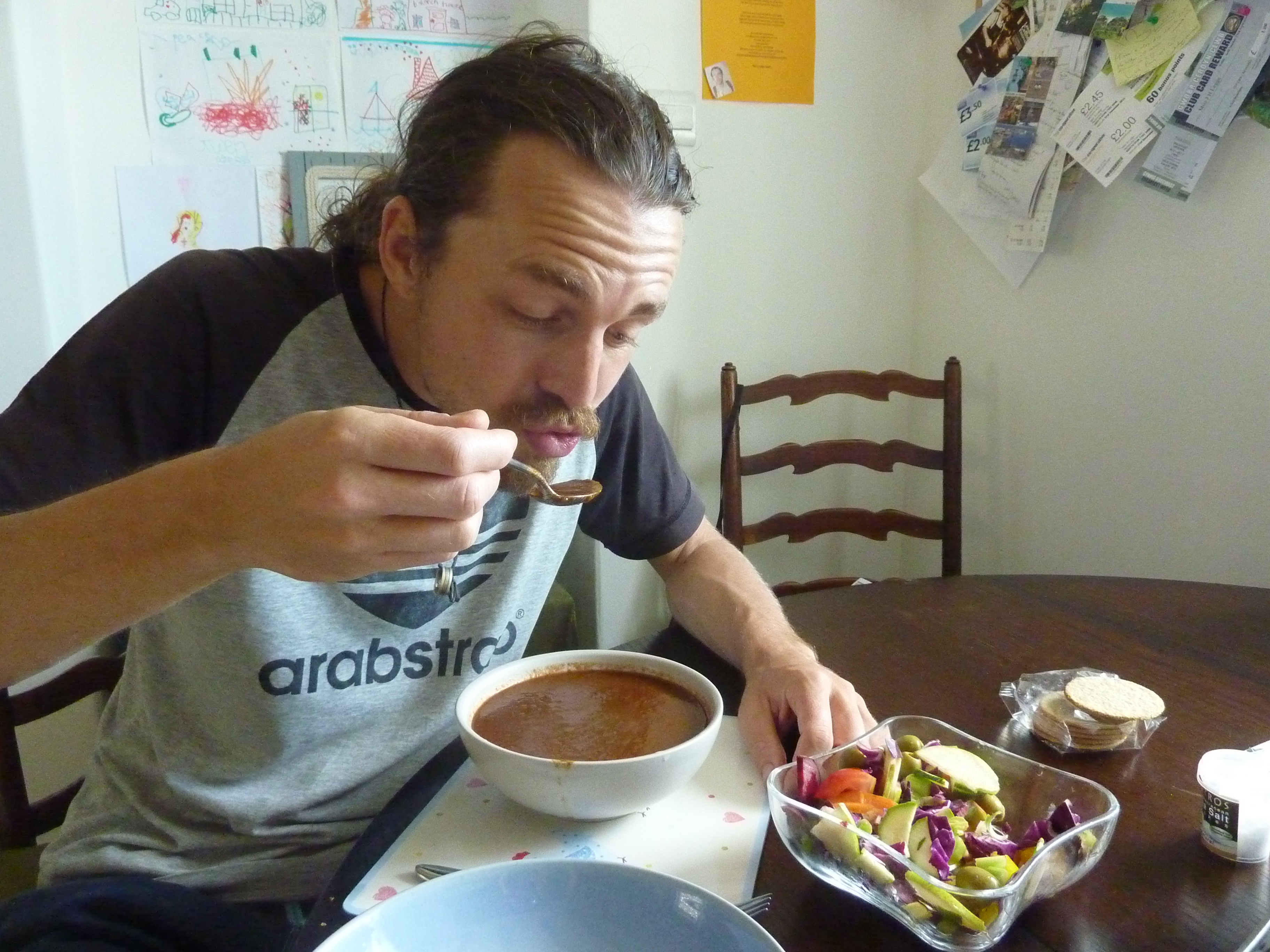
Having a good slurp. YUM!
Foodie Facts
Beetroot leaves are full of fibre, protien and vitamin C, which we need constant supplies of because our bodies cannot store it. One cup of beetroot leaves gives you 60% of your daily dose of C. The best news is the vitamin A content, one cup contains 220% of your daily intake. Cor! They also contain alot of calcium, most people think that calcium comes from cows, but there are so many other ways of getting your calcium.
A quick and easy summer salad with many a luxury touch. The method here is simply blanching the veg and hopefully maintaining alot of their goodness. You certainly don’t want to cook veggies until they lose their crunch, that is utter madness. Veggies should be alive and crispy when eaten!
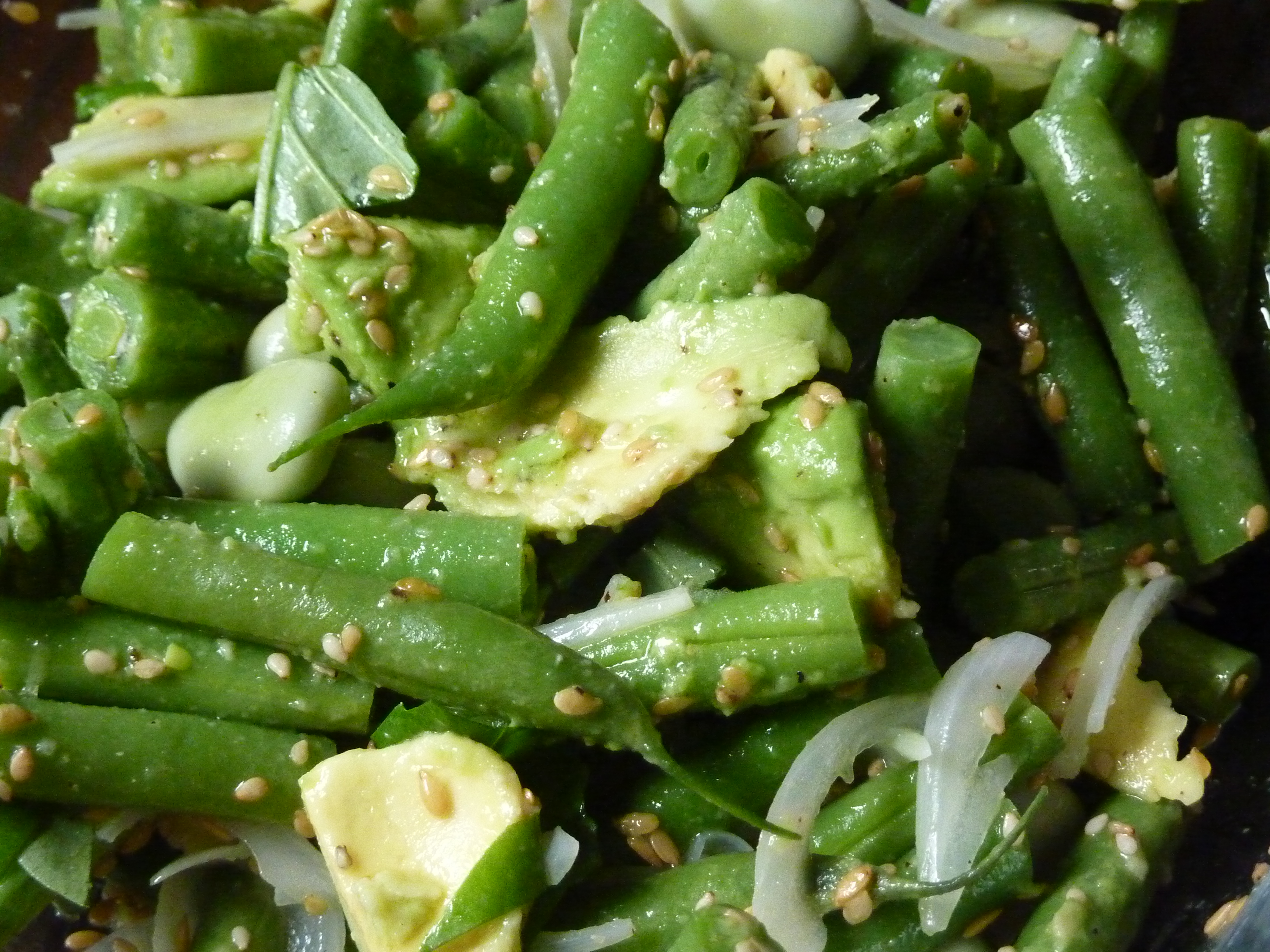
This salad was so green, it was jumping out of the bowl (if that makes any sense at all!) All the veg here are seasonal, from the farm (bar the Avocado which I think flew over from Mexico), the basil came from the bush on the windowsill and even the oil and salt are Welsh. It is so great to eat something made from produced sourced locally. We have really struggled this year to gather together good, organic produce. But the sun is out today and all is blooming, hopefully the next few weeks will see more harvesting and beautiful produce up for grabs. Even our rainbow chard in the garden is looking good for the plate. Amazing what a little sun can do!
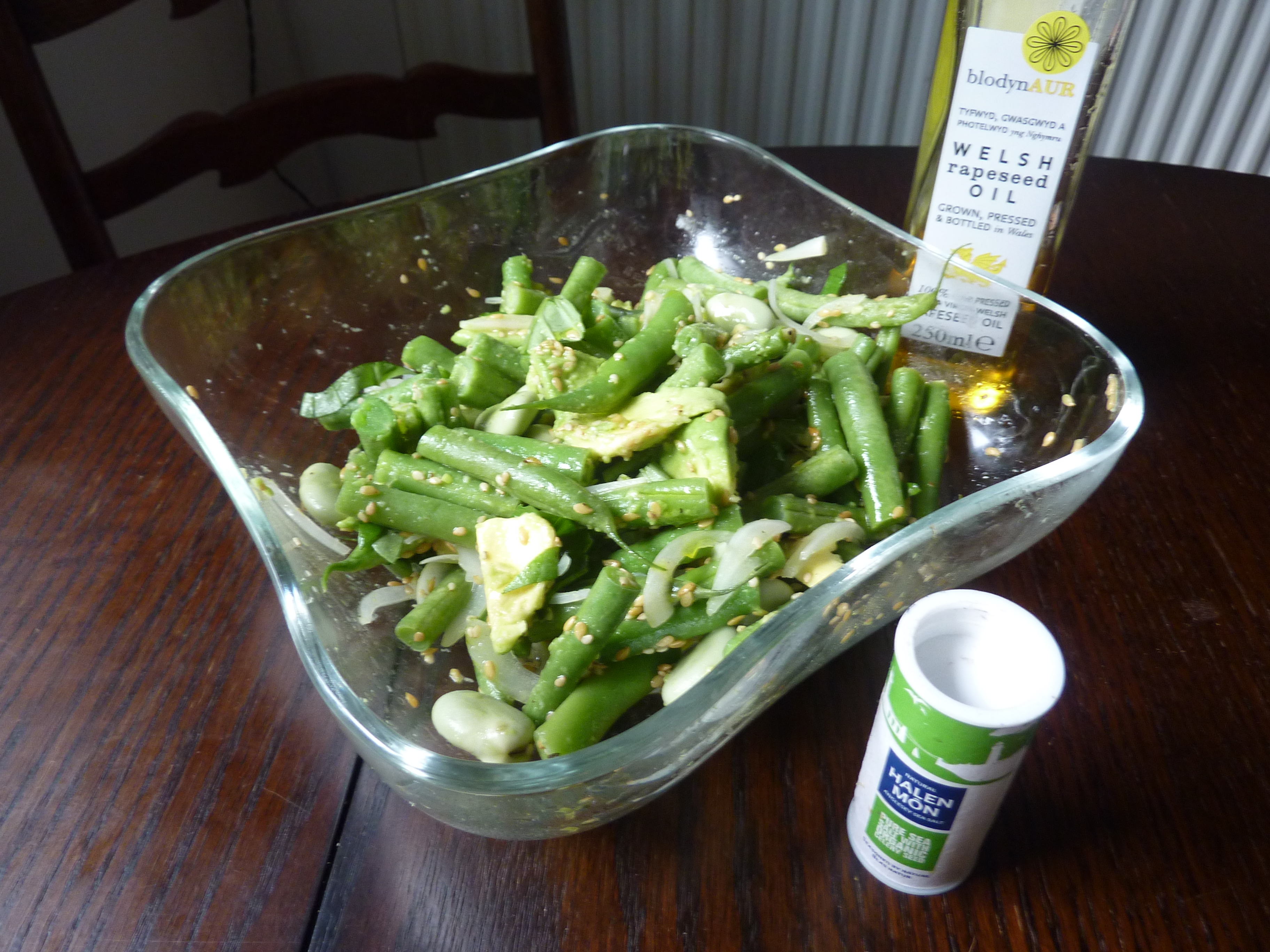
The dressing is made with Blodyn Aur Rapeseed Oil, a real find in Wales. Great folk who use the cold press techniques of olive oil making to produce a stunning rapeseed oil. Real food heroes who enrich our lives with beautiful oil. The flavour is very buttery, nutty and smooth and the colour is the brightest gold. This oil also has bags of Omega 3 essential fatty acids, which are great for us. If you live in Britain, I hope you can track some down. It is like no other oil I have come across.
We also used some local sea salt flavoured with celery. Halen Mon are a family business making salt from the pure water of the Menai Straits on Anglesey, we can seem them from the kitchen window of the Beach House Kitchen and have never tasted salt this good. Really. It’s amazing salt. See our Halen Mon post here.
We always have a good stock of seeds, but if you don’t have sesame or flax, any seed will do really. Although poppy seed would be a little strange. We like adding flax to dishes because it is good for the digestive system.
A opposed to our normal raw food fare, this warming (I wouldn’t go as far as cooking!) of the salad really brings out the flavour of the dressing. We have also recently been told that it is not such a good idea to each French beans or broad beans raw. They contain things that may do you no good.
Rapeseed Flower
PS – A handful in our recipes is probably about a cup (in our hands!). Maybe yo have different names for these beans, fava etc. I hope you know what we are talking about here!
The Bits
Salad – 1 ripe avocado (chopped), 3 handfuls of spinach, 1 small sweet onion, 3 handfuls of chopped french beans, 2 handfuls of podded broad beans, 1 stick of finely sliced celery, 1/2 handful of chopped basil leaves, 2 teas sesame seeds, 2 teas flax seeds.
Dressing – Freshly squeezed juice of a lemon, 3 tbs great oil (olive or we used local rapeseed oil, it has a lovely buttery flavour), 2 cloves of crushed garlic, 1 teas organic honey, cracked black pepper, sprinkle of sea salt (we used Halen Mon celery salt).
Do It
Gather all your broad beans, french beans, onion, place in a bowl/pan and pour over just boiled water. Leave to sit for a few minutes. Make the dressing, add all ingredients to a small bowl and whisk vigorously with a fork or small whisk. Drain you veggies and add to a large salad bowl (or any good looking receptacle), mix in your avocado, celery and basil leaves (gently does it) and pour over and stir in your dressing.
Warm Green Salad with Rapeseed Oil Dressing
Serve
Warm, with smiles and summer joy.
We Love It!
All good local fare; seasonal veggies that are so full of flavour and the vibrant dressing adds a lovely rich citrus kick. A bowl full of the joys of these lands.
Foodie Fact
Unlike all other vegetable oils, cold pressed rape seed oil contains a natural balance of omega 3, 6 and 9 oils, making it a great source for these essential fatty acids. ‘Good oils’ are essential in bodily functions, including aiding cholesterol reduction, and maintaining a healthy heart. Omega 3 is a rare oil, that can be difficult to include in our diet. Rapeseed oil also contains Vitamin E, a powerful anti-oxidant.
The Beach House Kitchen is definitely rustic. Not in the manufactured ‘rustic’ sense of the word, I mean we have sheep invading our front garden and no coffee shop within a half hour drive. The wind howls and we regularly have horses looking into our bathroom window (which can be quite a shock when you’re getting out of the shower!). We live out here and it’s beautiful!
I try and convey this country feel in our pictures, I just don’t have the gadgets (and time) to make our food look so polished. I am in awe of many blogs that manage to make any dish look like food of the Gods. When it’s so grey outside, taking photographs of food just doesn’t do the dish justice. One blog who constantly dazzles with its photographs and gorgeous food is 84th&3rd. This recipe is inspired by their Vegan Chocolate Ice Cream recipe. This is one of those food blogs that is so delicious and sexy, you just want to try out all of the recipes.
This is an amazing recipe that will blow anybody away. Vegan or otherwise. Even the hardest of hardcore Ben and Jerry lovers will be impressed with this ice cream. It is a wonder, with purely natural and healthy ingredients. Good fats and sugars ahoy!
The Beach House additions to this recipe were mainly nutty. Almonds to be exact, although pecan and cashews would be lovely also. We used soaked almonds here, the soaking brings out the nutrients and also makes them nice and plump and soft, ready for blending. Soak your nuts! It helps.
Cacao powder is a great investment, a little costly, but a small spoonful goes a long way. It is surprisingly chocolaty and opens a doorway into much sweet experimentation. Contrary to popular misconception, vegan ice cream can be rich and we’ve turned to the old favourite, avocado, to give things that creamy richness that diary normally would.
Cacao Beans
Cacao or Cocoa?
Cacao is not cocoa, cocoa is not cacao. They are very similar in every way, which can be confusing, but one way they differ greatly is nutritionally. Cacao is raw, meaning not heated to an extent that fragile enzymes and nutrients are destroyed, cocoa is heated (although still very tasty). Raw chocolate is brilliant for the body (in moderation) and big slab of Cadbury’s just ain’t so great.
Try to buy organic with your cacao, they use a load of pesticides and bad things in cacao growing. There’s no point going healthy and opting for a chemical cocktail, it will probably be the matter of a few pennies more.
Bananas (not ripe yet)
Bananas
The bananas here, and in general, should be getting towards brown. Some brown spots and a nice soft banana is important. They will be alot sweeter and better for you (I won’t bore you with the science of it this time, see the ‘Foodie Fact’ for that). Most places sell bananas way to early, meaning we eat them far too early. We try and buy bananas a week in advance so they are nicely ripened when we get around to them. Bananas are an essential part of any healthy foodies diet. They are so packed with sugar and can add super sweetness to all kinds of things. No added sugar required when a banana is in town. It is a nice idea to keep some bananas (and fruit in general) chopped and ready in the freezer. It keeps them fresh and is perfect for making smoothies etc.
This recipe is so easy to prepare, no need for an ice cream blender (which is surely a dust trap/ counter clutterer waiting to happen). It just needs a little stirring and a freezer and you have a gorgeous, very chocolaty ice cream.
You may like to add even more chocolate to this recipe, just bash up a bar of your favourite dark chocolate or add cacao nibs for the healthier touch. This adds some nice crunchy bits, as does the almonds. If you like a smoother ice cream, just blend for longer.
Jane sneaks in
The Bits
1 cup soaked almonds (overnight), 1 ripe avocado, 2 large frozen bananas (chopped up), 1/4 cup cacao powder, pinch good sea salt (we use halen mon tahitian vanilla sea salt), 1 tsp maple syrup/ honey, 3 tbsp bashed up dark chocolate or cacao nibs (for serious chocolate fiends only)
Do It
Blend up the almonds first for a minute then add your banana, avocado and salt using a food processor until smooth. Chop up the rest of the almonds into rough looking pieces and stir them through with cacao powder until well combined. Add maple syrup/ honey. Stir through chocolate chunks/ cacao chips if using.
Pour into an old ice cream container, or something of those dimensions. Stir every 30 minutes or so, breaking up frozen bits and mixing until smooth. Do this approximately four times if you can. You may also like to dust off and put into use your ice cream maker here.
Set out for 15 or 20 minutes to soften slightly before using, it is easier to scoop this way. Sharing is optional.
Serve
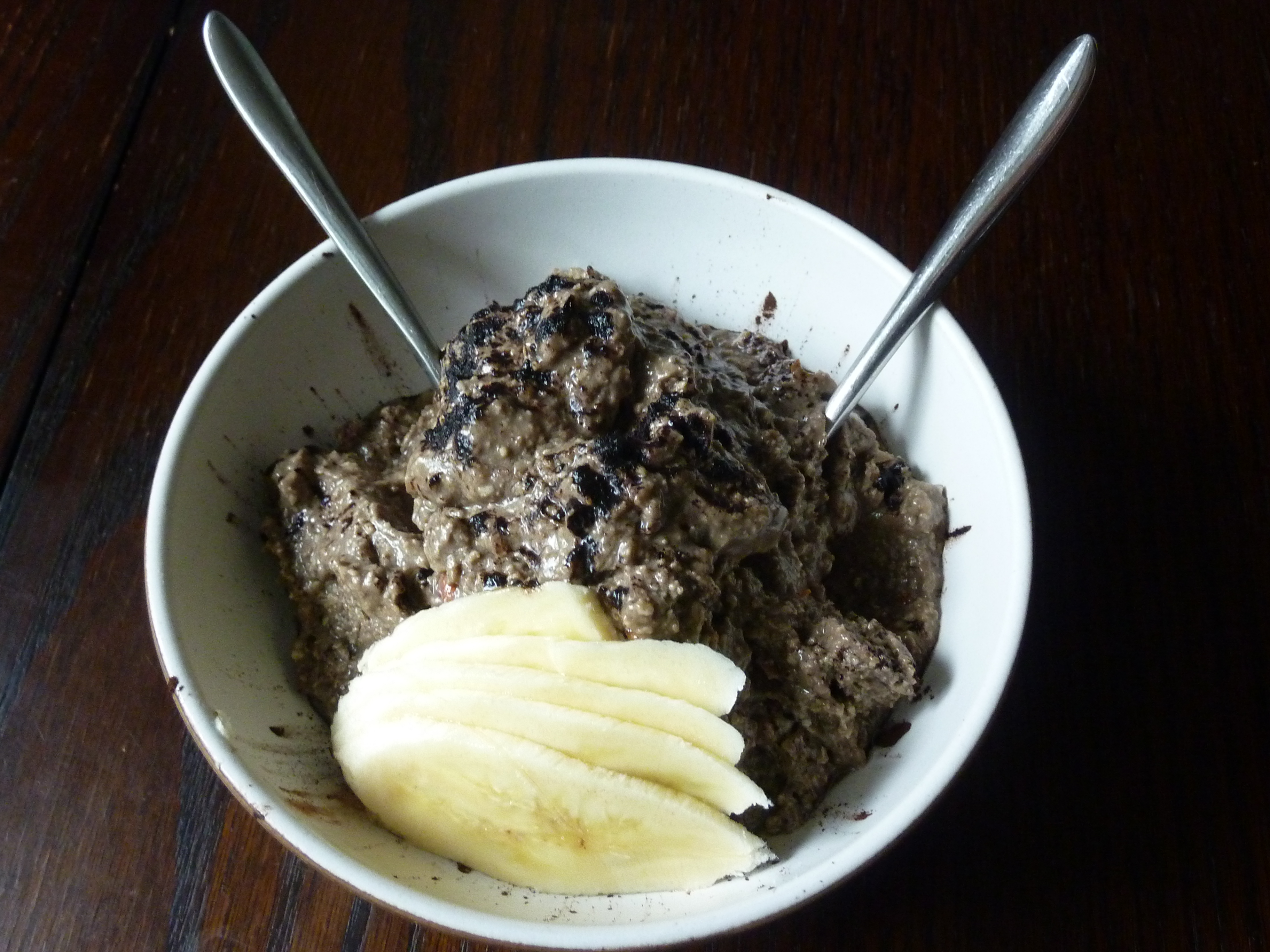
We had ours with blueberries and chopped banana, with a little more chopped almonds on top.
We Love It!
The texture of this ice cream is so rich and has a lovely smooth nuttiness. We cannot believe how healthy and delicious it is, we will be making more of this. Alot more.
Foodie Fact
When bananas ripen proto-pectin is converted into digestible, soluble pectin and starch is also converted into sugars of which 20% is glucose, 14% is fructose and the remaining 66% is sucrose.
Bananas give off a large amount of ethylene, which helps fruits ripen. If you have any fruits that need ripening, pop them in a bowl with the bananas and wait a day. They use this ethylene to turn green oranges orange. Many people don’t like the look of a green orange, even though they are ripe. We do funny things with our food!
Bananas also contain our happy friend trytophan, that converts to serotonin and makes us shine. See our ‘Mood Foods….’ post for more info on happy veggie foods.
Cooking is still a bit weird here after all of our raw escapades. We are still eating mainly raw, with a few exceptions, when the produce and mood take us in a hotter direction. I need to keep my hand in because of the work that I do.
I’ve always loved a stuffed veg, Mum used to make stuffed peppers back in the dark ages on the early 90’s. Mum’s always been a bit of a maverick. I remember the first time she made cheesecake, in the mid 80’s with cheddar cheese! The family all came around to try this new found food. We’ve come a long way since then.
This is a dish along the lines of the millions of other ‘stuffed’ dishes on cyber space, the only difference being, this is ours and its only semi-stuffed. Recipes that spring to mind via what you have at hand are always my favourite. Spur of the moment cooking, making the best of what you have. This recipe goes against all of the food combining advice that we have been following recently, but we felt like living dangerously!
We are lucky to have brilliant courgettes at the moment from the farm and some sweet ripe peaches; combine that with a nut cabinet that never runs dry, mint growing wild like a madman in our garden and the ever-present cauliflower and you have the makings of a feast.
I decided to add the cauliflower to the cous cous, I love the subtle flavour that cauliflower gives off when steamed/ boiled. It added great flavour to the cous cous.
Being very much an amateur cook, I make many mistakes, or as I call them, great opportunities to learn. Cooking with an electric hob can be a real drag, but that is what we have. I much prefer gas stoves, mainly for controlling the heat by eye. When cooking the cous cous and cauliflower here, I forgot that the hob was still on very low and went off to do other things (drink tea), leaving the poor cous cous to overcook. Oh well, this is ‘real’ cooking and it still tasted good, if a little soft and congealed.
The French beans here are optional and can be substituted with anything else green and is season. Peas, spinach, broad beans etc would be grand.
We are an energy conscious household at the Beach House and don’t like turning on the oven unless very much necessary, namely, when we have lovely guests. Otherwise, it’s all hob. These courgettes could be blanched off in boiling water then thrown in a hot oven for a while, that would be nice. We have opted for the simpler and more efficient method of re-using your frying pan.
This is an ideal seasonal summer lunch which oozes flavour. All that sweetness and crunch with the bitterness of the olives. You could even cook the courgettes on the barbecue if you fancy!
Peaches and Raisins
The Bits
2 cup wholemeal cous cous (or brown rice, quinoa etc), 1/2 cauliflower (chopped finely), 1tbsp good veg stock, 1 large onion (chopped), 10 french beans (topped and tailed and chopped), 1 teas carraway seeds, 2 cloves garlic (minced/ finely chopped), 1/2 cup olives (sliced, we like the green ones), 1 ripe peach (finely chopped), 3 tbsp hazelnuts, 2 tbsp raisins (chopped), 2 tbsp mint (chopped), 1 tsp parsley (chopped), sea salt and cracked black pepper, 1 tbsp good oil, 4 courgettes (halved lengthways)
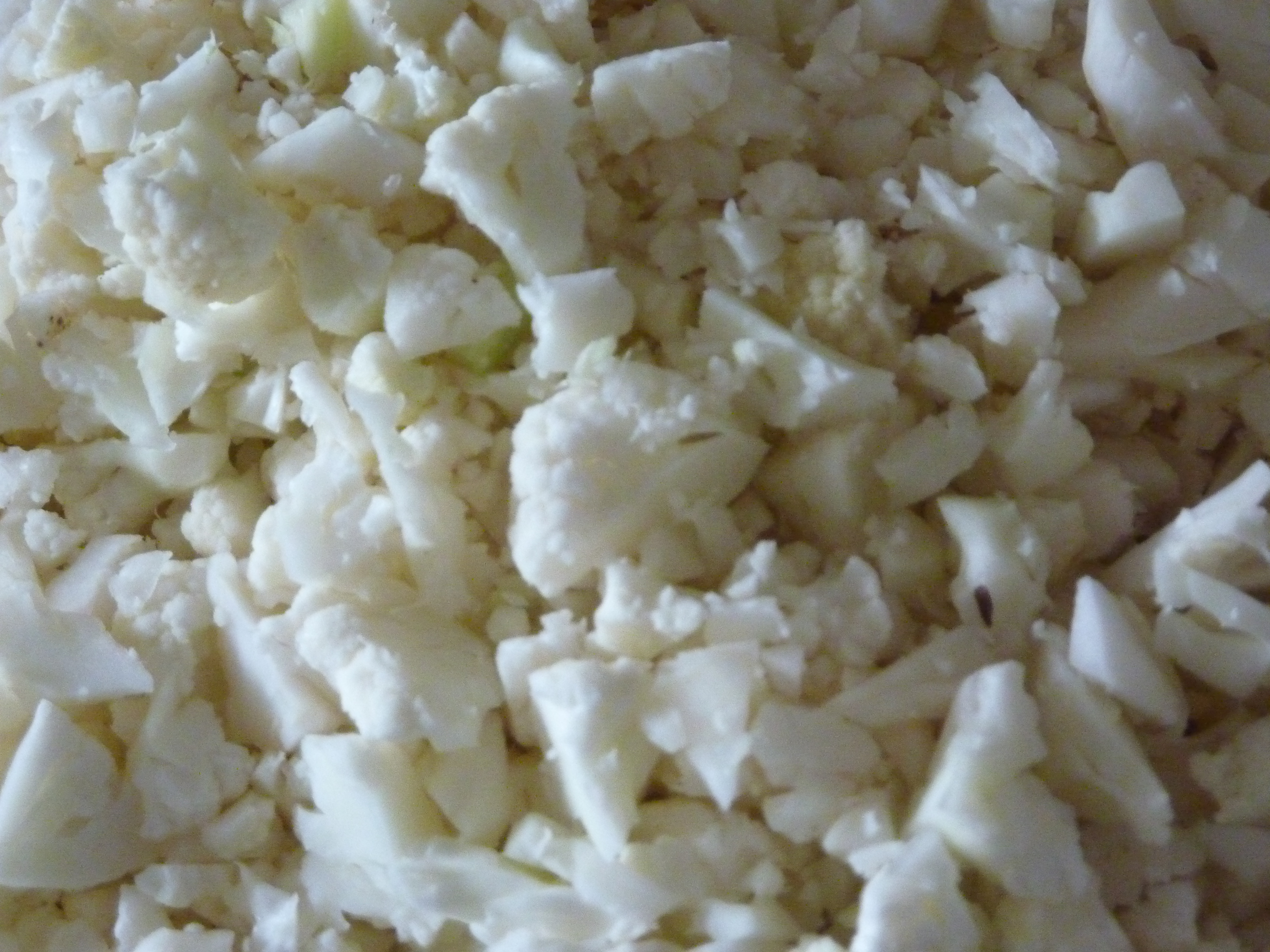
Chopped Cauliflower
Do It
Boil some water in a saucepan (follow quantities written on your cous cous packet, you will need a little less due to the water given off by the cauliflower) and stir in your stock, add your finely chopped cauliflower and cous cous, stir a little then tightly cover and leave off the heat to cook for 20 minutes. Fluff cous cous with a fork and re-cover until needed. If more water is needed, add now.
Heat your frying pan, add your hazelnuts and warm them through, lightly roasting them. Allow to cool, chop up into chunks.
Then heat some oil in the pan, gently soften your onions for 5 minutes, until slightly golden; add carraway seeds and french beans. Cook for 5 minutes, stirring regularly, then add your mashed garlic, cook for 5 minutes more.
Gently soften your onions
Now add your mint, parsley and chopped hazelnut, stir for a minute to heat through, then add your cous cous and cauliflower, raisins, olives and peaches, with plenty of cracked pepper and some sea salt. Combine well. Be gentle with the cous cous here, you don’t want a mush! Cover pan and keep warm.
In another large frying pan, heat some oil and on a low/med heat, fry your courgettes face down. Allow them to colour for a few minutes then flip over, repeat this twice and the they should be cooked. You don’t want to overcook the courgette, it should still have a little crunch in the middle.
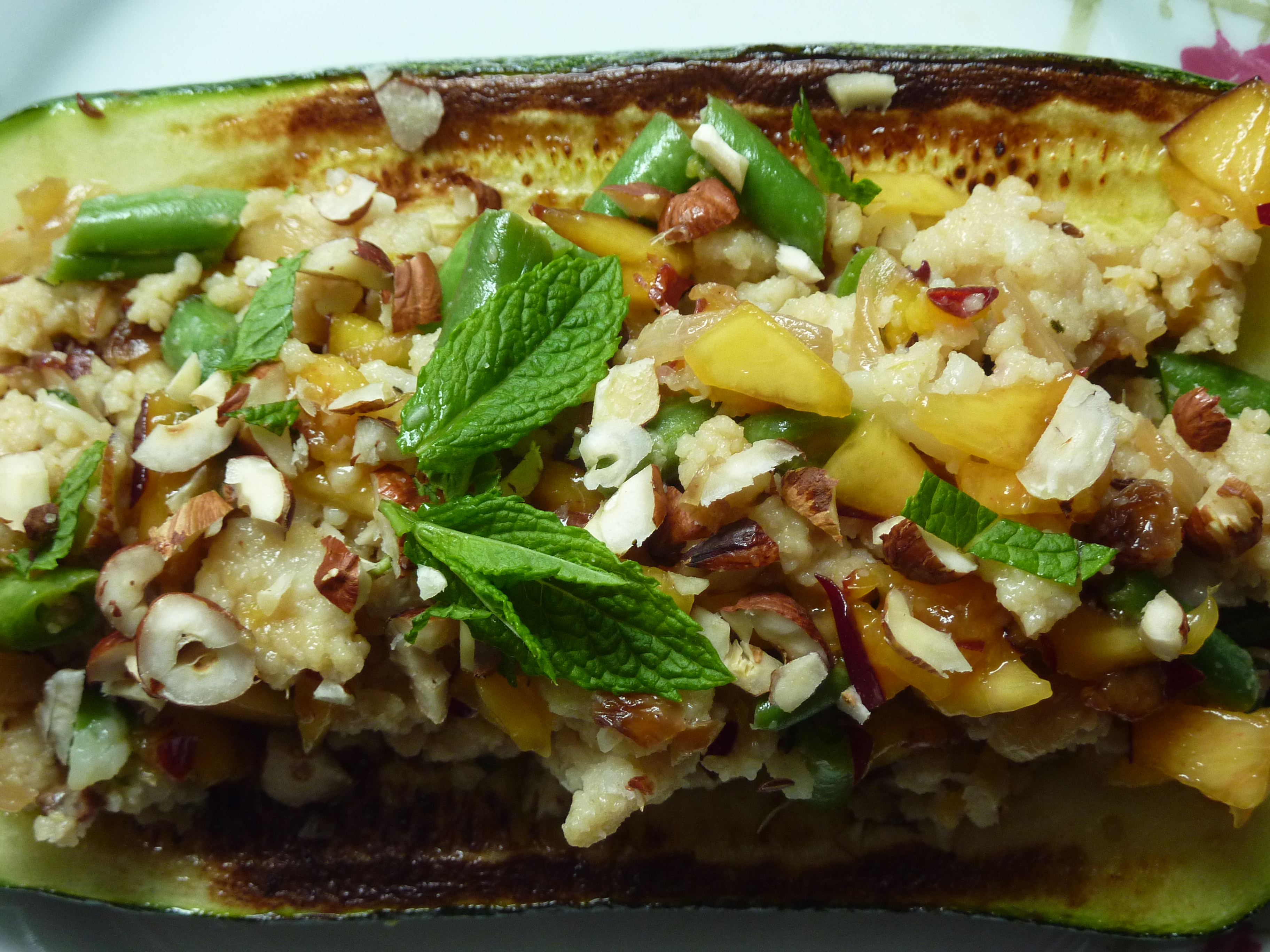
Stuffed Courgette with Hazelnuts and Peach
Serve
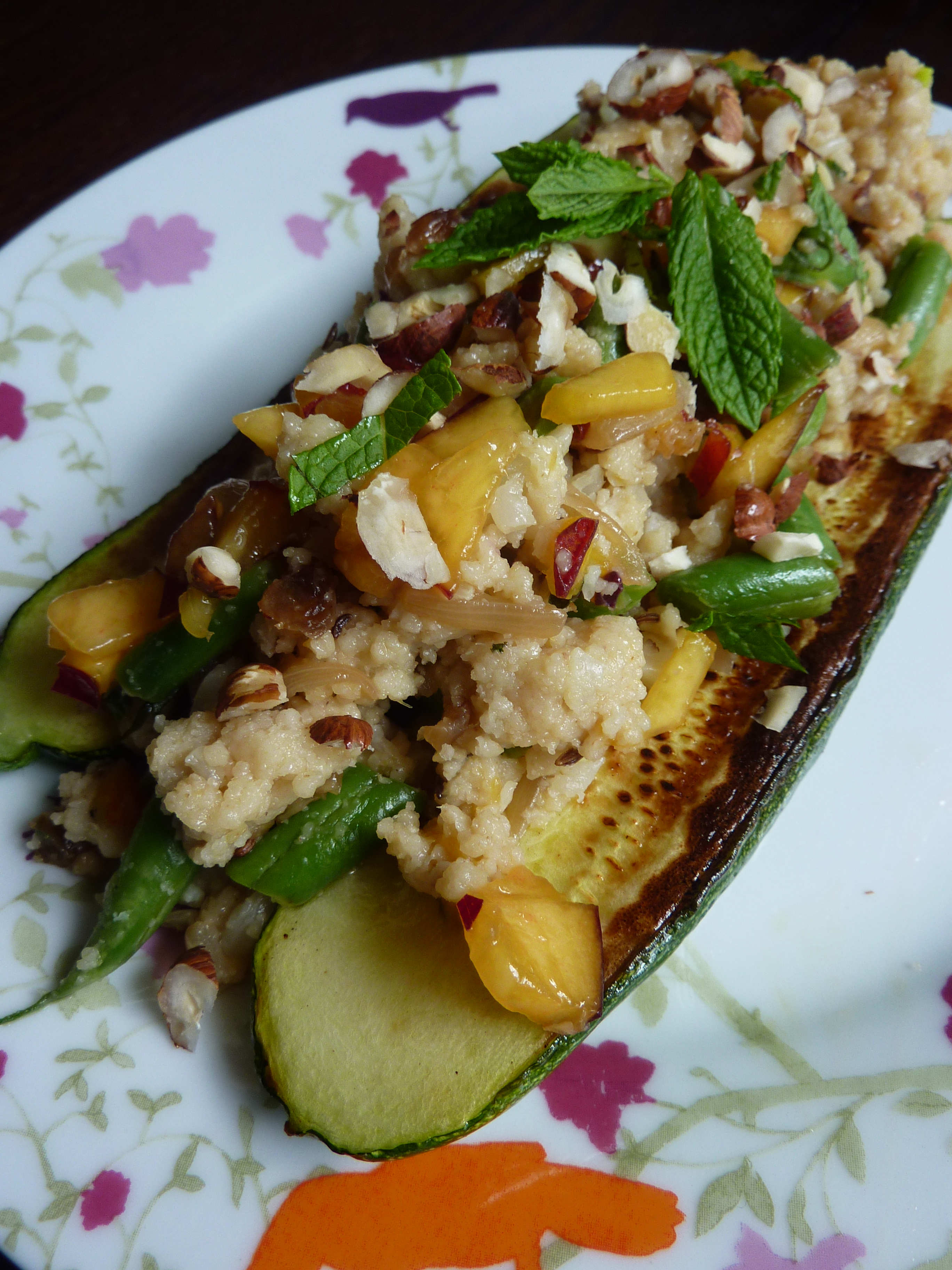
Place two courgettes on a plate, leave a little space inbetween, spoon over your filling. Pile it nice and high, finish with some of your chopped herbs.
We Love It!
This is a great dish, ideal for a light summer dinner. The combination of flavours and textures here is something that delights the mouth (even with overcooked cous cous)!
Stuffed Courgette with Hazelnut and Peach
Foodie Fact
Cous cous is small balls of semolina flour, whole wheat cous cous is made with wholewheat flour and has higher nutritional properties. Wholewheat cous cous contains higher fibre and iron than the normal stuff, 1 cup gives you a third of your daily fibre requirement.
It’s easy to get into a salad rut when summer is doing its thing in the garden and salad-making is so easy. Greens, veggies, vinaigrette, boom, salad. But a salad can be so much more, and just a few moments of effort invested in a good dressing can go a long way toward spicing things up.
I am not the maker-of-vinaigrette in our family (thank you, J!), so on the rare occasions when the salad dressing is my job I tend to branch out, if only a little, from the standard oil-vinegar-mustard combination.
Well there has been little summer to speak of really. The clouds parted today, so I went outside and took a few pictures, but really this summer has been very strange. Even the old timers down the farm say they cannot fathom what is going on. The soil should be warm and it is cold and damp, meaning the plants don’t know what to do.
White Rose
Our lonesome Kori Squash and Rainbow Kale
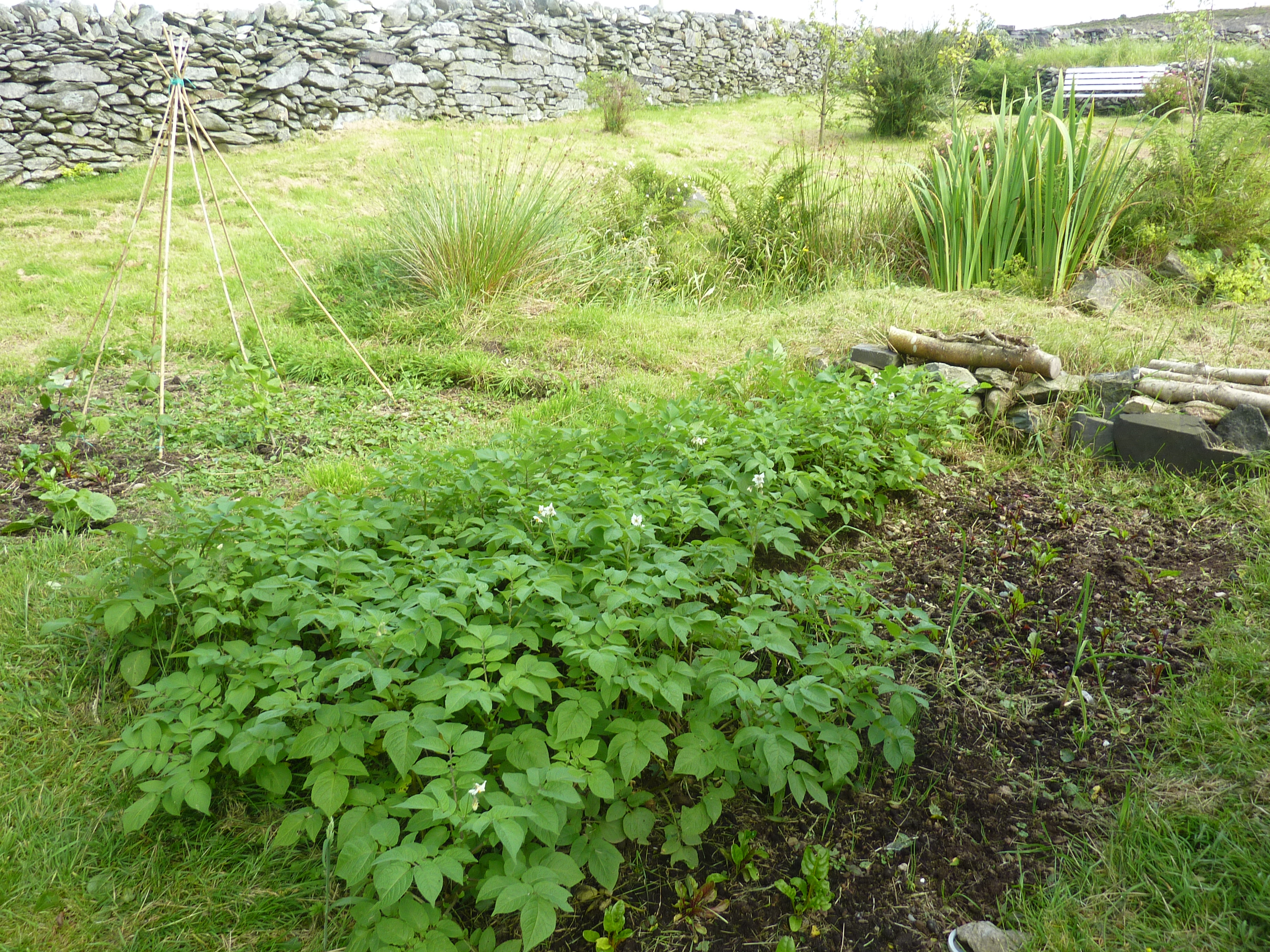
We have had a few minor successes, mainly down to raiding our neighbours horse field for massive piles of poo. It’s like magic dust. One sprinkle and the plants shoot up. The potatoes love this environment and sprang up, they are just starting to flower and we may have a look soon to see if we have any tasty little tubers.
The Potato Patch
Rampant Foxglove
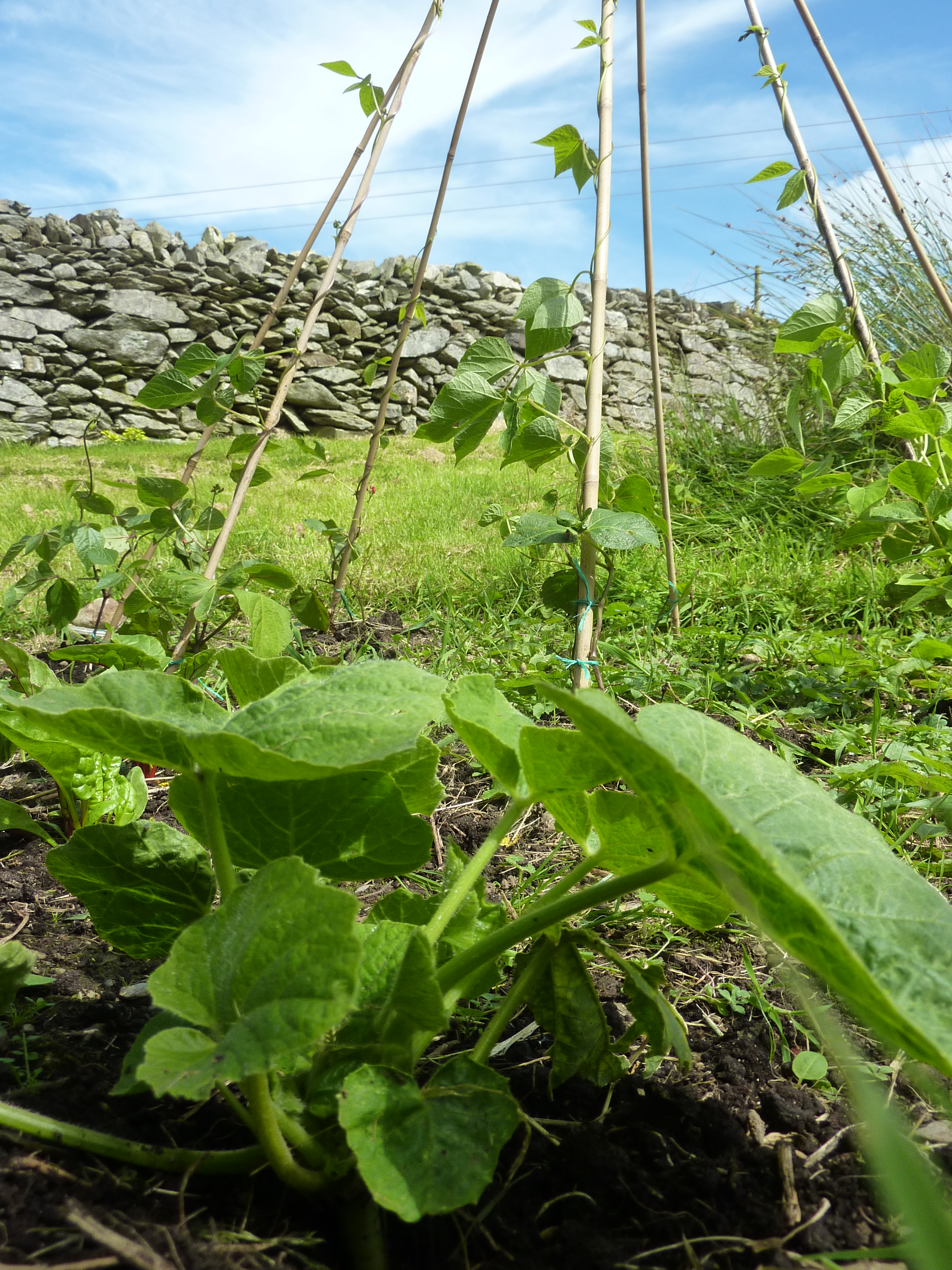
After an epic battle with slugs and snails, we have managed to get one squash plant through the madness. We have been trying all sorts, beer traps, gravel and jagged rocks, I have been on many stealth nighttime missions to snatch them off our precious green friends. Sometimes it felt like a losing battle, but now things are established and semi-blooming, all these efforts seem worthwile. The squash is growing nicely and we hope to have our first Welsh kori squash soon. Beetroots, rainbow kale, runner beans and hannibal leeks are all holding in there.
The Beetroot Jungle
Flowering Succulents
We have also diversified in the herb garden, with some different types of thyme and our new favourite, ginger mint. A wonderful thing that has its own bed to go wild in. We have been loving wandering out to the herb garden and cutting our own fresh herbs. A real cooks treat (even in the howling gales).
We think it will be a late summer (we hope!) and in late September, we will be cooking with our first batch of Beach House Veg. We will keep you posted.
Moods. What can we do? Sometimes you’re up and then for no reason whatsoever, your down. Can food help? Most people realise that moods affect what we eat, but does it work the other way. Do foods effect our moods?
There has been much research into the matter which has shown a link between moods and the food we eat. A recent survey has shown that a large proportion (over 80%) of people felt better when they changed their diet. Eating healthier makes us feel better inside and out.
From what we can tell this is down to serotonin, the happy chemical, produced in our brains. Serotonin cannot be produced without tryptophan (an amino acid), so its a good idea to eat foods high in trypophan to make us happy. Simple enough!? Low serotonin levels are blamed for anxiety, cravings, mood disorders and IBS. The concept of eating foods high in trypophan is similar to that of taking an anti-depressant like prozac. Holistic anti-depressants.
Smile away!!
Moods cannot be gotten rid of, but can be brought under some kind of control. The extremity of the ups and downs can be lowered, minimised, meaning we feel more centred and grounded in a good place. Evidence suggests that eating and living well can be essential in maintaining not just our physical, but also our mental health. We certainly feel the benefits!
Foods high in fibre, whole grains and protein can also help boost moods. Food with a low glycemic index, like oats for example, will help the brain absorb all of these happy amino acids. Tryptophan absorption is boosted by carbohydrates.
These foods should be combined with lots of clean water and fresh fruit and vegetables. Eating regularly and not skipping meals also boosts our mental health. As ever, a balanced diet is always the best way forward, lots of fresh veg and fruit, with wholegrains, plenty of green leafy veg and some sweetness! Treats are essential!!
Foods that have the opposite effect are sometimes called ‘Stressors’, the main culprits are listed below:
Food ‘Stressors’
Sugar
Caffeine
Alcohol
Chocolate
Wheat-containing foods
Additives
Dairy
Saturated Fats
Provided by the food and mood project, backed by the mental health charity Mind.
A diet heavy in the ‘stressors’ can lead to all sorts of problems including anxiety, insomnia, fatigue, panic attacks, lack of concentration and unfortunately, many more…
Sugar has a powerful effect on our sense of well being, if we eat too much, we can get into a ‘sugar roller coaster’, which is never nice. Our blood sugar levels are all over the place and we feel drained and fatigued when the sugar is lessening and high as a kite when its peaking.
If you do over indulge, one of the worst things that you can do is feel guilty about it. Feel great about it! You have just treated yourself and you deserve it. Move on and make efforts to eat better and feel better, step-by-step, slowly slowly. It’s a long road without any fixed destination.
Apparently we all have ‘triggers’, foods that can take us up and down. This depends on you, have a little experiment. If you are feeling a bit sluggish and down, think about what you have eaten that day or the night before. Trends will inevitably form.
We found it really helpful to take the plunge and go for a full raw diet. Our bodies became sensitive to what we ate and we learned alot about what makes us feel good and otherwise. You don’t have to go this far of course, just cut out certain foods for a period of time and see how you feel.
Eating well is one thing, but thinking well is another level completely. Think positively, practice thinking only positive thoughts for 5 minutes at a time and build on that. You will eventually develop a brilliant habit of a positive world outlook. This is a helpful tool. Add that to your new found passion for mung beans and you’ll be shining away for all to see!
For more information on mood foods, check out the ‘Mind’ site. There is information here for Brits on how to contact dietitians and nutritionists to get started on a new diet plan and lifestyle. You could also check out the website food for the brain.
Take it easy, have a handful of sunflower seeds and shine onX
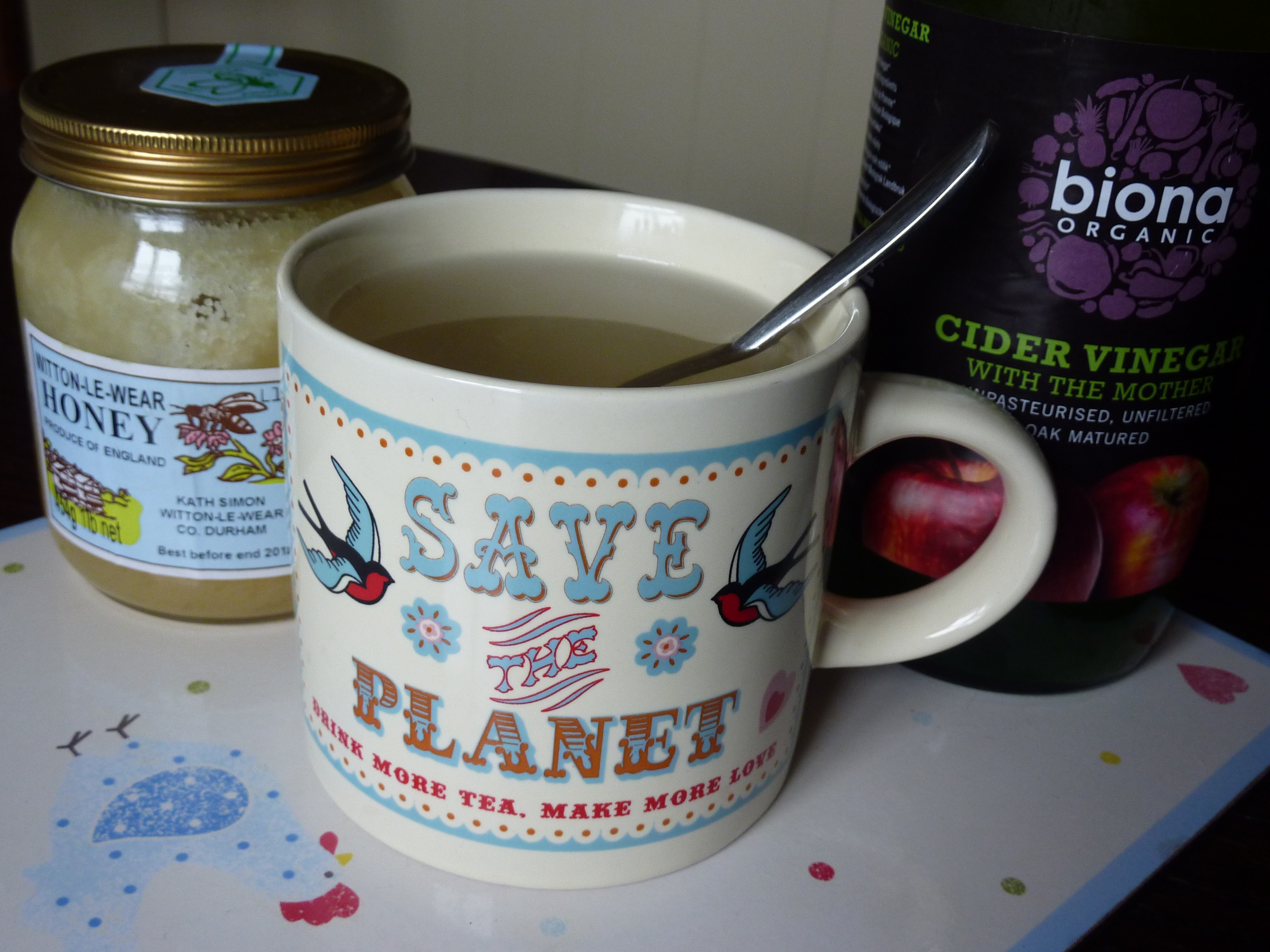
Honey and cider vinegar combined with just boiled water is normally called ‘Honeygar’ and a mighty fine thing it is. This potion is not only a lovely brew (an acquired taste) it also has great health properties and may help to cure many ailments.
Both Hippocrates and the ancient Egyptians are said to have appreciated the healing properties of cider vinegar. It has also been used as an anti-aging elixir in history, which is always popular!
Good quality cider vinegar (with the mother) is a natural product, made by allowing crushed apples to ferment in oak barrels. It has cleansing properties which help to detoxify the body and is a powerful cleansing agent which naturally helps to fight germs and bacteria.
Cider Vinegar can also help to keep the body nicely alkaline. Vinegar is acid but when broken down in the stomach becomes alkaline. An alkaline body has been shown to better fight germs and disease.
Raw fruits, leafy green vegetables, tea and legumes are examples of alkaline foods. Interestingly a foods actual pH is not a good indicator of a food that has acidic effects on the body, for example, lemons and limes when processed by the body actually have an alkaline effect. The ideal ratio of alkaline to acid foods in a diet is around 70/30. High stress levels can also effect the amount of acid produced in the body.
Cider vinegar has been used to help treat arthritis. Many people are looking for alternative methods of treatment. There have been articles recently in the press verifying these healing effects.
Lillies on the windowsill (nothing to do with Cider Vinegar, but lovely non-the-less)
Sir Ranulph Fiennes, the famous explorer and endurance chap, suffered with arthritis in his hand and hip and turned to drinking honeygar. He says “Without it I wouldn’t be able to have done all the things I have done…it has completely kept my arthritis at bay.”
Honeygar is best drank regularly and can take a while to kick in, so stick with it. It also must be combined with a low acid diet, that means no nasty foods high in sugar, nothing too processed (factory food) and alcohol.
I have a hip that clicks and a dodgy neck, which are probably old injures from when I was young and used to do terrible things to my body, all in the name of sports. I have started to drink honeygar and will keep you posted on the progress.
I think the message is, there is enough evidence out there to suggest that honeygar can work well.
When buying cider vinegar, check that it contains the ‘mother’ and is organic. This ensures that it is completely natural, the good stuff, and has not been distilled. The distillation process kills of enzymes and minerals.
‘Hagar’ Recipe
Add 2 tbs cider vinegar and top up with freshly boiled water, add honey to taste (1 tbs is normally good for us, we use maple syrup now which is delicious!)
You can tell this is an old article, the BHK is now 100% vegan!:)
The raw food diet is based on the belief that the most healthful food for the body is uncooked. Although most food is eaten raw, heating food is acceptable as long as the temperature stays below 104 to 118 degrees Fahrenheit (the cutoff temperature varies among those in the raw food community).
Cooking is thought to denature the enzymes naturally present in food. According to raw foodists, enyzymes are the life force of a food, helping us to digest food and absorb nutrients. If we overconsume cooked food, our bodies are forced to work harder by producing more enzymes. Over time, a lack of enzymes from food is thought to lead to digestive problems, nutrient deficiency, accelerated aging, and weight gain.
Cooking food can diminish its nutritional value. For…
We don’t care if the weather is damn awful, we are having our summer! These kebabs are pure sun food, to be eaten when it’s too hot to even consider a barbecue and all you want to do is have a massive chill (preferably in a hammock). Serving suggestion – on a tropical beach. They are easy on the eye, served cool and require very little effort.
Summer will not be reaching Wales this year, so we are making our own, using kebabs. When you need to get a big fire on in mid July, you know you’re in trouble. British people are famous for talking about the weather, well it’s no wonder, it’s a freak.
Watermelons are a fruit custom designed for summertime. They are so thirst quenching, I like then best just at it comes and straight out of the fridge. When living in Murcia,(+40oC in summer) Spain I used to use them as ice cubes (just cut into cubes and stick in the freezer). We decided to add kiwi here and some amazing cucumber from the farm; purely for the colour contrast, we demanded sexy kebabs. The not-quite-ripe kiwi also adds a nice fruity bitterness.
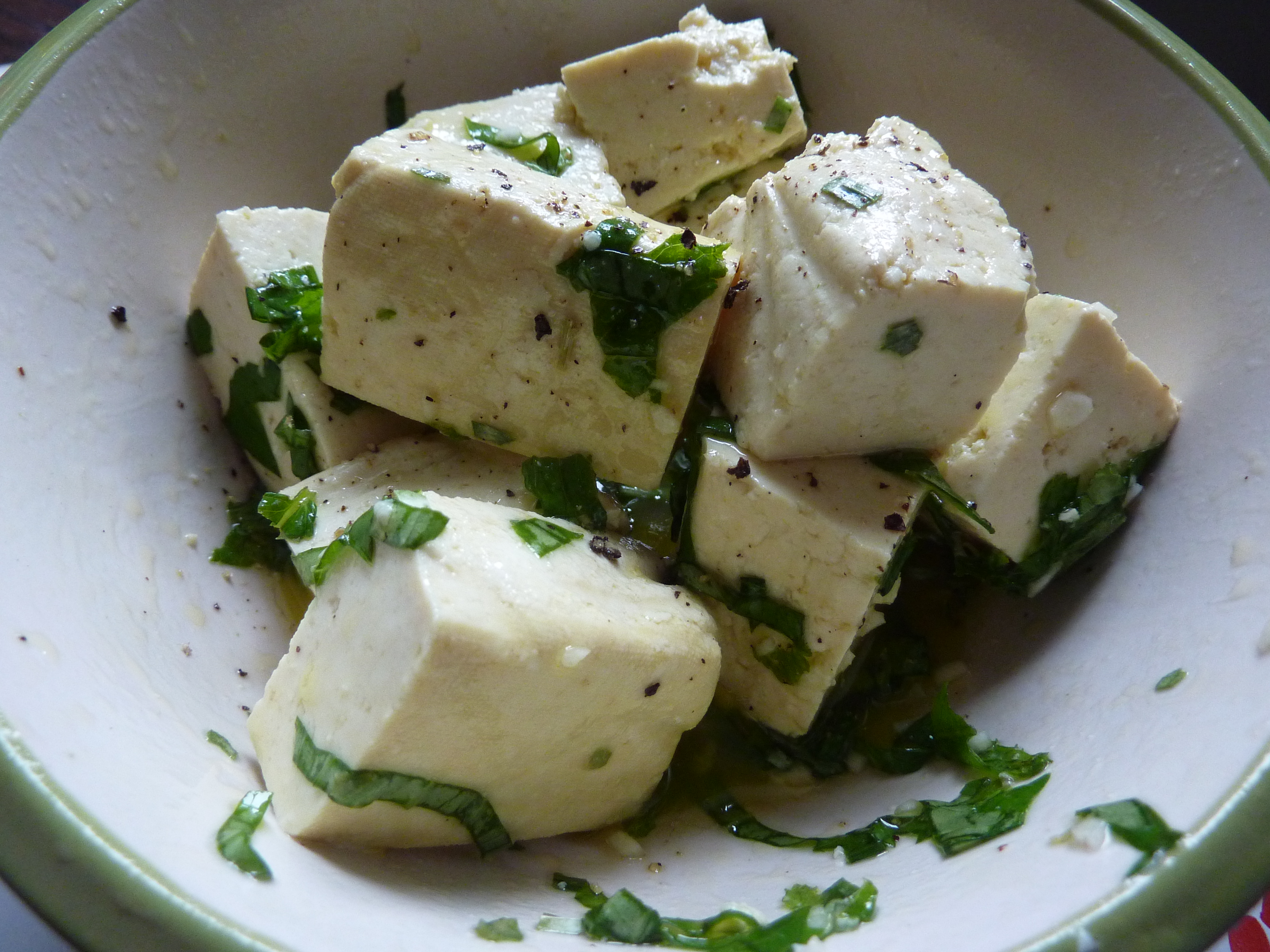
We marinated the tofu for a few hours in a classic style summer dressing, all basil and mint from the garden with tad of honey and lemon. You can use goats cheese or feta and treat it in the same way.
Marinating Tofu
When you buy a watermelon, and you don’t have a family of ten, you have to get a little creative to use it all up. We found out recently that you can actually eat the rind of the watermelon, cook it up into a stew. Checkout our some favela cooking, Rio style. Waste not, want not! We bought a beastly sized thing and have been making it into soups, salads, smoothies and all sorts. This was our favourite experiment with the big pink globe.
Watermelon works surprisingly well with savoury dishes, its light sweetness blends nicely with fresh flavours, it is quite neutral really. It certainly add colour to the plate, which is something we love in any food.
Please try these cooling kebabs in a hotter part of the world, we ate ours with our fleeces on (indoors) dreaming of swaying palm trees. We have good imaginations, it nearly worked!
Remember your seeds. Keep them, dry them out and roast them for a lovely little snack. Pumpkin and watermelon seeds are delicious and very easy to collect and roast. It seems a waste to chuck them in the bin.
Kebabs and the ‘Big Crunch’
Makes two big kebabs:
The Bits
Kebabs – 10 big chunks of watermelon (cubes), 10 chunks of firm tofu (marinated), 1 large cucumber (chopped into chunks), 1 kiwi (not quite ripe, peeled and cut in slices). 2 large skewers, we used metal.
Marinade – juice of 1/2 lemon, 6 fresh basil leaves (ripped up small), handful of fresh mint (chopped), 1 teas honey, 1 clove garlic (finely chopped/ crushed), pinch of sea salt, cracked black pepper (to taste), 1/4 cup of good olive oil.
Do It
Mix up your marinade in a bowl, toss tofu well and coat in the marinade. Leave covered in the fridge for a couple of hours. When ready to serve, gather your bits and begin to make the kebabs. Slide on your chunks in a regular order, we like the last one to be a kiwi.
Serve
Spoon over any left over marinade and serve on a nice platter/ chopping board.
We had ours with a nice ‘big crunch’ salad:
All chopped – 1 head chicory, 1 apple, 2 carrots, 1 orange pepper, 2 large mushrooms, 1 beetroot, 1 red onion(diced small), 6 large lettuce leaves, 1 handful of beetroot leaves, sprouted mung beans, golden flax seeds with our ‘Beach House Dressing‘ mixed in. CRUNCH!
Watermelon and Tofu Kebabs
We Love It!
This is the perfect summer munch and a fine way to get rid of your excess watermelon! One day, we will eat this in the sunshine…….
Foodie Fact
Watermelon are the ideal accompaniment to a sun scorched summers day. They are originally from Southern Africa and are closely related to the squash. They are full of electrolytes and of course, water. They also contain alot of lycopene (super antioxidant) vitamin A and C and potassium.
We are really looking at how we can cut down on our waste, both non-organic and organic. This clip is a real slice of inspiration. Stewed watermelon rind, who knew?! world-latin-america-18284632
The perfect accompaniment to the ‘Hippy Daal’. This sweet, crunchy, fruity raita salad is the ideal side dish to spicy rich food, also great as a salad in its own right.
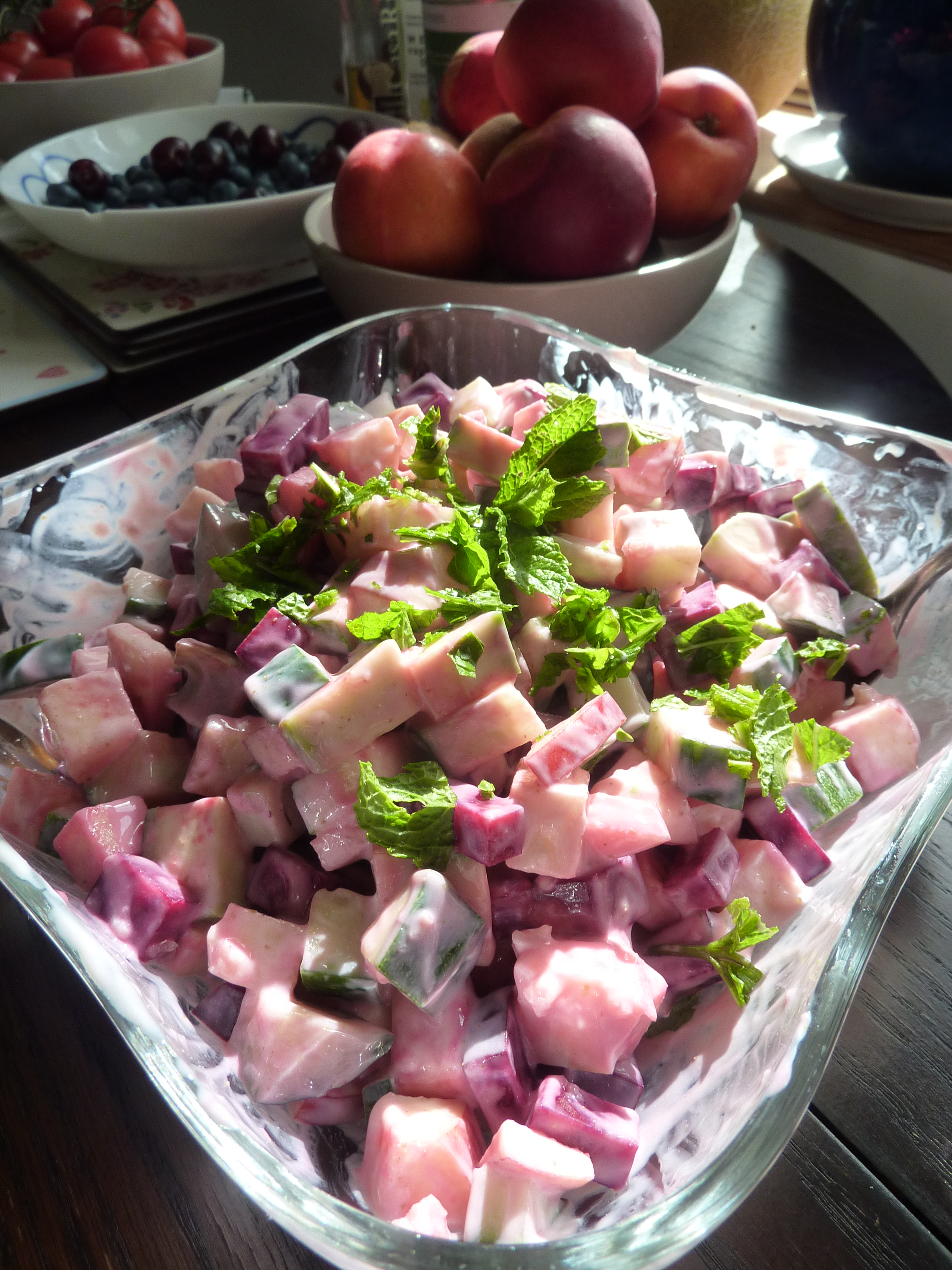
This is a really nice twist on your normal raita recipe. Absolutely nothing wrong with the original recipe, but when you have amazing beetroots and apples in the bowl, you just have to play with flavours!
Of course we love beetroot at the BHK, for the most part, we live on the stuff. We juice it, chop it, grate it……our table is incomplete without a little purple plate or two.
I like using the apples here, because I would normally sweeten my raita, but with these apples it doesn’t need it.
Jane and I on the beach today, enjoying the a little bit of sun (too rare).
The raita will look great if you try and chop all components in an even way. Squares work well! Circles more difficult, but very impressive!
Make sure your yoghurt isn’t too thick, water it down if needed. Otherwise you could have a sticky mess on your hands. The fresh mint makes this dish, so do try and get some together. It is really easy to grow and we have found it saves alot of hassle (and money) to have some planted outside or on a window ledge. If given space, it will spread like wildfire and you’ll never have a fresh mint crisis again (you’ll also have an endless supply of amazing mint tea).
The Bits
1 medium sized beetroot (peeled or scrubbed and chopped), 1 sweet organic apple (chopped), 1/2 cucumber (chopped), 1 small courgette (chopped), 1/2 teas ground cumin, 1 clove of crushed garlic, 1 handful of chopped fresh mint (chopped), 150 ml of yoghurt (we use soya, greek/turkish would be amazing)
Do It
Add all ingredients to a bowl and give it a good stir.
Beetroot and Apple Raita (Raw)
Serve
Leave for at least an hour before serving, let the flavour’s gather. Serve as you like, traditionally with a stonking curry or as we like, as a main course salad with some green leaves. Add nuts (hazelnuts, walnuts) to make it more of a meal of it.
We Love It!
Creamy, spicy, fruity and what a crunch! Difficult to find anything wrong with a raita.
Foodie Fact
Mint is high in fibre and magnesium. It is very high in vitamin A and folates and also packs some serious vitamin C. It also helps with all sorts of stomach issues.
We fancied a stew, a change to all these raw food textures. My mind immediately stuck on my ‘Hippy Daal’. With the beetroot and apple raita that was being chopped up, this was going to be a feast!
Hippies like daal (Dhal, Dal, Dahl however you take it), I like hippies, daal likes me…… I’ve cooked this a million times, maybe more, over camp fires and in people’s homes, in the back of jeeps and beside roads. We eat it in the Beach House every week and every week it changes, but the heart of the dish remains the same. Lentils and spices cooked with love, stewed until creamy. Food that ‘clings to your ribs’ as we say. It’s a true one pot wonder and cheap as chips.
The California Baba in Rishikesh, India
Daal is the food that keeps India ticking over, it comes in many forms, made with lentils, beans or chickpeas. All Indians eat Daal of some description and I was told that one state had to ban Daal, because the people were eating too much of it and not getting a balanced diet. Daal is normally a super healthy dish (unless you add loads of ghee) so these are quite drastic measures, but show the passion for the dish in India. A land fuelled on daal.
Cooking daal is so simple and I’ve made it even simpler. I have cut out the steps of frying the onions and spices etc and fast forwarded straight to whacking it all in the pan and bubbling the stew until it becomes thick and gooey. It saves on washing up at least. This is a basic recipe and is wide open to bits being added and spices thrown in.
Daal in India is always made in pressure cookers, as are most curries. Anybody who has travelled around India will be familiar with the sound of your dinner hissing away in the kitchen, regularly reaching a kind of hissing climax that sounds like an imminent explosion. It can be quite therapeutic, knowing that food is one the way and the potential of a hot chapatti just tops things off. Chai mileaga!
I like all lentils and yes, some people do call me a hippy, not always because of this though. Yellow lentils keep their shape, but also break down a little to form that lovely creaminess. You can experiment until your heart is content with this one.
You cannot be shy with your spices here, they must be added with gusto and happiness. Remember to take care of your spices, they are sensitive to light and the air. Keep in a cupboard in an air tight container preferably, for long term, keep in the fridge. I still have my stash of spices brought back from my favourite little spice market in Mumbai. They have retained their potency.
Because this post relates to Indian cuisine, I must mention Kolpona Cuisine, the best place to go online for India recipes. I love the way that Desi Chick cooks, plenty of oil and spices, and bold, bold flavours.
The garam masala here adds a nice bit of spice, I like the touch of cinnamon and cloves. Really, you can use any India spice here and it will still turn out fine. You can substitute all of the spices for the same amount of your favourite curry powder if you liked.
Daal keeps brilliantly, just add a little water to loosen it up again when re-heating. I server my daal quite thick, but in India its normally halfway to a soup (or a full on soup depending on the quality of the restaurant you’re eating in). I like it nice and thick though. In fact, the best Indian food I have ever eaten has been in the U.K. In Leicester and London in particular, we are blessed to have such a culturally diverse nation, it certainly means some interesting food.
The best Indian restaurant in Britain is the Jungle Club in Leicester. Eating there is the complete Indian experience on these shores. It’s such a colourful place, decorated like a jungle, with monkeys and tigers all over the place. There is also a kids play area and a working mans club attached, just to add to the spice!
Strangely in the north east of England, where my family all hail from, we have a dish not disimialr to Daal. Lentils cooked in stock, cooled to form a thick paste. Its called ‘Peas Pudding’ and we traditionally spread it on sandwiches with ham and beetroot and plenty of butter. The bread we use is a soft doughy white loaf called ‘Stottie Cake‘ which is very similar to the ubiquitous round load of Morocco. Small world eh! ‘Stott’ means bounce in Geordie (a dialect in this little corner of the world) and the bread is so dense, it bounces when dropped. The north east of England was a mainly coal mining area and the food there was designed to fill up the miners for the hard labour they carried out 6 or 7 days per week miles below the surface.
This method produces a great daal, although not traditional in anyway. Its carefree cooking, lentils are very forgiving, just let it bubble nicely and you know, dinner is on the way. This daal is a meal in itself.
Makes one big panful:
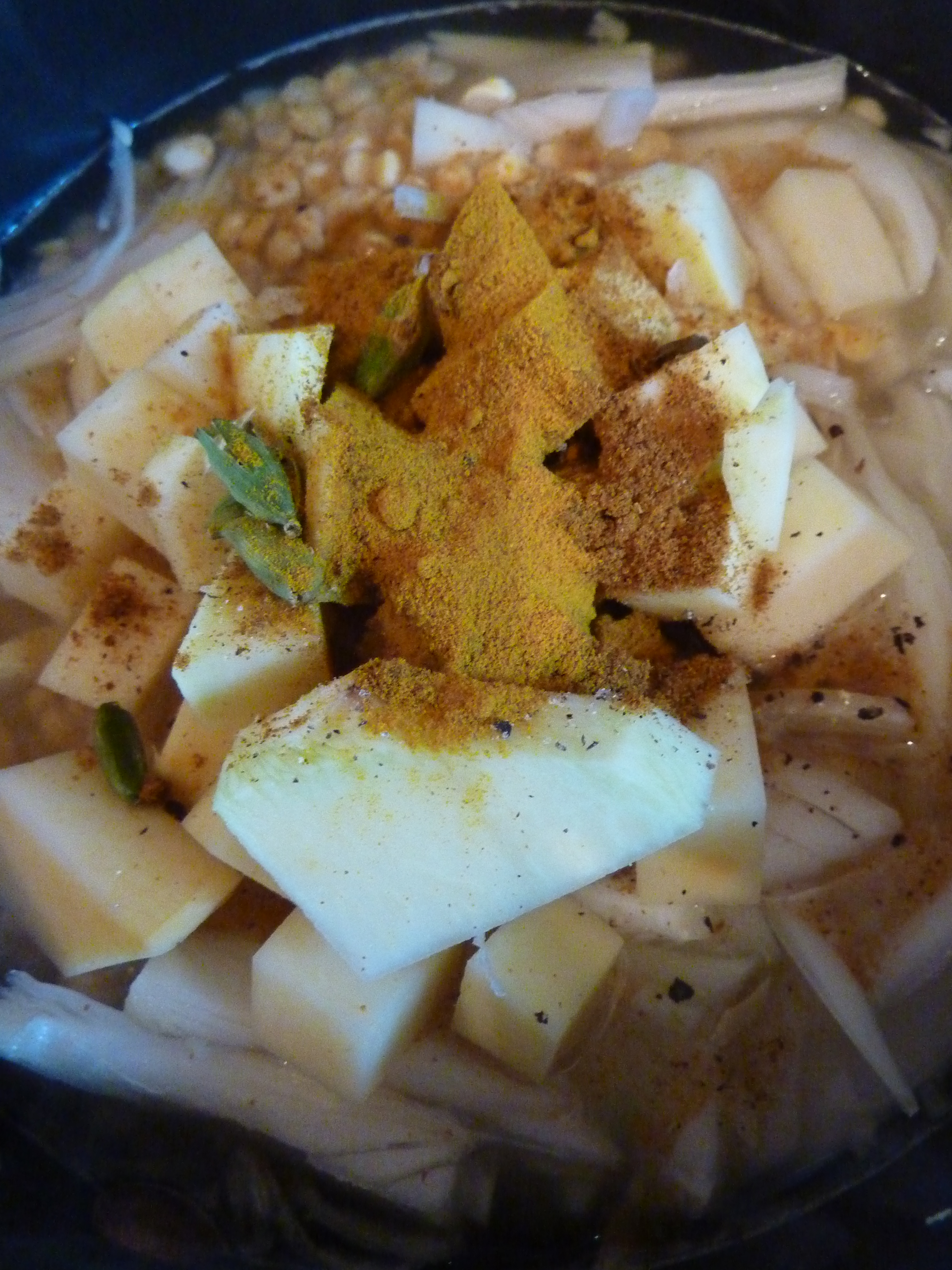
Hippy Daal – Ready for a mix
The Bits
2 cups of yellow split lentils (any lentils will do really, soaked overnight in filtered water), 1 big onion (chopped into small pieces), some root veg (we used one large potato, and half a swede and 1 carrot, also using parsnips, sweet potato etc would all be grand. Chopped into small chunks).
2 inch piece of ginger (finely chopped), 4 cloves garlic (mashed/ finely chopped), 4 bashed cardamom pods, 2 teas garam masala, 1 teas cumin seeds, 1 teas ground coriander, 1 teas turmeric, 1/2 teas chilli powder, 2 teas flax seeds (good for the belly), 2 teas curry leaves, sea salt to taste
I added two teaspoons of tamarind pulp to give it a nice fruity edge (optional).
Do It
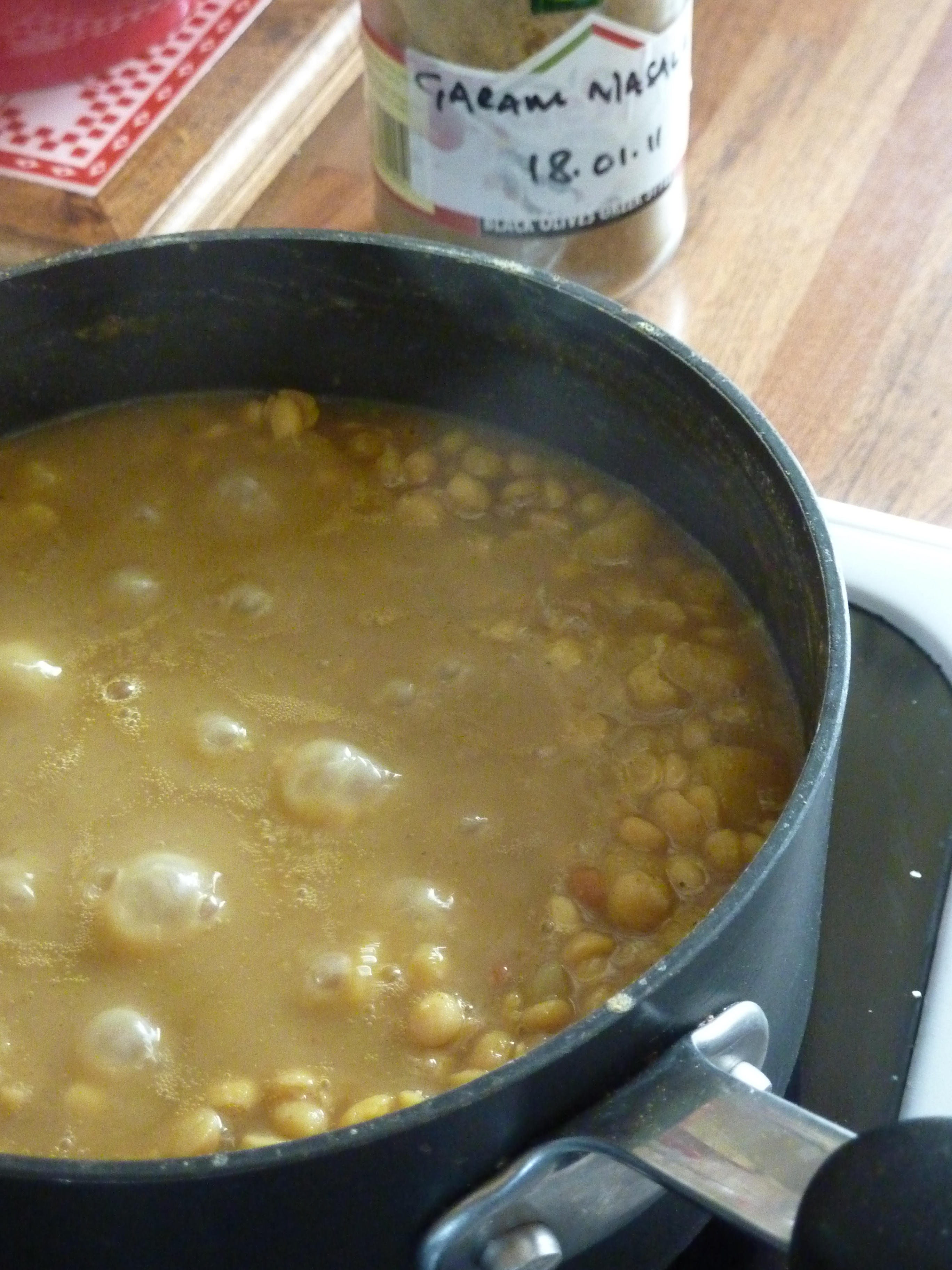
Rinse you lentils well and cover in a large, heavy bottomed pan, with an inch and a half of water (more water can be added if needed throughout the cooking). Bring steadily to a boil and then add all you veg, ginger and garlic. Lower heat to a fast simmer and cook for 5 minutes, then add all of your spices and stir well, bubble gently for around 20 minutes, add some more water if needed, then cover and cook for another 20 minutes, stirring when you are in the area. Check that you stir the base of the pan and no daal burns on the bottom. Easy as that.
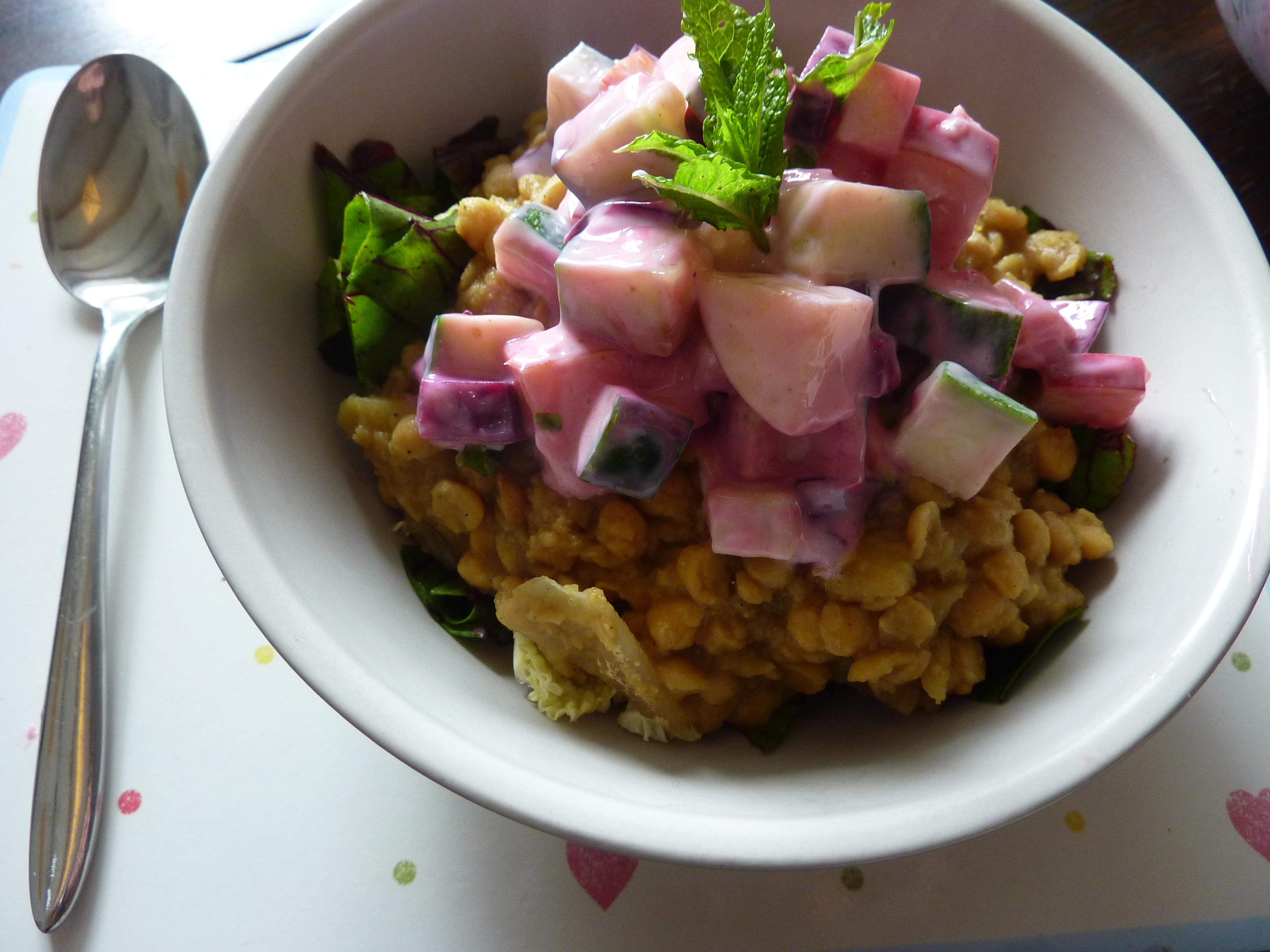
Hippy Daal with Beetroot and Apple Raita
Serve
We’ve had it cold in sandwiches before, now we eat it with salads and some Beetroot and Apple Raita, you can thin it down into a soup…cook it down and make lentil fritters…use it as a dip, the list goes on.
We like to stir in some more richness, we use yoghurt (soya or whatever you preference), ghee (authentic and delicious) or just a little good oil. The last two will give a nice shine to the daal.
Foodie Fact
Lentils are packed with protein, a good source (of many) for a veggie diet. Daal contains a protein content of around 25%, similar to meat and is very low in fat but high in carbohydrates. It is also high in vitamin B and iron.












































 beach house kitchen