Travel

Vegan Lebanon! – My experience of Lebanese cuisine

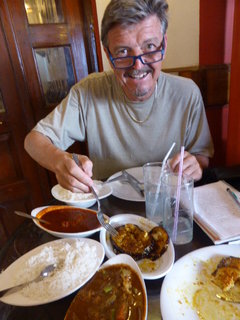
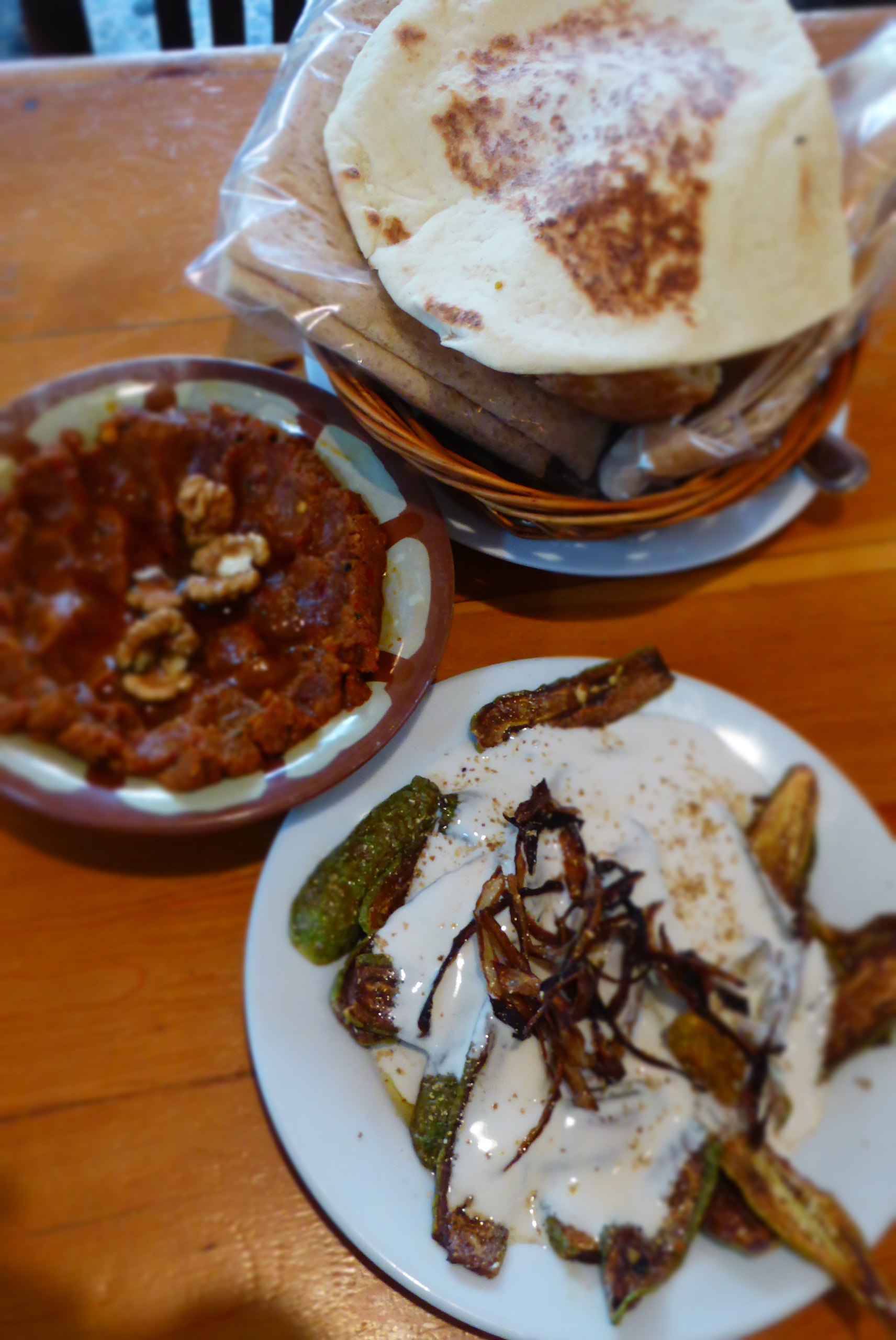
Loved this lunch in an Armenian Restaurant plus live music/ bohemian-style hang out. Mahummara – think a dip, but much more, walnuts flavoured with pomegranate molasses (there’s a recipe in ‘Peace & Parsnips’) and fried courgettes with crisp onions and creamy tahini sauce.  Plus massive pot of rose and mint tea.  If you read a book here, they gave you a free drink!!  I was one of the only people not wearing a Trilby.

I am very lucky to travel so much in my life.  It’s basically called ‘not having kids’ according to many of my friends.  The freedom to jump around the world and feast like a happy herbivore.

I’d always wanted to eat my way around Lebanon and learn more about this incredible country.  I took the opportunity to stop in Beirut, as I headed back West from India earlier in the year.  I had a unique experience, flying to Ethiopia before heading up into the Middle East.  The views of Ethiopia from the plane window left me wanting to see more, and maybe a bit closer.

I was not disappointed by Lebanon in anyway, it’s a small country with a big heart and packs in some incredible sites and flavours for the curious and slightly intrepid traveller sort.  There are fascinating places here which see very little tourism.  But let’s start with the food….

Msabaha – I liked it so much, I did a recipe for it on the BHK.  See here.

MEZZA – LEBANON ON A (LITTLE) PLATE

Mezza (mezze/ tapas in the Middle East) was my main fuel for belly and tastebuds.  Wow!  Mezza in Lebanon made tables groan and filled me with a rainbow of colours and flavours.

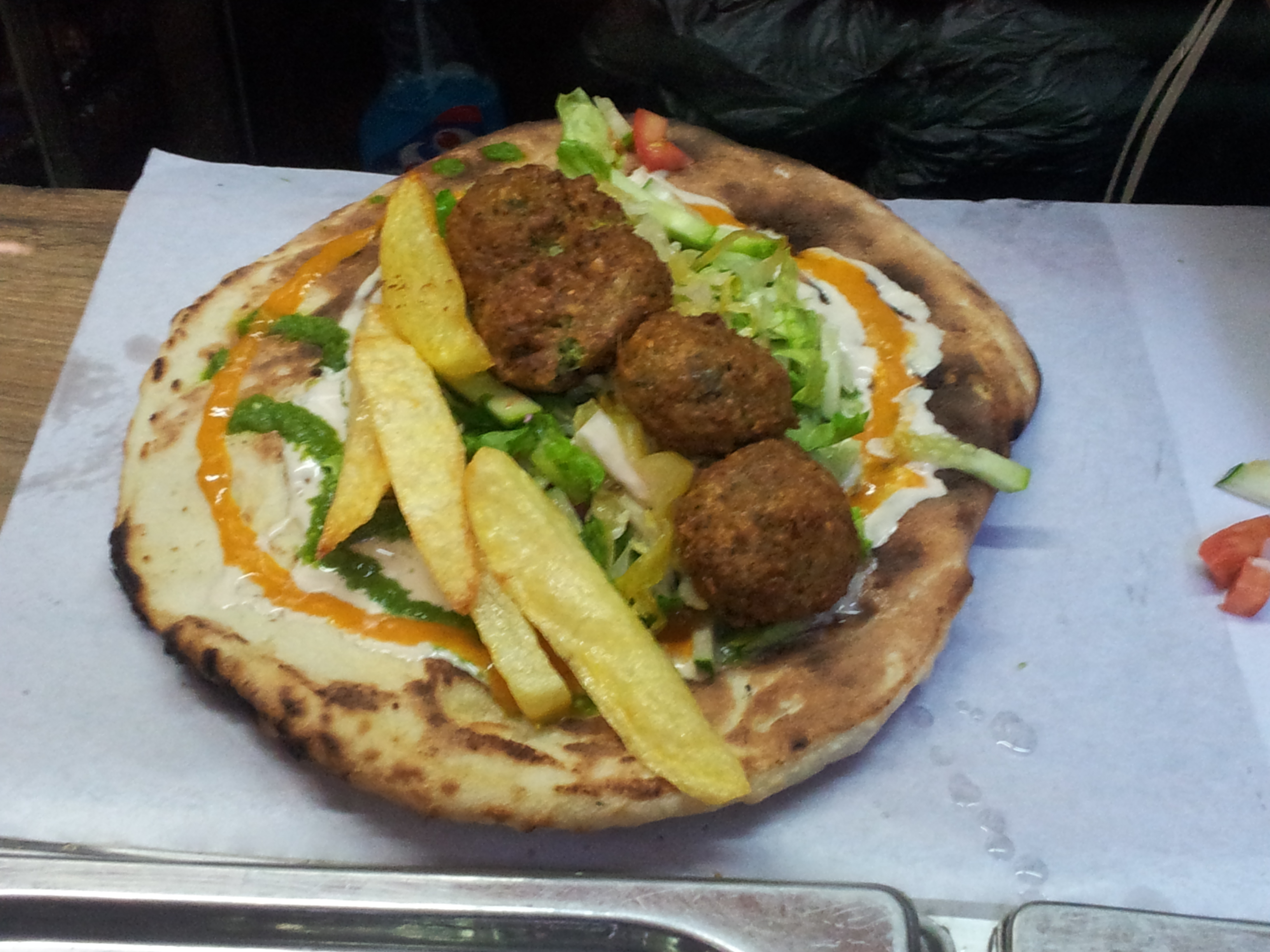
Things like Baba Ganoush (Baba Ganouj sometimes), radiant salads, Ful (gorgeous, soft and rich fava beans), loads of pickled veggies, of course, gallons of creamy, sumptuous hummus (I’m not going over the top there), and falafels.  Falafels, then falafels and more falafels.  I ate piles of those delicious crispy lumps.  Mainly in a wrap.  I could have done a falafel recipe, but truth is, there no different to the gazillion that are out there now.  They are light and cripsy and in one of Lebanon’s most famous falafel places, Falafel Sayhoun, they are heavy on the black pepper.  A bit of a surprise.  I’ll write more about falafels soon.

I’m a vegan, falafels make up a large part of my dining out diet.  Therefore, I probably eat as many falafels per year as your average Lebanese person.  I was in good company.

Ful – Tasty breakfast, fava beans flavoured with a little spice and great olive oil. You are never more than a metre away from a pile of flatbread in Lebanon.

EATING LEBANON

My style is cheap.  What to do!  I love to travel which means that expensive restaurants are off the menu.  I’m fine with that.  I seek the best food in the street, down alleys, from little windows and stands, in peoples homes and local restaurants.  Basically, the food everyone is eating. the culinary pulse of a place.  Cutting edge is great, but I like to go straight to the heart first.  I’m very rarely disappointed.   I have no interest in decor if the food is bang on.

What we have here are a selection of vegan Lebanese staples.  There is one vegan/ vegetarian restaurant in Beirut, but really, the Lebanese cuisine is vegan friendly, there’s a falafel joint on every corner and thats just the beginning.  You’ll pick up a fresh juice without any problems, juice bars are all over the place.  Plus, there are loads of shops selling nuts, seeds and Turkish delight (normally vegan).  Ideal travel snacks when you’re wandering around in search of interesting nooks of cities and towns.  Maybe you’re a hiker?  Perfect.

One difficulty about ordering/ writing about Lebanese food is that it’s such a diverse place, with bags of culture/ influences, the names and spellings for many dishes seem quite fluid.  But here goes, many of which are lifted from scribbles in my notebook.

One of the main mosques, Mohammad Al-Amin, in central Beirut.

WHAT I ATE – VEGAN LEBANON

Where to begin?  Stuffed vine leaves.  Mujadara (rice and lentils – recipe in ‘Peace & Parsnips‘) normally with a tomato sauce, Manouche (see below – like a massive, thin pancake, stuffed with punchy za’atar and loads of olive oil, although fillings vary).  What else……sumac was there……..
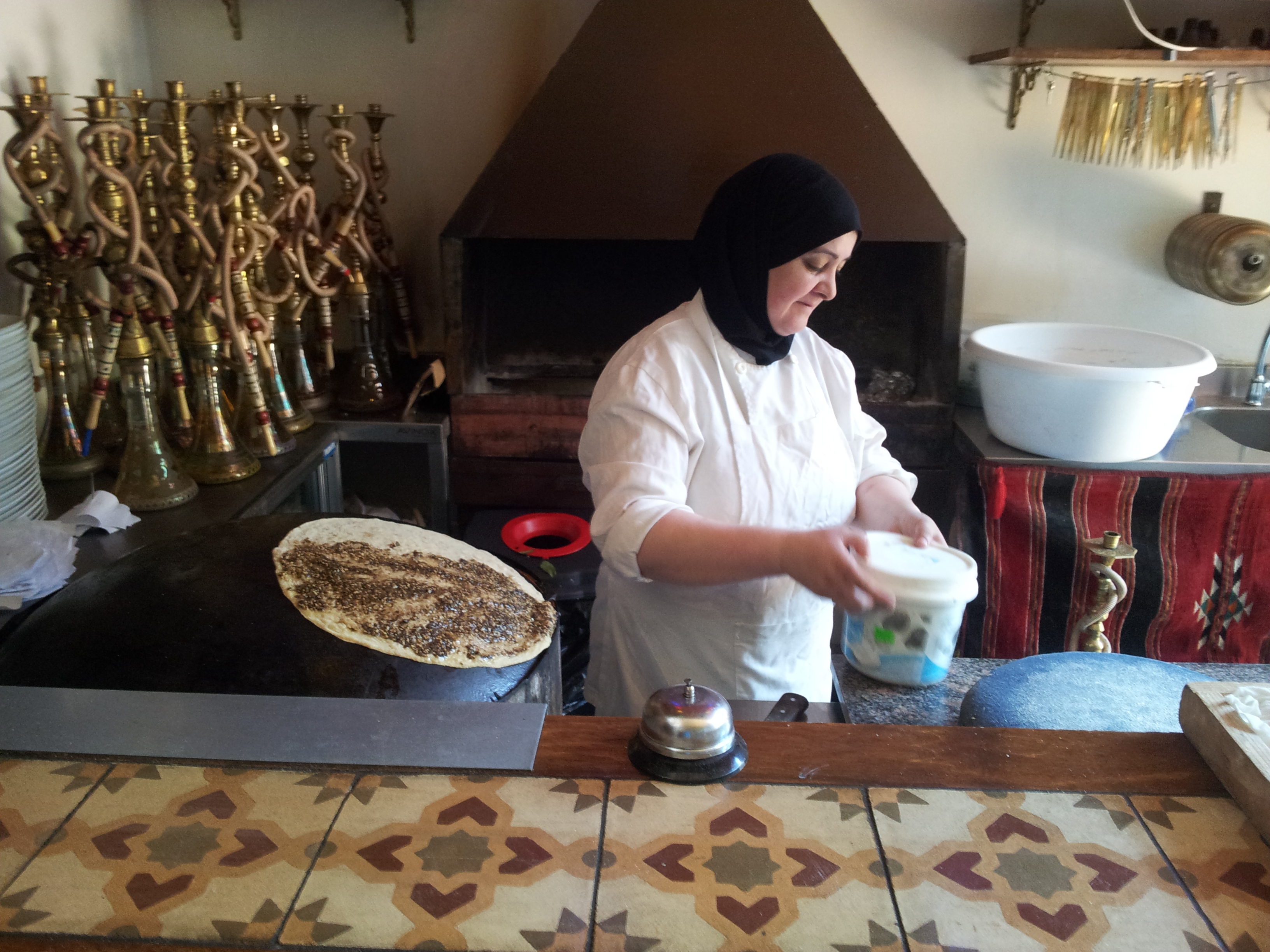
This nice woman made me a Manouche many mornings. Interesting technique, rolled super thin, big flat glove type thing, slapped on a dome shaped hot plate. Leave to bubble and brown.  Enjoyed with fresh juice and coffee.
The finished Manouche (Manakish)

I really enjoyed the veggie version of Fasoulya Hammanieh, a really rich bean stew which loved warm flat bread.  The chickpea is a hero in these parts.  I ordered an interesting sounding dish one night and what turned up was just a bowl of chickpeas in their cooking broth with a pinch of cumin on top.  Basic, but was really tasty.  The cumin, wow, potent stuff.

It goes without saying that the hummus is incredible, creamy and rich.  I wrote about hummus recently.  The tahini is also, as expected, next level plant-based creaminess.  You might know by now, and I not shy to say, tahini is probably my favourite thing in the world.  Taking a fried courgette/ aubergine and introducing it to a light tahini sauce is a beautiful act.

I did not manage to find any veggie Kibbeh, which was a shame, but there was enough to keep me occupied.  I enjoyed Makdous, bigger aubergine pickles stuffed with nuts.  Shades a pickled onion.   Batata Harra were a constant source of yum, baked or fried potatoes with a spicy, more-ish coating.  Spoon them in with hummus and pickle and again, we’re going somewhere nice for a while.

If you are Lebanese, or just know, what is the difference between Baba Ganouj and Mutabal?  Smoking?

You can eat awesome food late in Lebanon. Shakshuka (which was basically chips with tomato sauce and herbs, surprising), creamy rich hummus and a Lebanese beer.

LEBANON LOVES FOOD (AND DRINK)!

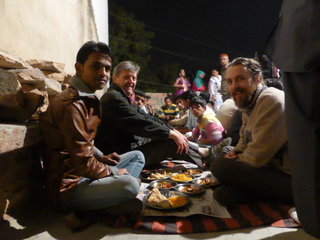
Lebanese people LOVE eating and many Lebanese dishes can be traced back thousands of years.  If it ain’t broke…..  Most restaurants and houses I visited had large groups of people sat around lots of dishes of food, drinking sometimes beer, wine or coffee and taking their time.  Maybe its the Mediterranean that does this to us.  Slows things down, makes us enjoy the good things in life a little more.  

Lebanese beer and wine is very good quality, I didn’t know much about it before, but some of the central valleys in Lebanon are making great wines and not too expensive.  Arak is popular, an aniseed alcohol which can also be good quality, but is normally proper rocket fuel.

When you drink, you eat.  I like that.  In the little, bespoke style bars of Beirut, I regularly got a little tray or bowl of something with my drink.  A nice touch, especially when you see the price of the drinks!!
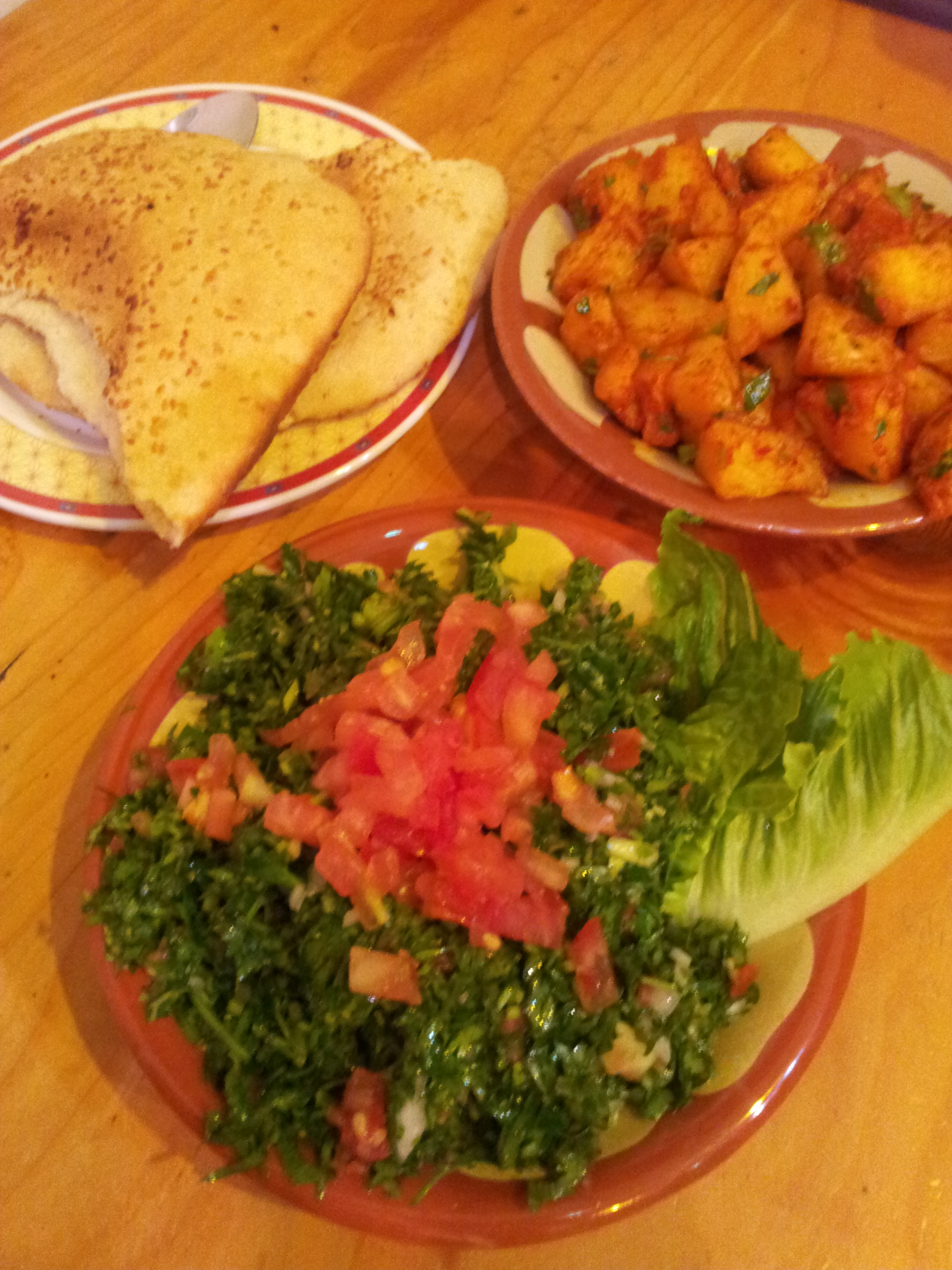
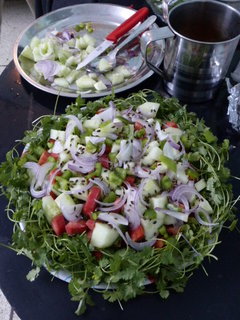
Tabouleh, you probably know. Lots of herbs, chopped. Lebanon does amazing roast, spicy potatoes. Who knew?!  These sesame flatbreads were really quite special.  Fatoush is another delicious Lebanese salad, normally with a nice pomegranate molasses flavour dressing and crispy, flatbread croutons.

LEBANESE COFFEE

Tea and coffee are not such a big deal in Lebanon.  At least in public.  Unlike Egypt and Turkey and other Middle Eastern countries I’ve visited, there are not many tea shops or cafes.  I was told that people tend to drink tea in their homes and Lebanese coffee (Ahweh) is served in the Greek/ Balkan etc style of finely ground (Turkish grind), boiled in a little vessel and served in small, espresso size cups.  It’s robust.  The resulting coffee is strong, sometimes flavoured with things like cardamom, and leaves that tell-tale sludge at the bottom of your cup.  
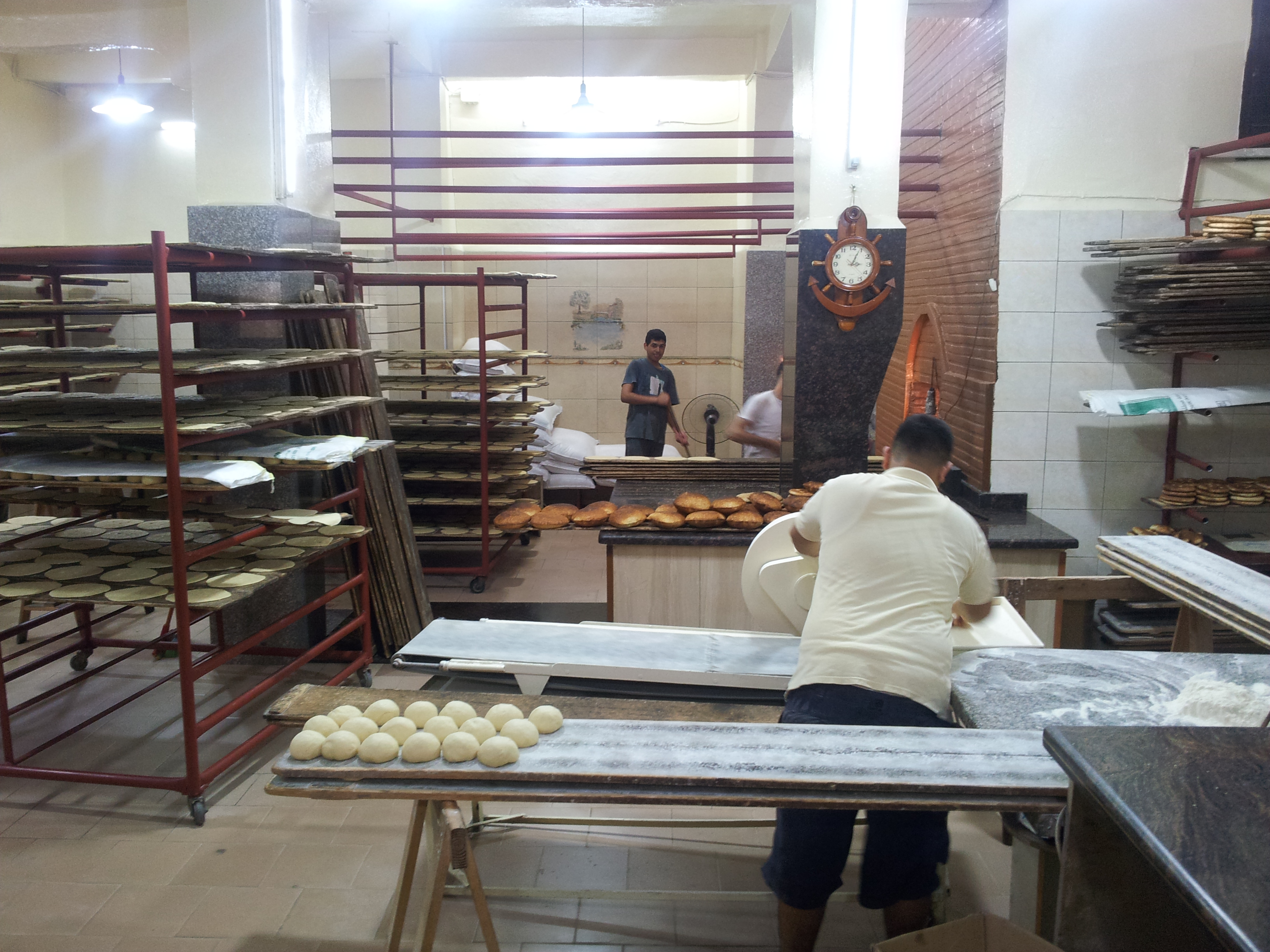
Sesame flatbread bakery – Tripoli.  That’s all they do, hundreds, thousands of steaming sesame flatbreads.  You know they’ll be good!!  Come out the oven puffed up like golden balloons.
I loved everything I ate in Tripoli, but this was challenging. Sharab Al-‘Eriq Sous is made by continuously pouring water through a bag filled with a licourice mix producing a potent licourice concoction. Wakes the taste buds up and makes you pull funny faces.

DESSERT

I didn’t actually sample many Lebanese desserts.  Most were dairy based and I was happy with the ubiquitous fruit, I was also normally stuffed from the meals and all that flatbread.  Halva, the nutty types, are normally vegan, but I find them overly sweet.  I like a little nibble though and it is delicious.  Of course, the tahini variety is a favourite.
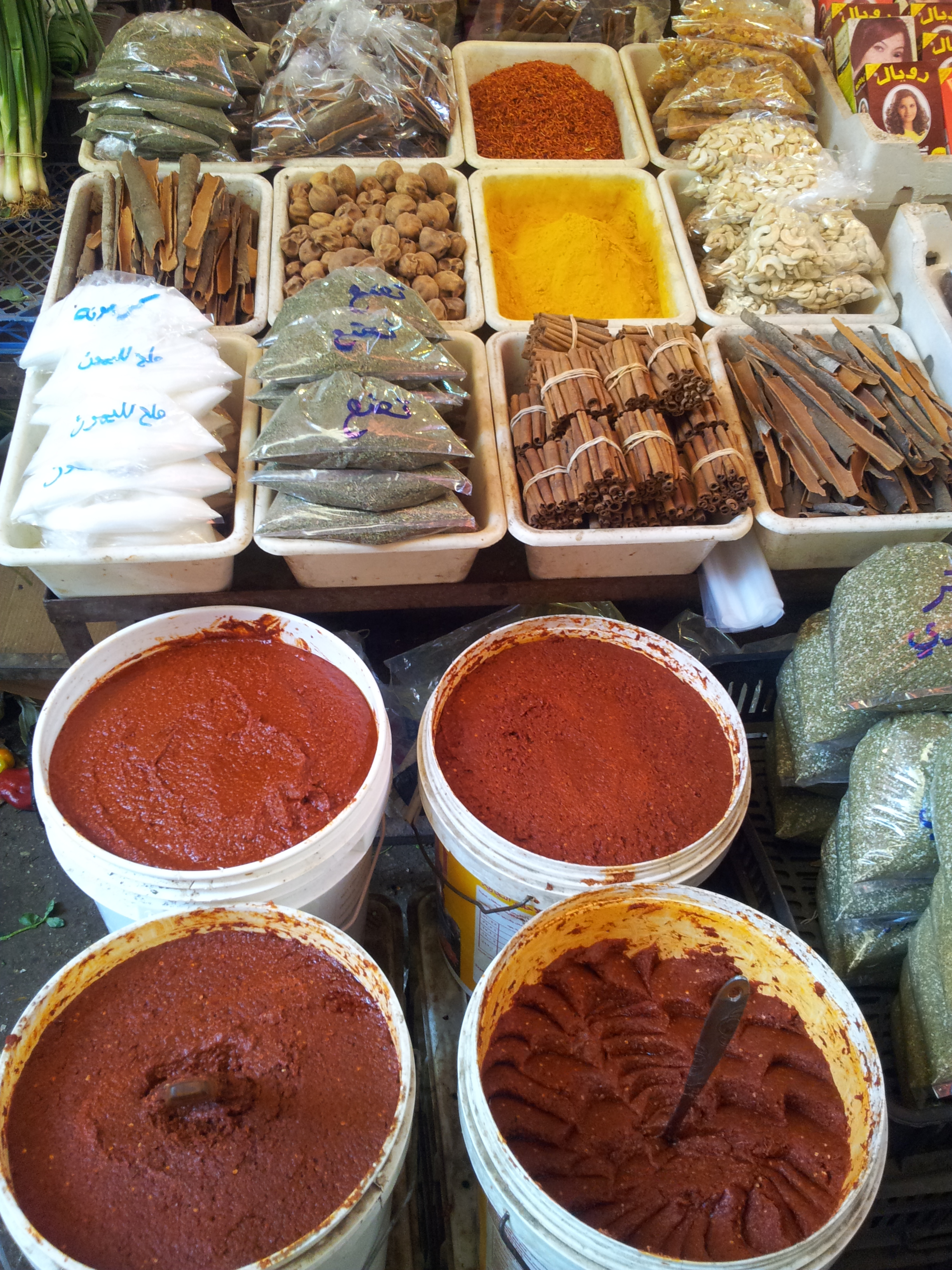
Pastes, spices and herbs. I love these stalls.  Bought some Za’atar here and some nice dried apricots, to be made into a refreshing drinks.  Amar-el-Deen, sometimes with a little twist of rosewater.  Perfect in the summertime.  I’d never heard of it before and went to a world food store in Newcastle yesterday and found the exact same packet!!

BEIRUT

Is set on the Mediterranean coast and was not long ago,  a cosmopolitan city influenced by the French, attracting tourists from around the world with stunning architecture.  It is one of the oldest cities on earth.  Beirut has had it’s problems, you probably know all about them.  Basically destroyed by the recent civil war it is a city being rebuilt, pockets of nightlife, galleries, museums are springing up amidst the ongoing problems.  In parts of Beirut, you could be in places like soho, tiny bars and lots of well heeled trendy sorts hanging out drinking cocktails.  I stayed in a wonderful hostel in the centre of a well-to-do corner of the city, plush in parts, a place teeming with offices, restaurants and the occasional hummer.

The Saifi Urban Gardens band. Twice a week, everyone dances, but everynight there’s a party.

The hostel has a sprawling, open air restaurants downstairs, serving excellent, inexpensive food, with regular live Arabic bands.  It was a buzzing place, never dull and the staff were incredible.   Saifi Urban Gardens.

Beirut is good for a couple of days looking around and then serves best as a base for travelling around Lebanon, only a few hours on a bus will take you to any corner of the country.  Most people staying at the hostel, which is a real hub, were students of Arabic.  They did not seem to travel around much, citing tensions and security issues, but most local people just said “Go for it, all is cool.”  So I did and was rewarded with many memorable experiences.

Street Art – Beirut

A RANDOM VEGAN POKE

Mar Mikael and Gemmayze are where the richer, trendy sorts hang out and there is a thriving bar and cafe culture in these areas, not to mention a diverse restaurant scene.  Over the road from my hostel, I bumped into a chef who showed me around his new restaurant, the theme is Poke (pronounced with an accent on the ‘e’, like ‘Ole!’).  Have you heard of it?  A concept he picked up in Hawaii, mainly seafood and veggies in a bowl.  Food that looks outrageously beautiful and he made me a special plant-based bowl.  It was dark, no pic.  It was interesting to be eating Hawaiian in Beirut.

Poke, Buddha bowls, whatever you want to call them, a very nice way of presenting a variety of foods and punchy flavours.  Don’t mix things up, keep them separate and appreciate each ingredients qualities.  I think it makes a nice change.   If you’re not familiar with these things, you’re probably not on Pinterest/ Instagram (like me).
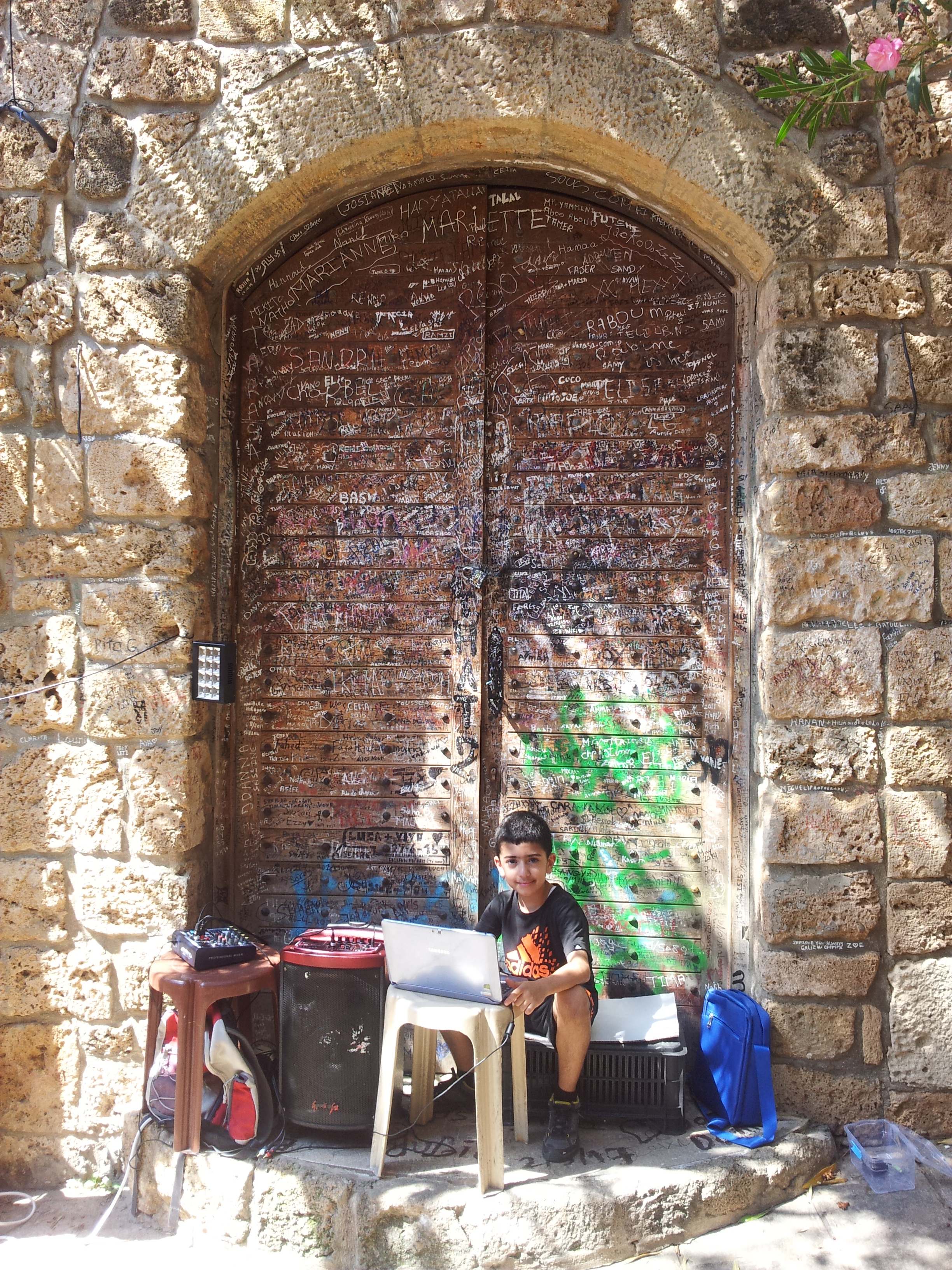
One of the coolest people I met. Kid DJ in the old quarter of Byblos. Playing Arabic dance music turned up to 11 for no one in particular.  For the love of it!

Of course, being a vegan traveller you right off the majority of most menus when you move around.  But in Lebanon, what is left is so delicious and generally varied, that you would not dream of feeling left out of the moveable feast.  I lower my expectations and am normally just happy to get fed.  In Lebanon, I revised that, and realised that most Lebanese people love their veggies and pulses.

Lebanese cuisine is well up there with my favourites, being vegan, it’s even a little healthy, all that hummus, tahini, vivid pickles, fresh juices and normally wholemeal flatbread.

Beirut – no beaches, mainly little rock outcrops where people sun bath and chill. This is from the promenade known as ‘Corniche’. Here, you could be anywhere in the Med, as people come out to exercise and stroll with poodles around dawn and sunset.

Lebanon left a big impression more to come soon……The Perfect Falafel and more travel stories On The Road in Lebanon.

Categories: Healthy Eating, photography, plant-based, Travel, Vegan, veganism | Tags: , , , , , , | 14 Comments

Italian Vegan Summer Feast – A Celebration! (pt 2)

Italian Vegan Summer Feast!  

Here’s part two of our Italian vegan feast, a whole heaving table of vegan delights perfect for a summer celebration.  The idea is that they’re quick and easy to get together and show-off the incredible produce we get when the sun comes out to play.

These are the flavours of summer and I think Italy is one of my favourite countries to eat, wander and marvel.  I’ve never visited big cities I must add, but the chilled life in the Italian countryside is my kind of vibe.  Simplicity and balancing flavours are just second nature to the cooks and magnificence is never far from my taste buds.  Italy is a vegan travellers dream, in fact, any travellers dream.  I agree with the old school maxim, ‘don’t mess with the produce, just let them shine!’ (I might have just made that up).

EATING ITALIA (JUST THE PLANTS GRAZIE MILLE!)

I’ve done a load of travelling in the past year and was lucky to tour around the south of Italy again; Puglia, Campania, Basilicata, just the names alone have my mouth watering.  The south of Italy has so many vegan choices, traditionally, veggie food down there is very popular.  It was a poorer part of the country where people couldn’t always afford meat and dairy, so they got creative with the plants.  My kind of place!  I love the parmesan they make with basically just fried breadcrumbs.  Great texture and crunch.  I also love the ever present mushrooms.

Every restaurant has a range of vegetable dishes, generally simply prepared, sauteed quickly or char grilled.  There is of course, the classic Marinara pizza.  Just tomato sauce and maybe the occasional basil leaf, but the quality of the base is regularly sensational.  There is Arrabiata and its varietals, huge bowls of fresh pasta with a rich tomato sauce and knock out olive oil.  Occasionally a basil leaf.  The tomato foccacia is dreamy, melts in the mouth and I haven’t even mentioned the Antipasto.  Jeez.  Huge, elaborate displays of preserved flavour explosions.  All kinds and colours of olives, sun dried tomatoes, artichokes, aubergines, peppers, you know the score but really, if you haven’t nibbled one standing in a Puglian market post espresso, you haven’t really tasted the true antipasto.  The pizza/ pasta dishes mentioned normally weigh in at 5-6 euros in a nice restaurant.  Not bad eh!

I think the markets in the south of Italy are my favourite places for sniffing out fresh produce and generally, just to hang out.  I spend quality time admiring the creations on display.  Did I mention the sorbet, no need to miss out on the evening gelato ritual, the sorbet is normally incredible.  Really, incredible.

Have you ever eaten a peach in Italy!!?  That’s a whole other level and blog post I feel.  Even the plums are a wake up call generally to the potential of fruit and veg.  The sweetness.  In Britain, we’re doing out best really.  Great apples and potatoes.

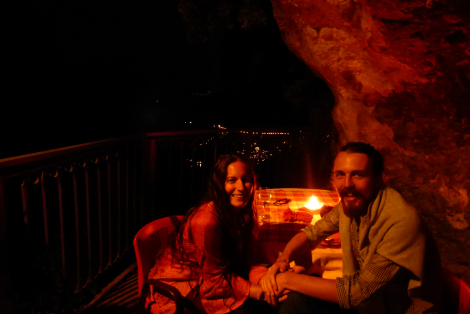
One of our favourite little restaurants, in a cave overlooking the Amalfi Coast.

Italy has a reputation of being an expensive place to travel, not for me.  There is also a growing vegan movement and even in small towns, I found vegan restaurants, salad bars, kebab shops.  It’s become quite trendy, restaurants advertise vegan options via flashing lights or blackboards.

Basically, all lovers of food and the simpler, finer things in life cannot help but fall in love with rural Italy.  Is that right?  Have you been?  What can I look forward to in the North?  The tastebuds boggle.

Back to our humble little feast with an Italian flava.

See the first post here for the Pepper, Basil & Cashew Cream Cheese Tart, Rosemary Roast Potatoes, Tomato & Balsamic Salad and Italian Style Dressing recipes.

The Bits – For 6-8 as part of the Italian Feast

Aubergine Antipasto

2 large aubergines (peeled)
1 large garlic clove (crushed)
4 tbs olive oil
Large pinch salt
Dried oregano

1 handful sun dried tomatoes (chopped)

——————–

Roast your aubergine in the oven, 200oc, 25 minutes, until cooked and a little caramelised. Toss gently with the other ingredients. Leave to cool and pop in the fridge. Can be done in advance.

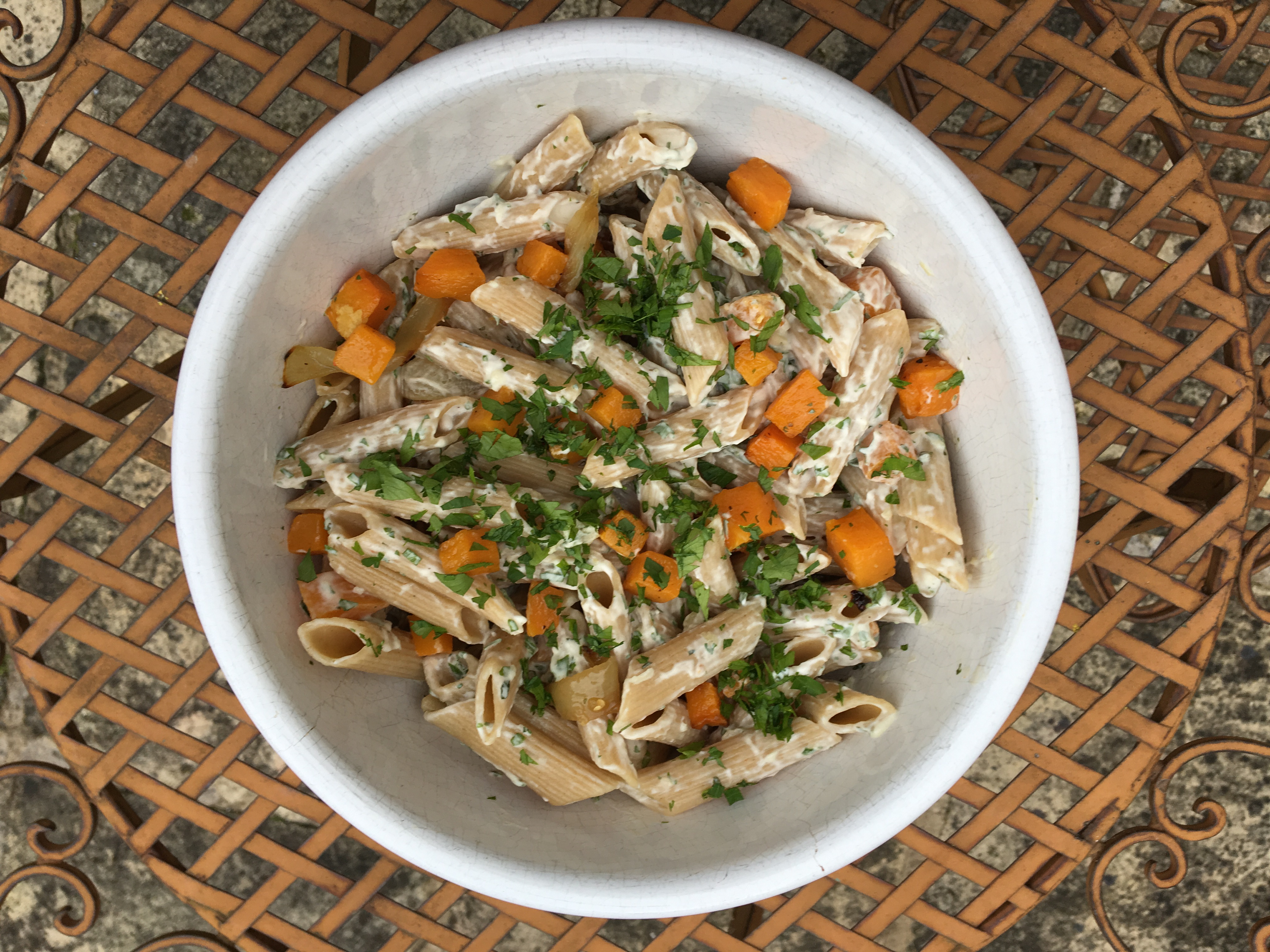
Roast Squash & Wholegrain Pasta Salad

Roast Squash & Wholegrain Pasta Salad

8 handfuls wholegrain penne
5 tbs vegan mayo
3 handfuls squash (small cubes)
1 bulb of garlic
1 large handful sun dried tomatoes (chopped)
1 handful parsley (chopped)
1/2 lemon (juice)

Salt and pepper

——————

Cook your pasta. Drain and leave to cool a little.

Roast the squash and garlic for 30 minutes in 200oC fan oven with a little oil and salt and pepper, take the garlic out after 20 minutes. Peel the garlic cloves and mash with a fork, stir into the mayo.

Place all ingredients in a large bowl and toss gently together.  Season with salt and pepper.

This dish is nice served warm, but also good cold.

White Bean Puree (Vegan)

White Bean Puree

450g white beans
4 tbs olive oil
1/2 lemon juice
1/2 teas sea salt
Parsley

Garnish
Whole beans
Olive oil

————————-
Place all in a blender and blitz until smooth. Check seasoning.

Serve ideally with a drizzle of olive oil and a handful of whole beans on top and maybe chopped soft herbs (basil, parsley) or dried oregano.


Serve dishes with


Large bowl of mixed salad leaves

Bowl of Olives

Olive oil/ Balsamic

Vegan cheese, like cashew cream, vegan parmesan.
Fresh Foccacia/ Ciabatta/ Any nice bread really

Extra bowl of dried oregano and mild chilli flakes

A bottle of something nice

Sunshine + smiles

Rosemary Focaccia

That’s it!  Enjoy the feast.  If you get to try it all out, or even just a few of the dishes, let us know in the comments below.  We love to hear about your kitchen adventures.
 

Categories: healthy, photography, plant-based, Recipes, Salads, Side Dish, Summer, Travel, Vegan, veganism | Tags: , , , | Leave a comment

Everyone’s Lovin’ Jack! Ten interesting facts about jackfruit

A giant jackfruit, found dangling by a restaurant in Goa which cooked up an amazing jack and coco curry

Everyone is loving Jackfruit at the minute, all those pulled jack fruit sandwiches and have you tried jackfruit ice cream? It’s incredible! But how much do we know about this strange fruit? Don’t let the spikes put you off, this is a super fruit in every way!!  I’m lucky on my global wanders to have tried many varieties of jackfruit and different dishes. I’ve never met a jackfruit dish I didn’t like!

Here are 10 facts about this strange, spiky and wonderful fruit:

1) Jackfruit, the yellow bit we eat, is actually called an ‘aril’. It’s a flower and we eat the edible petals. One jackfruit contains hundreds of flowers and one tree can grow 250 fruits per year.

2) Jackfruit seeds are edible and healthy most people roast them. You can also boil them up and make a lovely attempt at hummus. Comes highly recommended.

3) It is said to smell and taste like a cross between very ripe bananas and pineapple, with a twist of apple and mango. It’s a confused fruit! I think that’s quite accurate but there is definitely a custardy, juicy fruit gum-ness there too.

4) There are many varities of jackfruit, some are pithy inside and some are very sweet and tender.

5) In Indonesia, they make chips out of jackfruit, called Kripik.  You can buy them and eat them like crisps.

6) Jackfruit seeds, when roasted, taste like brazil nut crossed with a chestnut. You can boil, bake and roast them.  They can also be ground into a flour.

7) Using jackfruit as a meat substitute is nothing new. In Thailand it’s sought after by vegetarians and historically called ‘gacch patha’ (tree mutton!)

8) In Indonesia, the wood of the jackfruit tree is used to maked the famous ‘gamelan’ drums.  Popular in Bali (see video below).  The leaves are also fed to cattle, but also make a nice alternative to other greens.

9) Every part of the jackfruit tree is medicinally beneficial, the bark, leaves, pulp, skin and roots.  It is also antibacterial and anitviral.

10) Jackfruit is the heavyweight of all fruits, growing to four feet long and weighing in at over 35kgs.  That’s a lot of burger right there!

Cooking wise, the main attraction to Jackfruit for me is the interesting texture, when unripe, nothing else gives that stringy, chewiness when cooked. It is meat-like and an ideal plant-based dish to serve meat eaters.  Also the flavour is totally unique, in fact, Jackfruit is a very strange fruit indeed, like nothing else.  As the world goes meat free (it’s happening!) we’ll be increasingly familiar with Jack.  It’s going mainstream!  Great news as the production of meat is one of THE main causes of global warming.

Delicious Indonesian jackfruit dish ‘Gudeg’ – actually being served at breakfast

I’ve been in Goa for a while and jackfruit grows everywhere.  Jackfruit has been hailed as a ‘future food’, due to the fact that it grows so easy and is high in nutrition. It requires minimal fuss and pruning. One jackfruit can feed many and some say it will help to ease the issue of global hunger/ food security.

For me, the country who does jackfruit the best is Indonesia. I’ve never been to a country where it is used so frequently. Almost every meal I had in a proper place had at least one dish using jackfruit. The dish ‘Gudeg’ is a stand out staple. Of course, it makes for a great dessert. It’s a very useful plant, although I have been warned that in places like Brazil, it can be invasive. This is probably not such a problem in rural Wales as it will only grow in warm places.

Fairly standard Indonesian lunch! You have jackfruit and it’s leaves here, plus tofu and tempeh.  Woah!

I also tried a ‘Pulled Jackfruit Burger’ in quite a cool little place in Yogayakarta, Indonesia. This is a contemporary twist on things and its great. You’ve probably tried one yourself?  I’ll be cooking it when I get back to the UK for sure. Unfortunately, up here in the Himalayas, it’s not a Jackfruit zone. Great organic veggies though.

You can eat ripe Jackfruit raw, I love it like that, but they have to be ripe. It’s also interesting when it pops up in a salad. Jackfruit originated in India and in the South you can find people selling it as a street snack and, of course, in parts of India it’s made into a curry. I know they sometimes make candies/ sweets out of the juice.

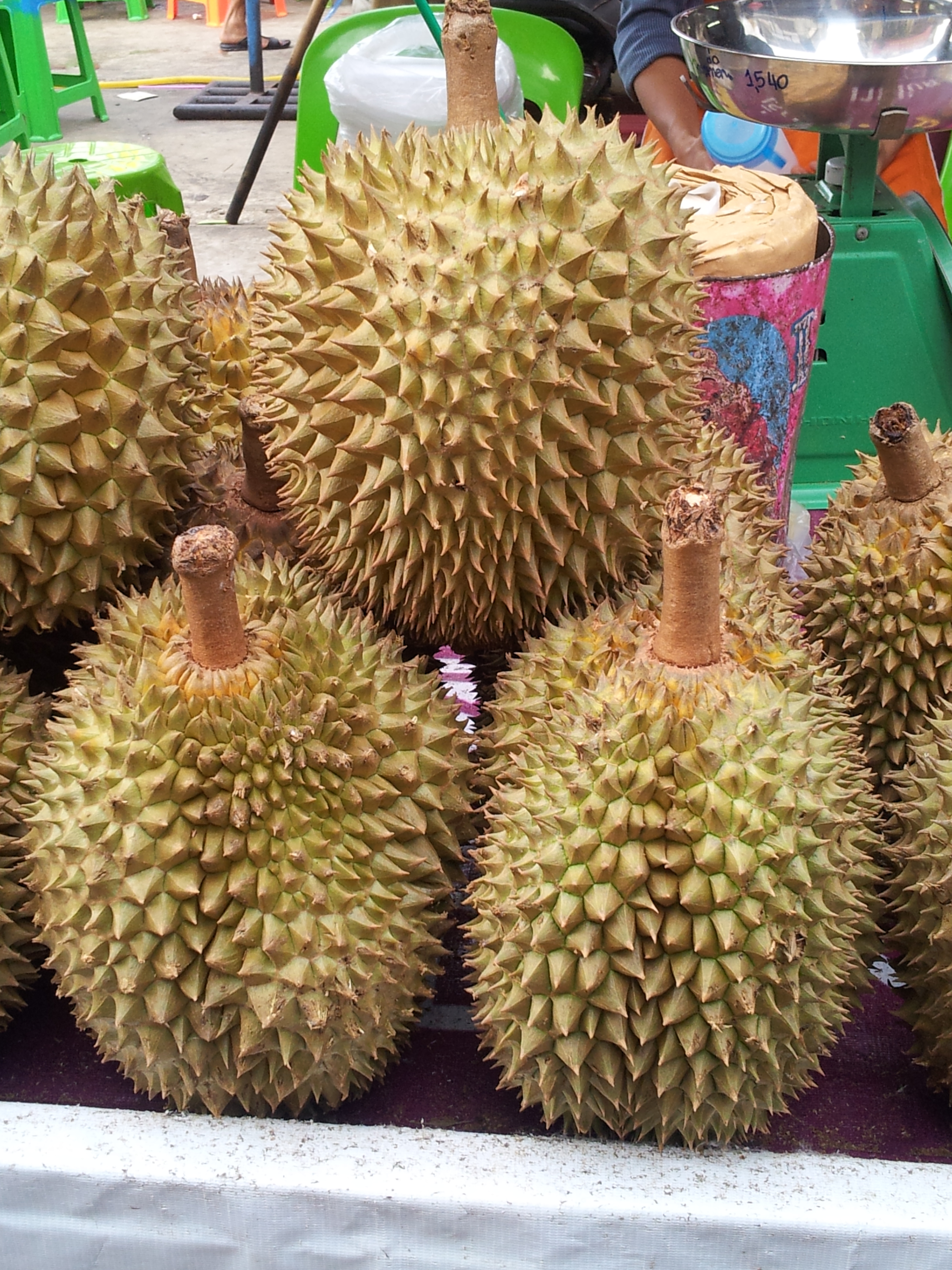
Jackfruit is easily confused with the pungent freak that is Durian (see below). Popular in South East Asia and banned from public transport there (it reeks like something gone way rotten and wrong). Durian is an acquired taste and once (or if) you can get over the stink, has an incredible flavour.  When I did the TV show ‘Meat vs Veg’ I was tasked with wandering around the streets of London, trying to get people to try it.  Some did and liked it, but most just looked sickened!  Again, something totally unique. Go to Thailand, try it out. The Thai’s adore the stuff. Durian looks different, bigger spikes and doesn’t grow as large.

Pulled BBQ Jackfruit Burger, Yogyakarta, Indonesia

Nutrition wise, for something quite starchy, its got lots to offer. It’s low in calories with good levels of Vitamin C and Vitamin B6 (which is quite rare). Its also a reasonable source of minerals and a good source of carbohydrates, fats, protein and has plenty of fibre.  The seeds have plenty of vitamin A.

Although it’s not exactly local (and you know we love our local produce) I guess there is little difference tucking into a pineapple or mango. Jackfruit is a treat and when you look at the quite high prices in the UK, this makes it even more so. I think for a every now and again, taste of something different, you can’t beat Jack!

You can buy jackfruit canned in most countries and if you buy a whole jackfruit, be warned, they can be a trick customer.  They ooze a white sticky liquid when cut into and it takes ages to pick out the little fruits, seperate the seeds etc.  It is well worth it, the texture of a fresh jackfruit is different from the tinned.

Have you tried Jackfruit? How did you cook it? It seems like a fresh and new ingredient in the UK and beyond that everyone is falling for.  We love it!

To avoid confusion, this is Durian. Bigger spikes. You normally smell it before you see it.

Evidence of its putrid odour. Banned on public transport in Thailand and other countries. Phew!

Finally, some fascinating and hypnotic ‘Gamelan‘ music from Indonesia:

Categories: healthy, Music, Nutrition, photography, Superfoods, Travel, Vegan, veganism | Tags: , , , , | 11 Comments

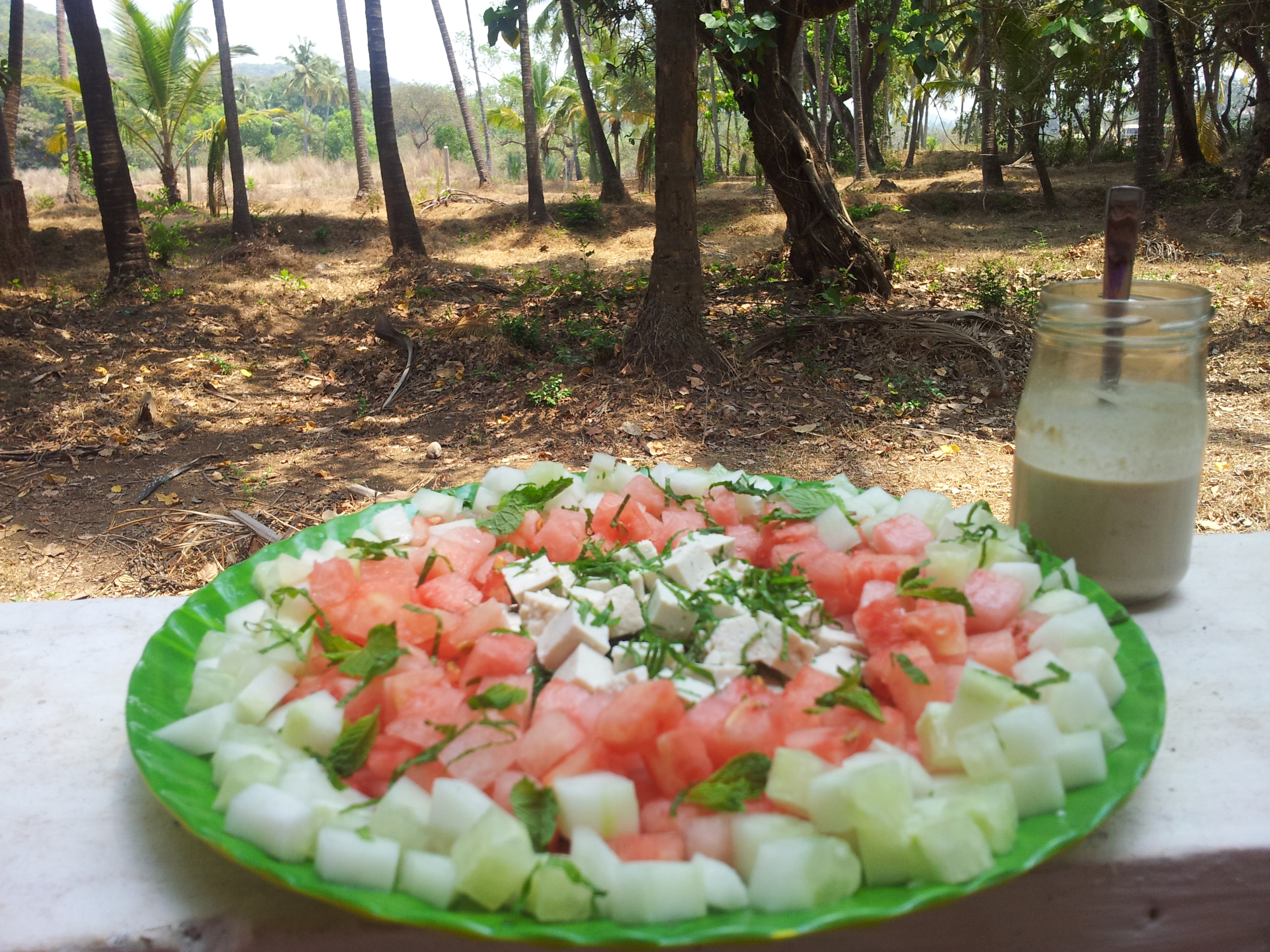
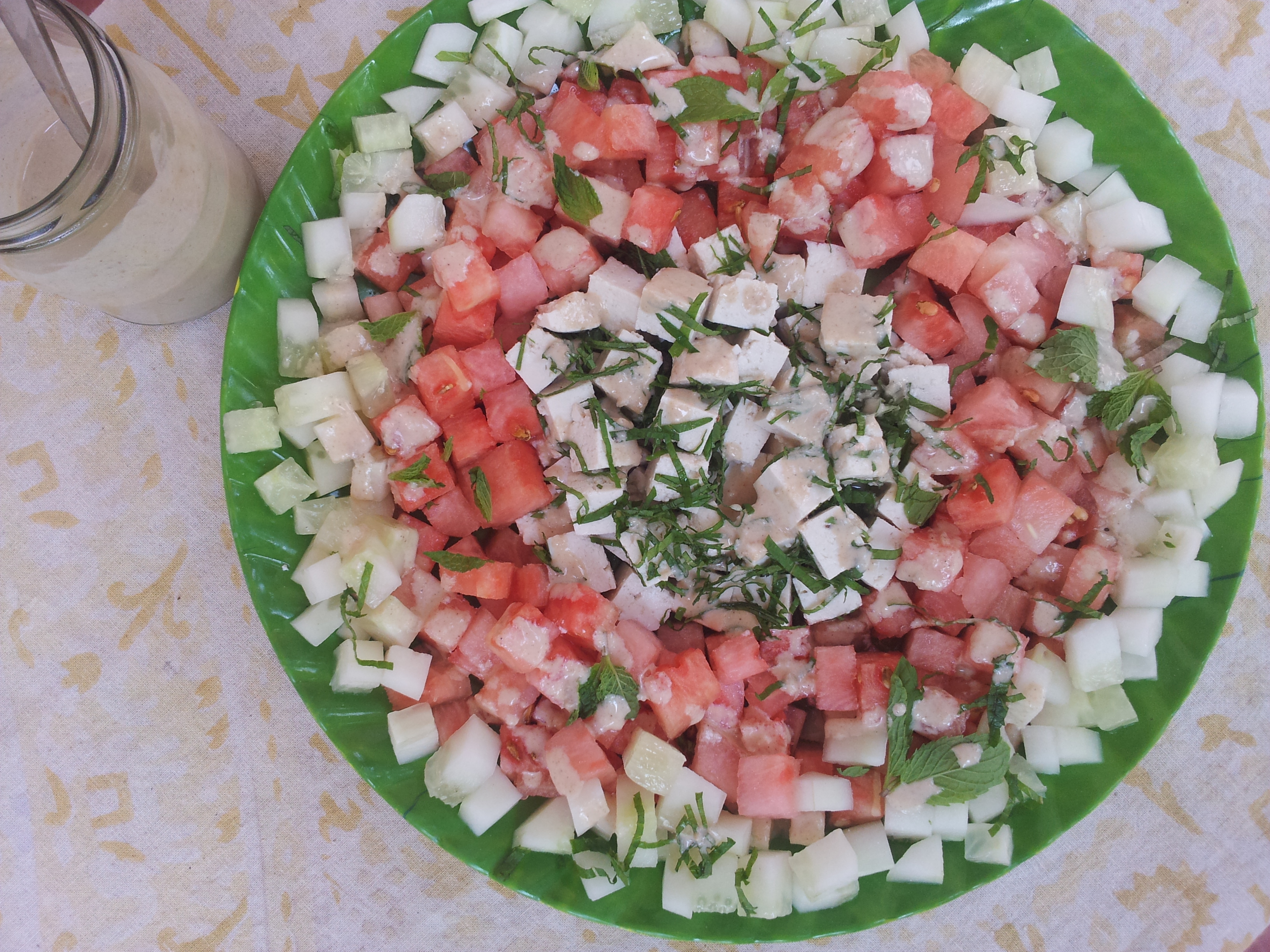
Cooling Watermelon, Tofu & Mint Salad

Cooling Watermelon, Tofu and Mint Salad

It’s getting HOT over here!

I realise that most of you don’t need cooling down, but we do. Its baking in our little place in the coconut grove, Goa. This is the most cooling and simple salad I could think of with the added benefits of tasting very awesome and also bags of sparkling nutrition.

We don’t have a kitchen so we’re loving playing with salads, of the fruity sweet variety and killer savoury ones normally with tahini dressing. We’ve a great supply of locally made tahini and tofu, it’s making us very happy. It’s been about a year since I’ve enjoyed one of my favourite things, tahini I could eat on anything and everything.  I love the creamy flavour and it’s of course, one of the best sources of calcium around.

Whilst taking these pictures we had to fend of Indra the local alpha bull geezer, a speckled massive creature with impressive horns. He’s a bit of a punk and loves nibbling things when we sit near the edge of our terrace. His tongue is outrageously long, something like a mighty iguana. Especially good at hoovering up stray bananas.  Cheeky chap, but we’ve a soft spot from his brusque greediness. He eats all of our peelings and I think looks a little happier afterwards. Other animals hanging around the coconut grove today are large woodpeckers, egrets, a family of buffalos, stripy chipmunks, a pack of semi-feral yet friendly mongrels, wild peacocks at dawn, fish eagles, many funky lizards, a praying mantis and probably loads of other amazing little things. Mosquitos, some. Families of geckos, yes. Anyway, we’re a food blog right!…….

If you’re in northern Europe, maybe save this one until summer hits (or turn the heating right up!) If you’re in more southern climes, this one is a light and cooling lunch for two that also looks a bit sexy.


Recipe Notes

The chillies are a great little kick, but optional.

The tofu quality is important when being eaten cool like this. See if you can get some good stuff, the tofu here is rich and creamy, slightly crumbly like feta. Perfect for salads. Add a squeeze of lemon, a little salt and come nooch (nutritional yeast flakes) if you have them for extra feta like cheesiness.

Watermelons are always huge. We’ll only use a little here so why not try cutting it into cubes, freezing it and using it as exotic ice cubes in your favourite juice/ cocktail. Of course, blended up with cucumber, lemon and mint (maybe a touch of sweetness), your looking at a wonderful smoothie.

I’ve seen some people taking the pips/ seeds out of their watermelon.  It’s a total waste of time!  Just crunch them down, they are not bitter at all.


The Bits – For 2 lunch

250g firm tofu (cubed)
1 cucumber (peeled and cubed)
2 cups watermelon (cubed)
2 tbs fresh mint (finely sliced – do this last)
Pinch salt
Squeeze lemon juice

1 green chilli (finely sliced) – optional

Dressing
2 heaped tbs tahini
½ lemon (juice)
Water
Pinch salt

Do It
Cut the melon, cucumber and tofu into similar sized cubes.

Squeeze a little lemon and a pinch of salt over the tofu and toss lightly.

Mix your dressing together with a fork adding drizzles of water and stirring in until a single cream texture is formed.

Mix your mint in with the tofu and place in the centre of a large plate. Surround in layers with your melon and cucumber. Sprinkle over leftover mint and chilli (if using)

Best served with a sunset;) From Zoori’s Place – Anjuna, Goa

Foodie Fact
We’re going to let Macka B take over the foodie fact, so many incredible health giving properties to the humble cucumba!!!!

Happy cooking!

Categories: gluten-free, Healthy Eating, Music, Nutrition, photography, Recipes, Salads, Summer, Travel, Vegan | Tags: , , , | 10 Comments

Jungle Kopi Culture – Sampling Indonesia’s coffee revolution

Traditional village - Tana Toraja, Sulawesi Traditional village – Tana Toraja, Sulawesi

There are so many striking things about Indonesia; the people are so friendly, warm and welcoming, the incredibly diverse cultures are ancient and fascinating, the landscape varied, and jaw dropping and somewhere steaming away in this heady mix is the coffee, something of a superstar in the waiting.

Of all the coffee giants in the world; Latin America, Africa, India etc, I feel Indonesia is slightly overlooked. Especially Sulawesi. You may see some packs of Java beans out there, but nothing much else. The variety of Indonesia’s coffee cornucopia is poorly represented and we’re missing out big time.

Indonesia has the perfect conditions for coffee (and cacao) growing.  Coffee and chocolate, what a combo!  There is a youthful espresso fuelled movement swinging into existence bringing quality coffee back to it’s roots and cherries, so to speak. Led by the sprawling megalopolis that is Jakarta, there is a growing trendy cafe culture over here, hip and buzzing, Indonesians are getting to enjoy their coffee and not just export it away.  We have been lucky to sample a bewildering array of brews and take in some plantations, each island produces very different styles of beans, within those islands are various regions, each with their own character and the tumbling coffee kaleidescope continues.

Perfect cremas are not always the case though. Many Indonesians don’t drink coffee as we Euro coffee snobs like it. The local brew is something like a long Greek/ Turkish coffee. Needing a few minutes to settle into a dark cuppa with some funky sludge greeting you towards the latter stages. It is normally pretty decent, better than packet instant, but this new roasted and toasted trend is very exciting.  Young guys with hipster quiffs and girls wearing brightly coloured hijabs let loose on Italian-made coffee machines to extract the maximum wow and yum. Jakarta is filling up with bespoke cafes and the big chains are lumbering in; Starclucks are making their insidious presence felt and bizarrely use beans from Guatemala!! Speaks volumes.

Jack fruit burger with sweet potato fries- It's not just the coffee that awesome in Indonesia Jack fruit burger with sweet potato fries- It’s not just the coffee that awesome in Indonesia

TANA TORAJA – A COFFEE AFICIONADO”S PARADISE

So Toraja is a remote region in Central Sulawesi, one of the largest islands in Indonesia, roughly the same size as France and basically, one big jungle. Toraja is reached by spectacularly rutted and windy roads, a mountainous region famous over here for producing some of the best Arabica in the country and is also home to an incredible tribal culture (see here).

Coffee is not a big deal in Toraja, they may drink it occasionally and most of the traditional houses in villages (see the top photo) had a little ornate wooden pot full of ground coffee. The beans are normally roasted in a steel pan over an open fire, which leads to inconsistent heat and inevitably a mixture of burnt and raw beans. I have tried roasting beans using this method in Luzon, Philippines and is seems that no matter how much care you take, there is little chance of avoiding charred bits with pale interiors. This could be why the Torajan’s didn’t generally cherish their beans.  The same could be said of cacao (chocolate beans) which also grows everywhere, their brilliantly red and yellow pods poking out of the canopy.

A friend told me about a Belgian couple who brought some local people a selection of fine European chocolates. The village Torajan’s were amazed that these bitter little beans had been fashioned into something so delicious. A chocolate revolution is surely the next step for Indonesia’s foodie folk, probably with some cacao smoothies along the way.

Some many Indonesia varieties to choose from, freshly ground to order Some many Indonesia varieties to choose from, freshly ground to order

One of the largest towns in Toraja is Rantepao and this is were we met two of our coffee superheroes, Mika and Eli. Eli runs a tiny coffee roasting business and cafe with his wife, Kaana Toraya Coffee, using a perfectly eclectic range of machinery that he built himself and techniques he learnt from a Hawaiian tourist in the early 90’s. Eli has made two roasters, the largest one powered by a large water wheel. A stroke of engineering genius. It is very peaceful to sit and watch it in action. The sound of flowing water and the tantalising aromas of coffee beans roasting. The equipment may look a little basic and battered in places, but the outcome is sensational and very high quality. We tried the traditional style of beans, dried leaving the husks on and also the standard washed style bean that we are familiar with, but then the bombshell came calling, Hani! Hani is a technique that I feel would be huge in the coffee shops and nooks of Europe and beyond.

Elli's water wheel powered coffee roaster. Ingenius! Elli’s water wheel powered coffee roaster. Ingenius!

HANI – A NEW STYLE OF COFFEE

The word sounds like honey and the flavour is like honey, much sweeter and fragrant than a washed bean. It is achieved by leaving the natural juices, released by the coffee berries when being picked and processed, on the coffee bean when drying (over here this is generally done on huge racks under the sun or in small quantities by the side of the road). This means that the berry is darker in colour. Dried pre-roast coffee beans are actually a yellowy green colour. These hani beans smell strongly of honey! It’s magic!! Especially for a vegan!!!

Eli and his wife kindly sold us a small bag of Hani for our backpacks, we are travelling with a little cafetiere contraption that means when we get a bit remote mountain cave or deserted island hammock we can still enjoy a top cup of joe. Eli loves exporting his families organic, hand picked coffee all around the world, if you’re in the business, you’ve got to try some Hani beans! Something truly unique. Also, you will never find a man who smiles more than Eli. Its highly infectious:)

Eli's extra special 'hani' coffee - tastes like honey Eli’s extra special ‘hani’ coffee – tastes like honey

After being immersed in the full coffee story, from bush to mug, we felt like a little sunset stroll around town. Rantepao is a dusty little place, clustered around a busy main thoroughfare. Tourism has made it’s presence felt and there are a couple of biggish hotels, normally catering for large tour groups. There is an impressive protestant church beside a slightly larger bright green mosque, there is a bustling bazaar selling everything from knocked off Rip Curl t-shirts to locally grown spices and finely carved machetes. On each street corner you’ll find the ubiquitous fried snack vendour, giant pans of oil bubbling away inches from frantic swathes of traffic. Pisang Goreng (Fried Bananas wrapped in a light pastry) are famous here and served in a number of ways, all sweet and tantalising. You’ve also got the usual piles of battered tempeh, tofu, corn fritters and sometimes chicken.

We were enjoying the energy and smiles encountered, many children and teenagers were practicing for their Independence day parades, something like a mass cheerleader-athon mixed with an army cadet march. All mini well pressed uniforms, papier machete tanks and tiara clad back flips. Many proud parents watching on beside Denis’s Massage Parlour, Jane and I causing minor waves of excitement, everyone shouting “Mr, Mr, hey Mr”.  This is a normal reaction to tourists in Indonesia.  Jane is also a Mr it seems! We have now posed for hundreds of selfies which, most of the time, is a real laugh.

From bush to cup, you get the whole coffee experience in Indonesia From bush to cup, you get the whole coffee experience in Indonesia

JAK KOFFIE – JIMI HENDRIX & AMERICANO

It was by pure chance that we found Jak coffee, not much more than a doorway on a side street. The brilliant graffiti caught our attention. We instantly realised that it was a special little place, the decor was really cool and Mika (the main man) had the biggest, warmest smile on his face. It is not uncommon in Indonesia to find cafes with rows of jars, filled with freshly roasted beans to choose. A rare treat for sure! Mika was playing some great tunes and had painted a large picture of Jimi Hendrix on the wall. Never a bad interior design idea!  The walls are lined with Mika’s work, he’s really a photographer moonlighting as a barista, plus the occasional antique lampshade or red phone.

Mika is very knowledgeable about most things it seems and spoke passionately about local history and culture, bringing life to it all, we learnt more in 1 hour than we did in 1 month of travel. This was the real story of Indonesia, right now, from the people creating the new waves and shapes.  My Americano was mindblowing; rich and deep, made with organic beans from the East of Toraja. Maybe you think a cup of coffee cannot border on or even tickle the mindblowing.  This was a coffee bomb!!  The flavours and aromas were intense.  Having said that, it was my fourth coffee of the afternoon and most things were a little intense.  Mika picks and chooses who he buys from, keeping things fresh, organic and interesting.  I have never seen someone take so much care over making a coffee.  The process elevated to an art form.

Jimi Jimi

‘NO COFFEE MAFIA PLEASE!’

You have probably not heard about Torajan coffee, primarily because large corporations from Japan and China buy it all up and make it into generic rubbish. This obviously means that prices are low and farmers suffer. There is no fair trade in these parts. Mika is fighting the good fight himself and attempting to showcase what Toraja can really do, saying “NO coffee mafia please!”  We loved his passion which sparked off in all kinds of directions.  He even had signs (see below).

Mika and his friends also bake some amazing cakes; stout brownies, chocolate croissants. The local crowd are loving to experiment with new styles of cooking. Anyone fancy a croissant sandwich?  This is anti-Starclucks world, local people taking control of their produce and making something bespoke and high quality (and a few bucks) with bags of good ethics and integrity.

No mafia coffee please No mafia coffee please

Jak Koffie is a slightly surreal experience really (in a good way), it’s like steeping through a hip portal, you feel like you’ve been transported to Soho, London or Gothica, Barcelona.   That is until you step outside and are nearly taken out by a twelve year old on a motorbike eating a fried banana. Mika is like Indonesia’s answer to a fully caffeinated, cheery Che Guevara and I wish him my wholehearted best and hope we’ll soon see the amazing coffee’s of Toraja in more Western shops and cafes.

If you’re in Toraja, Jak cafe is a must. An a urban chic oasis in the endless steaming jungles of Sulawesi. You’ve also got to try Hani coffee, a totally new coffee drinking experience.  Rantepao is a great place to sample the old and new faces of Indonesia as they mingle and take flight.  The only negative that we’ve encountered in Indonesia is a short visa and it’s now leave.  Selamat Tinggal!

Jak coffee - one of the best cafes we visited in Indonesia Jak Koffie – one of the best cafes we visited in Indonesia


Jak has no website yet but you can find more info and contact details here.

Categories: photography, Travel | Tags: , , , , , , , | 1 Comment

Dal Bhat Power! What’s cookin’ in Nepal

May I introduce Dal Bhat. If you've been to Nepal, you are already friends. May I introduce Dal Bhat. If you’ve been to Nepal, you are already friends.

After enjoying the most amazing traditional Nepali lunch earlier I had the urge to share with you all the delights of Nepali cooking.  My tastebuds were dancing and I felt inspired.  We’ve been here for two months now, travelling around, walking in the Himalayas, meeting the most amazing open hearted and kind folk. As usual, we’ve done a fair amount of hanging out in kitchens and nibbling things. We’ve been very pleasantly surprised by what Nepal has to offer and this is all made even more amazing by the fact that so many dishes are plant-based wonders.  Compared to China, life’s a breeze for a vegan exploring these stunning landscapes.

Nepal has a fascinatingly diverse and ancient culture, very distinct from Northern India and surrounding countries.  Nepal is technically a Hindu state, but many people we speak to are Hindu/ Buddhist.  They respect and adhere to some of the beliefs, festivals and rituals of both.  There is a great open mindedness about spirituality and it shows in the culture.  Nepalis are very tolerant, peace loving people and they know how to cook!

Nepal is basically the Himalayas in the top half and some flat lands in the south, there are countless valleys and micro-climates which means a huge diversity of crops; mangoes thrive in the south, millet and potatoes in the north.  There are many ethnic groups, the main ones being the Thakali and Gurung (north) and the Newari (Kathmandu valley) and Terai, further south, Lohorung in the east.  It’s a melting pot of cultures which can only add to the brilliance of the cuisine.

Jane is a big fan Jane is a big fan

DAL BHAT POWER!
Dal (lentils) Bhat (grains, normally rice) is what fuels this lovely country. Twice a day, every Nepali eats a big plate of Dal Bhat. I’ve never been to a country that adores a single dish so consistently.

Nepalis normally have a nice cup of strong tea for breakfast, maybe a baked good of some description, but the tastiness really kicks off around 11 am with an early lunch of dal bhat with some chutney or pickle (achar) and a tarkari (veg side dish). We love the fact that you normally get some fried greens, mustard leaves are very popular, and also the fact that in most restaurants seconds and thirds are politely enforced. If you turn your head for a second, your pile of rice magically grows.  It’s very rare that you leave a premise without being totally stuffed full of spicy veggies. You will sometimes also get a nice little salad going on and one single, solitary, tooth meltingly spicy chilli. To be eaten raw by the afeciandos and fool hardy. I love em!  Certainly wakes you up.

Dal Bhat is also served for dinner, again an early sitting, 6pm-ish. I like the simplicity of it all. All over Nepal, you hear the pressure cookers hissing in the early morning. The pungent aroma of frying onions and spices are to me something synonomous with the haze of Nepali mornings.  Everyone one knows where they stand food wise, no over complictions, and it must be so easy for the home cook. No one needs to ask whats for dinner! Of course, the veggies vary and the dal morphs from legume to legume, but the combo remains undiminished. Dal bhat rules.

The dal component can mean anything, but mung beans (halved) are very popular. You may also see some rajma (kidney beans – Jane’s recent favourite, see our recipe here) and chana (brown or normal chickpeas).  When I make dal, it’s thick and hearty, but you’ll find in Nepal and India, dal is more like a soup.  If you’re very luck indeed, the restaurant may have a tandoor oven which opens the door to all kinds of stunning breads. Warm and crisp naan being the royality of any tandoor behaviour.

Fortunately for the nomadic vegan in these parts the veggies are very, very tasty. Up in the mountains and in the countryside most people have their own veg gardens that really thrive. The produce is delicious; potatoes, carrots (quite expensive for some reason), spinach, chard, cauliflower, broccoli, turnips, long white radishes (like daikon), mustard leaves, bitter gourd, green beans, cabbage, tomatoes, cucumber.  We’ve even seen some pumpkin, but it’s a rare and very special event.  A beetroot curry has been savoured on one very special evening.  Even the stuff you buy from bigger Kathmandu markets is packed with flavour. We’ve enjoyed using this abundance in recipes in our little flat in Kathmandu, up in the north, a local neighborhood with dusty roads and a gently chaotic and superbly friendly nature.  We have a little kitchen and a sun trap terrace.

Monkey Temple Stupa - Kathmandu Monkey Temple Stupa – Kathmandu

WHAT ELSE?

But dal bhat is not the end of the line.  There are also such delights as momos (technically they’re from Tibet, but they are loved all over Nepal and there are many Tibetans living here), things like Chow Mein and Thukpa (Tibetan noodle soup) have also made the hop over the Himalayas/ border.  Barley, millet and buckwheat grow well in the cold areas and you’ll find these regularly made into  a range of noodles or tsampa, a flour which is made into a hearty porridge.  This is perfect early morning fuel for a day hiking.  You’ll also find these grains being made into Raksi or Chang, potent distilled moon shine or quite a mellow wine like booze that is mixed with fruit juice sometimes.  It’s perfect chilled with apple juice!  On average, 15p per cupful.

These cooks are superheroes. Nepali cooks are very talented and capable of creating complex menus/ meals with very basic equipment. Plus, this guy was cooking at about 4000m up a big snowy hill. These cooks are superheroes. Nepali cooks are very talented and capable of creating complex menus/ meals with very basic equipment. Plus, this guy was cooking at about 4000m up a big snowy hill.

THE REAL DEAL

So what was so special about todays lunch?  Thamel is the main tourist area in Kathmandu.  A jumble of lanes loaded with tourist traps of all forms and agendas.  You can get food from all over the world, but pizza doesn’t interest me in the slightest in Asia.  I could eat rice 24/7 anyway, so I’m never in the market for a seeded loaf or crepe when I’m wandering in Eastern parts.

We stumbled across a little old doorway, we ducked in and it opened out into a courtyard with beautifully carved wooden window ledges and perfectly wonky old walls.  Our host was toothless and beaming wearing a traditional Nepali hat.  We knew it was a proper joint, the kitchen was a hive of good natured activity.  I was excited as my expectations soared.

Most Nepali’s eat squating or sat cross legged on the floor, but in more urban restaurants, you’ll get a chair and tourists are always supplied a trusty spoon, although sometimes I like eating with my hands.  Really getting to grips with your food!  Just always remember, right hand only.  Left hand is a no go area for reasons I won’t go into on a food blog.

Safely perched on our chairs, we both went for the Nepali Veg Set or Khana, which is something we love.  It’s like Dal Bhat with a few more trimmings.  I went for dhendho with mine instead of rice, like a thick buckwheat porridge.  An earthy, wholegrain polenta.  The smells escaping the kitchen, a tiny room with very low ceiling, were tantalising.  No less than four pressure cookers were violently hissing, like some kind of out of sync steam train.  The waiters all fussed around us because there was only another couple of people in there and they were big fans of Gareth Bale (he’s a Welsh football player for non-sporties and officially the most famous Welsh person ever).  It’s always very strange to visit some very remote mountain village, lost to the vastness of the mystical Himalayas, and find a picture of Wayne Rooney pinned up beside Krishna in your family hostel reception.  I wonder what Wayne thinks about this kind of hero worship?  I wonder if he even knows!?

Mountain of dhendo! With all the Thakali trimmings I know what you’re thinking, ‘that’s a big pile of dhendo!’ With all the Thakali style trimmings flavoured with the mighty ‘jimbu’.

Anyway, lunch was ace.  Very traditional and a real taste of the Thakali style of cooking.  An ethnic group from mainly Mustang in northern Nepal (a fascinating region if you’re a culture/ history buff btw) which stretches down to Pokhara.  The Thakali’s love nothing more than flavouring their dishes with the brilliantly named ‘jimbu’.  It’s a member of the allium family, think potent onions crossed with chives, normally used to flavour dal but it was also evident today in the tarkari dishes. A delicious herby twist to the normally spice laden sauces.  The mustard leaves were radiantly green and fresh, there was even some gundruk, something you don’t always get.  Dried and fermented saag, which is a loose term for green leaves but something normally like spinach.  This was all finished off by some pickled white radish and a punchy chutney of tomato and coriander; plus crisp popadoms, some chopped up salad bits, a slice of lime and one of those highly explosive green firecrackers (chillies).  What a feast!  How many textures and flavours can you cram onto a large tin plate?!  All for the modest sum of £1.  You heard me right, £1!  And we still get people writing in asking why we choose to travel all the time.  £1 goes a long way in certain parts of the world and it can certainly buy you some delicious lunch options.

A random, yet delicious falafel wrap in Kathmandu. I may not seek out crepes when travelling, but falafels are always welcome. A random, yet delicious falafel wrap in Kathmandu. I may not seek out crepes when travelling, but falafels are always welcome.

Other Nepali specialities we’ve encountered include bread made from grains like millet or buckwheat (gluten free options abound), fermented soya beans (kinema).  We stay with an amazing family in Kathmandu, papa is called Raju and he takes wonderful care of us.  He was the first face we saw off the plane from Beijing, escorting us through the tangled Kathmandu streets on his motorbike (a Honda ‘Enticer’).  We love visiting Rajus family home and checking out what his sisters (he has seven!) and Mum are up to in the kitchen.  We’ve had some of our favourite food there, especially the popped, squashed and dried rice (baji) staple.  A dish normally served with roasted peanuts and different tarkaris (curries).  Something very uniquely Nepali and, I must admit, a little strange at first.  More like a pile of crunchy breakfast cereal has invaded your plate.

One of the most interesting dishes that Raju has introduced us to is Yomari (or ‘tasty bread’ – see below).  It looked like a hand crafted parsnip.  It’s actually made out of rice flour dough and stuffed with cane sugar, giving a gooey sweet middle.  It looks really tough to prepare and is loved by Nepalis.  Traditionally made for the Yomaru Puri festival, these funny things are something to do with an offering to the God of Wealth (Kubera).  There are so many festivals and religious rituals going on in Nepal, it’s almost impossible to keep pace.  I’ve never had anything like it, but I always appreciate a parsnip and the exploding soft sweet centre was a treat.

Yomari - a very interesting and unique Nepali sweet Yomari – a very interesting and unique Nepali sweet

Snack wise, our favourites are the peanuts sold off the back of carts.  Simple but effective.  They are roasted in sand and kept warm in big piles with traditional wood burning clay braziers.  Expertly moved around by the vendour.  A great smell on a brisk January morning.  A big bag is around 50p or less.  We’ve had some tasty samosas and also doughnuts, which the Nepalis call ‘sel roti’.  You’ll also get some dried fruit and roasted soya beans.  There are of course the massive corporations here dishing out crisps and poor quality chocolate.  In bus stations you’ll find men wandering around with big baskets on their heads filled with a selection of warm breads and pastries, all wrapped up snugly in colourful cloths.

Dessert wise, Nepal is probably not going to blow you away.  There are not the volume of sweet shops that you find in India.  Kheer is a constant, sweet rice pudding with dried fruits and coconut, but as a vegan, you’re really looking at fruits.  The papaya is sensational.  I have no complaints.  After three plates of dal bhat, I’m nowhere near the market for dessert anyway!  Randomly, some of the best sweet things can be found half way up mountains.  Little homestays do a roaring trade in fresh apple pie for weary hikers.

Of course, we’re only writing about the vegan highlights here.  There are vastly more dishes that contain meat and dairy.  A vegan must always be aware that many dishes are fried in ghee (clarified butter).  Many Nepalis speak very good English so explaining your needs is reasonably straight forward.  Even though Nepal is Buddhist (Gautama was born in Lumbini in the south) and Hindu, most people are meat eaters, especially in the mountains.  Veggies are harder to grow up there where arable flat land is scarce.  There are some signs in more touristy areas offering vegan options.  I feel that Nepalis are open minded, there has even been discussions about making Nepal an organic only country!  Big ambitions.  But what a great idea.  With an ethical, peaceful Buddhist and Hindu approach to things, I can also see veganism really connecting here.  After all, the veggies are amazing!

We made it up some mountains. Dal Bhat Power 24 hours!! (as they say here) We made it up some mountains. Dal Bhat Power 24 hours!! (as they say here)

We’re off for dinner in one of our favourite local Newari restaurants where the chef is a genius (he actually wears one of those proper chef white jackets with proud and shiny buttons) with all things spice and they have a tandoor oven that looks like an antiquated space rocket.  When it’s cranked up it actually sounds a bit like one.  The naans melt in the mouth, especially when dipped into a feisty bowl of beans or used to mop up the last drops of tarkari.  I’m getting hungry now……..

See here for more of our Indian/ Nepali inspired recipes.

Dinner way up in the Himalayas (we slept in a draughty cupboard that night, but dinner was fine.) Dinner way up in the Himalayas (we slept in a cupboard that night, but dinner was fine.)


Categories: Curries, Healthy Eating, photography, Travel, Vegan | Tags: , , , , , | 1 Comment

Visiting Tofu Village – Yogyakarta, Indonesia

The load, hot and crispy end of the kitchen

The load, hot and crispy end of the kitchen – Tofu Village

Jane and I are not fans of tour groups so we jumped on a motorbike and headed out into the countryside around Yogyakarta.  We’d been reliably informed that there would be huge ancient religious monuments, something like the grandeur of Angkhor Wat, and no shortage of tofu (tahu) making villages.  We were ready for some great times, lumps of tofu and stunning temples sounded like a decent way to pass a day.

This southern area is known as the garden of Java. Incredibly fertile and beautiful, lush countryside

This southern area is known as the garden of Java. Incredibly fertile and beautiful, lush countryside

We zig zagged and bounced our way out of Yogkakarta in the early morning, traffic flowing like a crazy vein of buzzing scooters making erratic patterns on rutted tarmac tracks.  We made it to the greener surrounds and went off piste down little tracks lined with rice paddies and folk thrashing their harvest by hand.  The countryside was breathtaking and so very fertile.  After the polluted city, the fresh air and open skies were a delight.

We began to follow our noses, asking the wonderful people of Java for tips and signals.  Many people understand English in Indonesia and they are so very kind hearted.  One chap hopped on his bike and led us over awesome off road terrain to a little village where an old lady was sat on a terrace.  ‘Tahu!’ he excitedly exclaimed and we knew we’d hit our plant-based jackpot.

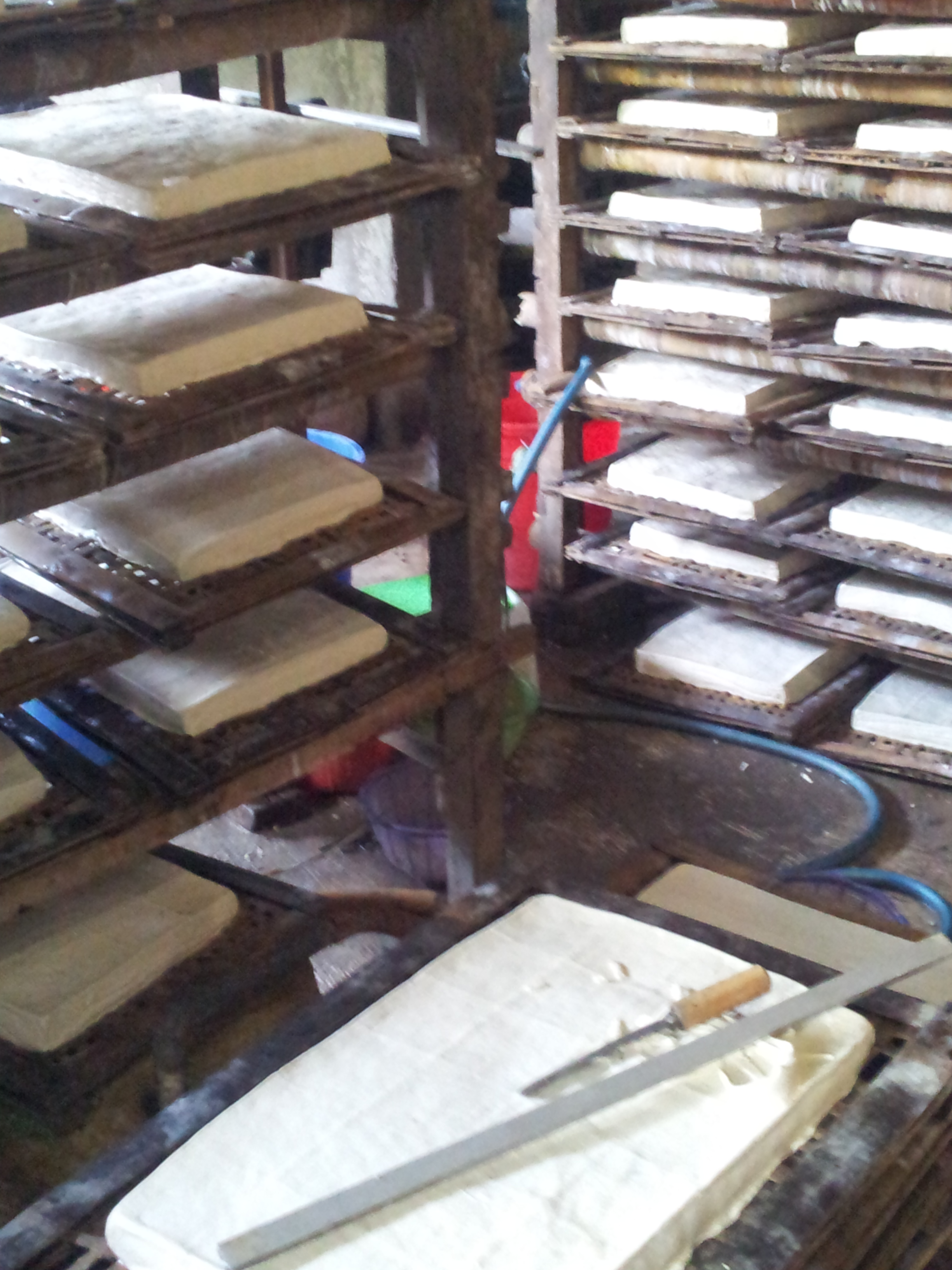
Firstly - Cook the ground beans and add coagulant

Firstly – Cook the ground beans and add coagulant (great word!)

Tahu (tofu) is a staple in Indonesia, as well as Tempeh (more to come of that in following posts).  Many people in the countryside cannot afford to eat meat regularly and it seems that tofu and tempeh fills the gap.  Indonesians love it and it is available everywhere, mostly in little stalls selling it as a deep fried snack with a cup of Jasmine green tea.  We’ve so far eaten it many ways and have gobbled them all with glee.  The tofu is generally given a quick fry in coconut oil before being re-cooked and the tempeh is regularly served after being simmered with cane sugar.  Sticky and sweet.  In many ways, eating tempeh and tofu in Indonesia is a little like eating Focaccia and Pasta in Italy, this is it’s land.  Where it is from.  There is something intangible there that cannot be recreated.

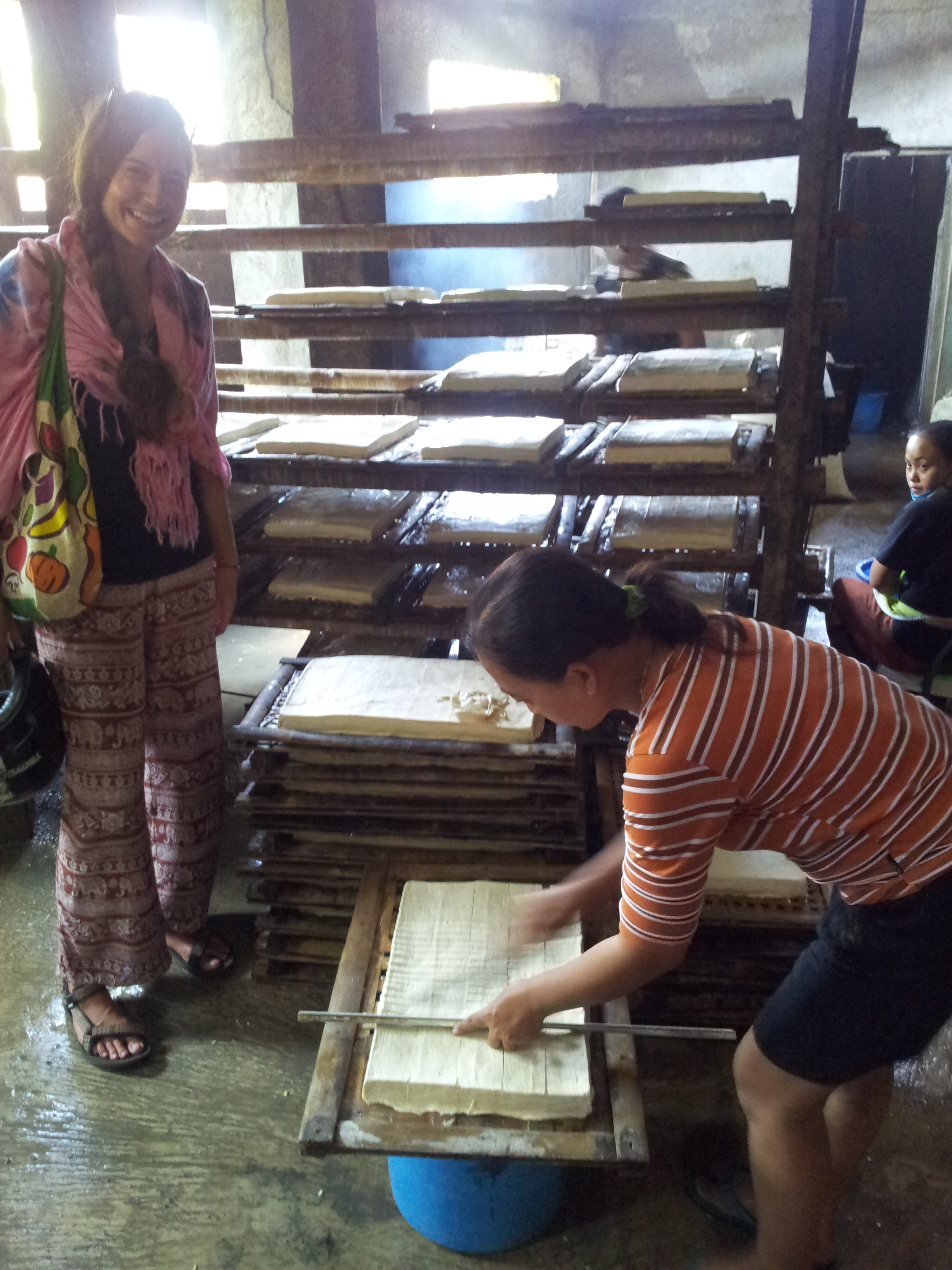
Put into moulds, then leave to dry on racks

Put into moulds, then leave to dry on racks

The tofu kitchen was actually a mini countryside production plant.  Generations of the family were lending a hand as Grandmother supervised.  For those who know the process of tofu making, it is the same as you’d do at home, just a larger scale.  They made what we’d call ‘firm’ tofu in the UK and sold it straight up cubed or gave big chunks a couple of minutes in very hot coconut oil to crisp up and then stored the finished tofu in water.  All of the heat used was via wooden braziers, the frying pan was heated using a large pile of wood chips.  Very, very hot work but the aromas were a delight.

Chop it up (Jane slightly assisting)

Chop it up (Jane slightly assisting)

The family didn’t speak English and were a little shy.  Our two scrumbled pages of Indonesian and a few sentences got us somewhere, but two big gangly exciteable tourists poking about your work place is generally a little unsettling.  They were absolutely lovely and we got to taste the tofu at each process and it was excellent, as you’d expect.  One thing that I did find surprising is that the soya beans used were from the USA.   I know that the US grows vast quantities of soya beans to feed their insatiable appetite for beef, but I did not imagine that some of it would be feeding the people of Java!  I can only imagine that its cheaper than local soya beans which just seems bizarre, but understandable with our current methods of food production and distribution.  Organic tofu this was not!  Otherwise, this method of making curd from warmed bean milk is completely genius and has long been established (Han Dynasty, China, over 2000 years ago) as a vital way to get nutritious, protein-rich food into diets.  It’s also utterly lovely stuff.

Bubble, bubble......man, this pan was smokin'

Bubble, bubble……man, this pan was smokin’

This was our first time seeing tofu being made in a traditional way and the family had been making the local villages tofu for generations.  It is such a privelege to be able to travel and investigate the food that we love.  Our connection with and understanding of what we are eating grows and we can find new found enjoyment in the wonders of global cuisine.  We’ll never look at a lump of tofu the same again!

PS – We’d love to tell you the name of the tofu village, but we were scooting all over the place and had no idea where we really were.  It’s our little secret, somewhere near Karang.  We’d also just had a jug of thick black coffee from Papua New Guinea which gave us some kind of joy jitters; laughing, jabbering, sweating, dazed, frantic, dry mouth……you know how that goes.

All wood fired in these parts

All wood fired in these parts

Categories: healthy, photography, Travel, Vegan | Tags: , , , , , , , , | 6 Comments

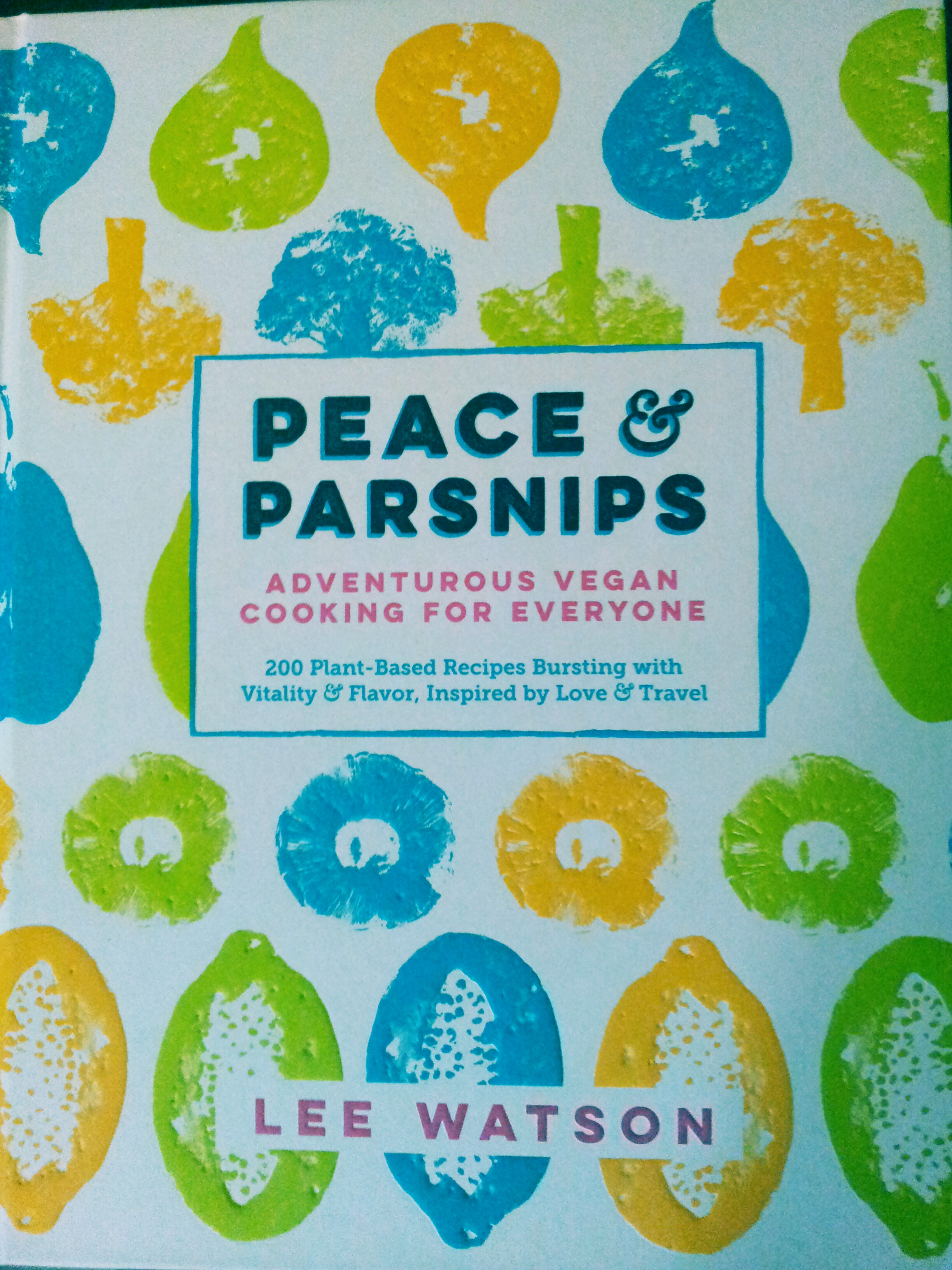
Peace & Parsnips coming to the USA soon!!! Adventurous Vegan Cooking For Everyone – Reviews + release date

Peace and Parsnips comes out soon in the USA:)

Peace & Parsnips to be published soon in the USA:)

Not long now!!:)

It’s been over a year since Peace & Parsnips was released in the UK and now its off for an adventure over in the USA!  How cool!!

It will be published on 31st May and I’ve just had a peek at an advanced copy of the U.S. edition and its looking totally awesome!  I had to share.  It’s still bursting with over 200 plant based recipes packed with vitality and flavours.  More about the US version here.

Loads of super tasty, healthy, wholefood, vegan recipes for everyone!!

Loads of super tasty, healthy, wholefood, vegan recipes for everyone!!

So far the cookbook has been really well recieved, with a load of great reviews and comments:

“Plant-based recipes from a fun-loving, world-wandering chef you’ll want to follow everywhere!”

“Now, Peace & Parsnips captures 200 of Lee’s extraordinarily creative recipes, all “rooted” in his love of life and his many travels—from the streets of Mexico and the food bazaars of Turkey to the French countryside, the shores of Spain, the spice markets of India and beyond! Twelve chapters burst with gorgeous photos (200 in all!), tempting us with Lee’s mouthwatering recipes—all meat-free, dairy-free and egg-free, and many gluten-free—that are brimming with goodness. Get set to savor:

Breakfast: Plantain Breakfast Burrito with Pico de Gallo
Smoothies, Juices & Hot Drinks: Healthy Hot Chocolate
Soups: Zen Noodle Broth
Salads: Fennel, Walnut & Celeriac Salad with Caesar-ish Dressing
Sides: Turkish-Style Spinach with Creamy Tofu Ricotta
Nibbles, Dips & Small Plates: Shiitake Tempura with Wasabi Mayo
Big Plates: Parsnip & Walnut Rumbledethumps with Baked Beans
Curries: Roasted Almond & Kohlrabi Koftas with Tomato & Ginger Masala
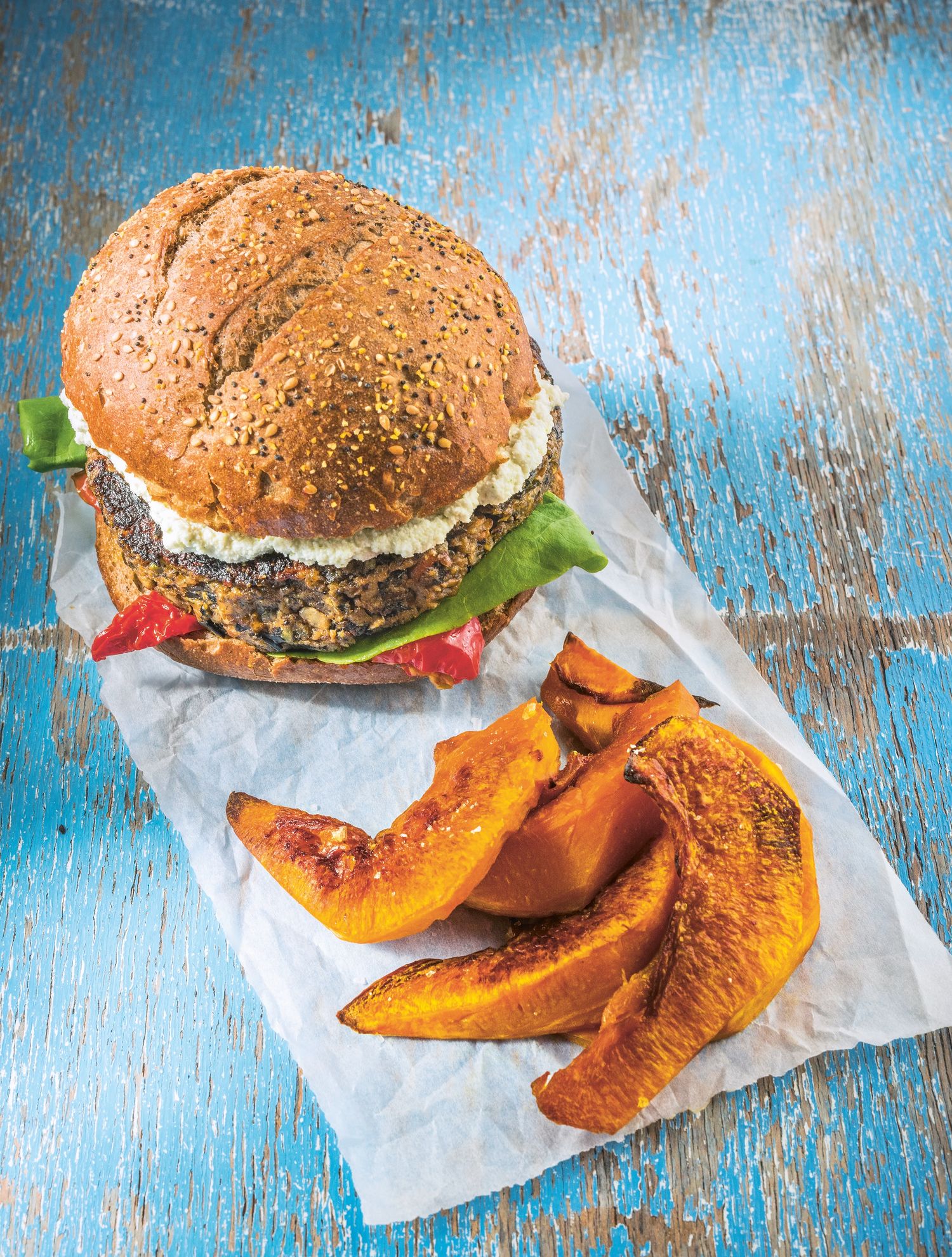
Burgers & More: Portobello Pecan Burgers with Roasted Pumpkin Wedges
Baked & Stuffed: Mexican “Pastor” Pie
Sweet Treats: Raw Blueberry & Macadamia Cheesecake; Dark Chocolate & Beet Brownies

“[Watson] sets out to prove that tasty vegan food isn’t an oxymoron.”—Publishers Weekly

“Filled with 200 vibrant, appealing plant-based recipes.”—VegNews magazine

“As a long-time collector of vegan cookbooks, I’m always looking for the next great vegan chef: one who thinks outside the box and uses ingredients in new and interesting ways. Chef Lee Watson is the next great vegan chef for me, and Peace & Parsnips is a sensational addition to my collection.”
—Del Sroufe, author of the New York Times-bestselling Forks Over Knives—The Cookbook

“With vibrant imagery and abundant creativity, Lee takes us on a rich adventure that proves that clean, vegan eating is anything but boring. Peace & Parsnips is a true celebration of plant-based possibilities, and the ‘life’ these foods bring to our lives.”
—Heather Crosby, author of YumUniverse: Infinite Possibilities for a Gluten-Free, Plant-Powerful Lifestyle and founder of YumUniverse.com

“Bravo to Chef Lee Watson who has us covered in this mouthwatering cookbook! Everything you need to satisfy your cravings is right here starting with breakfast and smoothies, to dips, soups, curries, burgers, and desserts. An excellent vegan pantry section is included to help guide beginners who are just starting to cook vegan.”
—Chloe Coscarelli, author of Chloe’s Kitchen, Chloe’s Vegan Desserts, and Chloe’s Vegan Italian Kitchen

Passionate about vegan food without being preachy, Lee Watson brings a singular sensibility to the vegan cookbook shelf. He has worked in restaurants for more than 20 years, has cooked on TV as one half of the presenting team on Fox’s Meat v Veg and helped open a restaurant on the beach in Murcia, Spain. Besides growing his own organic fruit and vegetables, Lee writes poetry and plays guitar, practices yoga, hikes and runs in the mountains, swims in the sea, surfs and enjoys nature. He lives “the good life” with his partner, Jane, in western Wales, where he works as a vegan chef at an idyllic retreat center in Snowdonia.

2016-04-26 17.10.56_1

Loving the US edition;)

It’s now ‘Adventurous Vegan Cooking……Inspired by Love and Travel’ which is brilliant and I think sums things up perfectly.

As an appetizer, I’ll be sharing recipes from the book here in the lead up to publication, so stay tuned.

The last year has been so amazing and I can’t wait to see the reaction of the U.S. to ‘Peace & Parsnips’!!

Categories: cookbook, healthy, Healthy Eating, Peace and Parsnips, Travel, Vegan, veganism | Tags: , , , , , , , | 2 Comments

Pea and Mint Hummus

Pea and Mint Hummus

Pea and Mint Hummus

Now that one half (me) of the BHK is rocking Spain, things are going totally Med for a while.  Fresh, vital, packed with sun, light and easy. Tapas basically. Little plates of flavour explosions that tantalise and don’t make you feel like a stuffed courgette. Perfect summer fare.

This is a nice twist on your standard hummus, plenty of lemon to lift it and enliven and a good hit of mint. It looks so vibrant, everyone will want a dip!  The great thing about peas is they freeze brilliantly and a I used frozen peas here.  When frozen, they don’t lose much of their nutritional value or texture, so its all good.

A hummus twist

A hummus twist

In Spain, the hummus wave is really hitting.  We went out with out mate in Madrid, a cool area and all the bars were serving hummus.  It seems like all the cool kids were at the crudites.  I think hummus is such a staple now in the UK, its nice to give it a twist now and again, although there’s absolutely nothing wrong with a well made ‘normal’ hummus.  I like mine nice and thick and creamy, with plenty of tahini.  I don’t think I’ll ever tire of it.

*Warning* – my posts from Spain may get a little erratic at times.  I’m normally tucked away in one of the the few local bars that have wifi.  There is a heady atmosphere of shouting and laughter and I’m no doubt sipping a ferocious black coffee.

Give peas a chance;)

2016-05-09 17.23.45

The Bits – Makes one big bowlful

480g chickpeas

275g peas

1 tbs dried mint

1 big handful fresh mint (finely sliced)

150ml olive oil

4 tbs tahini

1 1/2 medium lemons (juice)

2 big cloves garlic (crushed)

1 teas salt

50ml chickpea cooking broth


Do It

Place all ingredients into a blender and blitz until nicely smooth, drizzle in the chickpea broth (or water) until you get the consistency you like.  Remember that the hummus will thicken up in the fridge.  Check seasoning and served with a crazy array of chopped vegetables, flatbread slices, oat cakes, whatever tickles your fancy really.

View from one of the local interent hubs/ bars

View from one of the local interent hubs/ bars.  Life’s a long beach!

Categories: healthy, photography, Recipes, Snacks and Inbetweens, Summer, Travel, Vegan | Tags: , , , , , | 7 Comments

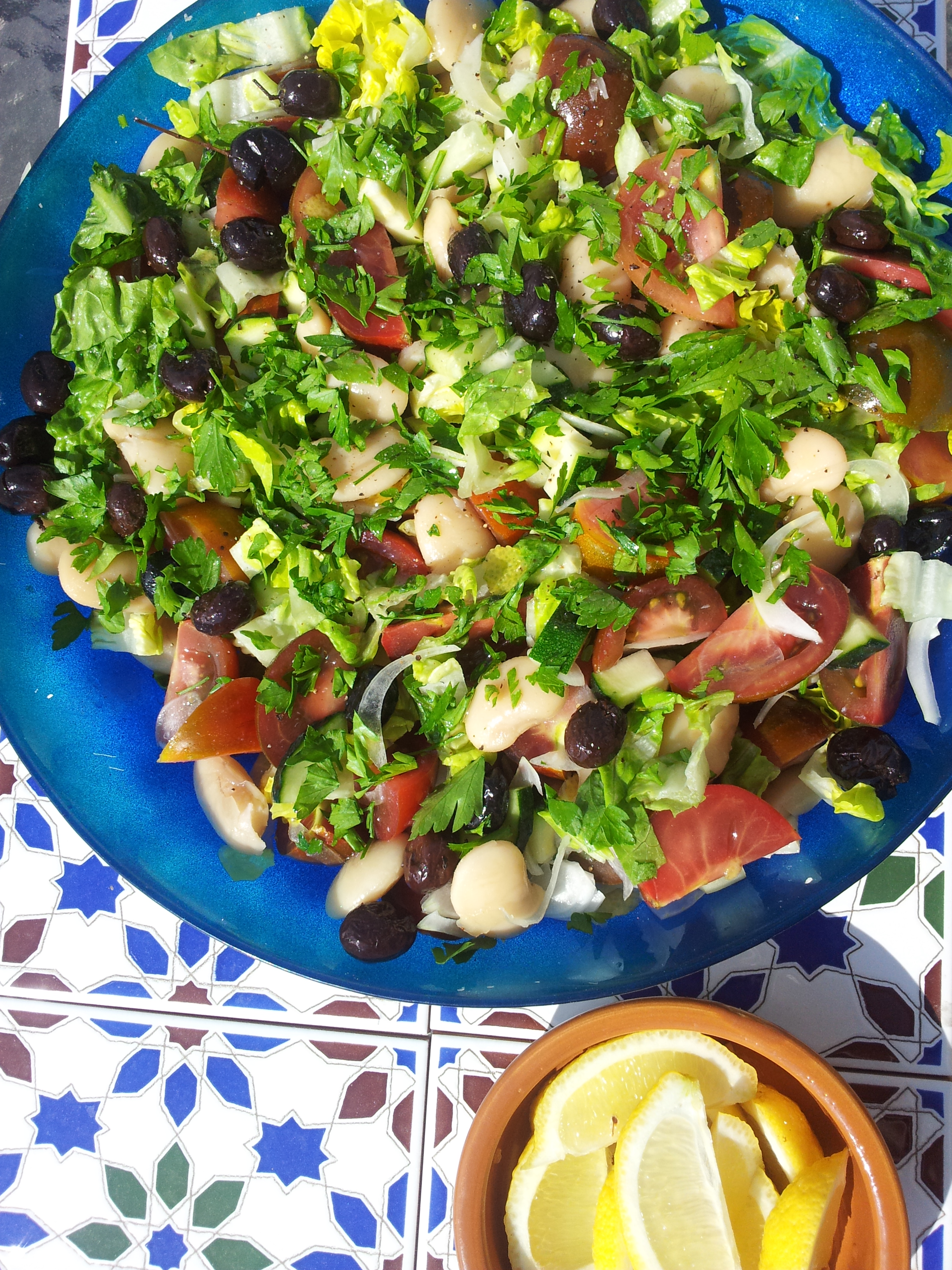
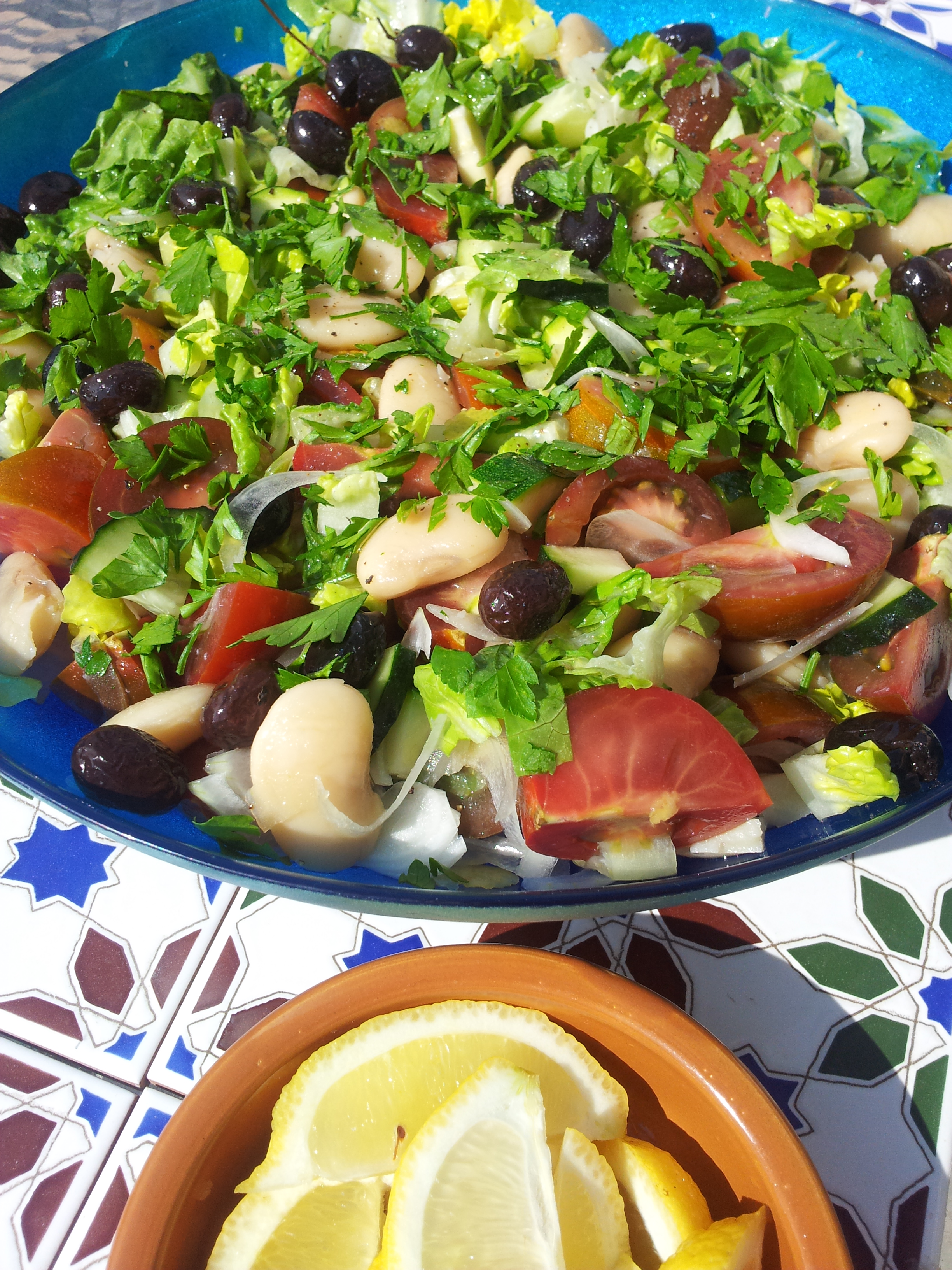
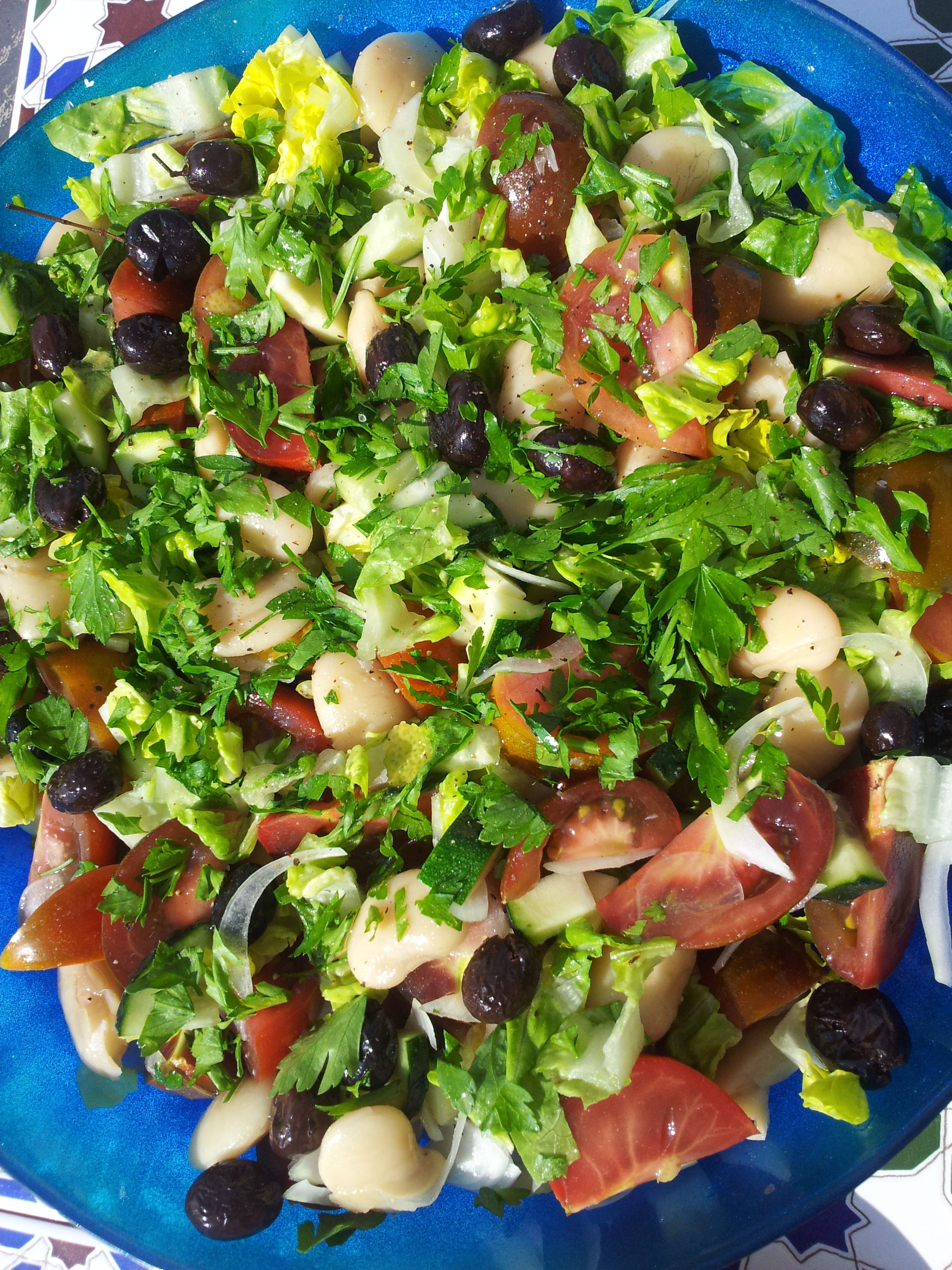
Butter Bean, Lemon and Black Olive Salad – A Real Taste of Murcia!

Butter Bean, Lemon and Black Olive Salad

Butter Bean, Lemon and Black Olive Salad

A simple sunshine salad which makes a great quick summertime lunch.  Ideal served as a side or starter, add some chunky croutons or toasted nuts for a more substantial dish.

The sun is coming and with it comes sprouting a host of beautiful fruits and vegetables. Summer is an exciting time of year, we can finally don shorts again and be collectively surprised at how white our feet are! The flip flops are out in force, maybe a vest and we’re into the garden with salads and fizzy glasses. Certainly in Spain, salads are an every day delight.

There is a global constant that baffles me. You visit local markets and shops (this does not apply to the sub-Saharan region) and there are a wonderful selection of fruits and veggies displayed. You then go to the restaurant next door to find that none of the lovely local fruits and veggies are present on the menu. It’s a strange old situation. The world is addicted to potatoes and tomatoes it seems. Murcia is similar. Although this is the ‘garden’ of Spain, and possibly Europe, a Murcian salad consists of onion, tomato and some black olives (plus tinned tuna if you’re particularly unlucky). This is my version of the local salad using things we can all get our hands on.

You can’t just throw things into your finest salad bowl and expect magical results, salads need a little thought. There’s a balance there. I’d say always gently handle and chop your ingredients and toss them together with care. You want a nice combo of flavours and textures, without over doing it. Salads are our chance to showcase amazing produce and whenever possible, lets buy good stuff for our salads. You might be able to hide vacuous tomatoes in a stew, but in a salad, they just look so lame.

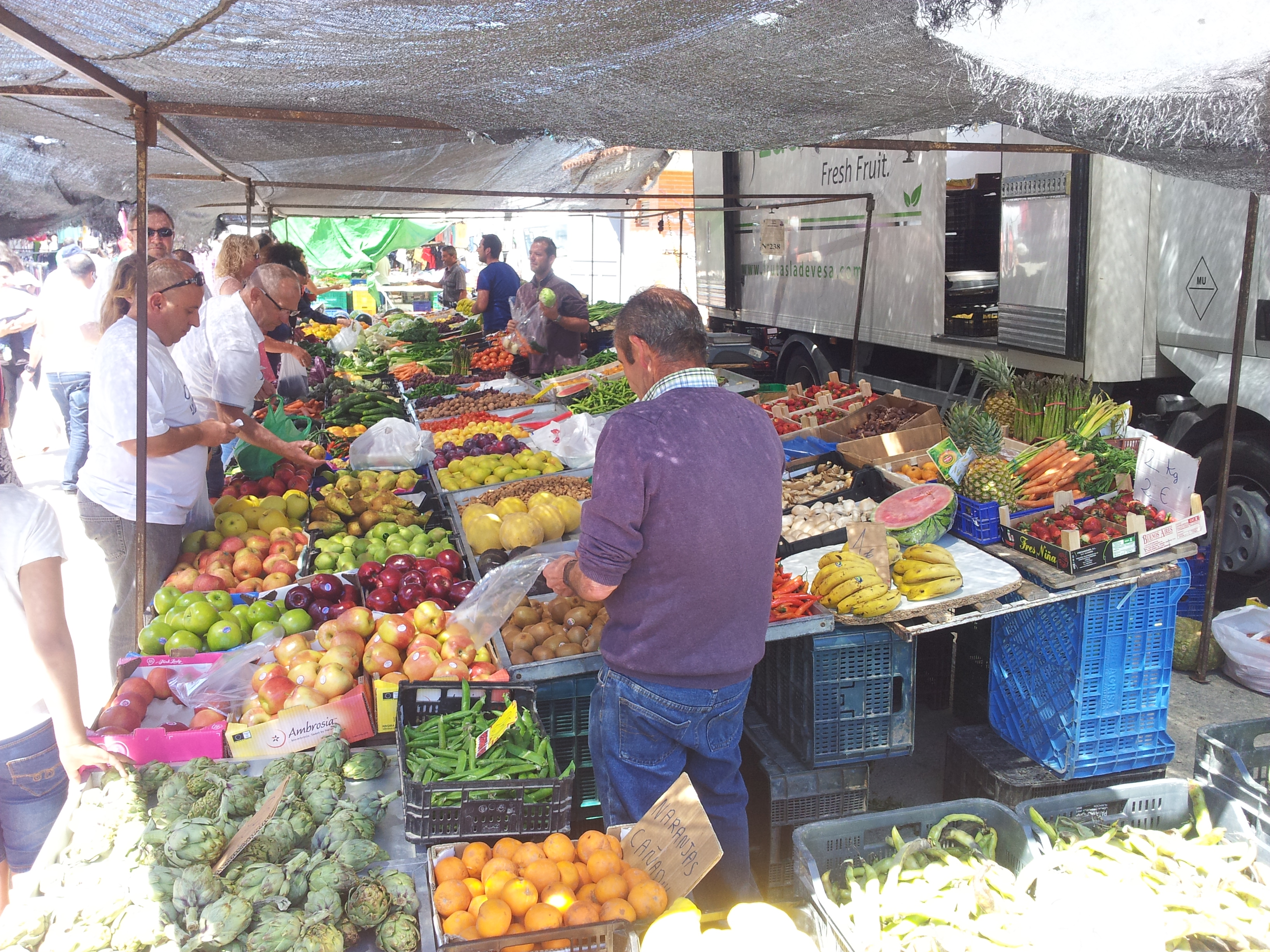
Puerto Mazarron market in full swing

Puerto Mazarron market in full swing

DOWN AT ‘EL MERCADO ESTUPENDO’

I’ve just been down to the local Sunday market here in Mazarron and beeeee jeehzus there is a startling array of amazing produce at the minute. Piled up like technicolour forts; melons like beachballs, bewildering varieities of tomato action, gangs of crimson peppers so deep and vivid, every conceivable shade of olive and crispy, fresh donuts (churros). Well, they seem to balance up all the healthy veggie behaviour. Spain is hot in weather and generally, super chilled in attitude. My kind of combo. ‘Manana!’ (tomorrow) is the Murcian moto. Their crest is probably a tranquil terrace scene, but I can’t verify that. Today is for enjoying…..

I rock up mid-morning just after the donut breakfast feast that’s washed down with goblets of brandy or thick coffee (maybe beer) sometimes a combination of them all will lashing of condensed milk and randomly, nutmeg. It’s a coffee called an Asiatico and is more like several desserts in a small glass swimming in a few shots of black espresso. If you’re lucky, you can score a fresh orange juice, but expect at least two funny looks as you make your way back to a wobbly plastic chair in the sun. Sunday is a good day here.

There is a whole host of other items sold at the market; counterfeit cd’s, plants, leggings, trees and the occasional pot or pan or pot plant. There is also a very cool pan pipe band from Peru who belt out all the classics. I must say, I just focus on edibles. I have a routine, I sweep past with an empty backpack, the first pass. I am above temptation. I don’t buy anything. This is a strict regime, fact finding, and essential for quality control and price comparison. There is no Asda price in Murcia, you’ve got to do the leg work and have hawk like instincts. Bargains are fleeting and sometimes well disguised.

I asses the form and then stop for a well earned cafe americano (sometimes plus a few crispy donuts). If I don’t have donuts, the lady will feel sorry for me and give me some anyway. Older ones from the bottom of the pile. A donut constant that I go with. Then the fun begins. I have pockets of small change and throw myself into the crowds of haggling Spanish and Moroccan housewives, all at least half my size and double my strength, who posses pin sharp elbows. Dead legs and worse have been known around the olive stand and especially at the bargain tomato family and always at the toothless apple dude.

Tomatoes - so many new types to try in Murcia

Tomatoes – so many new types to try in Murcia

The olive stand is a piece of work, ran by three generations of a family. It seems they’ll pickle or preserve anything going. Capers, caperberries, garlic, cucumbers, pink pickled onions the size of a cricket ball, the olives are pretty hot too. You’ll always get a few freebie tasters if you offer equally confused and intrigued expressions. Have you tried a purple olive? I went for some bitter bright green local olives today, they love their bitter olives in these parts, stuffed with lemon rind, minced onion and rosemary. Quite a thing I can assure you.

I know each stand intimately by now, after ten years, I’m one of the villages most well schooled veg selector. They all have their stregths and weaknesses and I try to spread the wealth (amounting to a few euros) around. I’d say on average, the fruit and veg here is at least 1/3 price in a UK supermarket. The Spanish supermarkets also charge more than Mazarron market. The market shifts from town to town, four days a week, I’ve been to each location but the Sunday one is the best. People are letting there hair down and there is a sense of celebration, most of the stall owners clutch a cold can of beer, churches occasionally ring bells and you’re never far from a chuckle or guffaw.

It’s a tough old life in Spain guys!! I’ll keep the sunny plant-based correspondence flowing. Here’s what I did with todays haul.

Mazarron sunsets are regularly a bit special

Mazarron sunsets are regularly a bit special

Recipe Notes
For a more filling salad, drizzle some bread with olive oil and toast under a grill. Roughly chop up and toss in a little more oil, a pinch of salt and a few pinches of dried herbs like oregano and thyme. Scatter over the salad before serving.

Pickled garlic is not that easy to find but it is a superstar ingredient. Use a couple of cloves of fresh garlic instead, it’s worth noting that the flavour is different, pickled garlic is sweet and mild tasting pretty well pickled! I find it quite addictive and sometimes just eat it straight up, I find its quite nice served with nibbles.

I find the lemon and a good extra virgin olive oil is more than enough dressing wise.

Spain boasts very fat and creamy butter beans. Seek out some beauties for this salad, they are one of the highlights.

Using pitted olives is a good idea.  An unexpected olive stone is always an unwanted crunch.

Great with some toasted croutons or a handful or toasted almonds

Great with some toasted croutons or a handful or toasted almonds

The BitsFor 4 as main course, 6-8 as side salad/ starter

500g cooked or 2 tins butterbeans (the fatter, the better)
1 small sweet onion or 3 spring onions (finely sliced)
6 medium sized tomatoes (ripe and sweet)
1 handful pickled garlic cloves (roughly chopped)
1/2 courgette (diced)
1/2 cucumber (diced)
1 head baby gem lettuce or similar (sliced)
2 big handfuls black olives

1 handful parsley (finely sliced)
Extra virgin olive oil
1 lemon (juice and zest)
Salt and pepper

Do It
Place all ingredients in a large salad bowl, drizzle with a little olive oil and the juice and zest of one lemon. Toss gently together with your hands.

Scatter over the parsley, some salt and pepper and croutons if your using them. Serve with more wedges of lemon if you fancy a little more zing and extra virgin olive oil for drizzling.

2016-05-08 17.05.07

Categories: gluten-free, healthy, Healthy Eating, Lunch, photography, Recipes, Salads, Side Dish, Summer, Travel, Vegan | Tags: , , | 4 Comments

Pablo’s Perfect Pancakes plus my Top 5 Pancake Tips

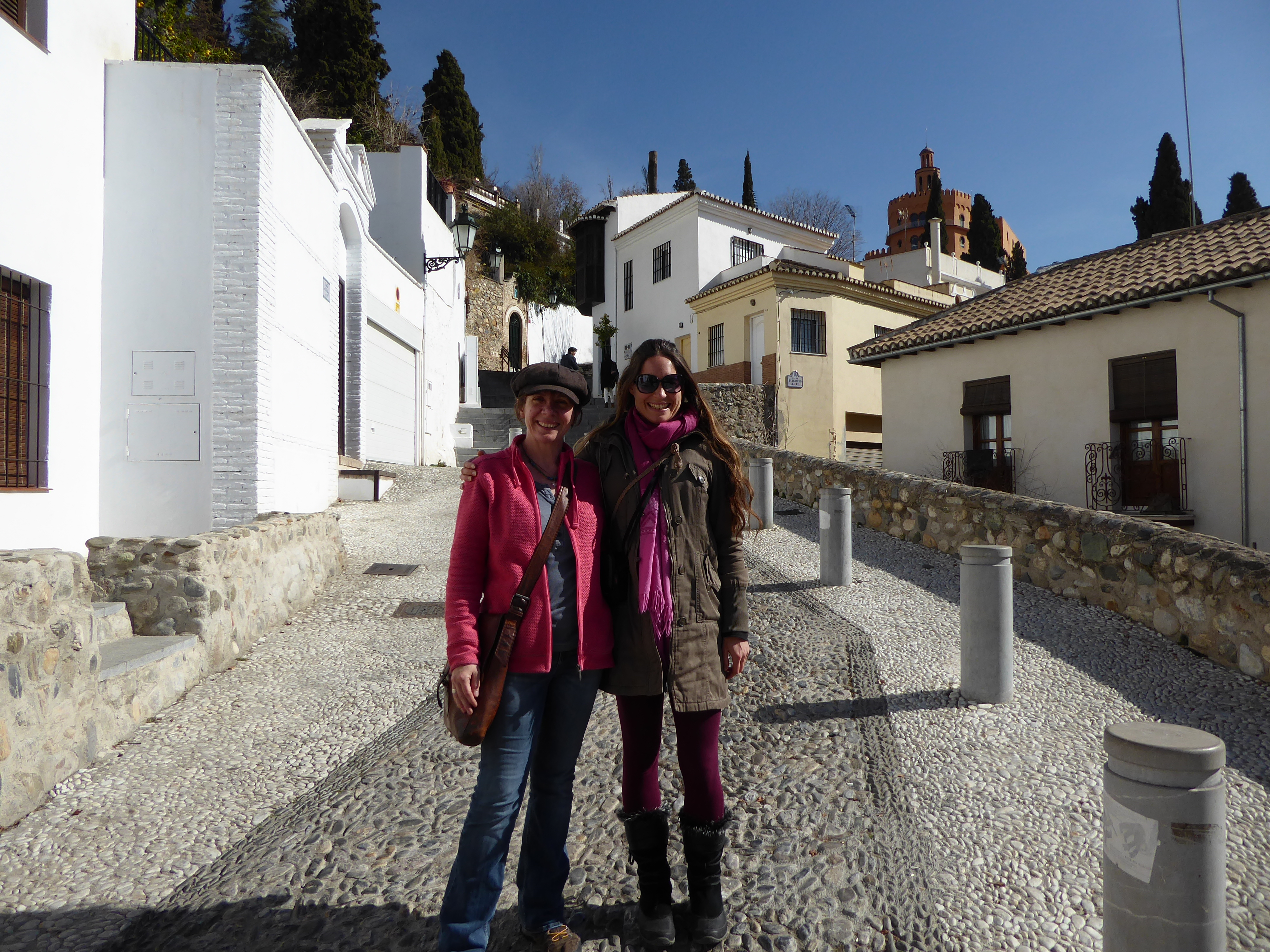
Jane and our amiga Rach in the backstreets of sunny Granada. Yesterday.

Jane and our amiga Rach in the backstreets of sunny Granada. Yesterday. I think they went to the Alhambra later…..Que vida!

It may have been around a year since you last made pancakes, don’t fret a jot, we are here to ease you into an evening of perfect flippin’ and crispy edged perfection.  Jane has popped over to Spain and was last night giving this pancake recipe a dry run in the back streets of Granada (very nice indeed) whilst I kept my head down in the Beach House avoiding storm Imogen (nicely named).  So, we’d like to share one of the easiest ways to make the perfect pancake and a few key tips to ensure pancake paradise is yours……

Pablo (or Paul to some) is my sisters newly crowned husband.  I’m still getting used to the new title.  Pablo is a passionate cook and regularly comes up with sensational dishes, over Christmas, one that stood out for the whole family was Pablo’s perfect pancakes.  You could really wish for no more in a pancake recipe.  This is as easy as it gets, but the outcome is light, fluffy and hopefully, crispy around the edge.  Perfect for pancake day, or any day for that matter.

Pablo at the wedding party with our mate Nick

Pablo (right) at the wedding party with our mate Nick

I wish we ate more pancakes in Britain and didn’t reserve them for one night of frantic flipping.  I think our nations happiness index would leap with an increase in pancake munching, they are so fun and versatile; sweet or savoury, thick or thin, wholegrain and nutritious or light and white…….we all know how we like them.  I like mine with a fruity sauce or something rich like this wonderful coco and peanut sauce I just came up with.  Jane is a purist and opts for a squeeze of lemon and a scattering of sugar.  Each to their own!

If you'd like pancakes like this, check out these tips...

If you’d like pancakes like this, check out these tips…

TOP 5 TIPS FOR PERFECT PANCAKES

1. Don’t over oil – lightly grease your pan and remove any excess oil with a paper towel.

2. Practice makes perfect – The first couple of pancakes may be a little strange, but you’ll get the hang of it!

3. Regular heat – Consistent pancakes need a consistent temperature. Warm up your pan on medium heat and turn down the heat slightly if needed.

4. Flippin’ Marvellous – Make pancakes small to ensure an easy flip.  Always loosen run a spatula under the pancake before trying to flip, otherwise you may pull a muscle and generally look a bit daft as the pancake clings to the pan.

5. Portion control – use the same amount of mix per pancake.  Sounds obvious, but for best results, keep a measuring cup handy and add the same amount of batter to the pan.  They’ll take the same length of time to cook, look great and there will be no arguments over who got the runt of the litter!

And voilà! Perfect pancakes every time! 

Right………..lets rock a perfect Pablo pancake!

I use cups here because I love America and it cuts out unnecessary scale faff.  These are not supposed to be huge, pan filling pancakes.  They are harder to handle.  These are roughly 6 inches in diameter, light and fluffy.  More like an American style pancake than a French style crepe.  Thats how Pablo likes ’em……

The Bits  

Dry

1 1/4 cup strong white flour/ all purpose flour

2 teas baking powder

1/2 teas salt

2 tbs light brown sugar

Wet

1 cup (250ml) non-dairy milk (we use soya)

1 tbs oil

2 tbs water

(should equal 1 1/4 cups in total, if not, add a splash more water)

Jane flippin' in Spain

Jane flippin’ in Spain

Do It

Add the wet ingredients to the dry ingredients and whisk until all is combined.

(Check the top 5 tips above to make sure you are fully prepared for pancake paradise……)

Grab a medium sized frying pan (preferably with a nice thick bottom on it) and warm on medium heat.  Add a couple of drops of oil, coat the pan, then add roughly 1/3 cup pancake batter.  Let it naturally form a nice circular shape, leave to cook for 3 minutes, then flip over using a spatula to loosen it from the pan.  Cook for another 2 minutes.  If the colour is too dark or too light, check the heat and/ or cook for longer/ shorter with the next one.

Like I said, the first pancake at least, is a loosener, a warm-up.

Serve straight from the pan with accompaniments of your choice.  There are some ideas on our last post Blender Banana and Pecan Pancakes with Chocolate Sauce for sauces etc.

Rach presenting one of Pablo's finest - Happy Pancake Day!!!!

The delightful Rach presenting one of Pablo’s finest – Happy Pancake Day!!!!


Categories: Breakfast, Healthy Eating, Recipes, Travel, Vegan | Tags: , , , , , , | 4 Comments

Lazy Lahmacun – Vegan Turkish Flatbread Wrap

timthumb-2

Lazy Lahmacun – Vegan Turkish Flatbread Wrap

We absolutely love Turkey and it’s diverse, veggie-friendly food.  We have so many happy and tasty memories about our trip there a couple of years ago.  We will be sharing more Turkish dishes soon as they are firmly on the menu at home and at work; Pide, Imam Bayildi, Shakshouka, Corba, outstanding salads, wicked coffee…….the highly delicious list goes on and on.  If you are vegan/veggie/ or just love amazing food, Turkey is calling to you!

Three of my favourite things are travelling, eating and history (the order changes daily).  Turkish is a feast on all these fronts.  We did not eat Lahmacun in Turkey, it was always non-veg friendly, but I vowed to experiment with it when I returned home.

P1100235

On a walk – Sunset in Cappadocia, Turkey

Travelling inspires so many of the dishes I cook, influencing recipes, my constantly evolving style of cooking and the way I prepare food.  I love wandering the world, soaking up all the flavours and techniques and then giving them a blast next time I’m in the BHK (or just any random kitchen for that matter).  It is what inspires and challenges me to be a better cook and take on different influences.

We travelled around the south of Turkey in a clapped out car, mainly camping, taking in some of the outstanding ancient sites and spending as much time bobbing around in the azure Med as possible.

We then spent a couple of weeks working on an organic farm where we cooked with the local veggies, normally without electricity, power or water.  It was a great challenge!  At the end of meal times, we went across and fed the scraps to the giant resident wild boar.

P1100227

Jane in Cappadocia

We bought produce from the local market in Burdur (Central Turkey, proper middle of nowhere.  Beautiful people and landscape).  The farm made its own rosewater, ran by a vet, enviromentalist and animal lover, they even cared for rare eagles, wild boar and wolves (yes, grey wolves! Normally injured by hunters).

We especially loved the weekly trip to the markets and have never seen such a fine display of olives.  Many stalls were like works of art, colourful patchwork quilts of olive perfection.  Have you tried a pink olive?!  One of our most random memories of Turkey was hitching a rid in a ramshackled sewerage wagon.  We were stuck in the middle of the mountains and it was a lifesaver.  Very fragrant.

p1110162

Outside the Blue Mosque – Istanbul, Turkey

The markets of Turkey were always overflowing with beautiful produce.  When we travel we generally prepare many of our meals, saves money and ensures we’re keeping this gloriously vegan and tasty.  Everything seems to grow well in Turkey and Turkish people have a real passion for produce, they absolutely love their veggies, especially local favourites like aubergines and pomegranates.  Here’s what The Guardian wrote about Istanbul’s markets, I always feel very at home in a food market, you generally see people enthused and passionate about food, it’s a revealing window into local culture.  I also find many of the very freshest and most authentic restaurants and food vendors around markets.  They’re the real deal, where the locals flock for delicacies.

rsz_p1090271

We camped on a beach down south, on the Med coast, under an olive tree and did lots of this……somewhere near Antalya, Turkey

Lahmacun is normally made with minced beef and is served all over Turkey but we’ve packed loads of plant-based gorgeous-ness into our version and the flavour is epic.  This is another recipe plucked from our recent cookbook ‘Peace & Parsnips’.  You can eat it like a pizza or wrap it around some salad leaves, pickles, onions etc….either way, you’re in for a totally Turkish treat.  I use shop bought ‘lazy’ flatbreads here, it would be awesome on your favourite home made flatbread of course.  In Turkey, they may even be made in a blistering wood fired oven.

One of our favourite 'Lokantasi's' In Istanbul. Cheap and filling with loads of veggie options. One of our favourite ‘lokantasis’ (restaurants) in Istanbul, in a winding little alley close to Spice Market. Cheap and filling with loads of veggie options.

Turkey really captured our hearts, from the vast expanses of emptiness in the heart of Turkey, the mountains of the East and of course, the glittering Mediterranean coastline.  It is a truly fascinating place expressed perfectly by the diverse and rich cuisine.

Afiyet olsun! (Enjoy!)


————————

Lazy Lahmacun – Vegan Turkish Flatbread Wrap

The Bits – Makes 4

  • 1 large aubergine
  • 1 red pepper
  • 3 tablespoons olive oil
  • 1 small onion
  • 5 cloves of garlic, peeled and crushed
  • 150g mushrooms, sliced
  • 1 teaspoon ground coriander
  • a large pinch of ground cinnamon
  • ½ teaspoon ground cumin
  • ¹⁄³ teaspoon chilli powder
  • ½ teaspoon sea salt
  • ½ teaspoon black pepper
  • 1 teaspoon dried basil
  • 2 tomatoes, grated
  • ½ a handful of fresh flat-leaf parsley, chopped
  • 4 wholewheat flatbreads
  • juice of ½ a lemon For the topping
  • 1 x lemon tofu feta (optional)
  • 5 tablespoons cashews, roughly chopped
Do It

Preheat the oven to 200°C/gas mark 6

Pierce the aubergine many times with a fork, then put it on a baking tray with the red pepper and rub them both with olive oil. Bake in the oven – check the pepper after 15 minutes, then turn them both over with a spatula and bake for 15 minutes more. Take out the pepper and leave the aubergine in for another 10 minutes. They should both be soft and well coloured. Deseed the pepper, trim the aubergine, and roughly chop them both.

While that is going on, on a medium-high heat, warm 1 tablespoon of oil in a frying pan. Add the onions and fry for 6–8 minutes, then add the garlic, mushrooms, spices, salt and pepper, and continue cooking for 3–4 minutes. Add a splash more oil if needed. Now add the red pepper and aubergine, with the basil and tomatoes, and warm through on a low simmer for 6–7 minutes more. Stir in the parsley, cover and keep warm.

Your oven should still be rocking. Bring it back to 200°C/gas mark 6, lay out your flatbreads on baking trays and brush them with olive oil (especially the edges). Spread the vegetable mixture thinly over the bread – 4 tablespoons per lachmacun is normally cool. Top with cashews and tofu feta (if you’re using it) and pop into the oven for 12–15 minutes.

Serve

Drizzled with a little more olive oil and even a little squeeze of lemon juice. Depending on the size of the flatbread, this dish makes a great little or big plate and can be cut into wedges to be served as an appetizer or rolled around some salad. Raw cashew hummus (see page 160) is a perfect accompaniment.

p1100414

Turkey really took our breath away

Foodie Fact

Aubergine (or eggplant, brinjal….) is a nightshade, along with tomatoes, potatoes and peppers.  It has not always been appreciated as a delicious vegetable, for centuries in Europe it was a purely ornamental plant and was even said to cause insanity and leprosy if eaten!  Aubergine is a good source of fibre and minerals, the skin is high in anti-oxidants and it is low in calories.


Categories: Healthy Eating, Lunch, Nutrition, Peace and Parsnips, photography, Recipes, Travel, Vegan | Tags: , , , , | 4 Comments

Aviyal – Keralan Coconut & Vegetable Curry with Watermelon & Pineapple Salad

Aviyal - Keralan Coconut and Vegetable Curry with Pineapple and Watermelon Salad

Aviyal – Keralan Coconut and Vegetable Curry with Pineapple and Watermelon Salad

A simple, light summer curry with all the joys and sparkling nutrition of coconut and seasonal vegetables.  This is a recipe straight outta Peace & Parsnips and was recently featured online here in Reveal Magazine.  Recipes like this are a wonderful reminder for me of special times spent travelling and cooking in India.  Kerala is surely one of the most beautiful corners of the planet and its food is surprisingly vegan friendly, diverse and really healthy.

This is a recipe I learnt from my friend Narendra on the patio of a wooden hut in a yoga retreat, rural Tamil Nadu.  Although this is (probably) a traditional Keralan style curry, they love it in neighbouring Tamil Nadu also.  I had been eating it regularly in India and was so pleased when Narendra took the time to sit down with me and finally get a recipe on paper.  He taught me his families traditional recipe, from the ancient temple town of Madurai, and it was pleasing simple.  Like many Indian family staples, the difference is in the freshness of the ingredients; the vegetables and the spices.  Most Indian households will have what I call a ‘Sabji’ (Vegetable) man.  Just like a milk man in the UK, he wanders the streets in the mornings selling his wares from a cart, shouting up to the windows of house wives what’s good , freshest and of course, on special offer!  Fresh vegetables are everywhere in India and veg markets are frequent and always interesting to wander around and pick up some funky looking spice or odd looking root (maybe a mooli or two?).

The beaches of North Kerala are stunning!

The beaches of North Kerala are stunning! Kannur

Although this is a simple recipe, cooked most days in Keralan homes, it adapts well to the changing seasons in most countries.  Any variety of vegetables can be used in its preparation and Aviyal lends itself perfectly to British/ European veg.  In fact, Narendra’s grandmother used to call things like carrots ‘British veg’ as they we only grown and popularised in the time of the Raj, when much of Indian cooking as we know it was altered and influenced by British tastes.

The ladies at Varnam Homestay, Wayanand, Kerala - Lunch prep in full swing

The women Varnam Homestay, Wayanand, Kerala – Lunch prep in full swing

I was lucky to cook in a beautiful kitchen near Wayanad National Park, Northern Kerala with some amazing ladies.  Here I learnt some proper Keralan classics and top tips that you can only learn by actually getting your hands on the pots and pans.  I loved the way that they used very roasted coconut to add depth and flavour to sauces, especially when used with piles of freshly grated ginger.  I also loved cooking with a wide range of local produce, all of their dishes contained only ingredients from their own land.  Spices and all!  They even grew their own coffee and we were inundated each day with fresh exotic fruits, many of which I’d never seen before.  Mangoes grew above the hammocks in the garden, guavas, green figs, coconuts, plantains……you can imagine, it was a bit like eden/ nirvana!

Cooking at Varnam Homestay, Kerala

Cooking at Varnam Homestay, Kerala

Aviyal is such a healthy, light dish, nothing like the rich and fiery curries of the much of North India.  Coconut is king in the south, making travelling around South India a foodie paradise for vegans.  Its up there with places like Thailand or parts of the Med for traditional vegan dishes.  Anywhere that the vegetable or coconut thrives, you find brilliant vegan dishes.  Vegan food is so creative and evolving all the time, but it is nice to find dishes on my travels that reflect a cultures heritage and history.  We’ve always eaten and enjoyed vegan dishes, we just don’t necessarily give them that name (which, for whatever reason, can put some people off).

Indian spices, down at the market

Indian spices, down at the market

The Bits – For 4
For the curry
•2-3 fresh green chillies
•2 big handfuls of freshly grated or desiccated coconut
•2tsp cumin seeds
•220ml coconut milk or unsweetened soya yogurt
•2 large carrots, scrubbed
•2 large potatoes, scrubbed
•1 large courgette
•6 fat asparagus spears
•2 green plantains, peeled
•200ml water
•1tsp ground turmeric
•1tsp of sea salt
•1 big handful of mangetout or green beans
•2tbsp coconut oil
•2tsp mustard seeds
•3tbsp curry leaves
For the pineapple & watermelon salad
•A small pineapple
•One third of a small watermelon (don’t bother deseeding)
•1 large cucumber
•1 small handful of fresh coriander, roughly chopped
•A pinch of sea salt
•A large pinch of chaat masala mix or black salt (optional)

Do It
In a pestle and mortar or a food processor, blend together the chillies, coconut and cumin seeds (if you’re using desiccated coconut, add 2tbsp of the coconut milk to make a thick paste). This is best done in advance and can be left overnight in the fridge to develop zing.

Cut the carrots, potatoes, courgette, asparagus and plantains into 2.5cm pieces. Heat the water in a large pan and add the turmeric, salt, carrots and potatoes. Bring to a steady boil, then lower the heat to a simmer and pop a lid on the pan. Cook for 10 minutes, then add the courgettes and plantains and cook for 10 minutes more, keeping the lid on.

Add the coconut paste to the curry with the coconut milk or yogurt and stir carefully to combine. Cook uncovered for 8-10 mins on a gentle simmer. Check that the carrots and potatoes are tender, then add the asparagus and mangetout and remove the pan from the heat. Cover, set aside for a few minutes.

Jane and I in the Yoga Retreat, Tamil Nadu

Jane and I in the Yoga Retreat, Tamil Nadu

Serve

Really simply, with steamed rice.  Keralans love their rice!  A crunchy salad is great as a side, exotic fruits work well here with Aviyal.  This is how they served it in the Yoga Ashram (where the food was excellent).

Foodie Fact

Coconuts are wonderfully healthy, containing high levels of Lauric Acid which is anti-fungal, anti-viral and anti-bacteria.  They also have the highest level of electrolytes known to man, making them perfect when exercising or when dehydrated.  In some parts of the world it is even used intravenously for the purpose of re-hydration.  Coconut can boost our metabolism and make our skin shine.

Keralan sunset

A Keralan sunset, Kannur

Categories: Curries, Healthy Eating, Peace and Parsnips, Recipes, Salads, Summer, Travel | Tags: , , , , , , | 2 Comments

Sweet Potato and Spinach Thoran (Keralan Stir Fry)

Sweet Potato and Red Pepper Thoran

Sweet Potato and Red Pepper Thoran

Do not be put off by the long list of ingredients, this is Indian cooking in a flash! Thoran is like a South Indian stir fry, very quick to get together and whip up.  Its one of those dishes that easily slots into the ‘staples’ category of your recipe repertoire.   Small efforts are rewarded with massive and delightful flavours.  Definitely our way of doing things.

The ingredients for this have been adapted to Wales, a subtle change from steaming, tropical Kerala.  I’ve still gone for some non-native ingredients, pepper and sweet potato, but swede and parsnips just don’t seem to fit the bill (although I did use them for a soup – coming soon……)

Thoran is what the Indians would call a ‘dry’ side dish, normally served with a saucy curry (like Sambar) and rice, some coconut chutney would finish things off like a tropical Keralan dream.  Thoran is cooked especially well in Kerala and Tamil Nadu and this part of the world is a vegans heaven.  There are very few dishes which are reliant on ghee (clarified butter) that dominates the cooking of North India.  In the south its all about the coconut and sometimes, if you’re lucky, the odd cashew.  The food is lighter and seems fresher, without the reliance on uber rich, spicy sauces (which I might add are extremely delicious).

Thoran is an essential part of a Sadya, which is basically a very elaborate South Indian Thali, normally served on a banana leaf (if you’re in the right joint) at festival times.  Sadya showcases the depth and diversity of Indian cuisine, the way for centuries it has been designed and modified to tantalise all of the tastebuds and senses.  Sadya will have dry curries, saucy curries, fluffy rice, crispy papads (poppadoms), sour chutneys, creamy/ herb based chutneys, smokey chutneys, banana chips, spicy pickles and normally a tamarind based soup (Rasam) to aid digestion of all of this.  In fact, a full on Sadhya served at a big festival can consist of around 28 dishes (some even go up to 60!)  I would have to say that to get the most flavour from your Keralan food, it has to be eaten with (well washed) hands.  Roll up your sleeves and dive in.  A Sadya sounds like an elaborate feast but its actually quite a normal meal, inexpensive and versions of it are served in modest restaurants all over Kerala.  I think we normally paid around one pound for an all you can eat Sadya.  Yes ONE POUND for all that deliciousness!  Welcome to India!  The dishes all come out in a specific order and a nice gentleman will come over and just keep spooning things onto your welcoming leaf.  It is quite a complicated process, but when you’re the recipient, you just scoop away and smile.

Trying to help, learning loads.....

Trying to help, learning loads…..

I have just got back from the Mother land and while I was there stayed in some amazing homestays.  I spent the first six weeks travelling from Delhi to Kerala with my Dad (see out blog ‘The Jalebi Express‘) and then we met Jane in Delhi and Jane and I travelled the Himalayas and spent time with the Tibetans up in Mcleod Ganj. Homestays are not normal in India, they vary greatly, some are just like hotels although many hotels in India can soon become something like a homestay.  If you hang around for a while, you are bound to get to know all the people that work there.  More so than in other countries.  Even in the heart of Delhi, I now know all the people who work in my favourite hotels, restaurants, shops and chai stands.

Whilst travelling around the spectacular North of Kerala we stayed at Varnam Homestay, just outside Wayanad National Park.  There, I had the pleasure of cooking with Beena (our host) and her amazing team of lady helpers.  Wayanad is tucked away in the northern tip of Kerala and is a stunning area, the flora and fauna are dense and spectacular; wild elephants and tigers roam the land and the people are gentle and very hospitable.  The way of life hardly wavers above a gentle amble.  Beena and Varghese our gracious hosts were amazing and could not have made Dad and I more welcome.  When I mentioned my passion for food and cooking they immediately roped me in to helping out with the next days lunch and dinner prep.  I learnt so much and was amazed to see their chopping skills.  You pull a plastic sheath over your index finger and use it as a mid-air chopping board.  The knives are sharp and occasionally you end up cutting through the flimsy guard.  Once the blood is stemmed, you carry on with a new colourful finger guard.  This of course never happens to the ladies.

The Varnam ladies get busy

The Varnam ladies get busy

We prepared many dishes, but the Plantain Thoran was one of the highlights, cooked over a wood flame stove with minimal fuss.  We also made a Keralan classic sauce, with highly roasted coconut and ginger as a base.   A very unique flavour and something I will be cooking very soon (I forgot the name, it may be called Inchi Curry – see here for a recipe).  Once i find a good supply of coconuts up here, our kitchen is heading towards Kerala again.

Varnam Homestay was set in some impressive farmland and forests.  The little huts are raised on stilts to ensure the farmers have somewhere to go when a tiger wanders by

Varnam Homestay is set in some impressive farmland and forests. The little huts are raised on stilts to ensure the farmers have somewhere to go when a tiger wanders by

Varnam Homestay is set in acres of its own land and we were served only ingredients that grew on their land, that included the rice, coffee, all the sensational fruits and vegetables and even milk (they had a few cows roaming behind the kitchen).  The family were so friendly and warm, Dad and I stayed an extra two days, mainly exploring the locals hills and testing out the hammocks for comfort and durability.  They all seemed to work well.  We also saw a tigers footprint, which looked fresh, but I am no expert.  It sounds like I’m belittling the whole experience but the food was a highlight and to be served only homegrown, was a rare and highly tasty treat.  Another wonderful aspect was the other guests, not something you can say in every hotel. They were such a good bunch from all around the world, we ate together on a large table and during the delicious meals,  very quickly became friends.  I think eating is the best way to meet new people, we all relax over a good curry!

Varnam's Plantain Thoran

Varnam’s Plantain Thoran

Indian food is mind boggling at times and can be complex, but that’s why I like Thoran, its cheap and quick.  The other wonderful thing about a dish like Thoran is it is there to use up any seasonal produce.  In Kerala for example plantains are a regular ingredient, as well as bitter gourd, yucca, yardlong beans, giant arums, red cheera and several different types of flowers.  Even banana flowers make a mean Thoran.  In Britain, you can opt for potato, green beans, carrots, I’d even go for asparagus.

Thoran is quick to cook and so easy to get together

Thoran is quick to cook and so easy to get together

The Bits – For 4 (as a side dish)
2 tbs coconut oil
400g sweet potato – or 1 big one (peeled)
1 onion (peeled)
1 large red pepper (deseeded)
(all finely diced)
4 large handfuls spinach leaves
1 teas mustard seeds
1 teas cumin seeds
1 handful curry leaves
2 dried chillies (cut down the middle lengthways)
2 tbs grated ginger
1 tbs turmeric
75ml water

Finish with……
1 massive handful grated fresh coconut (or desiccated coconut will do)
1 large chilli (finely sliced)
1 handful fresh coriander (finely chopped)

Do It

Thoran cooks quickly, so best have all your ingredients to hand and prepared.  Stay with the pan for most of the cooking time, stirring gently with a non-metal spoon or spatula.  I love this kind of cooking, its exciting!

In a large, heavy frying pan, preferably with a chunky bottom, warm your coco oil on high heat.  Add the dried chillies, mustard seeds, when the seeds pop a little add the curry leaves.  Fry for a minute and then add your sweet potato, onion and peppers, stir.  After a couple of minutes, add the ginger and turmeric and a little water if things begin to stick to the bottom.  Fry for a couple of minutes and then scatter the spinach on top and cover the pan with a lid.  Lower the heat a touch, leave to cook for five minutes.

Check that the sweet potato is softened, then stir in the grated coconut, fresh coriander and chillies.  Reserving a little of these for a final flourish.

Serve 

Spoon into a preferably warm and striking serving dish and sprinkle on your ‘final flourish’ ingredients.  Munch with relish and dream  of swaying palms and endless rivers of mango juice.  Check out those vibrant flavours!!

Sweet Potato and Red Pepper Thoran

Sweet Potato and Red Pepper Thoran

Foodie Fact

Sweet potato is packed with beta-carotenes.  In fact it is one of natures best sources of Vitamin A.  They also boast plenty of vitamin C.  Although SP’s are a starchy root veg, they actually help to maintain and regulated our blood sugar levels, mainly due to their high levels of dietary fibre.

One of the local residents, who was friendlier than he looked

One of the local residents, who was friendlier than he looked


Categories: Curries, Healthy Eating, Recipes, Travel | Tags: , , , , , , , , , | 1 Comment

A Taste of Goan Cuisine and Papaya Paradise


Papaya Paradise - Papaya, cashews and a drop of coconut milk.  A fruity delight.

Papaya Paradise – Papaya, cashews and a drop of coconut milk. A tropical tickle.

Paradise for me involves papaya, cashews and coconut. Maybe a beach and a few palm trees lolling in the background. Put all those in a bowl (minus the salt water, sand and chewy leaves) you are approaching my idea of a fruit-based nirvana.  We are in Goa and all of these things are plentiful, there are stalls that enforce coconuts on you with each passing, men gifting papayas to you on a regular basis and cashews, the size of small curved chipolatas, are sold for peanuts.  Also, it is not mango season in India, so there is no fruity conflict for me, the papaya reigns supreme.

Peter (the wonderful man who looks after the apartment we are staying in) gifted us the largest and ripest papaya I have ever clapped eyes on yesterday. Carving it is something like hollowing out a canoe from a large orange tree trunk. Peter obviously has a secret local supplier, I’ve never seen a papaya like this is the stalls by the side of the road. It would take up half the stall!

I am not sure if you’re going to be able to get a decent papaya in Europe and beyond. Maybe try a Caribbean or Asian shop, you know the one, the Aladdin’s cave of interesting ingredients from all corners of the world. The little space that transports you to Africa, Jamaica, Thailand and Pakistan just by the power of the brands they stock, the occasional aroma and random, unknown, packet of semi-illicit looking spice that just has to be experimented with.

Se Cathedral - the largest cathedral in Asia (with the largest bell also)

Se Cathedral – dedicated to Saint Catherine, the largest cathedral in Asia (with the largest bell also)

Goa is a magical land, totally different from the rest of India, the cuisine is very interesting, a mixture of many things, Indian and Portugese especially. Each dish changes from region to region and this is not a huge state by Indian standards.
I have been reticent to cook much in the apartment, not wanting to stock up on loads of spices and ingredients, we are only here a short time and whenever I travel I always end up with kilos of half used packets and sachets lurking in the depths of my backpack. This time, I’m trying not to waste a thing.

Tonight I will try something like a Goan Curry, which normally has a good tang to it, created by adding toddy vinegar or tamarind. Adding vinegar to food was the main influence of the Portugese who were here for hundreds of years, in fact, Vasco de Gama landed in 1498 and they hung around until well into the 17th century.  Old Goa had population larger than Lisbon or London at that time. The Portugese also brought some other quite important staples across the waves; namely, chilies and potato, along with some very common spices, especially nutmeg, which the Goans love to use liberally in savoury dishes.  The Portugese also influenced the Goan desserts, many resemble the flans and tortas of the Iberian Peninsula.  Most of our local friends, living around the apartment have Portugese ancestory and could actually emigrate to Portugal if they wished. Interestingly, most of them have the last name ‘De Souza’, there are a few ‘Courtinho’s’, ‘Perrera’s’ and so on.

Dad does an Abbey Road Impression - in front of the Bom Jesus Cathedral, Old Goa

Dad does an Abbey Road Impression – in front of the Bom Jesus Cathedral, Old Goa (‘Bom’ means ‘good’ in Portugese.

Goa is mainly divided between Christian and Hindu (with a small population of Muslims), they have lived in harmony since the beginning and even share some festival days. Religious background affects the way that dishes are prepared, one Xacutti or Kodi will differ greatly depending on the faith involved. Goan cuisine is incredibly traditional and diverse, awe inspiring really. I have never tasted anything like the Vegetable Xacutti I had yesterday in the excellent ‘Viva Panjim!’. A restaurant tucked down a side alley in a sedate quarter of the capital city, Panjim. ‘Viva Panjim!’ is located in the old Fountainhas area of the city, with many colonial looking buildings forming small quiet alleyways and nooks. In this place you can really see what things would have looked like under Portugese rule. My Xacutti involved alot of roasted coconut and was heavy on the warming spices, especially cinnamon and clove, there was definitely some kind of nutmeg/ mace going on in there as well . Dad opted for a Kingfish Goan Curry (like a ‘Vindalau’ – as they call it here), which has a vibrantly red coloured sauce which contained; Kashmiri chillies, tamarind, lots of onions and garlic, cumin seeds and tomatoes. It looked sensational. All of this served in an old colonial home with slow fans and hand carved furniture. The owner Madam Linda D’Souza sat at a desk overseeing things and when we showed an interest in the cuisine, how it was prepared (I was digging for a recipe or two of course) she gifted us a beautiful cook book, packed with the history of Goan culture and very personalised recipes from local home cooks and chefs.  There are even diagrams of how to climb a coconut tree and work a rice paddy.

In 'Viva Pajim!' one of our finest dining experiences to date

In ‘Viva Pajim!’ one of our finest dining experiences to date

Goa has no end of old school hippy joints that sell homemade tofu or seitan, pancakes, vegan cakes etc which was fine for a couple of meals (Bean Me Up, Blue Tao, Whole Bean Cafe and the legendary German Bakery were particular favourites) but we are now definitely in the hunt for more Goan delicacies. The only problem is we’ll have to leave the beaches and head inland, to the small towns to find the real deal. It seems that travelers/ tourists are not really into the local wonders. Which is a real shame. We have been invited by two real old school gents, Patrick and Peter (who run a tiny bar beneath our place) to their home for a home cooked (vegan!) dinner on Sunday. Something we are both very excited about. Will keep you posted.

Vegetable Xacuti, Fried Aubergine Chips and Dad's Goan Fish Curry

Vegetable Xacuti, Fried Aubergine Chips and Dad’s Goan Fish Curry

Categories: Curries, Travel, Vegan | Tags: , , , , , , , | 2 Comments

The Tribal Vegans of the Bishnoi Villages, Near Jodphur – 20th January 2015

I’ve been writing a travel blog about my Dad and I’s journey around India, ‘The Jalebi Express’.  We visited some tribal vegans recently, wonderful peace-loving people living in the Thar Desert, Rajasthan.  I hope you enjoy the article!

The Tribal Vegans of the Bishnoi Villages, Near Jodphur – 20th January 2015.

Grinding millet into flour

Categories: Travel, Vegan | Tags: , , , , | 3 Comments

Israeli Salad (The Indian Traveler Classic) and Tribal Vegans


Israeli Salad

Israeli Salad

B.H.K. IN JODPHUR, INDIA

I actually had our homestay’s version of this for breakfast today, sitting on a roof terrace feeling inspired, taking in the massive Mehangarh fort and early morning city skyline with black kites hovering overhead.  The perfect breakfast setting!  I had forgotten about this traveler classic salad.  I enjoyed it so much, I’m having it twice today!  This type of salad is so quick and fresh , apparently hailing from Israel.  Salads like this are almost naked, stripped down and a showcase for glorious veggies.  They have this kind of salad in many countries, Morocco, Turkey, Iran etc, it’s one of the world’s finest side salads that compliments almost any meal.

Any traveler around India will recognise this salad, it’s served in most traveler/ backpacker style restaurant or cafes.  India is a home for many hybrid style world cuisine dishes.  For example, German Bakeries are everywhere selling bready croissants and random biscuits.  I guarentee that from Pushkar to Rishikesh, Gorkana to Leh, Varkala to Darjeeling travelers will be eating this salad right now with grins on their faces.  Salads are rare and normally a very small deal in India.  I am not sure exactly how Israeli it is, there are obviously some missing ingredients in India, like the gorgeous olive (which I miss deeply when on the road in the East).  I’ve been totally spoilt for olives in Spain over Christmas, we have our own olive man down the market who always sorts us out with a local and diverse range of those delightful orbs of oily goodness.

So I whipped my version up tonight for dinner (well Dad added an omelette to the mix, but he’s doing amazingly well to steer away from meat and embrace veganism).  I love making dishes in hotel rooms and always travel with my trusty little knife and a couple of plates and spoons.  Add to that two big tin cups and you have all the apparatus needed for a salad smorgasbord.  Jane and I have traveled with a grater before and other such bits, but space is at a premium in my backpack this time.  Making things in your room means you know exactly what went into it, sometimes in India they stir a little curd or cream into this salad.

I miss the crunch and vibrancy of a massive bowl of salad, all that raw food goodness.  I adore curry, but making my own fruit salads and veggie salads in my room is a real treat.  When I’m eating it, I can almost hear my body thanking me.  Keeping yourself topped up on nutrients and vitamins especially when travelling is a must to stay on top form.  I even have Dad taking part in my morning spirulina ritual, you can buy it over here inexpensively and organic.  Adds a touch of zing to proceedings!

rsz_p1130399 (1)

Dad striding through Sadar Market, Central Jophur with the giant Mehrangarh Fort in the background.

So, here I am with Dad, Jodphur, in Rajasthan.  A wonderfully historic city, I am typing beneath the giant fort, fantastically lit each evening.  In fact, it reminds me a little of an old Spanish town, dominated by a medieval fort.  The streets are small and windy and the people wonderfully friendly, something I find all over Rajasthan.  We are staying with a incredibly hospitable family (the Hill View Guesthouse), headed by the laugh a minute Zafran, who is also a member of the local government…..I could go on at this point for a long, long time, but Dad and I are starting a blog called ‘The Jalebi Express’, coming to wordpress very soon (aka when we can get a decent blast of reliable internet access).  It’s going to be a hoot, with all of Dad and I’s adventures around this truly awesome land.  For regular Beach Housers, the other half of the BHK, Miss Jane Legge, will be joining up with us in Delhi in some 5 weeks time.

VEGAN INDIA

Being vegan is a serious challenge in India, normally involving turning down sumptuous looking food and regular boughts of impromptu fasting.  I like yoga, I believe fasting to be very good for the health, but if you’re not expecting to go hungry it can be just plain pants!  Trying to explain not eating ghee to an Indian is a little like going into an Italian Mama’s kitchen and saying “What are you doing with all those rank tomatoes and this wine is like a poor man’s Vodka and Red Bull and as for that dodgy mouldy looking cheese, I’m going nowhere near that, smells like feet, and as for those dodgy noodle things.  Sorry, just not my thing at all.  I’m English you know.  Our food’s great etcetc…….”  I approach with hopefully a little more tact but the ghee issue constantly rears its head and seems to sneak into the most unexpected things.  I will soldier on and still have plenty of oatcakes left from Lidl!  Turning down things like camel milk tea, traditional village cooked dishes, constant streams of delicious looking steaming masala chai, basically all Indian sweets is one of the most difficult part of being a vegan.  It’s well worth it though, this is after all, very much my own choice. It’s just when cultures shift, so does the ethical playing field and in India, the cow is Holy and what comes from the cow, the milk and even the poo has sacred connotations.  I have started to go for the approach of lots of laughing and pointing at my head with a zany look in my eyes, trying to convey that I am slightly mad.  Lots of shrugging and confused looks ensue.  It rarely works.  Any ideas?

Down at the market, Jodphur

Down at the market, Jodphur

I had a magical time down at the market today gathering a few bits.  I have been to Jodphur before and love the little veggie market near the stately Victoria Clock Tower, a hopelessly British looking thing poking above the skyline of Maharaj buildings, Mosque Minauret’s and an enormous palace.  I always get local price there and meet so many characters.  The salad, with plenty of leftovers, cost around 1 pound to amass.  The experience of chatting with characters selling fruit and veg (market vendours are always a hoot all over the world, why is that?), local folk who are interested in my nationality; reasons for visiting India, marriage status, occupation, age, university back ground, next destination (a very standard range of questions fielded on average 30 times per day) and having a laugh is of course quite priceless.  I gently elbowed my way past many a ferocious, single minded house wife.  In the market, they mean business.  When buying veg I have regularly been elbowed out of the way or body checked away from the freshest looking produce.  It can get a little hectic.  All part of the fun.  For my quid I also got 6 small lemons and a wedge of ginger for morning beverages.  Not a bad price all considered!

TRIBAL VEGANS!

In fact today I’ve been quite busy in the kitchen.  Earlier on Dad and I visited a Bishnoi Tribal village, a very interesting branch of Hinduism (see here).  They are vegans!  The Bishnoi’s do not believe in harming nature, no cutting of trees, no animal products at all.  They eat grains and vegetables grown in local forests and this philosophy of life can only be found in Rajasthan, just 28 villages in fact.  You’ll see me busy below grinding millet to make flour which is them mixed with a little water and made into lovely, toasty chapattis.

Grinding Millet for chapati, Bishnoi Village, Jodphur

Grinding Millet for chapati, Bishnoi Village, Jodphur

Tomorrow, Dad and I are helping with the food preparation for a engagement party, some 300 guests are expected!  Fortunately Dad is an ace carrot peeler and garlic basher.  Indian’s love a wedding and this is wedding season.  We went to visit the brides house last night, Dad and I carrying plates of fruits and nuts down through the winding blue walled lanes of Jodphur.  The bride to be lives beside a large white mosque and we were welcomed like long lost family.  Dad has some tender looking mutton, I opted to nibble on roti (flatbread).  Tomorrow night, the brides family come to visit our homestay, with Raja (the amazing, 18 year old son of the family) taking centre stage.  Zafran is organising the feast and it sounds like a mutton affair again.  I’m looking forward to getting behind the scenes of mass Indian wedding catering.  The pots are normally the size of a small jacuzzi.  Maybe I could rustle up a salad?!

The Chef at Raja's Brides House (lovely fellow, cooking on wood fires for hundreds of hungry party goers)

The Chef at Raja’s Brides House (lovely fellow, cooking on wood fires for hundreds of hungry party goers)

I have made a few wee embellishments to the classic Indian/ Israeli salad.  You knew I would.    They are not really taste based, more with nutrition in mind.  I cannot live for long without green things in my belly.  So I’ve added loads of coriander and mint which is plentiful over here and 10p for a massive bag.  You could also use spinach or even watercress, and if you love parsley, parsley.  Flax seeds are one of my favourite things.  They are powerhouses of all sorts of nutrition.  I’ve added flax seeds which I bought in Dilli Hart in South Delhi (a wonderful craft market if you’re ever in the area).  In a classic Indian twist, these flax seeds turned out to be deep fried and smothered in salt and masala spices.  My diet flips on its head in India and after a week, my belly is just about coming up to speed.  Lots of carbs and a huge decrease in vegetation.

Dinner time, Dad and I getting ready to eat off newspaper on the roof of a Jodphur Blue House.

Dinner time, Dad and I getting ready to eat off newspaper on the roof of a Jodphur Blue House.

A (VERY) BRIEF HISTORY OF CARROTS

In North India, carrots are a shade of deep pink, potentially red.  Striking looking things and ours today was a whopper, about 2 foot long.  It stuck out of my ‘man bag’ like a baseball bat.  Originally carrots in Europe were black (it was the orange loving Dutch who changed the colour to and trend, the Dutch are excellent market gardeners and the British were not.  Many of our techniques for market gardening, meeting our supply of veggies in cities etc, we’ve borrowed/ bought from the Dutch.)

I say things like extra virgin olive oil and sea salt almost in jest.  There is very little of that touching our lips here.  I am sure there is a hotel in Jodphur serving these types of delicacies tonight, but not on our budget!  A miniscule sacrifice for travelling India, but would have embellished this salad very nicely indeed.  Instead we use two sachets of olive oil that Dad had pocketed from our dinner on Turkish Airways from Istanbul.  Genius!

Remember this a traditional Indian Israeli salad and if you decide to make it, you will be joined by thousands of travellers over here, chowing down on exactly the same crunchy, vibrant goodness.

Make this salad super fresh, straight off the chopping board, just like they do in Marrakech, Tehran, Jodphur and  Istanbul.

The Bits – For 4 as a side salad

2 carrots (black, red, orange…….white I hear are quite tasty)

5 tomatoes

1 large cucumber (peeled or non peeled, some say that the skin is hard on the digestion)

1 small, sweet red onion (finely sliced in half moons, nice for presentation)

1 green pepper (finely diced)

3 big handfuls fresh coriander leaves

1 big handful fresh mint leaves (finely sliced)

4 tbs extra virgin olive oil

3 tbs flax/ linseeds

½ lemon juice

Sea salt (to taste)

Do It

Chop your carrots, cucumber and tomato in similar sized 1-2cm chunks.  Arrange your coriander leaves around the edge of a serving plate.  I like to add texture and layers to the salad so mix the mint, tomatoes and onion together (holding back a little onion for topping).  Pile as a base layer between the coriander.  Now mix the cucumber, carrots and pepper together.  Scatter/ pile on tip of your tomato layer.  Scatter the flax seeds and a few thin slices of cucumber on top.

Israeli Salad (The Indian Traveler Classic) ready for action

Israeli Salad (The Indian Traveler Classic) ready for action

Serve

When ready to serve, simply drizzle the oil over the salad and squeeze the lemon on top (watch those pips!)

In India, you can serve this with warm chapatti in most other parts of the world, crusty bread is nice.  Or keep it purely raw for optimum nutritional benefits.

PS – Carrots are of course a bit crunchy.  Maybe you’d prefer slightly more refined, smaller chunks.

Foodie Fact

FLAX SEEDS = PROPER ‘SUPER FOOD’, CHEAP, LOCALLY GROWN (It pretty much grows everywhere)

Flax seeds have outrageous amounts of Omega 3 fats, they are superb for anit-oxidants and have plenty of vitamin B.  You will also find them to ease and assist digestion.  They are also cheap to buy, no ridiculous ‘super food’ price tag here.  Not bad for a humble brown grass seed.

Happy muncher!

Happy Muncher!

Categories: Healthy Eating, Raw Food, Recipes, Salads, Travel | Tags: , , , , , , , , | 11 Comments

A Massive Festive Hug!

rsz_p1110540

The depths of winter on Mojon Beach

Just a quickie to say:

MEEEEEEEEEERRRRRRRRYYYYY CHHHHHHHHRIIIIISSSSTMMAAAAASSSSSS!!!!!!X

and then:

HAAAAPPPPYYY NNEEEEWWWWWWW YYEEEEAAAARRRR!!!XXXX

Hope you have a very magical time with plenty of tofu pie and pumpkin crisps………and the odd sherry to wash it all down.

It seems like an ice age since we last said a little ‘hello’. We have been suffering from a very Spanish dilemma over here in Murcia, cooking loads of gorgeous nibbles and bites, but easing into the manana (tomorrow) lifestyle a little too easily. “Manana, manana, manana…..” its a magnificent way to live, but leads to a lack of posts and far too much time to contemplate dinner whilst lounging on a beach. Its 20oC today, Christmas Eve and we are soaking up the rays on behalf of all Beach Houser’s out in lands not so well endowed with festive sunbeams. We salute you!

We are planning a quiet Christmas on the terrace with my Dad and some stunning local vino and a mammoth veg-fest terrine (not necessarily in that order!).  Jane is plotting a platter of potato served three ways, as you all know, Jane is partial to a patata or three.  Dad is fully on board with the vegan express and we’re going totally  vegetal this festive period.  Bravo big man!

2014 has been a great year at the Beach House, thanks for all of your support and inspiration. Jane and I are in India in the new year, so you can expect plenty of curry based action very soon. Our new year resolution will be to whip up more posts, hopefully this year, we’ll actually get around to it. Life so rich and ‘Manana’ an ever viable option…..

Peace, Love and Light,

Lee and Janexxxxxxxxxxxxxxx

The Winterwonderland (a massive calcite wave with turquoise pools) Pammukale, Turkey

The Winterwonderland (a massive calcite wave with turquoise pools) Pammukale, Turkey

rsz_p1110398

CHEERS! (G+T’s all round)


Categories: 'The Good Life', photography, Travel | Tags: , , , , , , | 12 Comments

Breakfast Cookies with Banana and Brazil Nuts and the Trials and Tribulations of Vegan Travel

Brazil Nut and Banana Breakfast Cookies - Fresh from the oven

Brazil Nut and Banana Breakfast Cookies – Up close and personal

Warm, healthy cookies for breakfast.  Yes, please!!!!!!  A fine start to any day and even the sleepiest of heads can cope with the simplicity of getting these together.  This is a nourishing and energy giving breakfast on the run and one of these cookies contains much more nutrition than your average bowl of cereal.

A strange post to be winging it across from the Turkish Med, but the weather in the port town of Antalya is dreadful.  Jane and I are tucked up in bed with cups of well stewed Turkish tea.  We were here two weeks ago and the sun was blazing, it now resembles a supermarket car park in Leicester town centre in a November hail storm (with the occasional roman aqueduct thrown in).  Amazing the difference some pants weather can make.

THE BEACH HOUSE ON TOUR

A quick update as to our wandering ways.  We’re in Turkey, as mentioned and have been whizzing around in a hire car for two weeks, covering thousands of kilometres in this fascinating and rich land.  Firstly, Turkey is a country with many layers of incredible history and culture, stunning and varied landscapes, but the real star (as ever we find) is the people.  The folk we have met have been absolutely brilliant, wonderfully hospitable, kind and funny.  Jane and I have felt very at home ever since, on the first night, a genial waiter Abdullah, offered us his house to stay in for as long as we like. We declined his more than generous offer, so he halved our bill and sent us on our merry way.  This has become quite normal, every day we are confronted with bare faced kindness and highly welcoming behaviour.

The view from our hotel in Antalya on the first day, now it looks considerably greyer with occasional lightning forks crackling over the mountains.

The view from our hotel in Antalya on the first day, now it looks considerably greyer with occasional lightning forks crackling over the mountains.

We’ve been so active in the last 14 days its quite hard to recap that’s been done.  Having taken in most of the Turquoise coast, with its stunning ancient Greek and Roman Ruins and beautiful beaches, we headed up to Pammukale, which is a massive calcite wave with hot thermal springs (and an almost token vast ancient Greek settlement on top).  We then whisked our little Fiat up through the Alpine clad mountains, inland and across a vast Anatolian steppe to Konya (the resting place of the poet Rumi and the home of the whirling dervishes) and then spent a few days exploring and hiking in the ridiculously unique and surreal rock features of the Cappdocian valleys.  We stayed in a luxury cave, carved out of compressed volcanic dust.  The beauty of having a car is being able to stop alot along the way and get lost.  Getting lost I find is the best way to get to know a country properly.  The out of the way places are always more fun than the tourist ‘hives’.

Now we’re back on the coast, having traced the silk road for a while and hung out in caravaserai’s.  We’re readying ourselves for a weeks volunteering and cooking on an organic farm and animal sanctuary (meaning sitting down for a day).  Phew!  In a nut shell, its been intensely brilliant.  It feels like we’ve been away for years.  Pictures will hopefully follow when a better internet connection arises.

THE TRIALS AND TRAVAILS OF VEGAN TRAVELER 

Being a vegan foodie traveler outside select parts of LA  is never going to easy, but many Turkish staples are easily veganised and we haven’t struggle for sparkling sustenance thus far.  Saksuka, corba (soup, lentil normally), bean stews, gorgeous pides (Turkish pizza), village rice dishes, shepherd salads, smoked aubergine and pepper salads, many clay pot roasted veggie variations (in wood fired ovens), and lashings of white bread ( no whole grains on the horizon) have kept us ticking over quite nicely.  All washed down with plenty of tiny glasses of Turkish Whiskey (well stewed tea normally grown around the Black Sea).

We do have a very unique diet in the Beach House Kitchen and we always feel the pinch the first few weeks of a travel.  Gone are the 6 vegetable morning juices and rampantly organic raw salads and layered tofu bakes.  Having said that, back here in the big city Antalya (population 11 million) we have just enjoyed a slap up mezze-fest in a white table cloth joint.  Radical selections of local leaves, beetroot, funky turnip juice, fresh steaming white bread, melt in the mouth aubergine dishes (known as the ‘sultan’ of vegetables in Turkey and quiet revered), interesting and intense tomato rice (the shape of which I’d never seen before, very squat and dumpy grains).  Great stuff and an open fire to boot.

Generally travelling as a vegan means scouting out as many fruit and nuts as you can find.  I’m not a huge supplement fan, but do travel with some Spirulina which I picked up in India, see this article I wrote for more info on this wonder green powder.  Getting balanced nutrition is a happy quest when on the road.  A vegan traveler has to be more patient with food and accept the occasion stray lump of cheese or gristle with grace and impeccable manners.  After all, we are ambassadors of something highly  positive, why ruin it all with a restaurant rant.  It can get a little embarrassing on occasion, especially when in a home.  No matter how much you explain yourself, language barriers can become chasms when ordering in a restaurant.  It is quite an alien concept in most parts of the world.  So far, on this trip, I have been fine and had no encounters with surprise ingredients.  There is an element of keeping it simple and realising the the cornucopia of local food is generally out of bounds and you will have to settle with some simple veggies dishes and many baffled and perplexed looks from local waiting staff and restaurant owners.  Jane and I also make alot of salads and simple veggie dishes ourselves, we always travel with a good knife and some plates.  This keeps costs down a little and means that we can pack loads of gorgeous local veggies into diets with relative ease.  Overall, Turkey is a great country for vegan travel and much of the produce is organic and seasonal.

I made these cookies just before we left the Beach House for our travels around Turkey, Spain and India.  They were a real hit with our friends over coffee and chats.  As usual with our sweet things, they are an attempt at taking a gorgeous cake/ cookie recipe and making it as healthy as we can, without compromising on delicousness.

These baked beauts are packed with nutrition and low GI, all that shebang!  They are also super tasty and almost a meal  in themselves.  After one of these for breakfast, we feel pretty much sated for the morning.  We’ve basically put loads of the things that we love in a bowl and baked it, most are ingredients that we believe will do our body the most amount of good first thing in the morn.  A novel way of approaching cookie making you may say?!  But the cookie taste it there, it just so happens that we snook in a few wonder foods as well.  We’ve got oats, flax seeds, bananas, maple syrup, brazil nuts, cinnamon……it’s like a health food shop condensed down into small disc of crispy happiness!  All these things are going to make your body smile and sing.

Gluten free folk may like to try buckwheat flour or your favourite gluten free flour mix instead of the wholewheat flour, we haven’t tried it, but are sure it will lead to magic results.  Gluten free oats are also readily available.  You can also just use oats, but the cookies won’t quite have the density and firm texture that these will.

Fresh out of the the oven

Fresh out of the the oven.  Would you call this a cookie or a biscuit?

SO WHEN IS A BISCUIT A BISCUIT, AND A COOKIE A COOKIE?

I think this is a matter of cultural surroundings and varying criteria.  Personally, a cookie is moist and chewy and a biscuit is crunchy and crumbly.  Cookies are normally fatter and biscuits are thinner.  Cookies are not traditional in the UK, so any new and magical ingredients normally take things in a cookie direction.  What do you think?  I know in the States biscuits are served with savoury dishes, they seem to be more like a semi-scone, but generally quite heavy.  I know one thing, there is no way anybody would refer to these whoopers as a biscuit, maybe a ‘slab’ would be better way of describing them, or a ‘chunk’.

Use any variety of nuts and seeds here, whatever’s handy (although poppy seeds are probably best used only if you love ‘em dearly).

Once baked and cooled fully, these cookies will keep for a few days in a tight fitting container or biscuit tin and don’t just eat them for breakfast, eat them all day if you like!

Gluten-free flour mix and oats will be great in this recipe too.

—————————–

Breakfast Cookies with Banana & Brazil Nuts

The Bits – 6-8 big cookies

200g Scottish oats (50g more reserved)

30g wholewheat flour

2 bananas (mashed with your hands or a fork)

3 tbs sunflower seeds

1 ½ tbs flax seeds

1 handful brazil nuts (roughly chopped)

200ml sunflower oil/ light olive oil

3 tbs maple syrup/ brown rice syrup/

1 teas bicarb of soda

1 ½ teas ground cinnamon

1 teas almond extract

In the mix

In the mix

Do It

Preheat an fan oven to 180oC.

Mix together all the bits in a large bowl until a smooth dough is formed, then add the rest of the oats and stir in.  This will give the cookies a little bite and texture.

For soft cookies bake for 10 minutes, for slightly crisper cookies, turn the tray and bake for a further 2-3 minutes.

Breakfast is served!

Breakfast is served!

Serve

Using a flat spatula, place on a wire rack and leave for 15 minutes to cool.  Best served with a nice big cuppa tea.

Foodie Fact  

Many people believe bananas to be high GI (Glycemic Index) foods, meaning they release their carbohydrates straight into your blood stream and leave you with a ‘sugar spike’ that can lead to blood sugar level mayhem and long term ailments.

Bananas are actually low GI and are our friends, meaning they help against diabetes and keep our heart healthy.  The greener your banana, the less sugar present.  Plantains have the lowest sugar levels.

Goodbye from the Med!  (expect more pics soon)

Goodbye from the Med! (expect more pics soon)


Categories: Baking, Breakfast, Recipes, Travel, Vegan | Tags: , , , , , , , , | 5 Comments

Sepen (Spicy Tibetan Dipping Sauce) and the Nightshade Fairy

Tawang Monastery, Arunachal Pradesh Tawang Monastery, Arunachal Pradesh

Tibet in a bowl!  I have never been to Tibet as such, but I’ve been close on a number of occasions, visiting various Tibetan regions of Northern India.  Tibetan culture is alive and well in India (unfortunately the same cannot be said of Tibetan culture in Tibet, but thats a whole different blog. post.  See here for more details regarding the present state of affairs in Tibet).  Once, on a hike in Himachal Pradesh (North West India) I thought I’d made it across the border when a Indian army fella popped out from behind a boulder with an AK-47 and politely asked me to turn around and don’t look back.  Shame, it was the absolute middle of nowhere!  Tibet looked like a majestic place, all icy peaks and vistas to take the breath away and inspire sheer awe..

Tibetan Monks, Tawang Monastery - March '14 Tibetan Monks, Tawang Monastery – March ’14

VEGGIE TIBETAN DELICACIES 

The food in Tibet is designed to fuel some of the worlds most hardy folk, many of them nomads.  Living at very high altitudes, with extreme temperatures and very little water, most Tibetans are rock solid folk and they need alot of sustenance.  Salted yak butter tea is one way of getting fat and energy into the body, but we would definitely not recommend it as a tasty beverage.  I normally opt for soemthing like Jasmin tea and Green tea is also common.

Tsampa is normal fare for breakfast, basically roast barley gruel (which grows well up there in the rare airs and windswept plains), sweetened or salty and we like to add banana to it for a luxury version.  Tsampa is lovely and reminds me of a very nutritious and fortifying ‘Ready Brek’ (a British brand of thin porridge that most kids were rasied on in the ’80’s).  ‘Balep’ is a light, spongy and chewy bread that is excellent dipped in a cup of hot tea on a crisp mountain morn.  ‘Tingmo’ is a light, dimsun like bun that is popular as a snack and can sometimes be found by the side of village and town streets, served straight from the steamer.  A welcome sight on wet and chilly day (seemingly very common in most of the Tibetan areas in India).

Noodles are an ever present and are made into something resembling what we’d call ‘Chow Mein’, sometimes with a broth, sometimes with bags of oil.  Basically different sizes and styles of quite bland noodles.  They normally call it Chow Chow, or they did in Arunachal Pradesh anyway.  ‘Thentuk’ is like a soft tagiliatelle noodle in broth which I find the most appetising way of noodling in Tibetan parts.  ‘Thukpa’ is another shape of noodle.  Seasonal vegetables are an ever present in these dishes and you normally get a good amount of greens mixed in.  The humble cabbage is well loved and creeps into most dishes.  Fermented bamboo shoots are very popular and add a wonderful flavour contrast to meals with a very, very funky smell indeed.

Our handmade noodle dish in Menchuka, Arunachal Pradesh. Our handmade noodle dish in Menchuka, Arunachal Pradesh.

We hand made noodles whilst up in Menchuka village, Arunachal Pradesh (the north east corner of India, sandwiched between Bangladesh, Tibet, Bhutan and Myanmar).  We were staying with a lady named ‘Nana’ and she cooked us local specialities every night.  These noodles were made as a second course, eaten after momos.  The stock used was the water left after steaming the momos, she added some local vegetables (grown in the garden) and greens to the stock and let it simmer for a while and there it was, a gorgeous bowl of broth-y noodles, one of my favourite foods.  Definitely what we’d call a ‘bowlful of soul’.  I like the way Nana used the steaming water from the momo cooking, this type of cooking trick makes me very happy, it always seems that more traditional cooking techniques are far less wasteful than modern and the zero waste policy is something that we try and put into practice in the BHK.  The beloved family Mithun (a cross between a buffalo and a cow, only found in A.P.) ate the vegetable scraps and seemed very happy with them.

Wild Mithun Mithun (when a cow merges with a buffalo)

Tibetans love cheese and make many varieties, normally using Yak milk.  Dried yak cheese looks alot like parmesan and certainly smells like it.  They also make fantastic little pastry parcels (like a British pasty) which I normally avoid as they’re stuffed with meat, like beef, or cheese. They do look delicious though.

Tibetans love a tipple and normally afterwards, a little boogie.  Chang (not the terrible Thai lager) is a barley beer drank in most households and distilled grain alcohol, called Ara, is something resembling rocket fuel that gets you there very quickly, especially when huddled around a blazing fire.  Falling over and dancing like a happy loon is quite common in Tibet (or maybe that’s just me!)

Being a vegan/ vegetarian couple, we find travelling around Tibetan regions quite easy, there are always plenty of vegetable based options to be had.  The ‘usual suspects’ on menu’s (mentioned above) can become a little repetitive, especially when compared to the fabulous diversity of food in the plains of India.

Probably the most ubiquitous of Tibetan foods is the mighty Momo (see here for our post on these bite size pockets of supreme tastiness) and Sepen, or something similar, is the sauce you will find on most Tibetan tables.  Momos are normally quite bland and need some jazzing up and this Sepen is the John Coltrane of condiments.

Menchuka high street, Arunachal Pradesh - March '14 Menchuka high street, Arunachal Pradesh – March ’14

This bowl of bright red wonderment is destined to accompany the MOMOS, but it also makes an awesome sauce to stir into noodles and can be used as a spicy little dip when canapes and nibbles are on the horizon.  You can use it like any Indian style sauce, stirring it into freshly roasted vegetables is a thing of extreme tastiness.  Its a good all rounder and one of our favourite things at the moment (even better than turmeric milk.  Yes, that good!)

This is pretty much the exact same sauce as you get in little momo shacks all the way across the Himalayas and to eat it in the Beach House Kitchen (North Wales) is quite a tastebud twister.  We have just recently been sorting our way through the local tomato bombardment, no not La Tomatina (that festival in Spain where they all lob tomatoes at each other), no, this is more like massive boxes of local tomatoes landing on our doorstep (twas the nightshade fairy we’re told!!)  We have been trying to figure out what on earth to do with the big old tom glut and sauces like this are perfect.  Ideal frozen (leave out the fresh coriander until you re-heat) we are amassing little red bags of sauces and chutneys all over our freezer.  Of course, Sepen is by far the finest, thats why we’re sharing it with you guys.

The work of the nightshade fairies (aka John and Pippa and their amazing farm in Bethel) The work of the nightshade fairies (aka John and Pippa and their amazing farm in Bethel)

Make a big bowlful:

The Bits

1 tbsp oil
2 tsp
crushed garlic
2 tsp
crushed ginger
¼ tsp
fenugreek seeds
1
dried red chilli (finely chopped) or 1/8 teas chilli flakes – to taste
500g ripe tomatoes
½ cup
fresh coriander (chopped)

Sepen in the pot Sepen in the pot

Do It

Gently fry the garlic and ginger in the oil over a medium low heat, taking care not to burn. After a couple of minutes add the fenugreek seeds and the chilli and stir until the fenugreek starts to turn a darker shade of gold.  Add the chopped tomatoes and simmer for 10 minutes, stirring occasionally, then blitz up in a food processer with the fresh coriander until smooth.

Serve

You can have this sauce warm or cold, both are very tasty.  Like most sauces/ stews, it does get better with age.  We’d recommend an evening of chilling in a fridge, to mingle and merge the beautiful flavours.

Couple of our mates from Arunachal Couple of our mates from Arunachal

Foodie Fact

We love our tomatoes and we love our raw food, but the two don’t exactly mix.  Tomatoes are one of the only fruits/ vegetables that benefit nutritionally from a little warmth.  Cooking tomatoes stimulates the lycopene (a phtyo chemical found in the red pigment of tomatoes and other red fruits and vegetables) content, but does reduce the vitamin C content.  For example, lycopene content in tomato paste is four times higher than that of raw tomatoes.  Its a balancing act, I imagine warm tomatoes are the way forward; not totally raw, not totally roasted.

Lycopene has been shown in tests to reduce the risk of cancer, but like most nutritional research, the evidence is debatable.   Tomatoes are good for you, eat them by the barrel-full (if you’re not allergic to nightshades that is!)  That’s the B.H.K’s advice.

Categories: Sauces, Travel, Vegan | Tags: , , , , , , , , , , | 9 Comments

Blog at WordPress.com.