Posts Tagged With: food

The Pancake Bake

Looks like a mess though tastes rather amazing

Pancake day is coming soon?  This makes a proper meal out of it.

‘The Pancake Bake’ is more a method, than a specific recipe.

You will end up with succulent layered oven baked pancake wonder.  Hopefully drenched in creamy cheese and a rich tomato stew.  Due to the presentation and perceived difficulty of this dish, its bound to impress friends, guests and family.

The ingredients can chop and change depending on whats in your fridge, that’s the beauty of this.  Its learning the basics and filling in the blanks with your lovely creativity.

The main components are cheese, tomatoes and stuff to make pancakes with.  That should be easy enough.  It takes a while to get together, but when you’ve done it once, you’ll be knocking out bakes like a veteran.

Fresh, fresh tomatoes and spinach with fistfuls of quality strong cheese will make this dish sing for you.  Its worth spending the extra pence on your taste buds (but not necessary).  Balance your pocket with the occasion and how much you love the people eating pancakes (including yourself!!!!).

This is a dish perfectly designed to warm, satisfy and comfort after a particularly wintry day.

Makes enough for two hungry mouths (we eat two pancakes eat).  As usual, it can be made vegan or gluten-free with a few twists and is equally delicious (just not that creamy).  If you haven’t tried a gram flour pancake, give them a whirl.  They’re brilliant with an earthy flavour.

The Bits

Tomato Stew – A small glug of oil (I don’t normally use olive oil for cooking, something cheaper but good ie veg or sunflower), 3 fat cloves of garlic (chopped), 5 tomatoes (or one tin of good chopped tomatoes), one large onion, 1 cup of veg stock (or water), herbs (we used fresh basil and thyme), add one veg or more (we used carrot and potato, we needed some ballast!), salt and pepper to taste.

The Spinach Layer – Good glug of oil, 3 fat cloves of garlic (chopped), a large pan of spinach leaves (the more the better, they cook down to not much).

Cheese – The one you like best.  Quantity depends on how much you want to use.  Get a normal sized block and see how you go.  Vegans add a nice tofu here.

Pancakes – Glugs of oil, one cup of wholewheat flour (gluten free, use gram flour), 1 egg (not essential), 1/2 cup of milk (soya if you like), 3/4 cup of filtered water, 2 teas dried thyme (or similar herb), s+p to taste.  A few roasted sunflower seeds can make a real treat of these.

Do It

Get the tomato stew on the go.  In a thick bottom pan on medium heat, add olive oil and thinly sliced onions.  Stir and cook for at least 10 minutes, until softened and sweet, then add garlic, fry for a couple of minutes then add the tomatoes, herbs and s+p.  Simmer for a few minutes then add stock, continue the simmer with the top off until the sauce thickens, then pop a lid on and leave on a low heat to infuse a little.   You could call this a ragout if you like, it’s a basic sauce for many pasta dishes.  Good to get the ragout in the repertoire.

In a large sauce pan (spinach takes up a lot of space initially), medium heat, a glug of oil and flash fry some chopped garlic.  Then pack the pan full of washed spinach leaves, season with s+p (if needed).  Leave for a minute, then stir the leaves down.  It should only take 5 minutes to get them wilted.  The oil should make them nice and shiny.  Set aside.

Chop your cheese into chunks.  We used a strong local cheddar, parmesan, blue cheese, goats cheese, really anything except cheese slices will be good here.  Your favourite is probably best.  Slice it into pieces that would grace a hearty sandwich.

Now for the tricky bit.  The pancakes.  They can take a little practice to get right, so the quantities here give you some breathing space.  Try a couple before going for the ‘presentation’ pancake.

In a large bowl, add all of the dry pancake ingredients with egg and milk.   Mix a little, I use a hand blender for this, you could hand whisk.  Gradually add water as you mix, you are looking for a batter with the texture of double cream.  Set aside for a couple of minutes to rest.

Pre-heat the oven to 200oC (most recipes tell you to pre-heat the oven far to early, it only takes 5 minutes and you’ll save a load of energy this way).

In a medium size casserole dish or similar (preferably ceramic, they look great).  Add a glug of oil and swoosh it around to cover it nicely.

In a small non-stick frying pan, get the pancakes fired up.  In a hot pan (medium heat, but adjust accordingly as you go) a small glug of oil followed by approx 1/4 cup of batter.  It should cover the base of the pan, but not much more.  Tilting the pan and rolling the batter around, until it meets each panside.

Leave for a minute, then with a thin spatula, life the edges away from the sides, make sure it loose.  Cook for a few minutes, the batter on top should be solid, then flip.  You can either go for the flick wrist acrobatic toss, or the gentile flip, using the spatula to support the pancakes progress.  This will take a bit of practice, don’t worry if the first attempt lands somewhere outside of the pan.  A taster!  When you get the knack, prepare 4 decent pancakes (they don’t have to be perfect!) and lay them on a plate covered with paper towels (to drain any surplus oil).  That’s a hell of a method!  But once mastered, is a real sinch.

Now for the layering.  Remember to portion your bits, you are aiming  for four and enough to pour over the finished pancakes.  On a board/ plate, beside your casserole dish, lay a pancake out flat.  Spoon in approx 2 heaped tbs of ragout, in a line across the centre of the pancake, spread across (not too much you have to roll these suckers).  Top with a layer of spinach, then a decent layer of chopped cheese.  Now gather one side of the pancake and flip it over, tuck and press with your fingers, then quickly whip over the other edge of the pancake to a make a fat sausage.  Hold together in with downward pressure from your hand.  Be firm but gentle.  Some sauce may shoot out of the end, enjoy that.  Now place the pancake fold down on the casserole dish.  Repeat and no doubt, get better with your rolling skills.

When four pancakes are laid out in a neat(ish) row, pour over remaining stew. It should get a good covering, sprinkle the left over cheese and spinach, the more the merrier and whack it in the oven for 20 minutes or until all the cheese is golden and melted and the sauce is bubbling nicely.

You can prepare all of this before hand, all the bits will sit nicely in the fridge overnight.  I’d heat the stew a little first though and keep the pancakes in a tight container or well cling’d.  I would always assemble the dish close to mealtime, the pancakes can go soggy.

Serve

With a good crisp salad tossed in a nice citrus dressing.  I’d finish off the bake with a few more leaves of torn fresh herb.

We Love It

You’ll be proud to view this Pancake Bake sitting in the middle of the dinner table,  it’s so unctuous all over and does have a hint of the wow factor.   Because it’s so rich, it’s a good one for carnivores.

Foodie fact

Allegedly the Mayans first cultivated tomatoes.  It’s a member of the nightshade family which includes aubergine, potato and chillies.   Unique to tomatoes, Lycopene helps to protect your cells from harmful free radicals, it also helps to protect the skin from U.V. rays.

Pickled Part

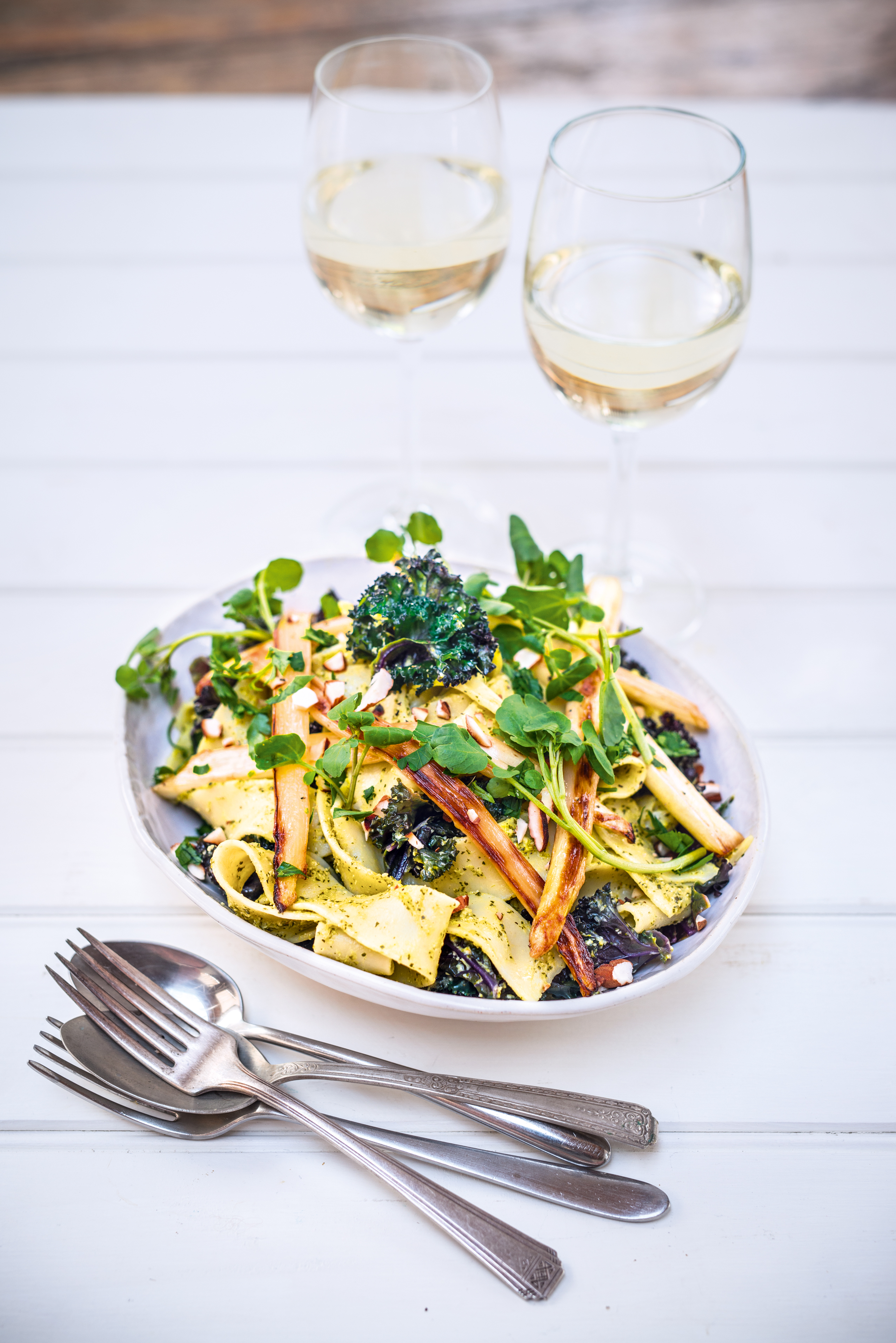
You don’t want something too tannic and overpowering here, I’d go white, something dry and with good acidity, like a Sauvignon Blanc.  Splash out on a decent bottle of French Touraine Sauvignon.  Normally packed full of fresh fruits, a good one should be around 6-8 pounds and have a decent structure to hold its own against the strong flavours in this dish.

You could go for a lighter red style and Chianti historically goes well with the rich tomato and cheese sauces of Italian cuisine.  I just think that the white will cut through the melted cheese and leave your mouth feeling vibrant and ready for more bake.

Categories: Dinner, Lunch, Recipes, Special Occasion, Vegan | Tags: , , , , , , , , , , , , , , | Leave a comment

The B.H.K Awards – Top 15 Seasonal Superfoods (Winter)

Beat those dark winter nights. Blow away those frosty morning blues. Hah! These foods give your body a super kick and are packed full of a feel good vibes. Spring is getting closer, but these beauties will help you across the dark season finish line.

Everybody seems to love a ‘Top 10’.  So surely a ‘Top 15’ is better?!  I was looking into healthy eating and came across several sites claiming to have the definitive selection of ‘Top 10 Superfoods’. I don’t know who or when the term ‘Superfood’ was created, but I like it. It simply suggests food that is super packed full of goodness.

Superfoods come into their own in the busy modern world, when we don’t always have time to prepare meals. They can be grabbed and munched, giving a nutritious boost.  This is especially important during winter when the sun retreats early and the cold can chill you to the bone. It’s a strenuous time for body and mind.

I’ve compiled my own Winter ‘Top 15’ (better than 10) below. The criteria are simple. Is it tasty? Is it also super healthy? Do we eat it regularly? Is it local(ish) and seasonal? I haven’t added things like spirulina, goji berries, wheatgrass etc, although they are very healthy they don’t have the delicious-ness. They are just not your everyday hero.

Our selection will inevitably change towards summer, expect another instalment.

All of these contenders are packed with goodness and if eaten with other healthy bits and some regular exercise, will keep you shining all winter.

15) Red Wine – Dodgy start you may say.  Well yes and no.  I’ve managed to stem the tide of wine in recent years.  Everything in moderation.  Grapes provide vitamin C, vitamin  B1 and vitamin B6–red grapes also contain powerful phytochemicals (especially  phenolics) that may help decrease risk of cardiovascular disease. These compounds are housed mostly in the skin of the red grapes, which gives red wine its colour. Resveratrol, found in the skins of red fruits has been shown to have anti-oxidant, anticancer, and anti-inflammatory activity.

14) Green tea – Not exactly a local crop, but this brew has a serious ‘feel good’ effect in the mornings.  Green tea contains polyphenols, which may reduce heart disease, cancer and stroke risk. Green tea also supports brain health and memory, likely due a key compound in green tea called EGCG (epigallocatechin gallate), a flavonoid. EGCG is thought to boost the immune system and prevent tumors. Aim for at least two cups daily.

12)  Whole grains (whole wheat, barley) – Bread and beer, not healthy really, but ever so British.  Two of the myriad of uses for the humble, yet essential whole grain.  Whole grains help stabilize blood sugar and insulin and may protect against heart disease. They include all three parts of a grain kernel: the bran, germ and endosperm. Whole wheat flour, brown rice and barley are all whole grain foods. Look for the words “whole grain” on the label, and the word “whole” immediately before the name of the grain in the list of ingredients.  Contrary to popular perception, the benefits of whole grains go well beyond fiber and fiber’s role in digestive health. Whole grains contain vitamins B and E; the minerals magnesium, selenium and zinc; phytonutrients; that appear to work together in powerful ways.

Panamanian Bean Mix (Good name for a band)

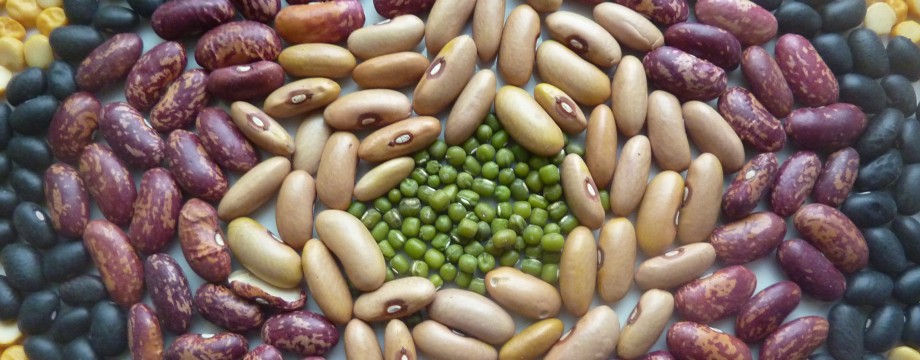
11) Beans –  A staple.  Anybody who knows me, understands my passion for these little beauties.  A fabulous source of vegetarian protein and fibre, two nutrients that help you stay full and satisfied.  Important to feel fully sustained in winter.  The protein and fibre in beans also tempers the rise in blood sugar that occurs after a meal, which can help stabilize mood. The fibre in beans helps keep you regular. Beans are low in fat and a good source of magnesium and potassium, nutrients that work together to lower blood pressure and keep your heart and blood vessels healthy. Added bean bonus: They’re cheap and when growing add vital nitrogen back to the soil.

10) Pumpkin – Orange veggies are all loaded with Vitamin A, vital in the winter when the sun is so shy. We are lucky to have two different varieties growing locally to give us some variety.  Pumpkin is loaded with nutrients that will help your heart, bones, eyes, and skin shining.  Beta-carotene and potassium are the two standouts here: Beta-carotene is an antioxidant that helps rejuvenate skin, protect your vision, and may even reduce risk of arthritis. Potassium is a mineral involved in lowering blood pressure and maintaining healthy bones.  There is nothing sweeter than a well roasted pumpkin?

9) Oats – Are technically whole grains, but get their own section in these parts.  Britain, this windswept little island, has been fuelled on the stuff since early man first landed here.  I don’t think any food better sums up our predicament and history.  The oats in porridge acts as central heating for your body, one bowl in the morning and you’ll be simmering all day.  Eating oats is good for those with high cholesterol.  Whole grain oats are one of the best sources of soluble fibre, which, in addition to lowering cholesterol, helps keep blood sugar levels under control.  No peaks and troughs, just plain sailing.

8) Olive oil – Reminds me of my other home in Spain.  My heart generally resides there, as my body does the rounds.  The freshly pressed oils of Murcia are hard to come by here, but with our uber consumerist ways, good olive oil is easy to find.  One of the best types of fat you can opt for in your diet.  Olive oil helps to protect against heart disease and cancer. Recent research shows that heart-attack survivors on a Mediterranean diet had half the death rates of those on an ordinary low-fat diet.  Nice to know.  Spaniards do eat a lot of fish, which keeps them healthy, but normally drink like one too.  However olive oil is also high in antioxidant activity.  Is there nothing this golden amritar is not capable of?!

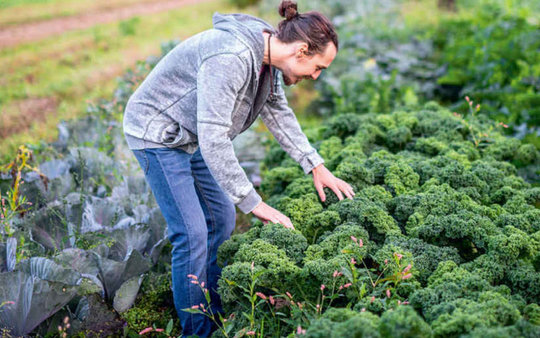
7)  Crucifers (broccoli, kale, cabbage) – This family thrives around here.  They are so tasty and versatile.  Trigonos (our organic veg farm) grows the finest red cabbage and kale imaginable.  In fact, all of their vegetables are rather special.  Cruciferous vegetables contain indole alkaloids that may help prevent the big C.  They are high in fibre, antioxidants, vitamins and minerals.  Foods from the cruciferous and cabbage family (including broccoli, cabbage, kale, cauliflower, Brussels sprouts, collards and turnips) may help bolster memory as you age.  Something I need help with right now!

6) Tomatoes – Grown in a local poly-tunnel.  We are so blessed to be surrounded by die hard green fingers.  These wonderful orbs contain lycopene, a powerful antioxidant shown to help stimulate the immune system and protect from certain cancers, especially prostate. Lycopene is more highly concentrated in cooked tomato products including tomato paste, passata or tomato sauce.

5) NUTS (Walnuts, almonds, hazelnuts, pine nuts, macadamia nuts, cashews etcetc)Generally, limit yourself to a handful of nuts per day.  But what a handful!  Nuts are so precious.  They are not local, but are one of our favourite treats.  Adding a dose of almonds daily helps the intake of key nutrients, lowering the intake of dietary detractors like trans fats, excessive sodium, sugars and cholesterol. Eating nuts may help protect against heart disease and inflammation, enjoying 11 walnuts daily reduces total cholesterol by up to 4 percent.  Walnuts also look like a brain, so are good for your brain (Ayuvedic wisdom).  They are a rich source of heart-healthy omega-3 fatty acids, as well as a compound called ellagic acid that has been shown to reduce artery-forming plaque.  Love NUTS!

4) Leeks – It goes without saying that this gorgeous Allium would crop up.  We are in Wales after all.  Regardless of that fact, leeks are one of my favourite vegetables.  Packed with flavour, vitamins, minerals and flavanoid anti-oxidants.  They are low in calories and contain both soluble and in-soluble fibre.  They contain lots of folic acid, essential in DNA synthesis and cell division.   Vitamin wise the are packed with A (hooray) and C, which not only protects against infections, but also harmful free radicals.  Wear your leeks with pride!  So much tastier than a rose (not to mention a thistle).

3) The Cuppa (Tea) – Another tea?  Why not!  The elixir of the B.H.K.  Without it, we’d be lost and flaccid. The caffeine content in tea is useful for stimulating alertness, mood and motivation, but is also a rich source of the antioxidant called catechins. Studies suggest that catechins protect the artery walls against the damage that causes heart disease and prevents the formation of blood clots. It also does wonders for the spirit on a dark winters day.  Avoid drinking too much milk, try a slice of lemon or drink good quality tea black.  It’s one of those things that will grow on you.

2) Dark Chocolate – The finest of news.  Believe it or not, chocolate is a healthy treat, as long as you choose wisely. Dark chocolate is rich in flavonoids, antioxidants that have been shown to lower blood pressure, improve blood flow, and boost overall heart health. Choose chocolate that is at least 70 percent cacao or cocoa to optimize the antioxidant power and health benefits. Dark chocolate may even boost your mood. The rich taste and sensuous mouth-feel of a decadent piece of dark chocolate may be to thank (remember the Flae advert Brits).  Just don’t eat a whole bar. Our favourite is Green and Blacks.

1) Beetroot (or beta vulgaris) – King Crimson!  The dark purple avenger!  Anything that comes out of the dark soil this colour, is bound to be packed full of good.  The pigment that gives beets their super-beautiful fuschia depth (betacyanin) is a powerful cancer-fighting agent. Beets’ potential effectiveness against colon cancer, in particular, has been demonstrated in several studies. Beets are also particularly rich in the B vitamin folate (see above) and the mighty vitamin C.  If you’re lucky enough, use the leaves.  They are higher in vitamin A and anitoxidants than the root.  We roast them up, put them in cakes, pickles, pies…..They add amazing hues of purples and pinks to anything they touch (including your chopping board) and generally brighten up any day.  Truly our winter king.

So Beetroot is the winner.  What drama!  I wonder who it will be in the summer (strawberries).

Heart of the 'root

Categories: Ayurveda, Healthy Eating, Healthy Living, Nutrition, photography, Superfoods, Tea, Vegan | Tags: , , , , , , , , , , , , , , , , , , , , , | Leave a comment

Rough Oatcakes

Super Oats

Frugal and nice with anything (and on their own).  I’m a purest with the humble oatcake.  I love ’em with a nice lump of local cheese or even with a little of Janes Mum’s Marmalade, they are versatile and an ever-present in our ‘Oat Cake’ tin.
The Oatcake originated in Scotland, where historically they were the only grain that grew up there on the wild northern part.  Oats are really healthy and I would say that they are a ‘superfood’ for sure.  My Dad used to say that porridge put hairs on your chest, but it didn’t work for me (and thankfully, my sister!).

Of course these crunchy delights can be meddled with, but the toasted oat flavour is enough for me (but sometimes I do add a handful of toasted sunflower seeds).

For people who are looking to eat less gluten.  If you make them thicker and add a tsp of baking soda, bake them for a little longer, you have a substantial substitute to bread.

This is as simple as it gets.  Rough oatcakes are best, so the rougher you are here, the tastier the cake.  It’s basically porridge, flat and baked:

The Bits 

A quantity of medium oats (judge by eye how many you’d like to make, 1 cup will make around 5 nicely sized oatcakes).

In a bowl, add half cold filtered water and half boiling out of the kettle (stir until a thick paste is formed)

A decent swig of olive oil

A nice pinch of nice salt and a good few twists of cracked pepper.

Do It

Traditionally, I believe a heavy skillet was used to make these.  I’ve tried it out and its a lot easier to whack them in the oven (we always try to bake a few things at a time, not to waste all that heat).

Preheat oven to 1800C.

Handle the oatmeal paste like dough, with some spare oats as your flour being used for dusting the surface and the dough.  If done properly, not much should stick to your fingers.  I flip them over a few times on an ‘oated’ plate and fashion a roundish shape with my fingers (for neat ones, use a round cutter), then place them on a lightly oiled tray.  The oatcakes should have a rough look and texture.

Bake for 20 minutes, then turn them and bake for a further 10 minutes.

Leave to cool on a wire tray.

Serve

Anything you fancy.  They are a great substitute for bread, we eat them with soup for example.  But for me, they are the finest accompaniment to a strong flavoured cheese, like a Welsh ‘black bomber’ cheddar or a Stilton (long clawson is the finest).

We Love It

They remind me of my Scottish roots (as does my ginger beard!), I lived in Glasgow for years and have fond memories of persistent drizzle and good whiskey.

Foodie Fact

Oats contain Beta-glucan, which slows the release of carbohydrates into the bloodstream, lowering the chances of any dramatic changes in blood sugar levels.  It’s also packed full of fibre.  Excellent roughage.  Oats hang around in the stomach, making you less hungry, probably leading to losing a little weight.  They also help to ease hyper tension or high blood pressure.  You see.  ‘Superfood’!!!

Categories: gluten-free, Recipes, Snacks and Inbetweens, Vegan | Tags: , , , , , , , , , , | 2 Comments

Seabuckthorn – The Wonder Berry

Wonderberries

In late 2010 I was walking around the Himalayas, up in Spiti Valley and stumbled upon the little NGO named Ecosphere in Kaza, ran by Ishita.

I have many fond memories of my time up there and Ishita has recently been in touch, reminding me of the amazing jams that they make from the Seabuckthorn berry.

I’d never heard of it before and was please to see that it had some ‘wonder’ food qualities, bags of Vitamin C and E and tastes nice on toast.  It’s not just jam, there is a whole range of products made from this brilliant little berry.

Seabuckthorn has been used for centuries, the Greeks named the bush ‘glittering horse’.  It made good horse feed.  According to legend, seabuckthorn leaves were one of the preferred food of Pegasus.  It was used as a folk medicine throughout the Roman Empire, Mongolia and Russia.  The oil of seabuckthorn was used by the armies of Genghis Khan, apparently making them stronger and more agile.

Considering this, seabuckthorn is surprisingly native to England also. Mainly growing around the South East Coast and found in the slightly less romantic setting of motorway hedges.

Some info. via Ecosphere:

The Seabuckthorn berry (‘Hippophae Rhammonides’), popularly known as the ‘Wonder Berry’ easily fits this category due to its unique composition of vitamins, minerals, nutrients and essential fatty acids usually only found separately from different plants and sources. In the high altitude regions of the Trans-Himalayan belt, nature has endowed Seabuckthorn with properties that are worthy of calling this fruit ‘an ambrosia fit for the gods’. The natives of these regions have utilised the wondrous nutritive properties of this superfruit for centuries and continue to do so till date.

Seabuckthorn is known to contain 10 different vitamins, 24 trace elements/ mineral compounds, 18 amino acids, proteins and many bioactive substances. It is also one of the richest known sources of Vitamin C in the world, containing almost 4-100 times more Vitamin C than lemon. Seabuckthorn is on top of the list for vitamin E, beta carotene and flavonoid content and contains omega 3,6,7 & 9 oils essential to our health and well being.

http://www.spitiecosphere.com/organics_seabuckthorn.htm

Seabuckthorn can also be grown in the U.K.:

http://seabuckthorn.co.uk/

Here is an interetsing article from the forager guy on Hugh Fearnley’s programmes:

http://www.guardian.co.uk/lifeandstyle/wordofmouth/2011/jul/13/how-make-sea-buckthorn-fizz

Seabuckthorn and Champagne.  Why not!  It’s certainly come a long way since Genghis Khan.

Buy the bush in the U.K.:

http://www.hedgesdirect.co.uk/acatalog/sea_buckthorn.html

A view of Spiti Valley, India

Categories: photography | Tags: , , , , , , , | 1 Comment

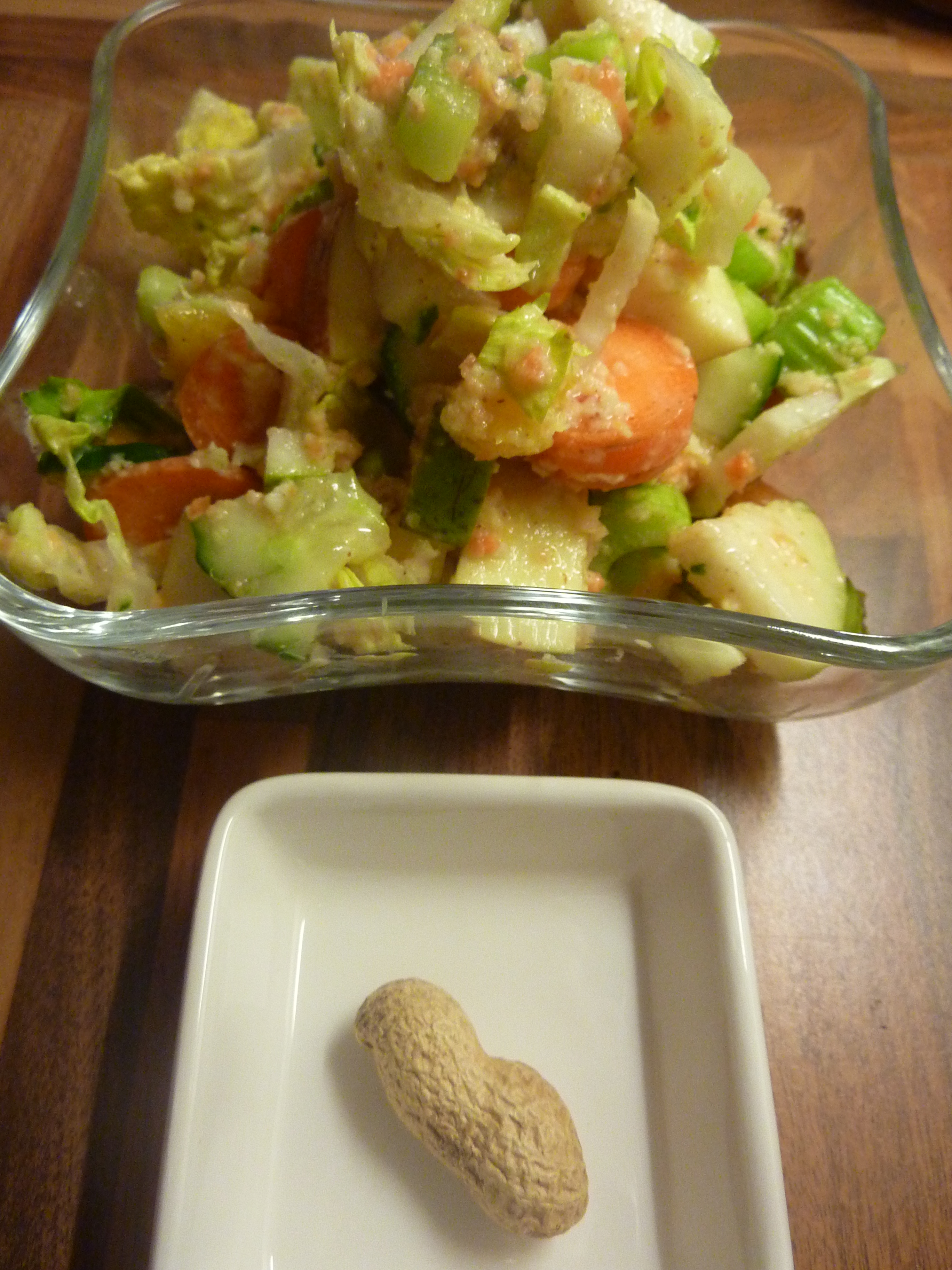
Ensalada de Kami – Coconut and Peanut Salad

Ensalade de Kami

This salad will shine all over the mid January slump.  Peanuts for energy and coconuts to remind you that Pina Coladas do still exist.

It comes straight from Panamanian jungle, via Jane’s lovely friend Kami.  Jane popped over to see Kami for a couple of weeks recently and came back all shiny and radiant, all down to Kami’s raw food and salads.

The fruits aren’t quite as good as Panama in North Wales, but we have continued the trend and I must say that a day started with this salad is a brighter place to be!

Lovely and crunchy, an interesting mix of veggies and fruit, with a smooth peanut and coconut sauce, its tastes amazing and will get your system buzzing first thing.

This is a versatile little number, you can also use it as a conventional salad for lunch or dinner.  We make a job lot in the morning and it keeps us going until late,  sometimes making two days dressing in advance (saves on washing up!).

This is most definitely a Beach House favourite.

Makes two big bowls.

The Bits

We tend to use what we have fruit and veg wise, it can change daily, but here’s an idea.

1 orange, 1 apples, 1 pear, 2 large carrots, 1 stick of celery, chunk of cucumber, bit of exotic fruit as a treat(we used a bit of pineapple today, or papaya, mango etc..) all diced into pleasant shapes of your liking.

For the sauce – 3 tbsp coconut milk, 2 tbsp organic peanut butter, 1 orange, pith off and chopped, 1 apple, 1 large carrot, both chopped, dash of water (to get it going)

Treat version – Sometimes some chopped walnuts, or finely diced dates (not too many).

Do It

Easy as pie…….

Chop up the fruit and veg.

Add all the sauce bits to a blender and pulse up, leave it a little chunky if you like.

Pour over salad and mix in.

Serve

We put it into our finest big bowl and enjoy looking at it all day.  I sometimes add a little muesli and yoghurt, or roasted sunflower seeds add even more crunch and energy.

Makes a great side dish to a slightly exotic main course, Thai or Indian food for example.

We Love It

The odd sweet burst of a date and the all over fresh crunchiness and vitality.

Foodie Fact

We stay clear of bananas with this one, sugary fruit and acidic fruit ferments in your belly, which is bad for people with sensitive stomachs.

In Ayurveda, fruit is meant to be eaten before a meal, never after or with, as it putrifies (nice word) in the stomach.  Sugary fruits also react with cereals, but sometimes, I live dangerously!

Thanks Kami

Categories: Breakfast, gluten-free, Lunch, Raw Food, Recipes, Salads, Snacks and Inbetweens, Vegan | Tags: , , , , , , , , , , , , , | 3 Comments

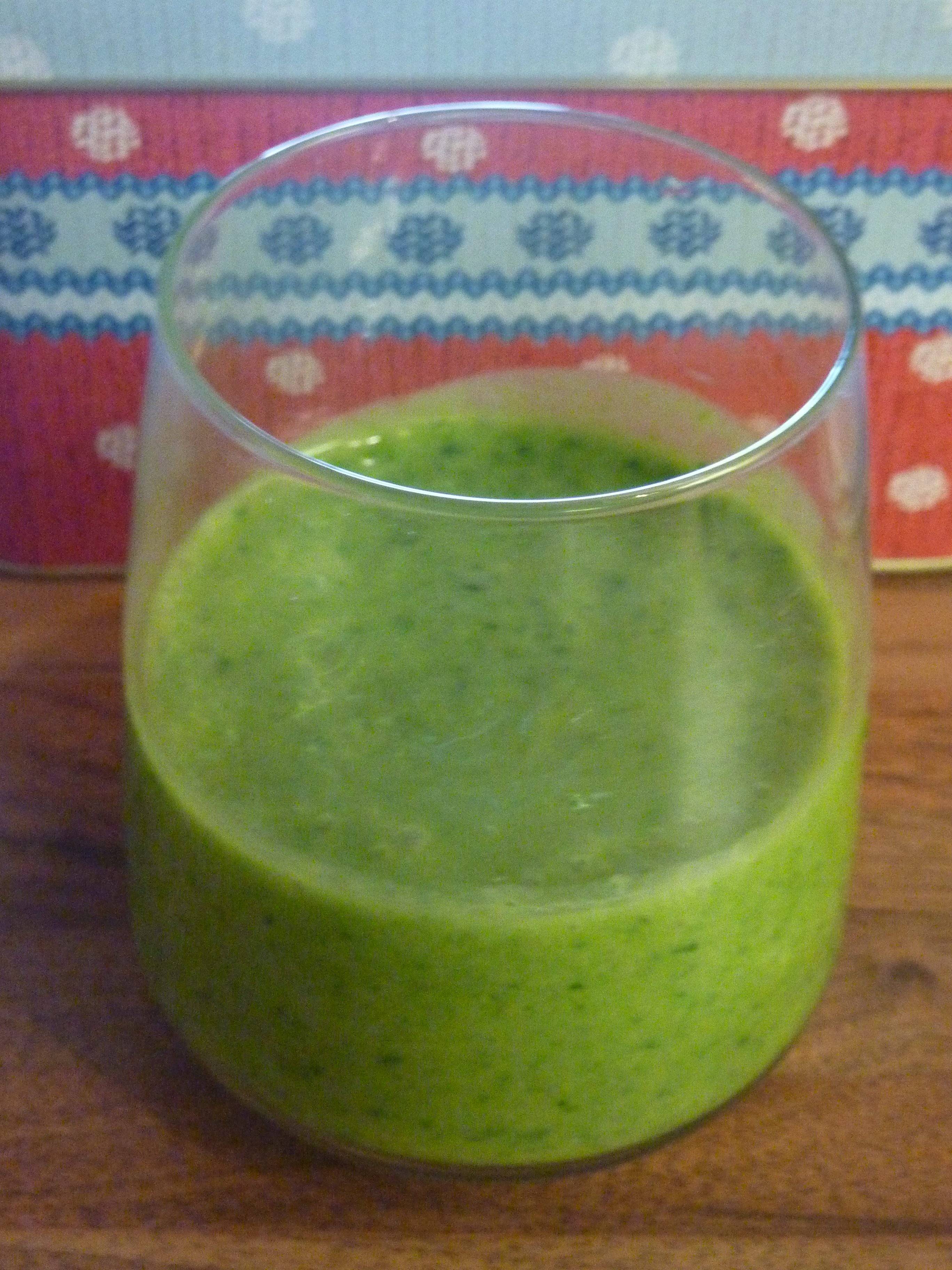
Super Spinach Smoothie

A shot of pure green goodness

This smoothie will kick any day off with a natural sugar hit and good dosing of iron to wake you up and feed your sleepy body.  Sweet and smooth with an iron fix.

It is so simple and quick to make and is Janes favourite morning booster.  You won’t be craving biscuits for elevensies either, the banana will see you through!

The Bits

1 1/2 bananas per person (ideally, I have two because I’m like a sloth in the morning)

2 tbsp coconut cream

Two good handfuls of spinach

A splash of water (to get it all blended nicely)

Need balast?  Add a handful of oats.

Do it

Stick it all in your blender and whizz until smooth.

Serve

Jane eats it from a bowl with a spoon, topped with some finely sliced veggies, celery is nice.  I glug from a glass, which is scrapped out after with a spoon.

We Love It

Its so easy and nutritious and its very green!

Foodie Fact

Spinach is famous as a good source of iron, but surprisingly not as good as much as most beans, lentils, nuts and seeds.  Even a dried apricot has more iron!.

Bananas are packed with natural fruit sugar (frustose), the highest of any fruit by a jungle mile.  This is still relatively low compared to most maufactured sweet foods.  They are great for the digestive system, with lots of fibre and also rich in Vitamin C and Potassium.

Categories: Breakfast, gluten-free, Raw Food, Recipes, Smoothies, Vegan | Tags: , , , , , , , , , , , , , , , , , | 2 Comments

Blog at WordPress.com.