Travel

Tibetan ‘Magic Herb’ Momos


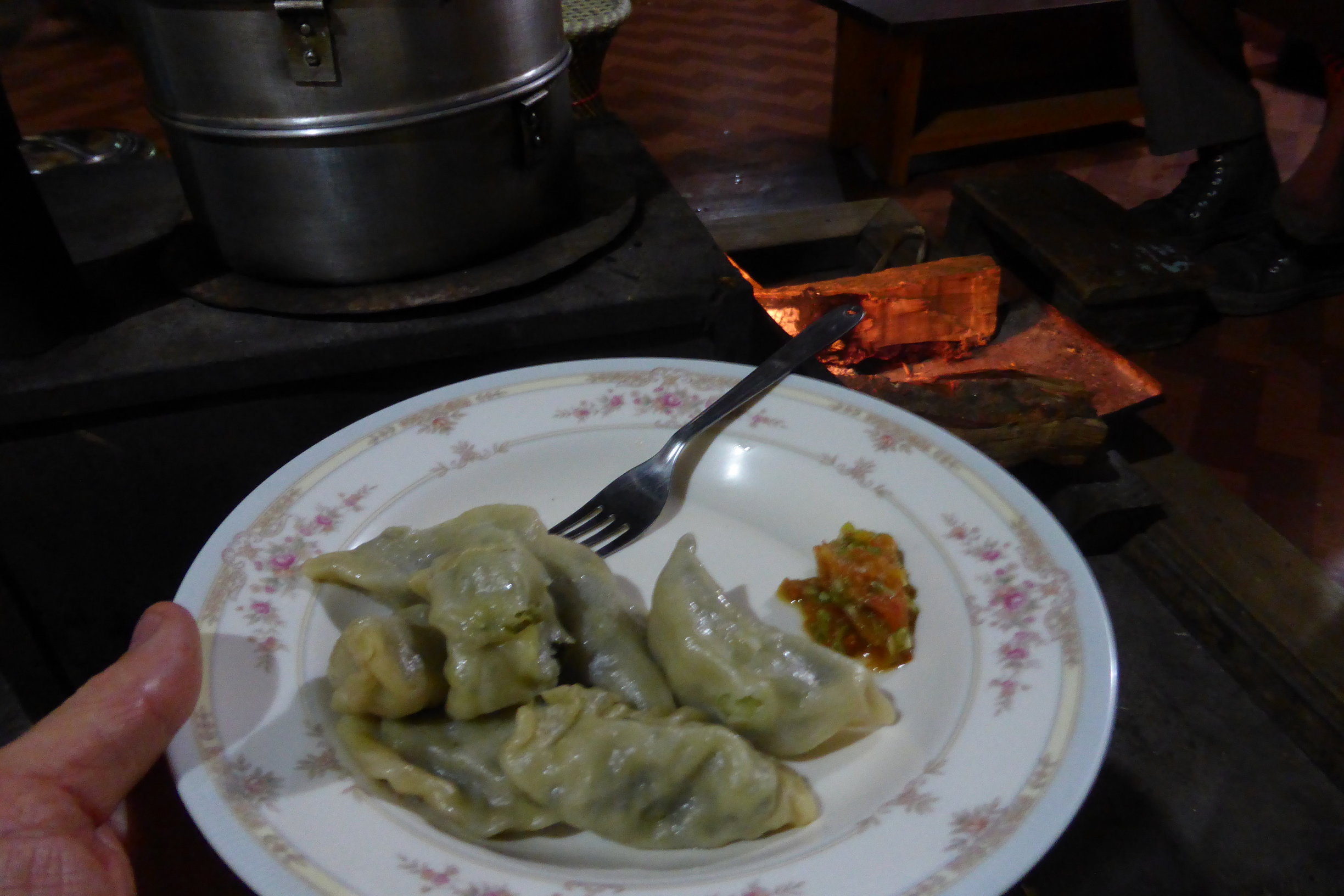
Momos a la GayBoo Homestay. Made bt the magnicficent Nana and Gemma in Menchuka Village Momos a la GayBoo Homestay. Made bt the magnicficent Nana and Gemma in Menchuka Village

Menchuka, or ‘healing-ice-water’, is a small village in a remote valley close to the Tibetan border of Arunachal Pradesh, Norteastern India.   Menchuka has a real outpost feel and is inhabited by the Memba, Ramo, Bokar and Libo tribes.  A.P. is one of the most stunningly beautiful, tribally diverse and ‘off the beaten track’ regions we’ve ever visited. Its a tough place to travel around, good old fashion slog with rickety jeeps and random time tables (most leave at 5am).  Arunachal Pradesh is very rich in culture, which normally means rich in food tradition and it didn’t let us down.  We ate alot of Momo’s stuffed with all sorts of wonderful bits (normally cabbage based) but this little recipe by Nana really blew our taste buds away.  We made Momo’s or noodles together most nights and it became the highlight of the day.

Because it’s a stone’s throw from Tibet, Menchuka is an expression of what India stands for, which is surely the most fabulous melting pot of humanity, religion and traditions.  Surrounded by endless ancient forests, where tigers roam freely and with a stunning backdrop of the high Himalayan snowy peaks, it is an untamed wild-land where we felt on top of the world (in more ways that one, its sits at over 6000 feet!).  The land is extremely verdant, with seemingly endless virgin landscapes stretching over countless valleys and breathtaking waterfalls.  Transport is tough, small jeeps playing terrible pop music cling to the craggy and pot-hole ridden roads/ trails and the pace of life slows right down, sometimes to a halt.

Some people say that Menchuka is the fabled ‘Shangri-La’ but it was normally raining and cloudy when we were there, this is picture is taken from Wikipedia (we’ve been to this exact spot, but couldn’t even see the village below due to cloud cover).

Menchuka is the end of the road and it took three days travel just to pass through Menchuka Valley from the nearest large town named, Along.  Each valley and turn seemed to unearth a totally different tribal culture; with differing techniques for hut construction, cultivating the land and keeping livestock, worshipping nature and dressing in a usually flamboyant and vibrant fashion.  Some of our best memories revolve around the nightly fire in Gayboo’s Homestay with all sorts of rosy cheeked local characters; hitching tractor lifts along muddy roads with friendly locals (crammed in with the lumber!), searching for isolated Tibetan Monasteries and Monks in the misty pine forests, navigating our way around the local army base with the massive runway construction project underway, slurping chow chow noodles (think a greasy chow mein) with mugs of restorative hot water in local eateries and crossing wide white rivers on long and creaking rope bridges… we had a ball!
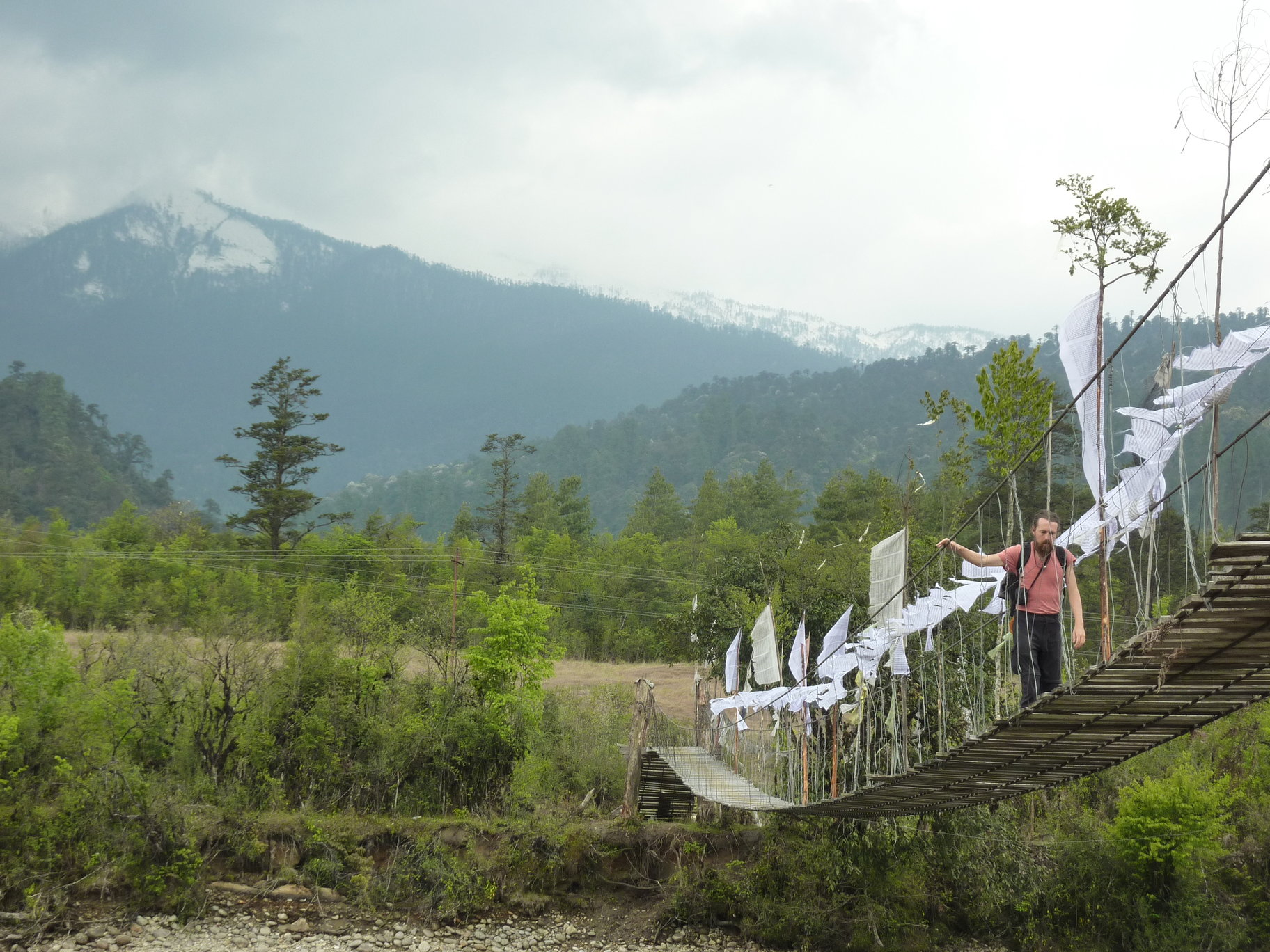
Crossing creaky rope bridges......near Menchuka, Arunachal Pradesh Crossing creaky rope bridges……near Menchuka, Arunachal Pradesh

What made it extra special was finding Gayboo’s homestay; a small group of log cabins in the middle of the village. The only warm place was beside the communal family fire, where we dried out with a mug of hot tea after yet another damp and chilly hike.  Gayboo, and his wife Nana, made us feel like we were wrapped up in a warm blanket in our little sanctuary home in the mountains.

Our sweet and very kind hosts welcomed us with open hearts and bright smiles. They told us the tales of their lives, showed us photographs of carpets of Spring time wild flowers blooming in secret places, and made us all sorts of Memba (their tribe) specialties.

They also taught us the art of making  Tibetan Momos, their speciality dish, served with a tasty chilli herb dip, made from a recipe passed down to them from generation to generation.  These momos are really special, the real deal. Of Nana’s three techniques to wrap them I liked the so called ‘pinch-pull’ method which gave the Momo a classic British Pastie look.  There was also the ‘twist’ and the ‘crimp’, favoured by Nana’s daughter Gemma, which admittedly sounds like something out of the Mighty Boosh, but all will be revealed….…
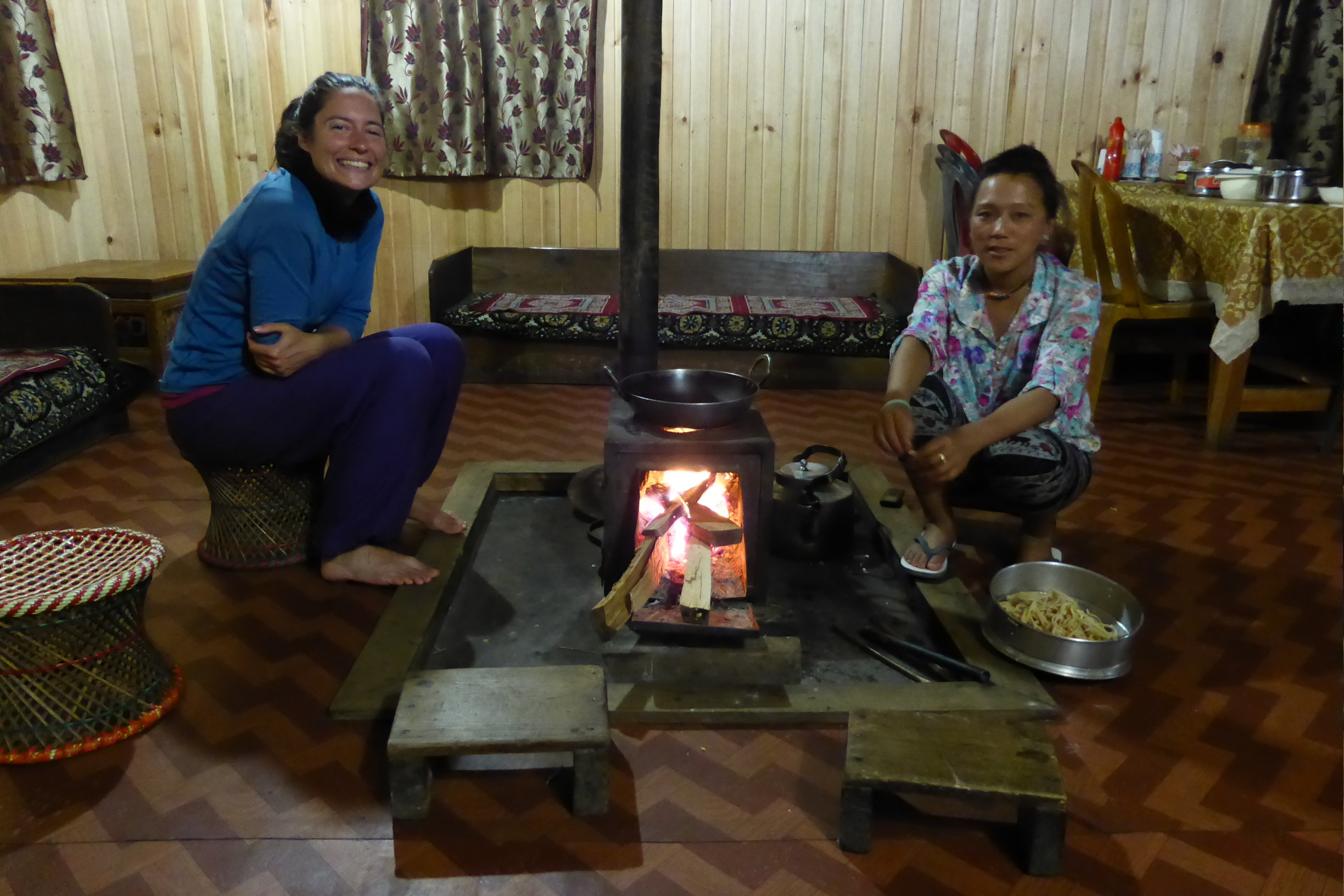
Jane and Nana gettign warm pre-momo 'fest. Jane and Nana gettign warm pre-momo ‘fest.

The ‘Magic Herb’ mentioned in the title was intriguing at first, but turned out to be something very much like a whole Szchechuan peppercorn, which was bashed up and added to the mix.  A process we have repeated in Wales to a very nice effect.  The family gave Lee a whole peppercorn to chew on with comical, gurning results.  We would recommend going easy on them in their raw state!!!

The Bits – for 4 (makes about 16 momos – more if your dough rolling skills are good and thin)

Momo Filling
600g boiled potato (peeled and diced)
200g broccoli (grated)
1 medium onion (grated)
½ tsp chilli powder
2 cloves garlic (crushed)
1 inch ginger (crushed)
½ tsp salt
1 teaspoon oil
100g chard or kale (very finely chopped)
¼ teaspoon Szechuan pepper (to taste – you have been warned!!)

Momo Dough
2 cups white unbleached flour
½ – ¾ cup of water (depends on the type of flour)
¾ tsp salt
2 tsp oil

The Tibetan 'Cornish Pastie' The Tibetan ‘Cornish Pastie’

Do It

Get the potatoes straight into a pan of salted boiling water and cook until they go soft and mashable.

While the potatoes are boiling, slowly and gently fry the rest of the filling ingredients in the oil over a low/medium heat so that they turn nice and soft. Take them off the heat before they go brown.

Mash up the potato when it is cooked, then add the fried ingredients. Give the mixture a good stir, seasoning it just as you like it.  Leave to cool for a good hour until at room temperature.

Whilst the mixture is cooling down, make the dough. For this, mix the flour, salt and oil in a bowl and add water gradually until the texture is smooth and the dough is stretchy. Knead the douhg for a minute and then stick it in the fridge to chill.

Then roll out the dough into a big circle and use a standard sized mug or scone cutter to cut it into smaller discs.  The size doesn’t really matter, just not too massive.  Then get creative with your folding styles!  The ‘crimp’ looks like a little semi-circle, the ‘push-pinch’ looks like a Cornish pasty and the ‘twist’ ends up looking like a little ‘dimsun’ style ball with a twisty top. Lee is the ‘crimp’ king, I’m partial to a ‘push-pinch’. See the pictures for a reasonable idea about what we are getting at.

There may be some filling left over at the end if the dough is a little too thickly rolled (they will still taste lovely though, so no worries!). This filling is so delicious you can just make leftovers into little patties the next day, or just snack on it while you are rolling.  If you are Tibetan and an expert then you’ll probably end up with too much dough!  Nana’s Momos were very thin, but we are just beginner Momo-makers.  We had a little filling left over at the end of our rolling session.

Momo's steaming on an open fire.... Momos steaming on an open fire…….Gayboo’s Homestay, Menchuka

Top Tip – if you try and put too much mixture in each momo it splurges out of the end…..!

These tasty little critters can steamed or shallow fried.  We steamed ours, so lightly oil both the steamer and the Momos so that they don’t stick to each other creating a giant inseparable momo blob. They take about 10-12 minutes to cook through on a decent steam and when they are done there is no stickiness to the dough any more, and the filling is piping hot through.

Serve

We quickly and simply pan fried bok choi, courgettes, tamari and ginger to make the perfect veggie accompaniment; eating our fresh Momos near a picture of the Dalai Lama with our minds all Himalayan.  We always serve Momo’s with ‘Senchen’, a Tibetan dipping sauce.  We’ll dig out the recipe and post it soon.

Foodie Fact

Fenugreek is a fascinating plant – even the ancient Egyptians understood the benefits of fenugreek – it’s seeds were found in Tutankhamen’s tomb!

The health benefits of fenugreek include relief from anemia, loss of taste, fever, dandruff, stomach disorders, biliousness, respiratory disorders, mouth ulcers, sore throat, diabetes, inflammations, wounds and insomnia. What a plant!

Slow moving traffic, waterfall meets road in Arunachal Pradesh. Slow moving traffic, waterfall meets road in Arunachal Pradesh.

Wishing you all happy momo-rolling times. There are few things as satisfying as munching fresh Momos slowly as you’re rolling more of the delicious beasts!!!!!  It is a highly relaxing way to spend an evening away.

Om Mani Padme HumX

Categories: Recipes, Travel | Tags: , , , , , , , , , , , , | 11 Comments

Italian Flava! Holiday Snaps of Napoli and the Amalfi Coast

ITALIA!  What a place!  Pizza, scenery, pasta, wonderful people, gelato (for Jane), stunning scenery, espresso, incredible history….so much, a country filled with endless passion for life and bellies filled with wonderful culinary creations.  Here we have just a few of our holiday snaps from June’s trip to Southern Italy.

Jane's first gelato (she was a little pleased) - Napoli

Jane’s first gelato (Pistachio flavour) – Downtown Napoli

We started off in Napoli, hiring a car and camping for most of the time.  We rarely spent two nights in one place as the allure of the open road and the fascinating sights just kept us rolling deeper and deeper into Campania.  Napoli reminds me alot of Latin America, a real vibrancy and chaos, it can be scruffy and awe inspiring  in the same alleyway, it is a hive of creativity, is crammed full of ancient historical sights and offers all the opportunity to feast like a greedy baron.

Pizza is the mainstay of things and the Marinara (just tomato sauce, a little garlic and a drizzle of olive oil, so called because the fishermen used to eat it) took dough discs to a whole new level in my eyes.  The wine was local, with a vast array of indigenous grape varieties and generally, delicious.  Apart from eating and sipping coffee with jumpers tied around our necks, we walked the cities old town, took in as many museums, cathedrals, underground grotto’s, gelaterias (Jane) and Greek sculptures as our mortal legs could manage.  Napoli is my new favourite city at a canter.

On the road lunch - Graveyard, somewhere in the Cilento National Park, Campania

On the road lunch, Italy=best produce ever! – In an old graveyard, somewhere in the Cilento National Park, Campania

The spectacular Duomo Cathedral - Napoli

The spectacular Duomo Cathedral – Napoli

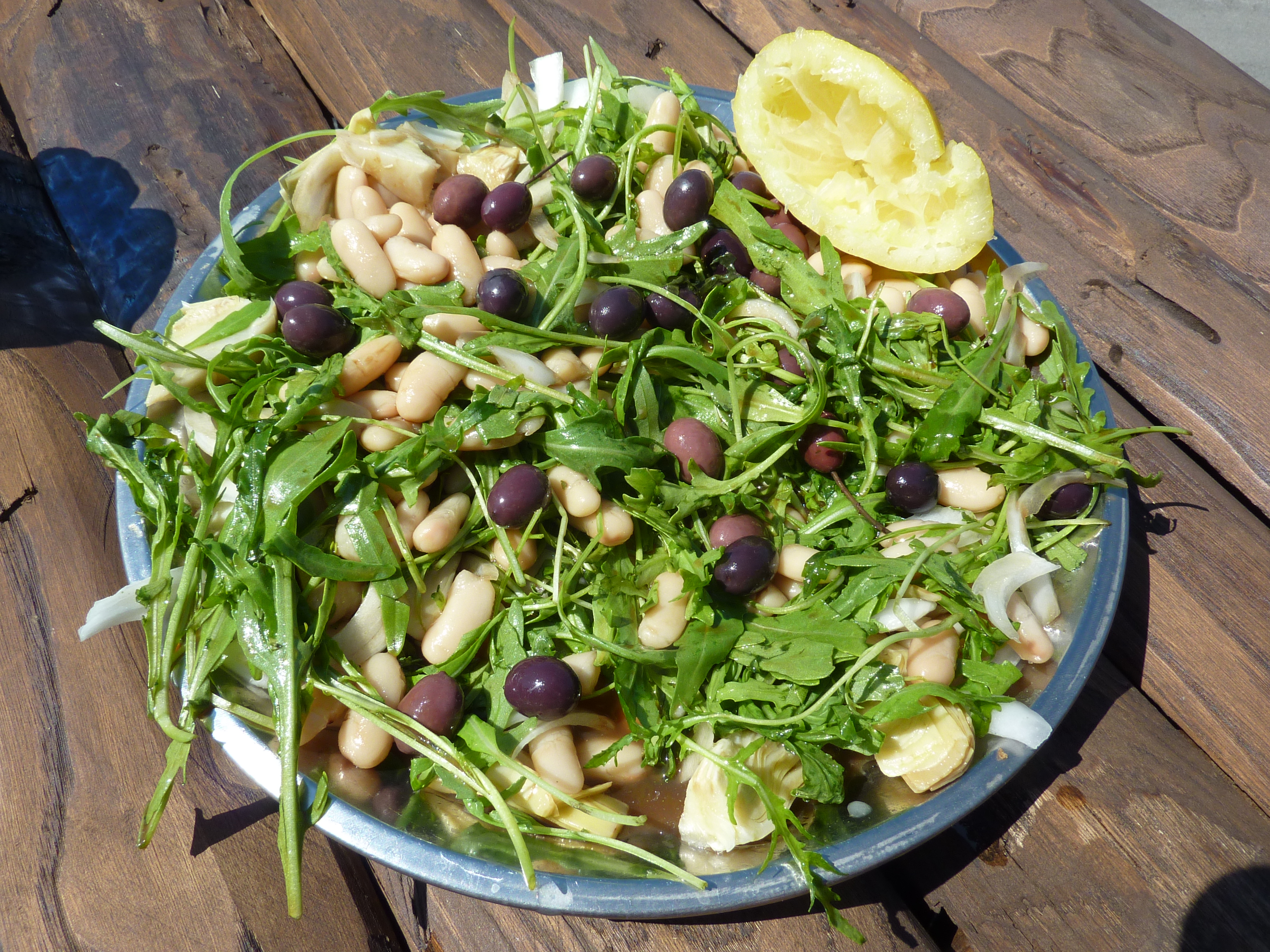
After Napoli, and the utterly mental driving conditions (most of the cars bear the scars of the outrageously tight roads and kamikaze scooters), we drove south past Mount Versuvius (the once mighty eruptor) and headed to the Amalfi coast, a place constantly banged on about as being rather pleasant.  Well it was in a  fashion, if you are of the manicured tourist variety.  We are not.  So camped in forests when we could and only ventured into the pretty towns for dinner, which was almost always, fresh, local, seasonal, made my mama and utterly delicious. We generally found things quite cheap, making our breakfast and lunch on roadsides and picnic benches along the way with some of the best fruit and veg I have ever encountered.  Believe the hype!  Italian lemons, plums, tomatoes, olives……the list goes on, are touched with something intangible and utterly magnificent.  Food here is a way of life, a cornerstone of culture…..I have heard this all before, but to witness it first hand and even better, to taste the fruits of this fascination and tradition, made me feel like the luckiest muncher on the Med.

Temple of Poseidon - The Ancient City of Paestum (600BC!), Campania

Temple of Poseidon – The Ancient City of Paestum (600BC!), Campania

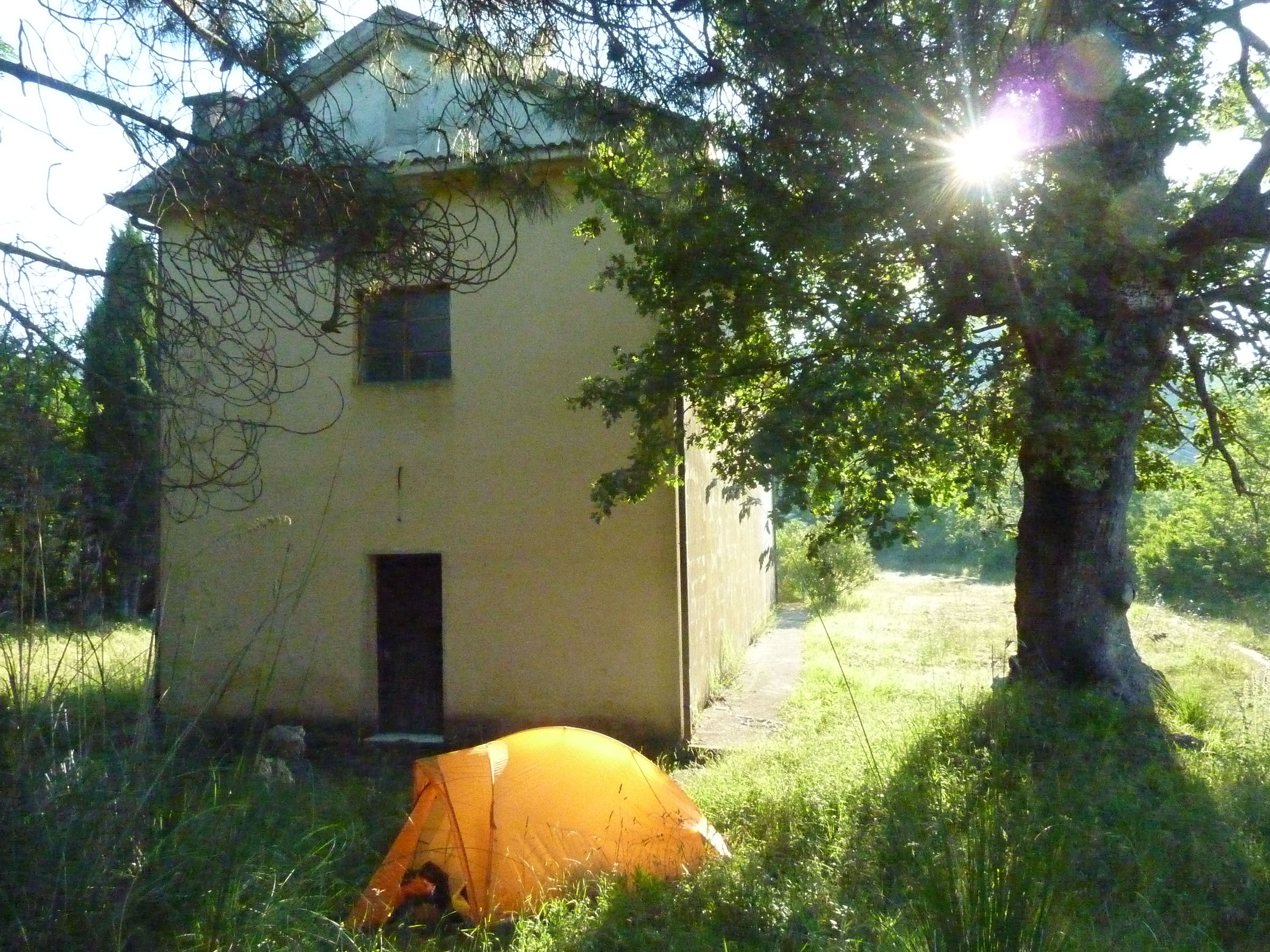
Camping by churches seemed to work well - Cilento National Park, Campania

Camping by abandoned churches works well –  Near Morigerati, Cilento National Park, Campania

We found some beautiful camp spots and used disused churchyards regularly.  Almost painfully romantic and with the added bonus of clean water springs to do the washing up and for the occasional bathe.  The weather was sweltering, so we rose early with the sun and generally bedded down under clear night skies, sparkling with stars and fireflies.

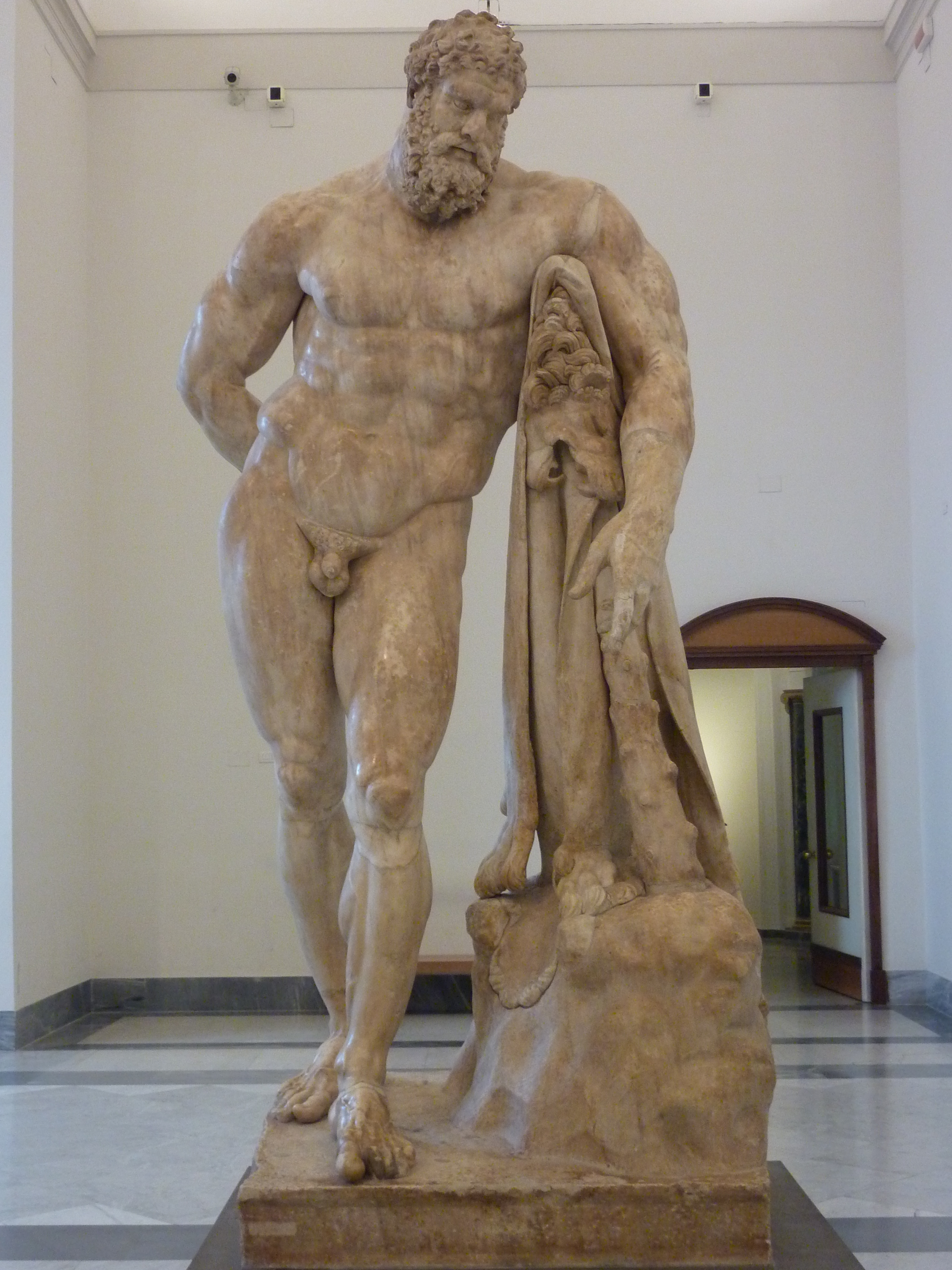
The awesome Hercules - National Museum, Napoli

The ancient and mighty Faranese Hercules 3AD (roughly 12 metres tall!) – National Museum, Napoli

Packing up one of our favourite campspots  - Overlooking Positano, Amalfi Coast

Packing up one of our favourite campspots – Overlooking Positano, Amalfi Coast

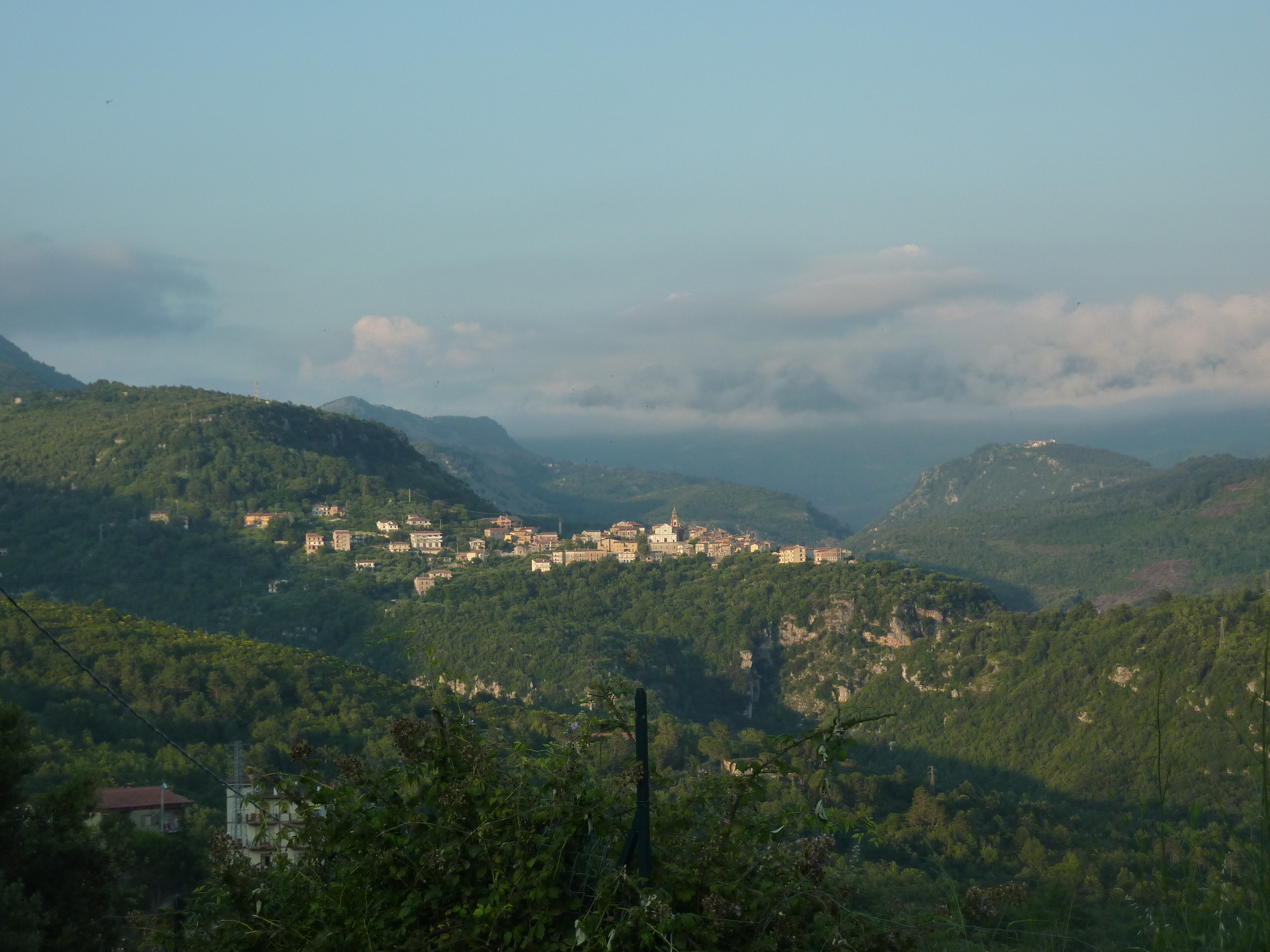
Stunning villages abound! - Morigerati, Cilento National Park

Stunning villages abound! – Morigerati, Cilento National Park

The national park, Cilento was a real highlight.  The second largest in all of Italy, with little villages on crags, waterfalls, endless forests and some stunning mountainous peaks, far too much to explore in the little time we had.  There seemed to be no one there and the towns were always sleepy and friendly, generally the opposite of the Amalfi coast towns which were packed full of tourists and establishments fixed to empty their pockets of silver.   We discovered a few gems on what is a dramatically beautiful, steep slope, but generally the Amalfi is a little overrated.  Its a big world, many coastlines, why should we all gather in one place?  I have to admire the marketing job done by the tourism folk, Sorrento for example is heaving with Americans who have flown all this way to the Med to see a sanitised version of what is surely, one of the worlds most stunning areas.  And, it was 45 euros for a dorm bed!  45 euros for a wonky bunk!!!!!!

Making salads on bins - A little medieval village, somewhere in the Cilento National Park

Roadside salads – A little medieval village, somewhere in the Cilento National Park


Stunning nature - Cilento National Park

Stunning nature – Cilento National Park

Jane just before another amazing dinner - Campania

Jane just before another amazing dinner – Castellabate, Campania

We spent a week in Cilento National Park, driving the crumbling roads and marvelling at the sheer natural beauty of the place.  It seemed impossible to escape the ancient past as we randomly came across site after site filled with magnificent ruins of towns and temples, the most impressive of which were (of course) Pompei and Paestum.  Some of the details that have survived are stunning, it feels like you’re looking directly into the lives of the people who lived more than 2000 years ago.  We know their names, how much they earned and where they worked, the Gods they worshiped, what they did for giggles and even their favourite snack bars!  These incredibly preserved relics give colour and texture to the ancient world and open fascinating windows into how our forefathers and mothers would have passed their lives.  It wasn’t all good, being a gladiator fighting lions seemed like a raw deal but I have to say, in the most part, they seemed to live well and in a highly advanced, organised and cosmopolitan way.

Another lunch stop, abandon churches again (always with handy fresh water springs for washing up!) - Cilento National Park, Campania

Another lunch stop, abandon churches again (always with handy fresh water springs for washing up!) – Cilento National Park, Campania

Italian beaches are strange and normally filled with sun loungers, costing an exorbitant amount of euros to perch on.  It is the only place in the world I have visited where beaches are private and fenced off!  You need to buy a Cappucino to take a dip in the ocean!  What a strange approach.  Due to this, we only spent 20 minutes on the beach, it all seemed a little hectic and the opposite of relaxing.

Temple of Isis, Pompeii

Temple of Isis, Pompeii

The best pizza in town (gypsy guitarists just out of picture) - Di Mateos, Napoli

The best pizza in town (gypsy guitarists just out of picture) – Di Mateos, Napoli

There are a few famous and touristy pizza restaurants in Napoli, but we were assured by locals that Di Mateos was the best.  Located on Via Tribuani, one of the main streets in the old town, it is always packed full and has a real buzz about it.   It was, without any peer, the best pizza I ever met.  Add to that the band of gypsy’s (not the Jimi Hendrix lot) playing as we went in and you have the full package.  You cannot beat the sound of a well strummed mandolin and some toothless yelping.  It stirs the appetite and soul.

Our favourite dinner spot, in a cave! - Nochelle, Amalfi

Our favourite dinner spot, in a cave! – Nochelle, Amalfi

After all that driving, we landed in Pompeii, not a bad little town considering the daily influx of tourist coaches.  We camped there in a little family ran site and walked the 20 metres to the main gates.  Italy really impressed me in the fact that corporations don’t seem to have taken hold.  Family ran joints, hotels, cafes, restaurants etc seem to be very much the done thing and it adds so much variety and authenticity to towns.  You get to meet the real locals, eat their food, hear their gossip and understand a little about what is actually going on.  Places ran by people who genuinely care about what they’re doing which makes all the difference.  I hear this does not extend to Italian politics, but that’s a whole different blog……

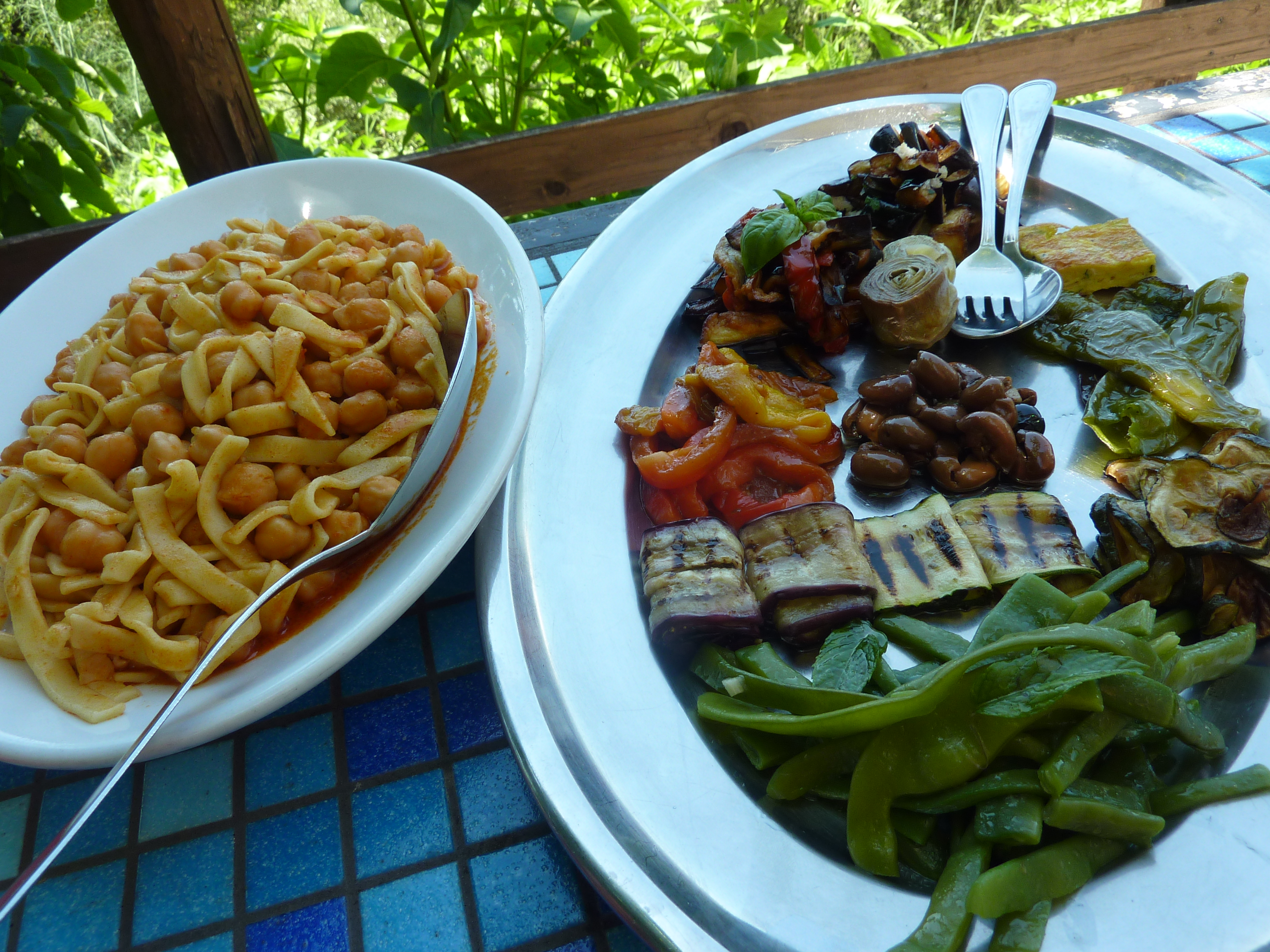
Last but certainly not least, antipasti and pasta! - Mama made it, Morigerati, Campania

Last but certainly not least, antipasti and pasta! – Mama made it, Morigerati, Campania

So Italy is nice, very highly reccomended by the B.H.K.  There seems so much to rave about but its the warmth and intensity of the locals which will stay with me.  Prego!!!!  I think Jane and I would go back now, if we weren’t tending to tomatoes and reveling in the unpredictable beauty of a Welsh summer in full swing.

Categories: Travel | Tags: , , , , , , , , , , , , | 8 Comments

We’re Back! and India Holiday Snaps

Under the Big Tree - Sivananda Ashram Madurai, 3/14

Under the Big Tree – Sivananda Ashram Madurai, 3/14

We’re back!  In two pieces;  older, wiser and hairier!

North Wales is shining; bee buzzing, flowers swaying, sheep baaaaaa-ing. This is definitetly the home of the B.H.K. Writing the blog from distant shores just seems a little strange, the creative culinary juices just aren’t flowing as deeply as when we’re hanging out up here with the heather.

This blog is such a big part of our life in Wales, so we’re back and ready to get stuck into good mountain living, with some gorgeous nibbles along the way……

There seems far too much water under the bridge to begin to catch up on the last 6 months. I decided to post a few travel pics to get us warmed up and reacquainted again.

I have been busy (even when travelling!) working on another food-related project which I am superbly excited about. More to follow on this soon. (Hopefully that is a decent enough excuse for not posting any news or recipes for a ridiculous length of time.)

Back in the lovely little Beach House, the fire is roaring (in June) and we are both full tilt and ready to get the garden blooming and the hob fully loaded with plenty of wonderful fruit and veggie action and no doubt some pictures of Buster the cat (who came back on our first morning back in the house, it seems we are linked with the little grey furball!).

Jane getting to grips with an onion - Udaipur, 2/14

Jane getting to grips with an onion – Udaipur, 2/14

Very brief catch up of our antics :
– We have been distant for the last 6 months, in Spain and India, spending time in the Himalayas and on a variety of beaches; cooked vegan food on farms, ate papaya straight from the tree, visited many huge desert forts and palaces, lived in huts and buses, hung out with warm tribal folk, learned to count to 10 in Hindi, practiced yoga by the Ganges, woke at 4am to sing songs, realised that there is more to life than chapatis (but not much!), ate our body weight several times over with the complete rainbow spectrum of all things curries, watched endangered rhinos play whilst sitting on a juvenile elephant, celebrated a Gods birthday……….too much. much, much to tell. Here are a few pics (most food related) that tell a better story:

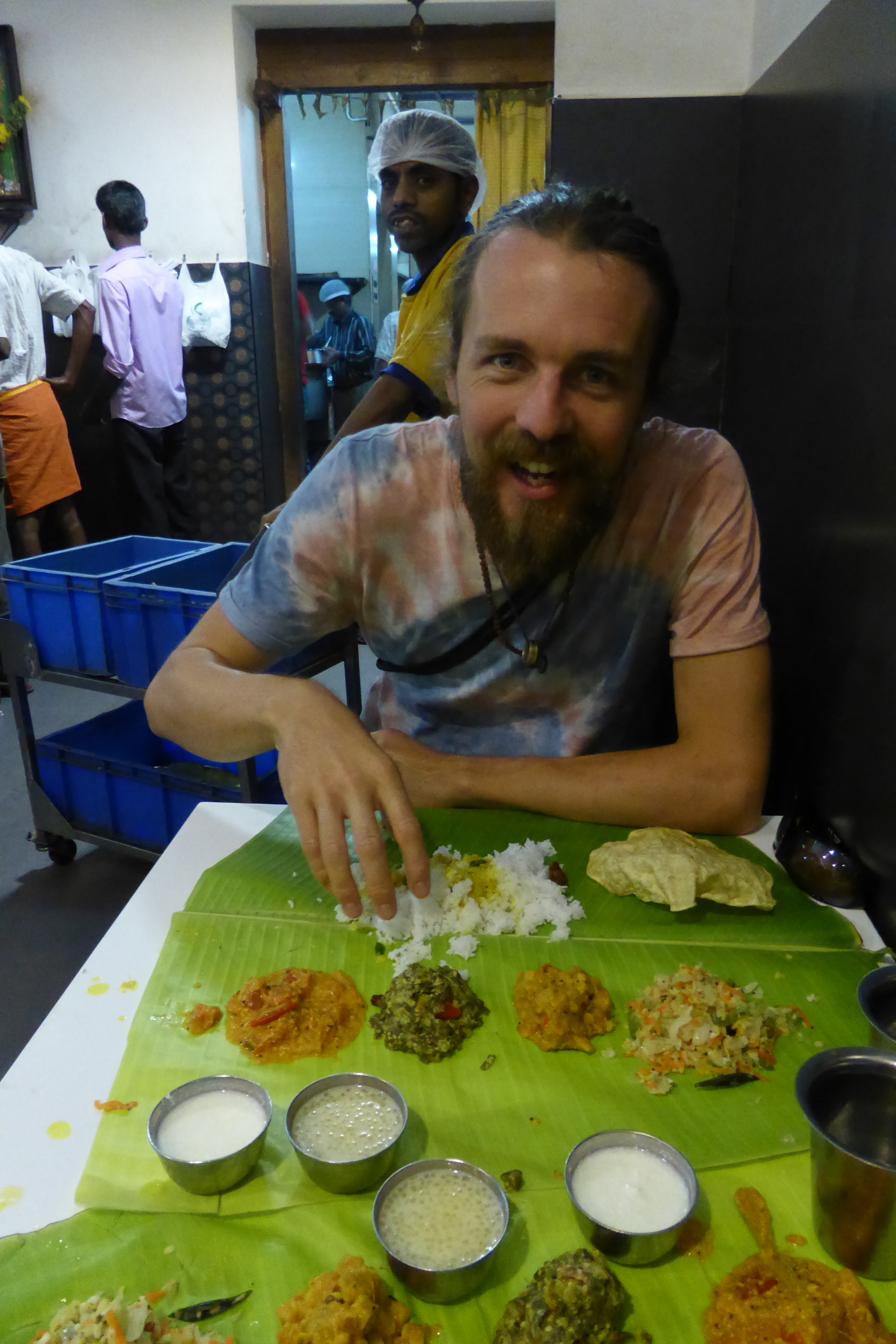
It's Thali time!!!! (South Indian style), Madurai, 3/14

It’s Thali time!!!! (South Indian style), Madurai, 3/14

Tawang Lake, way up in the Himalayas, Arunachal Pradesh, 4/14

Tawang Lake, way up in the Himalayas, Arunachal Pradesh, 4/14

Cooking up a monsoon, Rishikesh, 1/14

Cooking up a monsoon, Rishikesh, 1/14

Survival Travel Breakfast (Papaya and Chia Seeds)

Survival Travel Breakfast (Papaya and Chia Seeds)

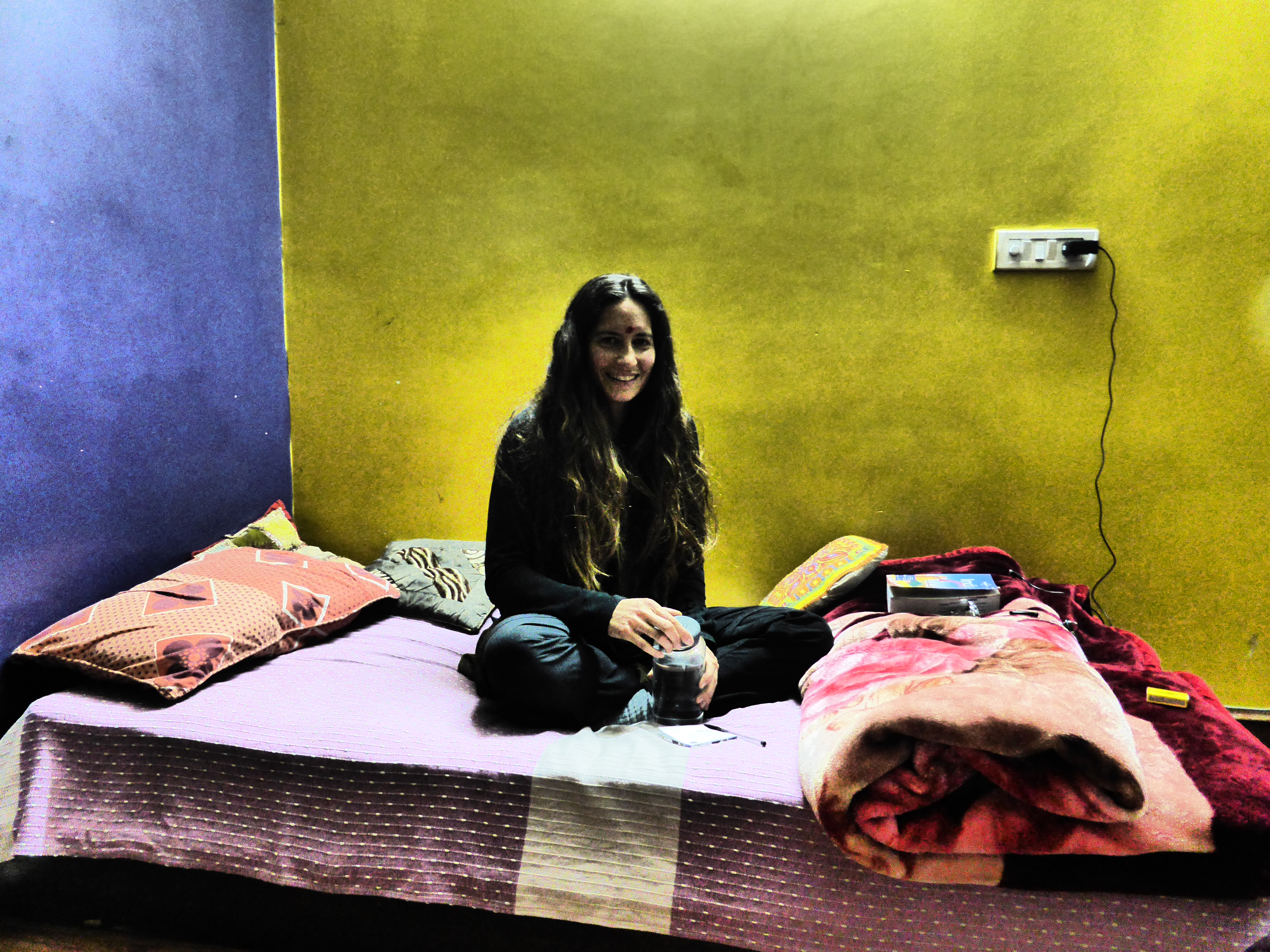
Jane, first day, first Bindi, Delhi. 1/14

Jane, first day, first Bindi, Delhi. 1/14

Vadas - some of South India's finest

Vadas – some of South India’s finest

A little taster, a canape of sorts, a wee bite into our last 6 months wandering the world.  We have a massive book full of new recipes to cook and hopefully post.  Its looking like a busy summer!

Love and Peace to all of you out there…..XXXXX

It’s great to be back, Lee and Janexxxxx

Categories: photography, Travel | Tags: , , , , , , , , | 3 Comments

Kala Chana Masala with Beetroot and Bok Choi

Jane on 'The Rock' - Karuna Farm, Western Ghats, Tamil Nadu

Jane on ‘The Rock’ – Karuna Farm, Western Ghats, Tamil Nadu

Finally, we post something!!!!  We have loads of half finished bits typed hurriedly in internet cafes, but have yet had the time and drive to actually finish one off!  

We’ve been in Indian now for three months and things have been thick with experience and too many foodie experiences to recollect.  Expect many Indian themed post soon, packed full of delicious and authentic recipes……. 

Kodai Kanal, Tamil Nadu 21st March 2014

Kodai is a little ex-British Hill Station (somewhere where the Raj used to go and cool off during the summer months).  Lots of little Anglo Indian stone cottages with lawns and chimneys, tea rooms and a beautiful lake.  We are staying on a farm, on a steep slope, with spectacular views over the plains towards Madurai.  It thick jungle, full nature and absolutely beautiful and best of all, we have a small kitchen to play in!!!!!

A random little post here, but we are half way up a hill in the middle of nowhere (Southern India). This recipe came together on our first night in Karuna Farm, in the green and verdant Western Ghats of Tamil Nadu. We have been sweating and meditating, sweating and yoga-ing, sweating and chanting our way through the early part of March in the Sivananda Ashram, outside Madurai. The temperatures soared, so it is magical to be up here in the mountains where the night air is crisp and the sunrises come on like an intergalactic firework show.

This is a spectacular little farm and we are witnessing many positive projects in motion. They are building earth ships, from recyclable car tyres and starting a permaculture project to supply the on-farm restaurant with some proper local produce.

On Sunday, Jane and I ventured up to Kodai Kanala (the main town). We walked through little villages, with many smiles greeting us, for 2 hours and then managed to catch a little rickety van the rest of the way to town (we’re quite remote here!).

Kodai is an old British hill station, with many rock built chalets and a large dollop of Christianity. It is now a popular retreat for Indian honeymooners and surprisingly few gringos on the streets.

Haggling at Kodai Market

Haggling at Kodai Market

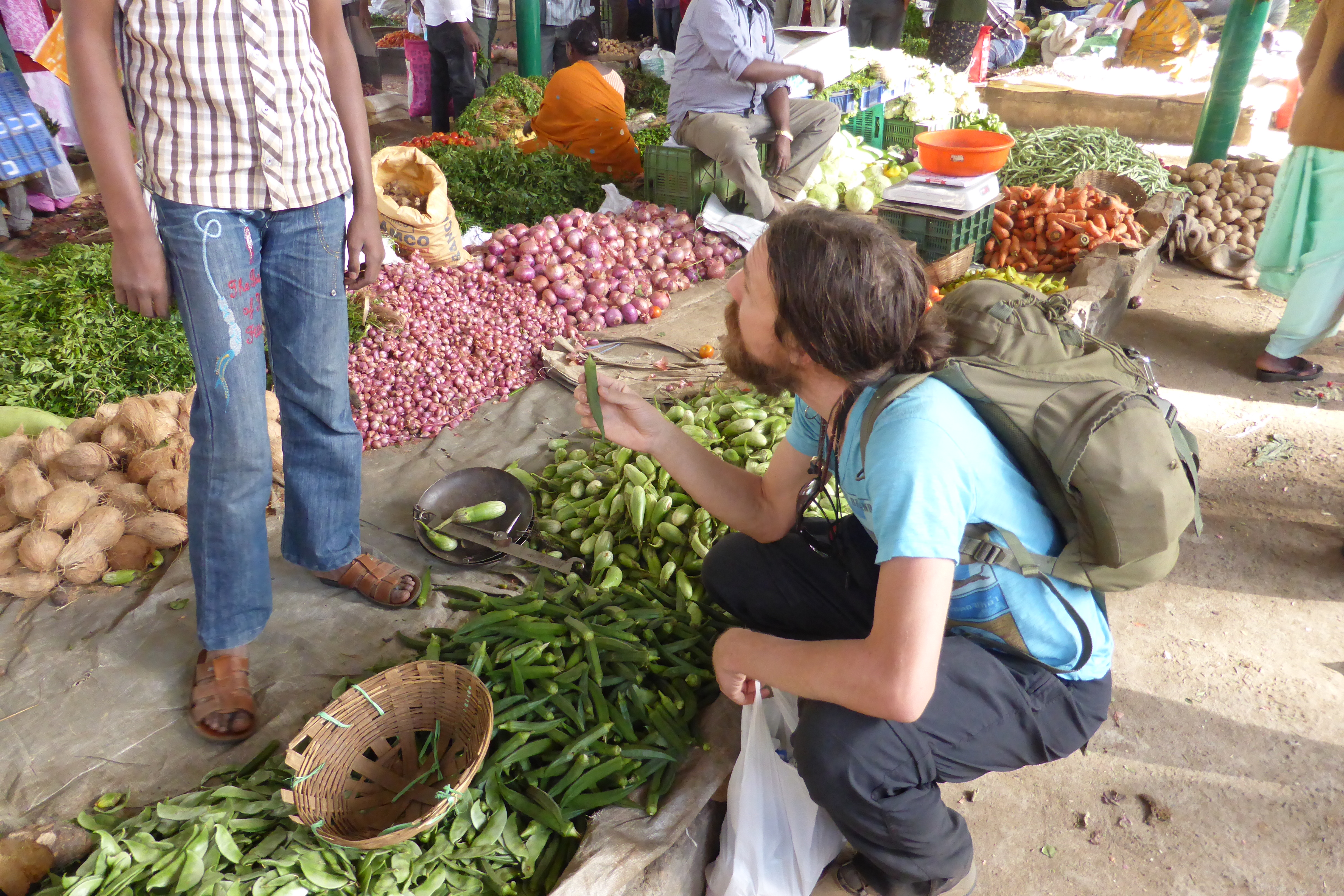
Sunday is market day and we spent most of it wandering around and ogling the local produce. Non of it organic, but all of it vibrant and full of potential. Our accommodation, a nice little cottage in a banana plantation, actually has a kitchen!  The first time we’ve been able to cook, apart from random cooking classes and making spicy tea with the chai wallas.  I was so chuffed to be having a bash at the pots and pans again.  We filled our backpacks with veggies and fruits and have not looked back since.

Internet in India is tough and I must apologise for the lack of BHK activity in recent times. We have heads full of recipes and new ways of conjuring up tasty nibbles.  We can’t wait to share them with you all from HQ (North Wales, which seems like a million and one miles away).

WHAT IS KALA CHANA?

Kala Chana (also Desi Chana or Bengal Gram) are brown chickpeas, unprocessed and packed with fibre.   ‘Kala’ actually means black in Hindi and Urdu.  They have more of a robust texture than your average chicker.  This type of chana has been enjoyed all over the world for millenia, from ancient Rome, Persia and Greece, to Africa and Latin America.  It has been used in British cooking since the middle ages.

Chana is so versatile to a veggie cook, we can boil them, sprout them, roast them in the oven, make them into magic puree’s (like hummus) or even make desserts with them.

We love this rough chana, especially in a dish with full flavoured veggies like cabbage and beetroot. A lovely old lady was selling these bok chois, we couldn’t resist them. I have never seen them cooked in India, but you wouldn’t expect us to be traditional now would you??!!

This is a highly spiced dish, similar to chana masala in many ways. The spices are warming including cinnamon and cloves, making it very much north Indian fare. In the South we have been eating mainly coconuts and white rice, the staple down here. Generally lightly spiced bu heavy on the dried chilli.

This dish, served with a massive salad, made a wonderful change and we actually cooked it ourselves! I have to say our bellies have not felt this good in the 2 month India adventure.

Jane washing up sporting socks and sandals, our new look

Jane washing up sporting socks and sandals, our new look

Grating the veggies for the sauce (called a masala over here) gives the overall dish a smoother texture and helps to thicken things up. Of course, grating things unlocks the flavours of the veggies and means you don’t need to cook them for so long to get maximum flavour.

I will be volunteering on an organic farm and cooking in a vegan kitchen soon, settling down a little. I imagine they will have internet and should catch up a little with the backlog of recipes and posts that have accumulated on my little computer gadget. There are some crackers!
Namaste and Much Love,

Lee and JaneXXXXXXX

The Bits – For 2
2 tbs coconut oil (or cooking oil)
1 large beetroot (scrubbed and diced)
6 large leaves bok choi (plus their fleshly stumps, chopped)
1 large carrot (scrubbed and grated)
1 small potato (scrubbed and diced)
1 big handful cabbage (grated)

Masala
1 onion (peeled and grated)
4-5 cloves garlic (peeled and grated)
1 ½ inch ginger (peeled and grated)
3 tomatoes (grated, skins discarded)
2 teas garam masala (or spice mix of your choice)
6 cloves
1 cinnamon stick
1 tea cumin seeds
1 teas black mustard seeds
2 tbs curry leaves
½ teas chilli powder
½ teas sea salt
½ teas black pepper

¾ cup chana daal (soaked overnight)

Brown Chana Masala with  Beetroot and Bok Choi

Brown Chana Masala with Beetroot and Bok Choi

Do It
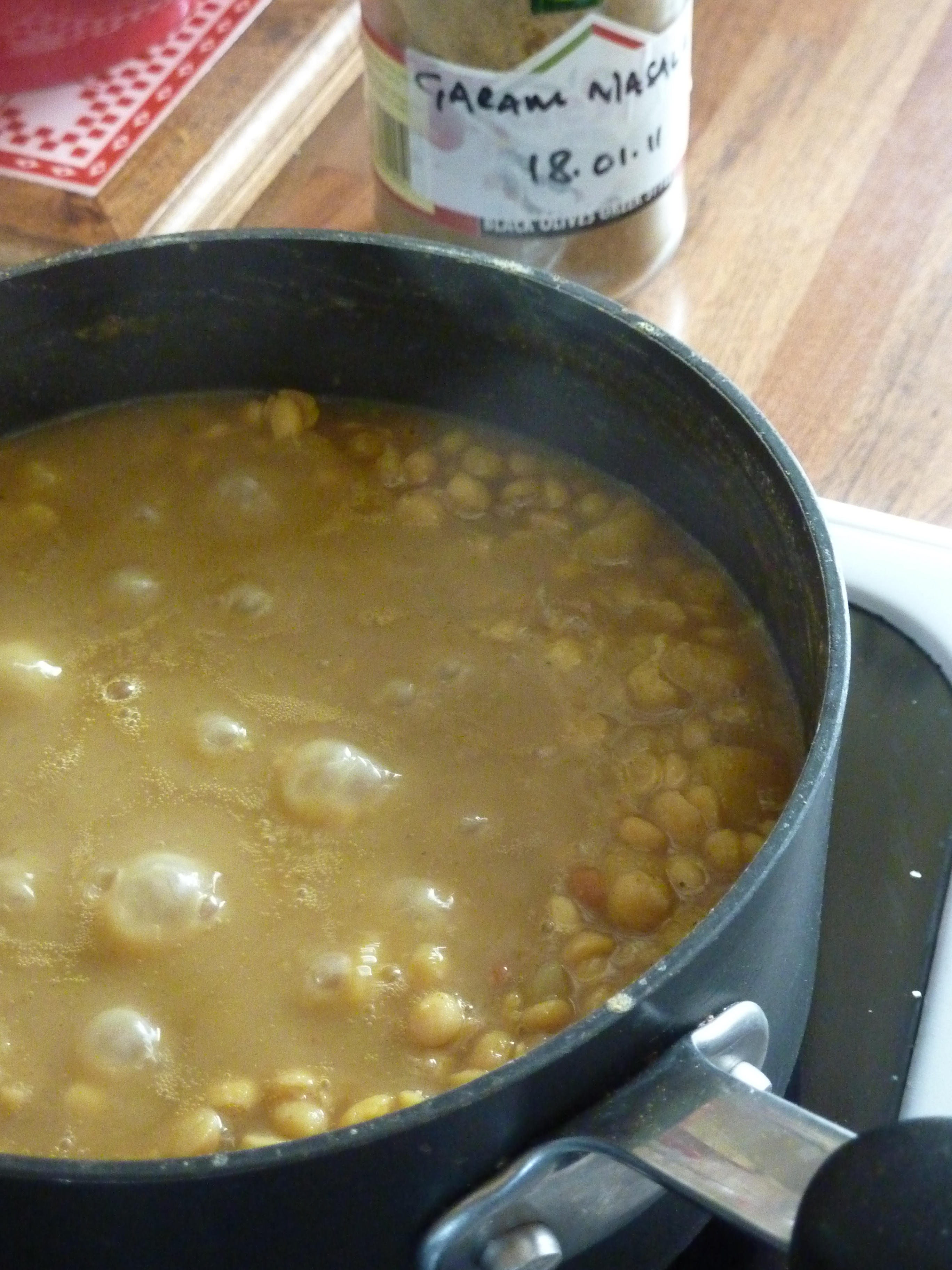
Drain your chickpeas and rinse. Place in a small saucepan and cover with 3 inches of water, bring to a boil and simmer with a lid on for 1 hour (or until nicely tender).

Whilst they’re cooking, get your masala ready. In a frying pan, warm 1 tbs of oil, add the cumin seeds, cloves and cinnamon stick fry for a 30 seconds then add the onions. Fry all on a med high heat for 5 minutes, until golden.

Add the garlic, ginger and beetroot, fry for 3 minutes, then add the carrots and cabbage. Stir well and warm through. Cook for 5 minutes and add the garam masala, chilli powder and tomato. Bring to a boil and cover. After 10 minutes cooking on a steady simmer, add 100ml water and stir, then recover. Cooking for another 10 minutes. The sauce should be nice and thick.

Now add the masala to the chickpea pan, there should be some liquid left in the pan. Stir in and thin out the sauce with more water if needed. Check seasoning, adding salt and pepper. Be heavy on the pepper, chana masala loves pepper!

In a small frying pan, warm 1 tbs oil and add the mustard seeds and curry leaves on medium heat. Let the splutter for 30 seconds and remove pan from the heat.

Once the chickpeas are warm through, stir in the seasoned oil and serve.

No lights in our cabin, but candles are better anyway.

No lights in our cabin, but candles are better anyway.

Serve
In these parts we’d be having rice and rice (with a side helping of rice!)  but tonight, in our own little cottage, we’re having one of Jane’s bonza raw salads; with grated beetroot, kohlrabi, peanuts, beetroot leaves, carrot, coriander and lots more market fresh bits (when Jane does a salad, the entire veg basket is used!)

Sunrise outside the kitchen window

Sunrise outside the kitchen window

Foodie Fact
Kala Chana is very high in dietary fibre, one big bowlful of this curry with give women almost half of their daily intake of fibre (men a little less than that).  These brown garbanzos are also high in protein and rich in minerals like iron, copper and manganese.

Kala Chana is one of the earliest cultivated legumes, remains have been discovered dating back 7500 years!  India is by far the biggest producer of chana in the world, Australia is the second, which I find surprising.


Categories: Curries, Dinner, Recipes, Travel, Vegan | Tags: , , , , , , , , | 6 Comments

Egyptian Ful Medames

We have hardly been prolific of late, both of us busy as bees.  Things are about to change.  Raw Earth Month is about to commence, more of that later.

It’s great to be getting back in the blog flow, so I thought I’d start with a simple little stew that we love, get warmed up gently.  So its semi-official, the Beach House is back and in many ways, better than ever!!!!!!!

I love broad beans.  They are surprisingly one of Britian’s most ancient crops and we used to make bread out of it until our seafaring sorts brought wheat to these shore.  I haven’t tried broad bean bread, but it sounds mighty.

This is a simple stew and ideal for a midweek dinner, hearty and superbly healthy, it also only takes a short time to prepare.

This may well be the national dish of Egypt, but it’s also served throughout North Africa and the Middle East.  Ful (I like to mispronounce it ‘fool’) Medames is a rich, spiced stew that was a true food revelation when I ate it in Cairo old town all those years ago (seven to be exact).  The food of Egypt was a pleasant surprise, as it does not have the reputation of say Lebanon or Iran.  I can think of one little restaurant, buffet style, with fresh flat bread, heavenly light hummus and a large dollop of this on a steel plate.  You can keep your Michelin star joints, this was real food, heart and soul.  They also showed very entertaining Egyptian TV and a beautiful recitation of the Koran, it was a multi-media feast.

This dish is equalled by an Arabian recipe, heavy on the tahini and tomato, which transports broad (fava) beans to something supreme.  I’ll be whipping that up in the future for sure.  Broad beans have such a great, chewy texture, they are great fodder for visiting meat eaters and would sate any ravenous carnivore, especially if you serve topped with a fried egg and lashing of warm bread.  YUM, YUM……

Alas, we live halfway up the hill in sunny Wales and my duty in the Beach House Kitchen it to bring the flavours of the world into our lovely little cottage.  Last night it was flavours of the pharaohs that we dined on and no, we were not walking like an Egyptian afterwards.


The Bits – For 6-8

1kg whole dried fava beans, 3 garlic clove (blended), 1 red onion (blended), 50g fresh coriander, 25g fresh parsley, 1 large lemons (juice and zest), 1 small hot chilli (finely sliced), 1/2 tsp cayenne pepper, 1/2 tsp cinnamon, 3 heaped tsp cumin seeds, 700ml good tomato passata, 3 heaped tsp tomato puree
3 heaped tsp brown sugar, 100ml olive oil, sea salt and black pepper

Add a tablespoon of light tahini for added richness.

Do It

Soak the beans overnight. Drain, place in a pan, cover with plenty of water and cook for around one hour until tender.

Toast cumin seeds for 3 minutes in a hot frying pan, no oil, pop in a pestle and mortar and grind (ground cumin is also fine, but just not as good)

Blend the onion and garlic in a food processor, then fry gently in a little oil. Meanwhile, chop and mix the herbs, oil, lemon juice, chilli and spices.

Add this mixture to the onions and garlic, then cook for a few minutes. Add the passata and tomato puree plus 100ml of fresh water, which you can first use to wash the remains of the passata out of the jar or packet it came in.

Cook for a ten more minutes and then add the beans. Continue to simmer and taste – adjust seasoning with sugar, salt and pepper. The beans will be ready as soon as the seasoning is balanced and the sauce is nice and thick.

Serve

Eat straight away or allow it to cool, divide into portions and freeze. It’s traditionally eaten with warm pitta bread, plus tomato and cucumber salad.

We Love It!

I love bringing the flavours of the bustling streets of Cairo into our quiet little kitchen.  Food evokes so many memories of travel for me and these flavours are allow me to relive days and nights in more exotic times.  I love Wales, but its good to mix things up, regularly.

Foodie Fact

Broad beans offer awesome levels of fibre, keeping the belly and below very happy.  They are full of folate, which lessens heart issues and other nasty diseases.  A cup of broad beans contains 40% of your daily iron (and fibre) and is a brilliant source of lean protein.  They are also easy to grow and even grow well in our windswept veg patch.

In times of doubt, refer to cat.

In times of doubt, refer to cat.

Categories: Dinner, Recipes, Stew, Travel | Tags: , , , , , , , , | 4 Comments

Radio Tarifa Tagine

Tarifan Vegetable Tagine

Tarifan Vegetable Tagine

Tarifa is one of the windiest towns in the world, home to windsurfers and a whole host of eccentric folk (apparently the relentless wind sends people mad!)  Most places in Spain have three winds, Tarifa has five!  It is located directly across the med from Tangiers, an equally nutty Moroccan town.

Tarifa has long been regarded as a great example of the merging of all things Hispanic and African, not to mention, there is an awesome band named Radio Tarifa who rock our worlds (see below), they’re also a mix of Moroccan, flamenco and other beats. Really when you get down to this coastline, cultural borders blur into one hectic mix of all things med. There is an ancient feel in the air around here, Romans, Greeks, Punics, Carthagens…… it makes sense that people who want to live in such beautiful climes and always have done.

I learnt to make good cous cous and tagine on the open fires and portable gas stoves of Morocco, in garages, date plantations and even the odd oasis. Moroccans are like Italians when it comes to their cooking, namely, don’t mess with it brother!!!! Keep it the way it has always been and momma knows best et al. Which is cool, makes things easier.  I cooked a tagine in the Atlas Mountains and added beetroot to the mix and then spent the rest of the evening in some form of food induced exile.  They turned their nose up at my meddling with the ancient, alchemical laws of the tagine.  Seems I haven’t quite learnt my lesson!

I have had a good meddle here. I love to add a little tahini to the mix to add some richness and paprika is a superb local delicacy that creeps into most things I cook over here on the Costa Calida.  The rest is all fine, fresh, fresh, med veg and fistfuls of cumin from the markets of Marrakech to get things flowing in the right direction.

The secret here is a thick and rich sauce to start with and gently steaming the other veggies over that. This makes this dish brilliantly tasty and the veg chunks are cooked until perfectly tender and succulent.  The nature of tagine recipes is wide and uber-complex, but this one is straight forward and mighty fine.  A tagine is just the pot’s name really, it’s unique conical shape, but it’s what goes into it that matters.

I serve this with fluffy cous cous in a tagine dish, there is  plenty of gorgeous sauce to make the cous cous nice and moist. My tagine dish has a very sticky base, otherwise I would cook the sauce in the tagine base and then whack the lid on. That would be the authentic route, but I have used a pan here to make this easier and avoiding sticky situatioGod, I love Morocco, the dunes of the Sahara and the peaks of the Rif mountains are just a hop, skip and ferry away from here and it is calling my name in capital letters.  It’s such a massive empty place, full of amazing people and tasty treats.  This tagine takes me back……

Tarifan Vegetable Tagine

Tarifan Vegetable Tagine

The Bits

2 med onions (finely sliced), 6 cloves garlic (finely chopped), 3 inch cube of ginger (finely chopped), 5 big fat plum tomatoes (chopped rough), 1 courgette, 1 large red pepper, ½ large butternut squash, 4 large carrots (all veg chopped into large chunks), 4 teas ground cumin, 3 teas paprika, 1 teas cinnamon, 1 teas ground coriander, ½ handful roughly chopped dried apricots, 6 dates (finely chopped), 1 heaped tbs dark tahini (dark has a more intense flavour, but regular tahini is fine), 2 cups good veg stock, s + p to taste
350g cous cous (for three), 1 pint good veg stock, 1 teas cumin seeds,

Do It

Get a nice good glug of olive oil hot (high heat here) in a large saucepan, pop your onions in and cook until soft and going golden, add your garlic and ginger and your spices. Stir well and often, get it all combined nicely, then add your chopped tomatoes and stir in. It should all be smelling amazing and cooking down well. Taste and adjust accordingly. When the tomatoes have all broken down, 5-10 minutes, add all of your other veggies, stock and dried fruit stir in a little. Stick a lid on it and leave for 30 minutes to cook slowly, no peeking!

When the lid is taken off, you’ll have a gorgeous tagine waiting with plenty of rich sauce to be soaked up by the cous cous.

To cook your cous cous, warm a pan with a little oil and toast your cumin seeds for one minute, then pour in your cous cous and stir well, add some s+p to taste and pour in some freshly boiled water (straight from the kettle is good).

Cover the cous cous with water, 2cm above and then cover tightly with a lod and leave for 20 minutes to cook off the heat. When you lift the lid, fluff the cous cous well with a fork and add a little oil if it needs a little help.

Puerto Mazarron Sunset

Puerto Mazarron Sunset

Serve

As warm as you can, in a tagine dish preferably. Lay out plenty of cous cous on the base, spoon over plenty of sauce and then scoop on your vegetable tagine. Cover with more sauce and a good drizzle of great olive oil.

We like to eat out of the tagine dish in a communal fashion, pop it in the middle of the table and enjoy with your nearest and dearest, just like in Morocco. We had ours with hummus or a nice garlic yoghurt.

At the shepherds house - Bolunuevo, Mazarron

At the shepherds house – Bolunuevo, Mazarron

Foodie Fact

We use tahini in many ways, but here it adds a creamy richness to the tagine without the use of our old friends butter/ cream and the dairy gang, with the added advantage of awesome health benefits and easy digestions.  Tahini is full of vitamin B’s, essential for keeping the body ticking over, enhancing metabolism and sorting the immune system out.

Tahini is also rich in calcium and a small blob can contain up to 35% of your required daily intake.  Many people believe that tahini boasts the highest levels of calcium in any food!

Here’s the soundtrack to our Tarifan Tagine, the incredible Radio Tarifa:

Categories: Recipes, Travel, Vegan | Tags: , , , , , , , , , , | 3 Comments

Hippy Daal

Bubbling Hippy Daal

We fancied a stew, a change to all these raw food textures.  My mind immediately stuck on my ‘Hippy Daal’.  With the beetroot and apple raita that was being chopped up, this was going to be a feast!

Hippies like daal (Dhal, Dal, Dahl however you take it), I like hippies, daal likes me……  I’ve cooked this a million times, maybe more, over camp fires and in people’s homes, in the back of jeeps and beside roads.  We eat it in the Beach House every week and every week it changes, but the heart of the dish remains the same.  Lentils and spices cooked with love, stewed until creamy.  Food that ‘clings to your ribs’ as we say.  It’s a true one pot wonder and cheap as chips.

The California Baba in Rishikesh, India

Daal is the food that keeps India ticking over, it comes in many forms, made with lentils, beans or chickpeas.  All Indians eat Daal of some description and I was told that one state had to ban Daal, because the people were eating too much of it and not getting a balanced diet.  Daal is normally a super healthy dish (unless you add loads of ghee) so these are quite drastic measures, but show the passion for the dish in India.  A land fuelled on daal.

Cooking daal is so simple and I’ve made it even simpler.  I have cut out the steps of frying the onions and spices etc and fast forwarded straight to whacking it all in the pan and bubbling the stew until it becomes thick and gooey.  It saves on washing up at least.  This is a basic recipe and is wide open to bits being added and spices thrown in.

Daal in India is always made in pressure cookers, as are most curries.  Anybody who has travelled around India will be familiar with the sound of your dinner hissing away in the kitchen, regularly reaching a kind of hissing climax that sounds like an imminent explosion.  It can be quite therapeutic, knowing that food is one the way and the potential of a hot chapatti just tops things off.  Chai mileaga!

I like all lentils and yes, some people do call me a hippy, not always because of this though.  Yellow lentils keep their shape, but also break down a little to form that lovely creaminess.  You can experiment until your heart is content with this one.

You cannot be shy with your spices here, they must be added with gusto and happiness.  Remember to take care of your spices, they are sensitive to light and the air.  Keep in a cupboard in an air tight container preferably, for long term, keep in the fridge.  I still have my stash of spices brought back from my favourite little spice market in Mumbai.  They have retained their potency.

Because this post relates to Indian cuisine, I must mention Kolpona Cuisine, the best place to go online for India recipes.  I love the way that Desi Chick cooks, plenty of oil and spices, and bold, bold flavours.

The garam masala here adds a nice bit of spice, I like the touch of cinnamon and cloves.  Really, you can use any India spice here and it will still turn out fine.  You can substitute all of the spices for the same amount of your favourite curry powder if you liked.

Daal keeps brilliantly, just add a little water to loosen it up again when re-heating.  I server my daal quite thick, but in India its normally halfway to a soup (or a full on soup depending on the quality of the restaurant you’re eating in).  I like it nice and thick though.  In fact, the best Indian food I have ever eaten has been in the U.K.  In Leicester and London in particular, we are blessed to have such a culturally diverse nation, it certainly means some interesting food.

The best Indian restaurant in Britain is the Jungle Club in Leicester.  Eating there is the complete Indian experience on these shores.  It’s such a colourful place, decorated like a jungle, with monkeys and tigers all over the place.  There is also a kids play area and a working mans club attached, just to add to the spice!

Strangely in the north east of England, where my family all hail from, we have a dish not disimialr to Daal.  Lentils cooked in stock, cooled to form a thick paste.  Its called ‘Peas Pudding’ and we traditionally spread it on sandwiches with ham and beetroot and plenty of butter.  The bread we use is a soft doughy white loaf called ‘Stottie Cake‘ which is very similar to the ubiquitous round load of Morocco.  Small world eh!  ‘Stott’ means bounce in Geordie (a dialect in this little corner of the world) and the bread is so dense, it bounces when dropped.  The north east of England was a mainly coal mining area and the food there was designed to fill up the miners for the hard labour they carried out 6 or 7 days per week miles below the surface.

This method produces a great daal, although not traditional in anyway.  Its carefree cooking, lentils are very forgiving, just let it bubble nicely and you know, dinner is on the way.  This daal is a meal in itself.

Makes one big panful:

Hippy Daal – Ready for a mix

The Bits

2 cups of yellow split lentils (any lentils will do really, soaked overnight in filtered water), 1 big onion (chopped into small pieces), some root veg (we used one large potato, and half a swede and 1 carrot, also using parsnips, sweet potato etc would all be grand.  Chopped into small chunks).

2 inch piece of ginger (finely chopped), 4 cloves garlic (mashed/ finely chopped), 4 bashed cardamom pods, 2 teas garam masala, 1 teas cumin seeds, 1 teas ground coriander, 1 teas turmeric, 1/2 teas chilli powder, 2 teas flax seeds (good for the belly), 2 teas curry leaves, sea salt to taste

I added two teaspoons of tamarind pulp to give it a nice fruity edge (optional).

Do It

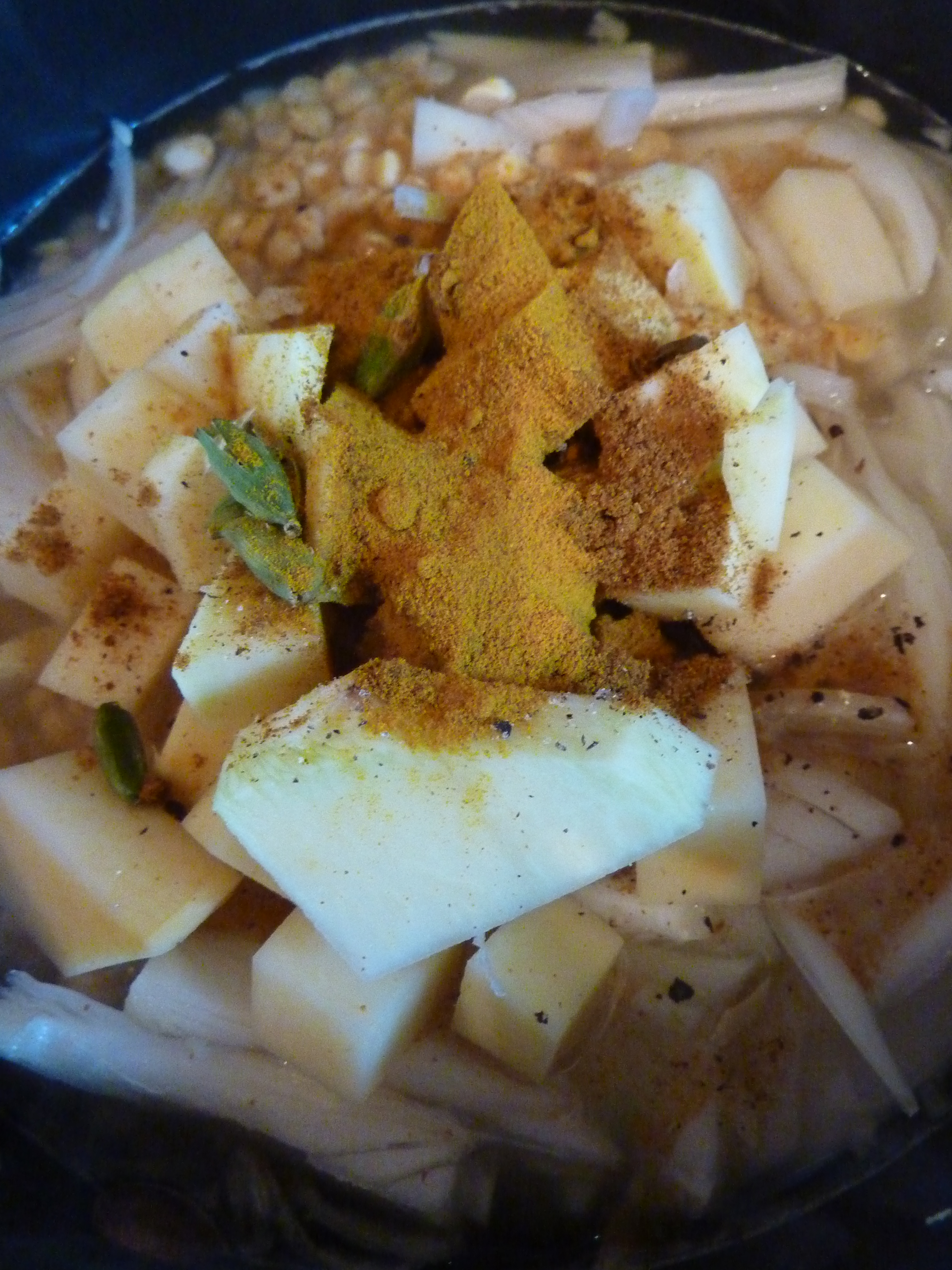
Rinse you lentils well and cover in a large, heavy bottomed pan, with an inch and a half of water (more water can be added if needed throughout the cooking).  Bring steadily to a boil and then add all you veg, ginger and garlic.  Lower heat to a fast simmer and cook for 5 minutes, then add all of your spices and stir well, bubble gently for around 20 minutes, add some more water if needed, then cover and cook for another 20 minutes, stirring when you are in the area.  Check that you stir the base of the pan and no daal burns on the bottom.  Easy as that.

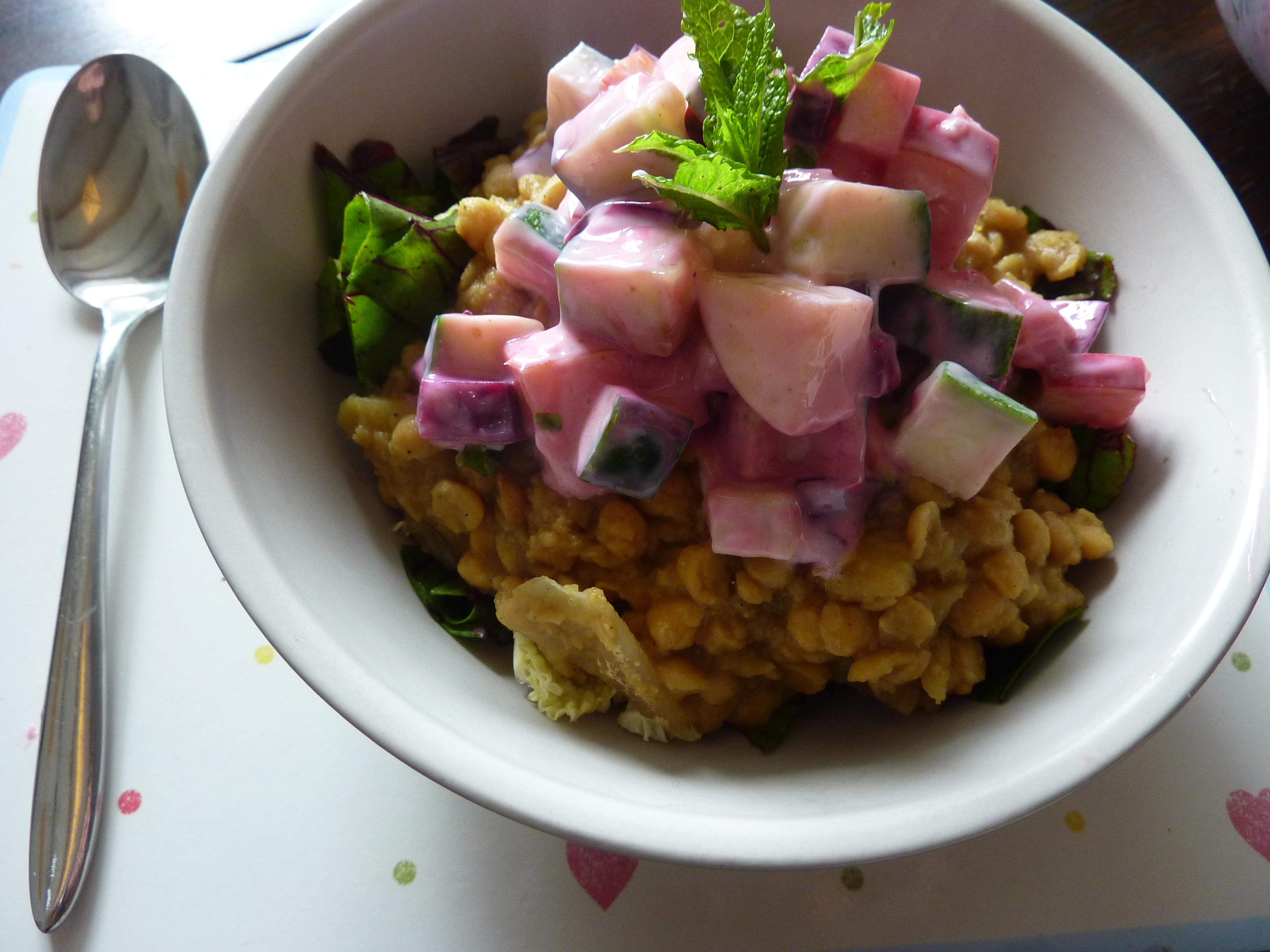
Hippy Daal with Beetroot and Apple Raita

Serve

We’ve had it cold in sandwiches before, now we eat it with salads and some Beetroot and Apple Raita, you can thin it down into a soup…cook it down and make lentil fritters…use it as a dip, the list goes on.

We like to stir in some more richness, we use yoghurt (soya or whatever you preference), ghee (authentic and delicious) or just a little good oil.  The last two will give a nice shine to the daal.

Foodie Fact

Lentils are packed with protein, a good source (of many) for a veggie diet.  Daal contains a protein content of around 25%, similar to meat and is very low in fat but high in carbohydrates.  It is also high in vitamin B and iron.

Ready to munch!

Categories: Dinner, Healthy Eating, Recipes, Travel, Vegan | Tags: , , , , , , , , | 8 Comments

Holiday Photos – The B.H.K hits Spain

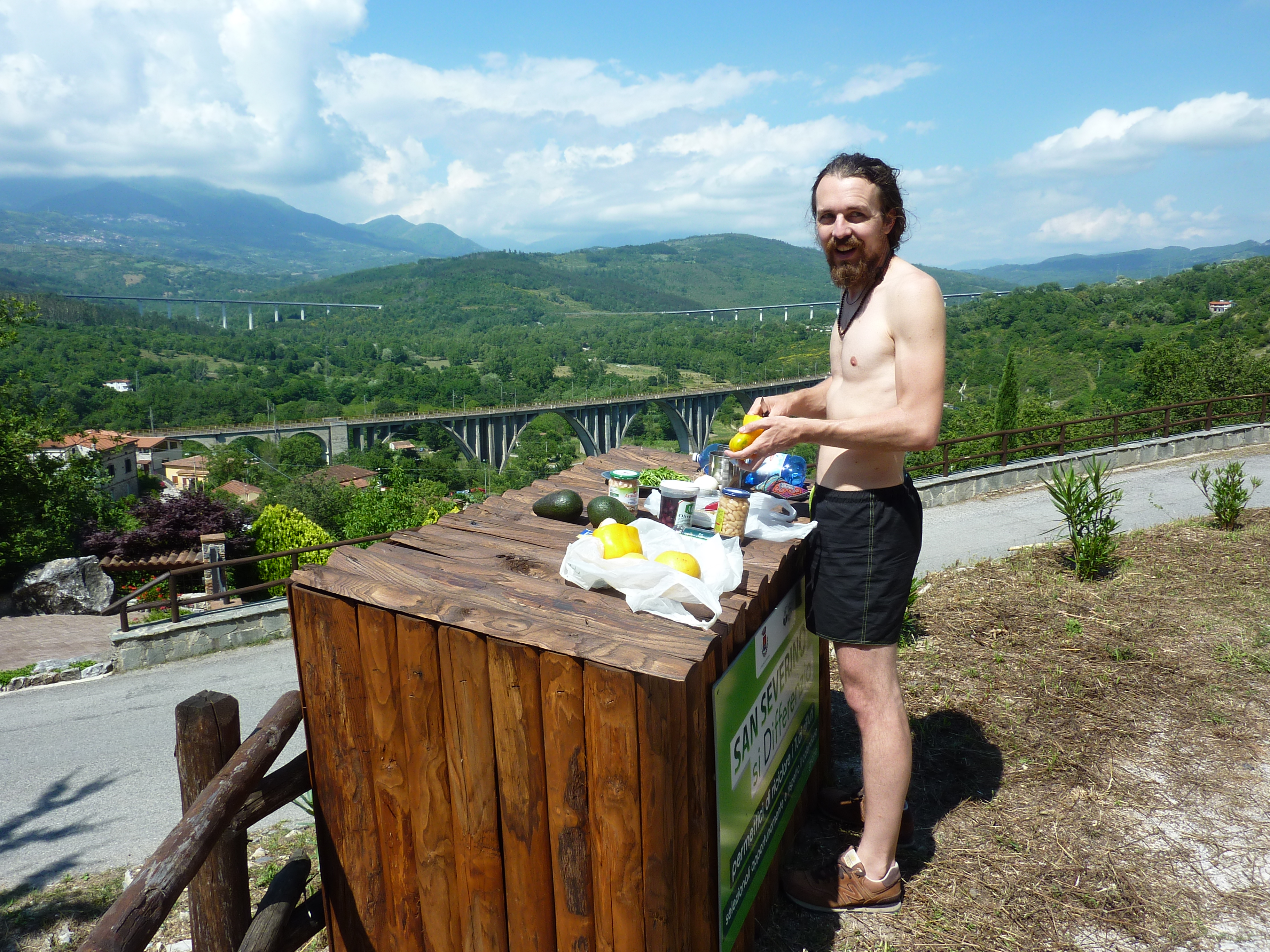
Jane walking in the forests of the Espunas. 12oC, sandals and snow.

Viva Naranja!

Under an old olive tree. La Santa Monastery

View from the terrace of Antipodas Restaurant, La Azhoia (with the bar mascot)

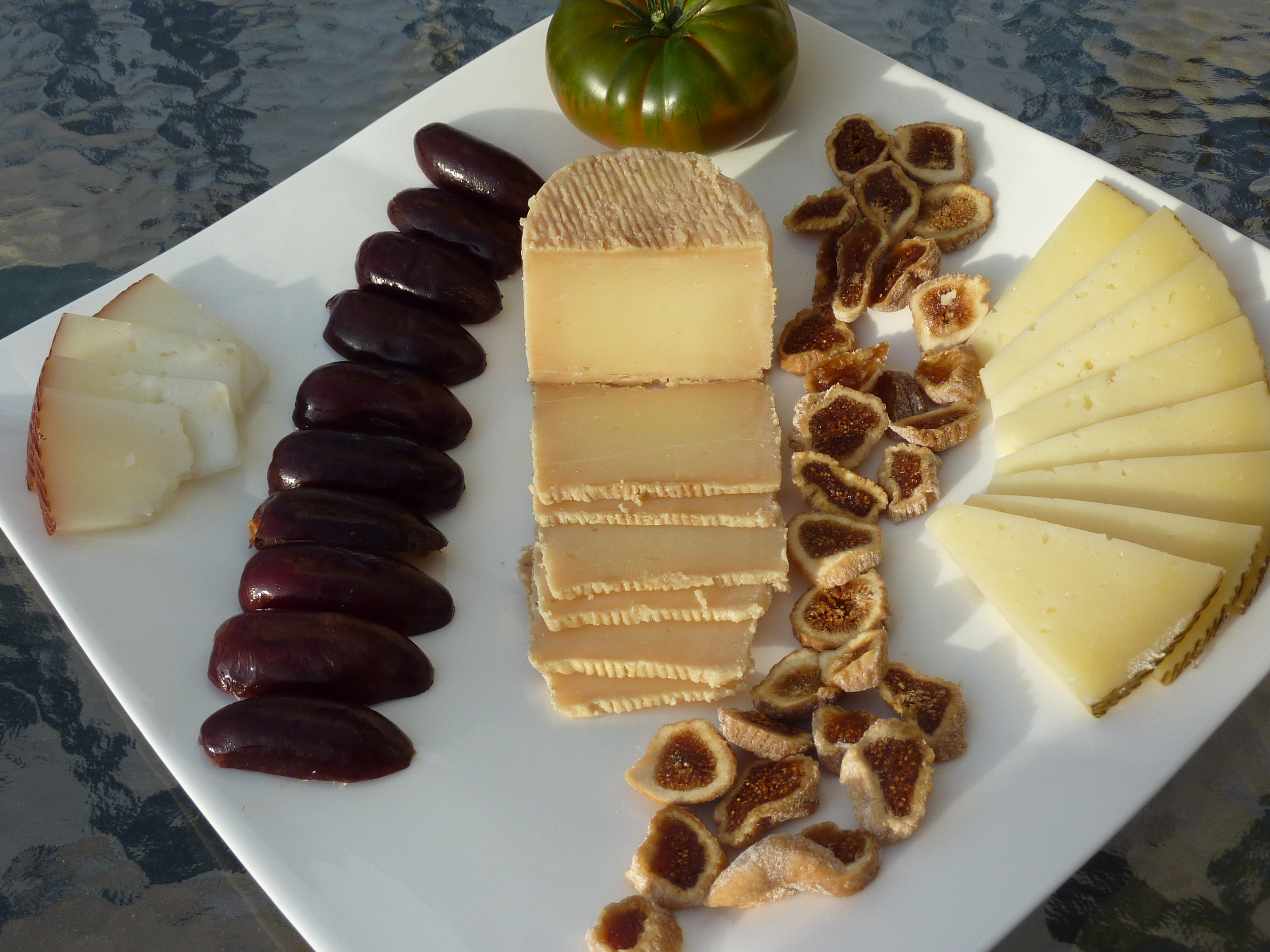
Our local goats cheese platter.

Jane in the Monastery Square, La Santa

Sunset over the Port of Mazzarron

Gorgeous local Raf tomatoes. Sweet, sweet, sweet...

Hello Beach House Folk,

So this is where we’ve been,  doing what we do best, going on holiday!  Hopefully this explains the lack of Beach House Kitchen action recently.

We visited Murcia, the Costa Calida, a magical place.  We have done all our ‘foodie’ friends proud by eating and drinking in brilliant ways and of course taking it very easy.  Que Vida Espana!

The produce in Murcia, known as the garden of Spain, is exceptional and some of our favourite times were spent in the markets practising the lingo and meeting the farmers.  Buying fresh dates, figs, almonds, amazing vegetables (peppers, aubergines, artichokes), olives, lemons……….etcetc.  The list goes on and on here.  The earth seems very arid in the whole area, but a little sun goes a long way!

We are going fully Raw in June, we met some amazing so we need some help planing for that.  Whats your favourite salad/ juice/ smoothie?  We met some guys in Spain who really inspired us in this respect, very shiny people, cheers Rob and LindaX

We will be back to full throttle soon-ish.  Watch this space…….

Peace and Happiness,

Lee and JaneX

Categories: 'The Good Life', Healthy Living, photography, Raw Food, Travel | Tags: , , , , , , , , , , | Leave a comment

B.H.K. Review – Allegra McEvedy ‘Bought, Borrowed and Stolen’

‘Some women collect shoes, Allegra collects knives.’

A cookbook full of ‘Recipes and Knives from a Travelling Chef’.  Allegra’s books are always full of good writing and inspiration, but ‘Bought, Borrowed and Stolen’ inspires with not only the food, but the tools that make it and the personal journey behind each dish.

From San Francisco to Burma, this book is a true labour of love.  Allegra has definitely put in the hard yards here.  It’s an insight into many revealing journeys over nearly a quarter of a century and most of the planet.  Ever seeking sharp edges, shiny people, proper food and other tasty mouthfuls.

I own a couple of Allegra’s books, but this is the best read.  It’s as much a memoir as a gang of recipes; the memoirs of a foodie in love with the world and its diverse cultures and traditions, always lead to culinary adventures, relating directly to the plate and the belly.

Allegra has been out and about, distilling years of travel and great eating into these pages.  There is a real sense of love and passion that comes through in the writing. Allegra seems to get to the heart of each country visited and as we know, the best way a people’s hearts……….are their bellies (or rib cages and I’m sure Allegra will have a knife to suit!!!!!).

Jane gifted me this wonderful cook/travel book for crimbo.  It graces our windowsill turquoise and when opened, explodes with even more vivid colours.  Allegra’s food is always vibrant and challenges the stuffy ‘elite’ of British cooking.  You may know who I mean?!  Unlike most famous chefs, Allegra actually has a great sense of humour!  You are allowed to laugh, enjoy and be natural whilst cooking.  Not fickle or false.  Allegra’s cooking comes from the heart, not an assembly line of egos.  Hoorah!

It’s not a veg cookbook, but there are many veggie options.  The meat dishes can always be played around with; an aubergine here, a pumpkin there and you’ve got worthy substitutes for a slab of beef (sort of).  Allegra’s enthusiasm and talent is prevalent on each page.  The travel writing paints magical pictures of markets, stalls and kitchens encountered along the way.  This is an insight into a real cooks (chefs?!) pilgrimage from working on the ‘line’ to being one of Britain’s best-loved and talented foodie people (chefs?!).

Allegra gave up cooking ‘posh food for posh people’ years ago and since then has commited her time to giving great, affordable food, to the masses; via Leon Restaurants and many other charitable projects.  Bagging an MBE along the way.  Allegra is regularly on TV, her most recent show was ‘Economy Gastronomy’ and to cap it all off (for now), has been made only one of three ‘patrons’ for the fair trade movement.  Allegra is quite a busy lady.

To add to the job list, it appears Allegra may need to build an extension to accommodate her knife drawer!  I am sure it resembles some kind of ancient armoury.  I wonder is she has a spear?  I have one good knife, but this book has wet my appetite for more.  Maybe one of those ‘Oaxacan Whackers’ to have a go at a particularly stubborn beetroot.  Bring on the carnage!

The knives all seem to embody the food culture of the place.  The are all fascinating in their own way, many exhibiting great craftsmanship, many purely barbaric.  My personal favourites are an elegant Japanese Unagi Saki, handle-less; deadly looking, like something a Ninja would carry in there sock.  The Grenadine Scrimshaw is a tasty looking pen knife, the Phoenician Phoenix is ostentatious and the Burmese Machete looks like something you’d reduce a tree to splinters with.

Difficult to say which is my favourite recipe.  There are many.  The Shepherd’s Salad went down well at a Veg. Hen Party I cooked for recently.  The Hens liked the pomegranate.  The Black Sticky Rice is a treat, the Sweet and Sour Aubergine, Rooibos Malve Pudding, the list goes on and on…………..these recipes will grace many a happy occasion in the Beach House.

I love the fact that Allegra has copied these recipes down in situ, in the moment.  Scribbled in one of her many food diaries and then copied down here, straight on the page.  There is no messing with the dishes or ‘dolling them up’, making the food technical and overly complex.  It’s straight from the stall to the page, showing Allegra’s integrity, in honouring foods simplicity and respecting the lineage and tradition of the many cultures cuisines.  How we eat says so much about who we are and the recipes here seem like a true reflection of that.

2012-01-17-miniHappyCooking.jpg

Allegra in Malawi

Allegra wears her heart on her sleeve, which makes the book a personal quest for culinary insight, as opposed to a bunch of recipes re-hashed with a tenuous theme.  This is ‘real’ soul food with choppers!

I had the pleasure of working with Allegra for a short time with Leon Restaurants and I can imagine her in these far off places, being charming and impressing all with a passion for good food and good livin’.  Allegra is so kind and genuine, I’m sure this has opened many a doorway.   This book acts as a portal to the kitchens, history and characters of the world (and their cutlery drawers!).

Wherever you are in the world, there’s no better way of giving people joy than by handing them a plate of food made with love … and watching them love it too.”

Cheers Allegra!

Heres Allegra’s site:  http://www.allegramcevedy.com/Allegra/Biography.html

I also recommend the ‘Colour Cookbook’.  It’s cheap on Amazon.

—————————————————————————————————-

I feel that cookbooks are generally overpriced and not necessary.  I own three.  Just think about all that amazing produce you could buy with 30 quid!  I have notebooks full of recipes, all very personal and much-loved.  This suit me fine.

I prefer to get my inspiration, like Allegra, through travel and eating as opposed to second-hand in a sumptuously photographed hardbacks (lets face it, you can’t eat photographs, or books for that matter).  I like scribbled recipes and cooking from brilliant memories of taste and occasion.  However, if you are ever going to waste money on a cookbook.  This is the one! 

2012-01-17-miniKnives.jpg

A few of Allegras choppers

Categories: B.H.K Reviews, Recipes, Travel | Tags: , , , , , , , , , , | Leave a comment

Homemade Goats Cheese with Wild Garlic

Goat's Cheese Recipe With Wild Garlic

I love Goats.  They are far superior to sheep.  More character, a little like their cheese.  I became aware of this love affair in Laos…..it’s a long story.

‘Eat Weeds’ (http://www.eatweeds.co.uk/) inspired me here.  It’s a great little website all about living from the land and getting out for the odd forage.  All you need to know about wild eating.  They regularly send me emails and this recipe reminded me of how easy this cheese is to knock-up.

The first time I made Goats Cheese was when I volunteered to help on a farm in Central Laos.  It proved to be very simple and deliciously creamy.  This method is almost as good, without the super fresh, still warm milk of the farm.

The Kids

We would milk, feed and clean the goats out before dawn, with the afternoons free to spend under the blazing sun, hacking down banana trees for feed. After around five hours hard graft, between three of us, we normally produced only four small blocks.  This experience really developed my appreciation of cheese!

The blocks were normally whisked off to the farm restaurant to be served to bus loads of tourists.  Sometimes we did manage to sneak a chunk ourselves and with a fresh baguette (which are amazing in Laos), it made all of the shovelling shit worth while!

With the lads on the farm

For this recipe, if you can get your hands on wild garlic, lucky you.  Otherwise use bulbs.  Goats milk is fairly easy to come by in the shops.

If you like eating weeds, subscribe and get the Classic Wild Food Collection.  It is free and packed with info on what to do with weeds and plants (and how you can eat them).

Bon Fromage!

The Bits

1 pint of raw goat’s milk, ½ lemon (juiced) or 2 caps of cider vinegar, 25g ramsons/wild garlic (finely chopped)***, sea salt

***An alternative to wild garlic would be one clove of minced garlic and a handful of roughly chopped parsley.

Do It

Pour goat’s milk into a pan and slowly bring to the boil. Remove from heat immediately.

Add lemon juice a little at a time until the curds separate from the whey.  Curdling.  It will begin to resemble very off milk.

Pour the pan of curds and whey through a fine muslin cloth, making sure that you collect the whey. Leave to drip for a few hours. You can refrigerate the whey for a couple of weeks, and use it in your sauerkraut recipes, in soups, stocks or as a refreshing drink. Whey is super full of minerals, and an excellent digestive.

Next tip cheese into a bowl and add the finely chopped ramsons and few pinches of sea salt, then stir until the ramsons and salt are thoroughly worked into the cheese. Taste saltiness and adjust accordingly.

Put the cheese back into the muslin and twist into a ball. Put on a slanted board with a big weight on top (always a bit of a balancing act), and leave for a couple of hours. The salt draws more moisture out of the cheese making it firmer.

If you can resist eating it, this cheese will age nicely.

Serve

Baguette! (warm)

Foodie Fact

Whey is a super-dooper food.  It’s packed full of protein, meaning that people who would like to be one big lump of muscle (mass) take it as a high cost supplement.  It’s free with this cheese.  The proteins in whey can be used easily by the body.

Whey is very low in calories and full of anti-oxidants that boost the immune system.

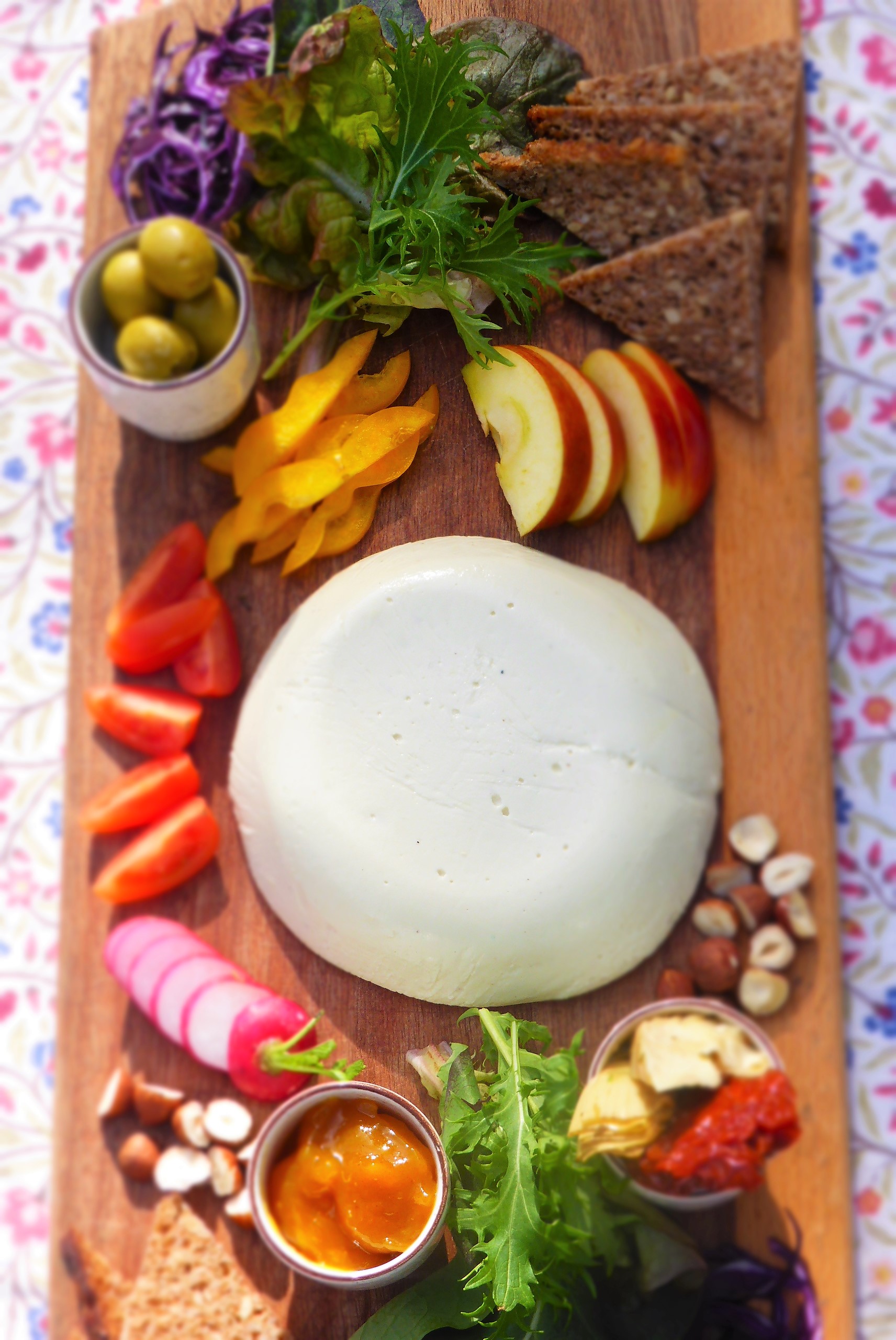
The end product

Categories: 'The Good Life', Foraging, photography, Recipes, Snacks and Inbetweens, Travel, Wild food | Tags: , , , , , , , | Leave a comment